




![Alberto Beingolea: “If they insist on not giving [the powers], they are complicating life for Peru”](https://insightermedia.com/wp-content/uploads/2026/09/bb3fa9e11304ea13fe2cd333955007bc-150x150.webp "Alberto Beingolea: “If they insist on not giving [the powers], they are complicating life for Peru”")


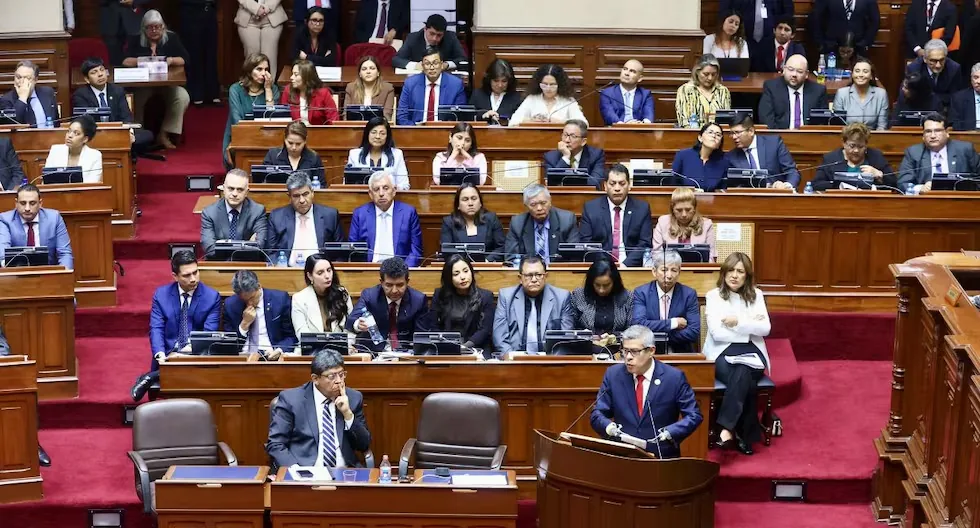
The government’s request has begun its process in the Constitution Committee of the Chamber of Deputies, where the summoning of State ministers will start to support the project consisting of 66 points. Once debated, the final report will be sent to the full chamber of deputies for voting. Then, the result of what is approved by the deputies will be elevated to the Senate where, after study by its own Constitution Committee, the full Upper Chamber will have the final word: ratifying, modifying, or rejecting it.
According to the deadlines established in the regulations of both chambers, the law draft of the delegation of powers request could be resolved in 45 business days, with the government having the final text ready approximately by October 22. This considering that, in the Senate, the project is exempted from the committee process due to the urgency claimed by the Executive. This decision requires three-fifths of the votes in the Board of Spokespersons of the Upper Chamber.
If not exempted from the committee process, the estimated time could extend to 51 days, with the government possibly having the final text only by early November.
Deadlines could extend even further if, in both chambers, the maximum times are taken for the project review, especially in the respective committees. Deadlines could also be extended if opinions are requested from other committees, due to the various matters included in the request.
“In the hypothetical case that greater depth is needed on financial and agrarian issues, specialized committees can be asked to review those points. That would delay a bit more. We are talking about the report possibly reaching the full chamber (of deputies) around September 30,” explained Deputy Roxana Rocha (Renovación Popular), member of the Constitution Committee.
-Out of context-
Regarding the substance of the request, Deputy Rocha assured that her caucus will support everything related to the El Niño Phenomenon which is addressed – in the delegation of powers – in various matters of housing, water, and sanitation; as well as security points. She also indicated they are willing to ratify six other axes related to economic issues such as strengthening micro and small enterprises, promoting formal employment, and administrative simplification.
“On the other points, we need more technical support, justification of urgency. Here we are talking about financial issues, such as the repeal of the interest rate cap law, the proposal for children over 12 years old to open savings accounts (…) and labor issues, such as holiday transfers, bonuses, gratifications, CTS,” she detailed.
According to the deputy’s calculations, Renovación Popular is in favor of 90% of the Executive’s project, but there is 10% that is making “noise” and could be presented through specific bills outside the delegation of powers, because they are not urgent matters.
Romina Uribe, deputy of the Good Government Party, is also a member of the Constitution Committee and assured there is no doubt in granting powers to the government to address the El Niño Phenomenon and the insecurity problem. “On those specific matters, the stance is that we will give powers, we have to let them govern. But there are very broad matters that are not aligned with the criteria that a delegation of powers should have,” she specified.
The deputy explained that the Constitution establishes that a request for powers must be adjusted to an urgency, with determined and specific deadlines. “There are other issues, outside security and the El Niño Phenomenon, that indeed do not respond to an urgency,” she said when asked about the financial and labor issues included in the request.
Uribe even said that in security matters, specifications are missing such as the proposed change in migration issues. “It is mentioned, but it must be specified in what way it will change, because there is a law on the matter and there is no specification of that issue. The competent sector has to come to develop it,” she pointed out.
For his part, Víctor Piñán, deputy of Obras and member of the Constitution group, added that there are observations on tax issues. “We have seen tax benefit issues in agro-export where there is no consensus. In the caucus, one of the speakers took an opposing position, so we will have a second meeting where we will see if we do not give the government powers on that point,” he specified.
The government requires the votes of Renovación Popular, Good Government Party, and Obras, both in committees and in the plenaries of both chambers, to obtain its request for delegation of powers. Everything indicates they will receive a reduced request, especially on financial and labor issues.
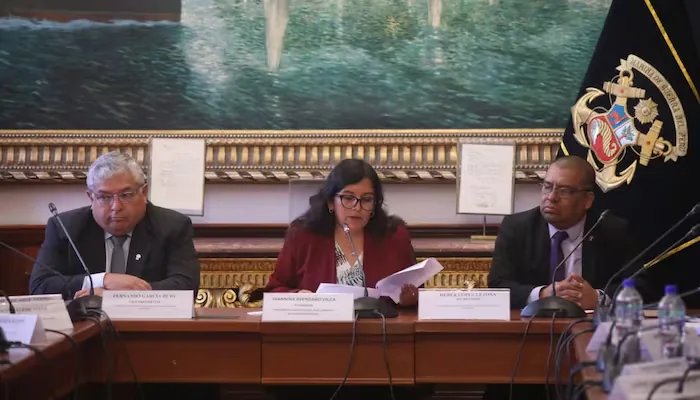
The Constitution Committee of the Chamber of Deputies declared itself in permanent session to rule on the delegation of powers request and send it to the full Lower Chamber. Deputy Romina Uribe (Good Government Party) said she trusts they will carry out this work within the 15 business days established in the regulations.
Read more Quini 6, draw 3406: find out the jackpot and today’s results, Sunday, September 6
- Marlon Aguirre: the story behind the congressman who threatened to resign from Juntos por el Perú, but remains in the caucus
- Request for powers: majority of caucuses lean towards prioritizing only citizen security and El Niño Phenomenon
- Congress: Constitution Committee session called for this Monday, September 7
- APP, Podemos, and other parties spent more than S/24 million in the last campaign but failed to maintain their registration
- Miguel Torres on request for powers: “Chamber of Deputies has requested opinions from more than eight committees”