




![Alberto Beingolea: “If they insist on not giving [the powers], they are complicating life for Peru”](https://insightermedia.com/wp-content/uploads/2026/09/bb3fa9e11304ea13fe2cd333955007bc-150x150.webp "Alberto Beingolea: “If they insist on not giving [the powers], they are complicating life for Peru”")


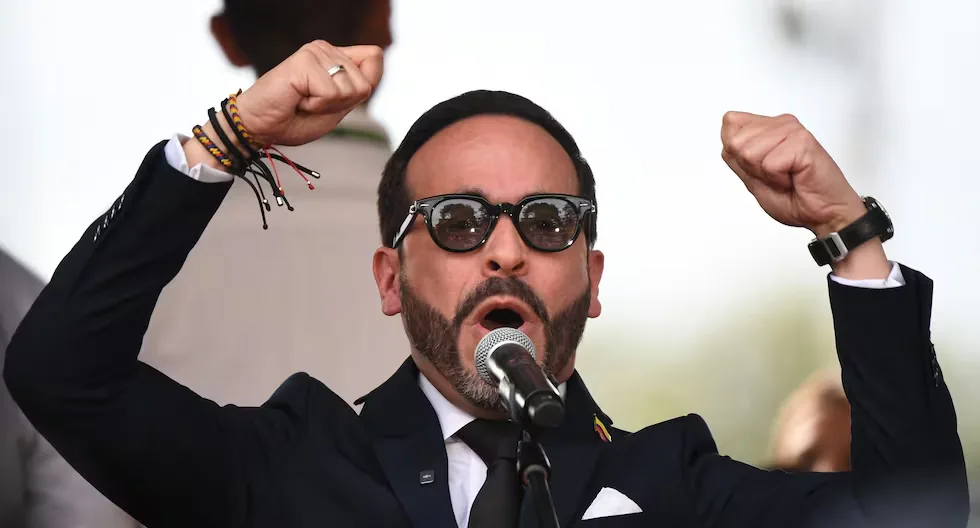
The new president arrives with a campaign program focused on reducing the State, a tough stance against crime, and a direct rejection of his predecessor’s “Total Peace” plan, as well as a rapprochement with the United States.
Read more For nearly three decades no one could explain it: the mysterious ocean noise was finally revealed
In an interview with El Comercio, journalist and director of the newspaper “El Colombiano,” Luz María Sierra, analyzes the country De la Espriella inherits along with the feasibility of some of his key proposals.
According to Sierra, part of the challenges the non-traditional right-wing leader will face will not only relate to the execution of his program but also to addressing internal politics, managing his relationship with Uribismo and distancing from a Petrismo that will seek to return to the presidency in four years.
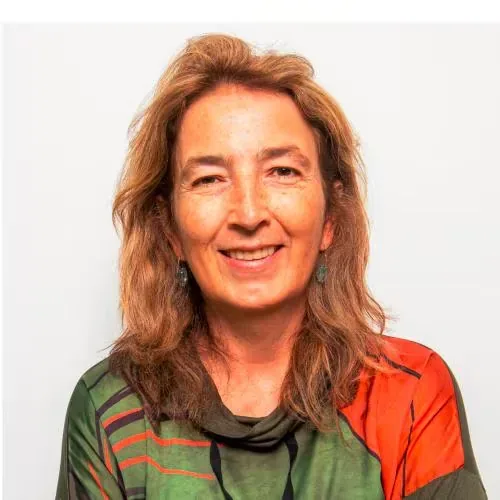
—What is the expectation of change with the arrival of a president with a line diametrically opposed to Gustavo Petro’s?
The expectation is due to the failure that Petro’s government was in several ways. It left the health system destroyed, people do not have access to medicines, and there are more than a million people without access to healthcare, according to the General Comptroller’s Office.
In terms of security, Total Peace was a total failure, armed groups doubled, and the Gulf Clan increased its number of members by almost 250%, and territorial control was lost. The fiscal issue is dramatic, as it leaves a debt exceeding 60% of GDP, impressive growth of the State and bureaucracy, in which much has been wasted, similar to what Gustavo Petro did in Bogotá [when he was mayor], where he left disasters that Enrique Peñalosa had to fix.
It is the same that Abelardo de la Espriella will have to do: arrive and organize, and people hope that this will happen. He has no background in State management, as he was a successful litigation lawyer. However, his vice president, José Manuel Restrepo, is a very recognized and sensible person, with experience in state work and university management.
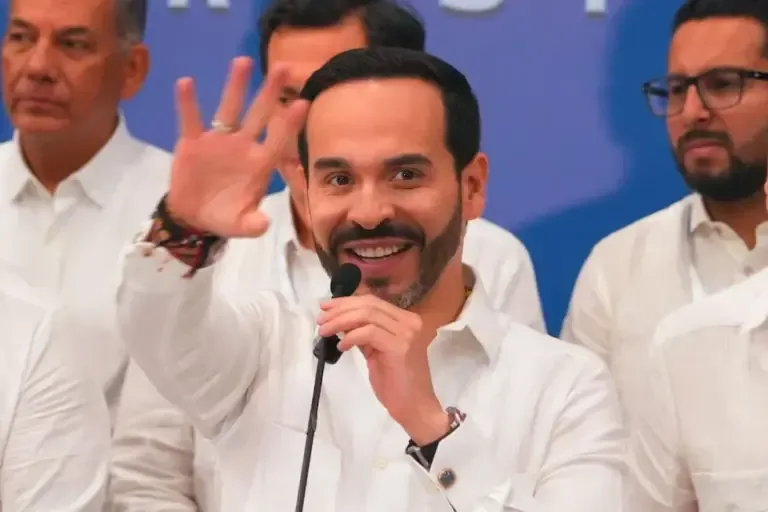
Although De la Espriella’s slogan was to have been part of “the never” —referring to never having lived off State money— fortunately, he chose several from “the always,” but those with a track record that gives some certainty amid the uncertainty the country has experienced in the last four years about the possibility of fixing the crises left by the outgoing government. The vice president-elect himself stated that Colombia is in a post-war situation.
—While you mentioned that De la Espriella has no prior political experience, from the outside there is the impression that due to his good relationship with certain sectors, the new president is not entirely unfamiliar with political work. Does this perception exist in Colombia?
Yes, because when he was a litigator he related to many powers, particularly the Prosecutor’s Office, and the cases he handled were often of national significance. In general, De la Espriella was a precocious and business-minded child, like those people who push everything. As an adult, he was not only successful in his law firm: when he wanted to sing, he sang; then he wanted to create a rum brand before retiring from his legal profession. People who know him say he likes to succeed, so his goal is to make a good government, but everything is expectation for now.
“There is a fight with Uribismo to see who owns the right-wing political sector ahead of local elections in two years”
—The electorate chose De la Espriella over the traditional right. How is the right that the new president embodies seen in Colombia, which he himself described as different from the traditional one?
What is happening these days is that those who had always been labeled as right-wing, which was the Democratic Center of former president Álvaro Uribe, are no longer the same. But that is a political game. Abelardo De la Espriella first positioned himself as the most Uribist, but when he won, some people in his group wanted to shake off the image of Álvaro Uribe to claim that the one who arrived at the presidency is the one who commands. It is a very long story, but the summary is that there is a sector of De la Espriella’s team that wants to separate from Uribe’s figure. It is unknown if this is due to a historical personal problem between the former president and Carlos Suárez, the incoming president’s campaign strategist, or if it is to clear the way for De la Espriella as the sole leader. There is a fight to see who owns that political sector because local elections, which define mayors and governors, are coming in less than two years.
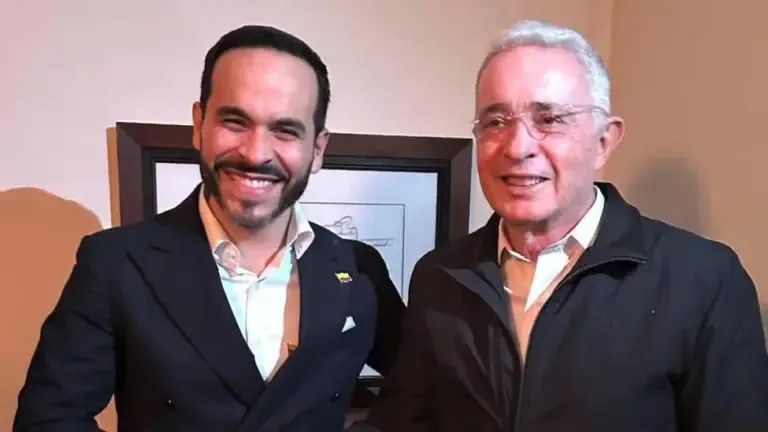
Abelardo de la Espriella arrived practically alone because he has no caucus in Congress, only a party with four senators out of 103, which is nothing. So his strategy is to win over today’s mayors and governors to try to do well in local elections.
What has emerged as a fight within the Colombian right is more of a political game. There is indeed significant friction today between these two branches, although mostly it is playing out as a cold war beneath the surface, on social media.
However, above all, De la Espriella invites Álvaro Uribe to his inauguration, and the latter is very politically correct in saying he will not attend because his legal problems do not allow it, but ultimately that tension still exists.
This has taken place in the warehouses on both sides on social media, although it has mostly been the president’s side that has sought to strike Álvaro Uribe. This is ongoing because at the end of the campaign there was an explosion, and De la Espriella’s supporters fought more with Uribe’s than with the left, and although the temperature has cooled somewhat, it has not yet been resolved.
Espriellistas today seem like a more extreme right in Colombia, but that is in discourse because to win over all the anti-Petro voters, they went to that extreme, and I don’t know if in government political practice they will be like that. In general, his cabinet is not so extreme.
—Will De la Espriella need Uribismo anyway to govern smoothly?
Yes, he has been seen in recent weeks as a little less combative against Uribismo, and it has to do with that. When choosing the president of Congress, Abelardo de la Espriella lost, and the Democratic Center’s option won, as Petro’s Historic Pact also voted for Uribe’s candidate.
Espriellistas began talking about “petrouribismo,” but that does not stick because people know that historically Uribe has fought Petro, and I think they have realized that strategy does not serve them. That is why they are now trying to be more cordial with Álvaro Uribe and the Democratic Center, as the election of the general comptroller is coming, and I think the government group cannot keep accumulating defeats in Congress.
What happened in the election of the president of Congress was really strange because the votes of Uribismo and Petrismo did not seem enough to elect the president of Congress, but they managed it. So it showed a very weak president of the Republic who is not capable of managing Congress right after taking office. De la Espriella lost that first one, and that is why it is believed they are trying to get closer.
Uribismo was the first party to declare itself part of the government, and since then it has been mistreated. That remained an open wound, but both groups benefit from being together, so they will understand sooner rather than later that they must unite.
“The Bukele model is difficult to apply in Colombia”
—Is the president’s tough-on-crime discourse inspired by Bukele really replicable in the Colombian context?
It seems difficult to me to apply. Colombia is not El Salvador, and the security problem is nationwide. The problem is much more felt in the countryside than in cities, although this problem also exists in urban environments. We have a history of conflict and human rights issues that make application very difficult.
Abelardo de la Espriella wants to apply a tough hand, but the situation is not so easy because Gustavo Petro eliminated many intelligence generals, with a certain layer of experience in the military and police forces. While you rebuild that, it takes time, and a mega-prison is not built overnight. Also, there is a significant fiscal problem.
We come from a very different situation than El Salvador, where the president of Colombia had given criminal groups a kind of carte blanche because he called them peace managers. The military forces could not capture them, and if they did, they had to release them, so these groups ended up committing massacres, an absurd thing. However, the mere fact that this ends and criminals no longer feel protected by the president already generates a change in the country. This happens with the return of cooperation with other countries that want to fight these groups, which are basically drug traffickers, something that will also generate change.
Beyond this, I don’t think it will end up being the Bukele model. Perhaps the president will build some prison or take some criminals and make symbolic actions because he has shown to be very skilled in marketing. Probably he may make some episodes seem like Bukele’s strategy, but structurally, changes are needed to tell people that crime pays.
What happened with Gustavo Petro is that in speeches he even legitimized crime. He said those who stole phones were poor kids who wanted to bring chocolates to their girlfriends and said the Tren de Aragua members were young people seeking their destiny. That someone at the State’s top promotes crime is different from someone saying crime will no longer be tolerated here.
I don’t see Abelardo de la Espriella doing scenes like in El Salvador’s prisons with all those people lying on the floor handcuffed; I see him more capturing one or two of these big criminals and exposing them while they are taken handcuffed to prison.
—Is territorial recovery against crime more feasible than implementing that Bukele structure?
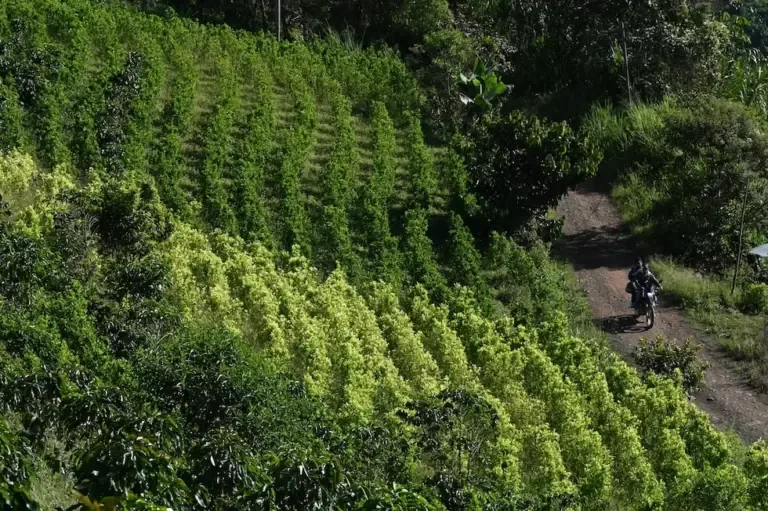
It will not be easy since since the peace process Colombia has multiplied its hectares planted with coca, which are more than 200,000 and have a whole system that is exploiting, among growers, marketers, and more. Specialists say this helped Gustavo Petro maintain some economic indicators beyond fiscal ones that, although not good, generated a sense of less unemployment.
Supposedly, Colombia has less unemployment; however, when looking at the figures in detail, self-employment grew, and suddenly millions of entrepreneurs appeared. These last ones are not entrepreneurs but it is considered that the money that entered from illegal gold businesses, drug trafficking, and others is irrigating the country’s economic system unleashing a flood of economic growth. It is unknown what will happen when they start pursuing these people.
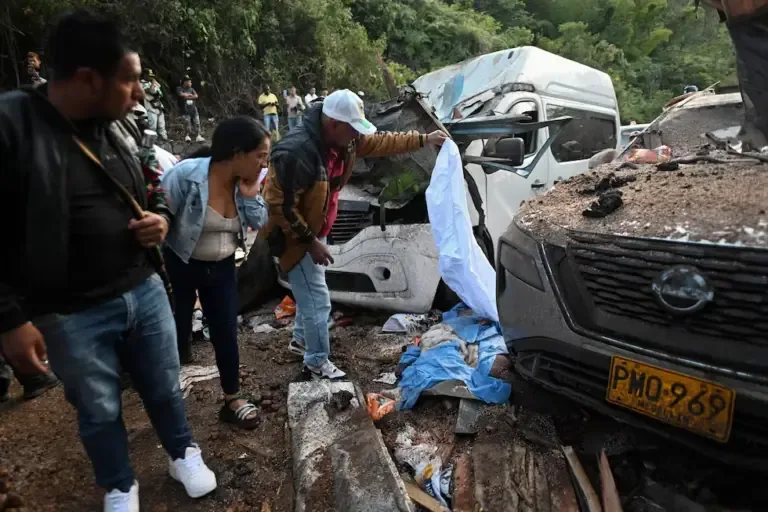
In Antioquia, illegal mining is destroying all territories. When some dredges are burned, these groups react with mobilizations or armed strikes, so it remains to be seen what will happen when a tough hand is applied and how they will react.
—Considering that Colombian elections have been decided by a narrow margin, is any programmatic or ideological concession expected from the president to please the population that did not vote for him, or will he carry out an unrelenting execution of his project?
I don’t see any concession, and that will really be another issue that can keep the country and the president busy in the next four years. In recent weeks, Petro said that De la Espriella will be known as “Abelardo The Brief” because he will not last and will be overthrown. This had never been said in Colombia, and Petro said it while still president, stirring and inviting mobilization, the only thing he has been somewhat good at and the only thing left to him.
He resorts to this for two reasons: first, he wants to regain power in 4 years for someone close to him, and second, because his term had too many scandals. In “El Colombiano” we made a list of 90 of these events a month ago, and recently there have been more scandals of absurd dimensions.
For example, Ecopetrol, the country’s largest oil company, along with some Catalans, had given the wife he is separated from. An audio revealed that the lady said she needed $50,000 to survive, but those partners gave her $2 million.
There is a large amount of evidence of corruption in that government, so much so that Petro needs to make noise so he is not investigated and to scare those who want to do so as a pressure measure.
—What can be expected from the incoming president’s international management on fronts such as regional right-wing alignment, a relationship expected to be close with the United States, and geographical proximity to Venezuela?
There are almost three million Venezuelans in Colombia, many very integrated into the country, who have actually been a very interesting contribution, but I still wouldn’t know what to expect from that relationship (with Venezuela).
Abelardo de la Espriella said he would not leave the country even for a day, that he would only dedicate himself to Colombia, and for the inauguration of the president of Peru, he sent the vice president and the foreign minister. It seems to me that he will try to show that difference because Gustavo Petro spent a lot of time abroad, dedicating himself a bit to campaigning for himself.
And the feeling I have is that it is evident that the connection with the United States will go even beyond that of any predecessor. The tectonic plates of politics are moving increasingly differently; left and right projects are progressively aligning —in their spectrums— more markedly. De la Espriella is very much on Donald Trump’s side, very close to Marco Rubio, and I don’t see that changing; he would have little reason for that.
That has implications on the continent, as for the United States it means recovering what had been its stronghold in Latin America, like perhaps Peru was, along with its hegemony in the region.
Besides staying close to the United States, I see Colombia returning to weave relations with Israel, which had been broken with Petro. De la Espriella said he will have no relations with Cuba or Palestine, returning a bit to what Colombia had always been aligned with a sector. Regardless, I have not seen the president propose many foreign policy orders; it is not his strength.
Read more Who were the influencers killed in the internal war of the Sinaloa Cartel in Mexico