




![Alberto Beingolea: “If they insist on not giving [the powers], they are complicating life for Peru”](https://insightermedia.com/wp-content/uploads/2026/09/bb3fa9e11304ea13fe2cd333955007bc-150x150.webp "Alberto Beingolea: “If they insist on not giving [the powers], they are complicating life for Peru”")


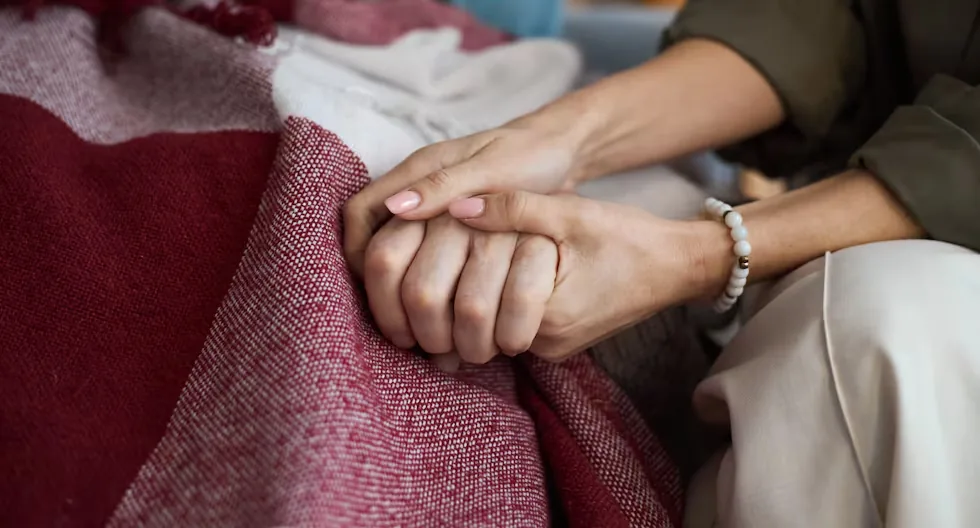
For a long time, death has been a matter that is usually avoided. Hidden in euphemisms, processed in private, and whispered quietly, few give it the importance it deserves. However, alongside the growing interest in mental health, a space is beginning to open to also talk about the inevitable: loss. In this still little-explored field, thanatology appears, a discipline that proposes to accompany grief from a broader, more human, and honest perspective.
“Thanatology is a science dedicated to the study of death and the social and human phenomena that arise from death and loss,” explains doctor and thanatologist Karina Zegarra. In practice, however, thanatology is not limited to accompanying death but to understanding everything that moves around it.
Along those lines, Tiza Martínez, thanatologist, explains the universe of grief: “Grief is any loss that breaks our heart. Anything we deeply love and is no longer there,” she says. Under this logic, thanatology is not limited to the death of a loved one but also includes accompaniment in romantic breakups, moves, life changes, illnesses, or even the loss of a version of oneself.

LOOK: How robots are beginning to sneak into the daily lives of Peruvians
“If you analyze it, life is a set of losses. Because of the changes that occur in different stages, because of growth itself, we are constantly saying goodbye to something,” reflects Zegarra. In that sense, thanatology does not only appear in critical moments but can be a useful tool at any significant stage of life.
Everyday Griefs
One of the most important contributions of this discipline is to broaden the idea of grief. Culturally, we tend to validate it only when it involves a close death. Everything else (a separation, loss of health, a move, for example) tends to be minimized.
“A little visible grief is that of lifestyle change,” points out Zegarra. “Leaving an activity you liked, a career, your home, even losing a pet,” she adds. However, all these experiences involve an emotional rupture that deserves to be attended to, emotions that need to be made visible.
YOU MAY BE INTERESTED: “Mom, what happens when we die?”: How to talk about death with the little ones?
Martínez agrees: “A girl who moves house can feel deep grief, while her older sister may be happy about the situation. And each one experiences situations uniquely.” That individuality is key: there are no correct or comparable griefs. Each process has its own pace, intensity, and expression.
The problem is that, as a society, we still tend to feel uncomfortable facing others’ pain. We try to hurry it, soften it, or even deny it. “Many times the mistake is made of telling the person not to cry, to be strong, to get over it, that time has passed. But grief is not linear; it is cyclical. It can reappear at different times and that is valid,” warns Zegarra.
Martínez also explains it: “Grief is like a wound. If you cut yourself, you give it time to heal. The same should happen with emotional pain. Ignoring or minimizing it does not make it disappear; on the contrary, it can accumulate and reappear in the future. Likewise, another common mistake is to compare: your grief does not have to be the same as your friend’s or family member’s,” she specifies.
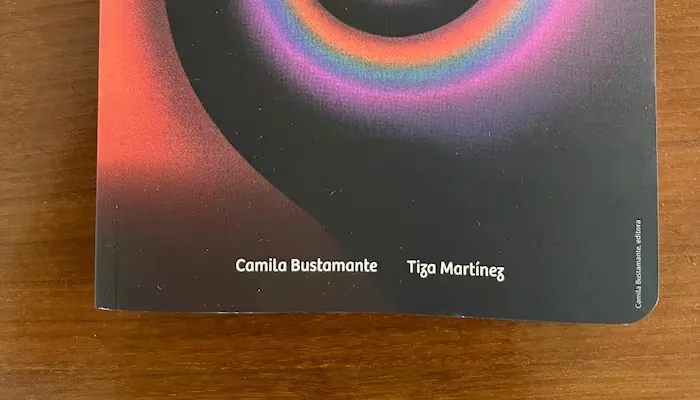
“Pain/color,” the book co-written by Tiza Martínez and designer Camila Bustamante, proposes a different way to go through grief: turning it into an active and creative process. Designed as a practical guide, the book combines information about grief with exercises, meditations, and concrete tools that invite looking inward. “It is a companion so that the person does not feel alone and can understand what they are feeling,” explains Martínez. Through simple dynamics, “Pain/color” (available at El Virrey) seeks to help navigate loss, validate emotions, and, little by little, reconnect with life.
Read more Where to vote? Check your polling place for the second round of the 2026 Elections at LINK
Reconcile with Death
Thanatology offers something that is often missing: a safe space to go through pain without judgment or rush. “What helps is validating the pain, regardless of the type of grief. Providing a space where the person feels heard and accompanied,” explains Zegarra, for those of us who have someone close going through grief and don’t know how to act.
“You don’t have to try to ‘fix’ the pain or eliminate it, but live it,” clarifies Martínez. “In these situations, humans tend to want to solve, but in grief sometimes it is enough to accompany, listen,” she adds.
In the specific situation of facing death (due to terminal illnesses, for example), thanatology accompaniment is not only relevant for those experiencing it firsthand but also for their surroundings, since knowing how to be present in the face of another’s pain can be equally challenging. “The best way to accompany is to be there. Without giving advice, without comparing, without trying to fill the void. Even holding the silence,” points out Martínez.
There is no single right moment to go to a thanatologist. It can be after the death of a loved one, upon a medical diagnosis, after a breakup, or even during personal change processes.
Zegarra points out that the most frequent cases she accompanies are related to deaths and illnesses that imply radical changes in life, such as cancer or autoimmune conditions. But grief from separations, loss of bonds, pets, or significant routine transformations are also common.

Martínez, for her part, insists that you don’t have to wait to “hit rock bottom.” “Seeking accompaniment allows you to go through pain in the best way,” she says. Not to avoid it, but to go through it with greater awareness.
The paradox is evident: we all know death is inevitable, but we act as if it didn’t exist. And in that silence, the possibility of preparing emotionally, closing cycles, and saying what remains pending is lost.
“When we don’t want to see death, we don’t fully embrace life,” reflects Martínez. In that sense, if we reflect enough, thinking about finitude may not be a fear but an impulse to live more consciously. //
- Peruvian scientists stand out in Antarctic expedition: why is researching the white continent so important?
- “My generation is the no-future generation”: Giovanni Ciccia explains why he paused television to return to theater and music
- Is having few friends normal? This is what psychology says about your well-being
- Getting back with your ex? Why some couples succeed… and others repeat the same mistakes
- From “Yo Soy” to the Cavern Club: the incredible journey of the ‘Peruvian Beatles’ who captivated the owner of the bar where the ‘4 from Liverpool’ were born