




![Alberto Beingolea: “If they insist on not giving [the powers], they are complicating life for Peru”](https://insightermedia.com/wp-content/uploads/2026/09/bb3fa9e11304ea13fe2cd333955007bc-150x150.webp "Alberto Beingolea: “If they insist on not giving [the powers], they are complicating life for Peru”")


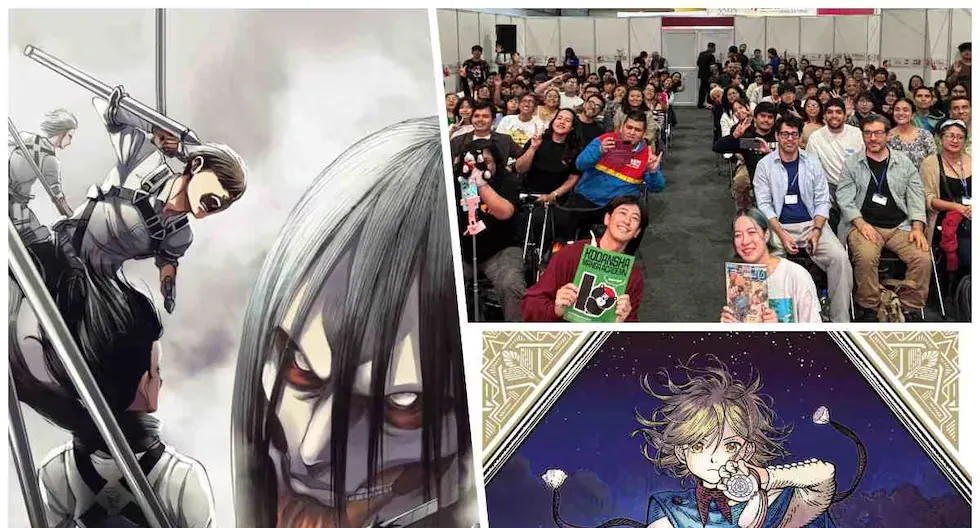
If you grew up watching anime on television or streaming, you may have jumped from there to manga, the comics that mostly inspire these audiovisual productions. They are Japanese comics, which have millions of followers worldwide. Peru is not exempt from this influence; it was enough to see how many FIL Lima stands brought manga. Since Japan knows the world loves manga, besides looking for the next big hits on the island, they look outside.
Yusuke Imamura and Ayane Chiba work for Kodansha, a Japanese publisher that has launched an international program to seek “talents with different experiences.” Both were in Lima in early August, sponsored by the Japan Foundation, and held evaluation sessions at the APJ headquarters in Jesús María, where they spoke directly with aspiring manga creators of various ages.
Global search
“At this moment we are, so to speak, working the ground”, Chiba tells El Comercio through an interpreter. The editor says that in recent years the rise of virtual meetings (Zoom) has made it more accessible to contact authors outside the Asian country. “In case the problems of translations and distance can be overcome, we believe we can find talents who will bring variety to the content,” she maintains.
“We are in an industry where it only takes an atypical, innate talent, a genius, to appear, and a whole movement, an effect, a positive consequence industrially speaking is generated”, Imamura says. “I am very enthusiastic about finding someone, I don’t know from where in the world, this mangaka who can make a difference. This positively affects the next generation of creators,” says the professional, for whom reading manga is as natural as breathing.
From Ibero-America to the world
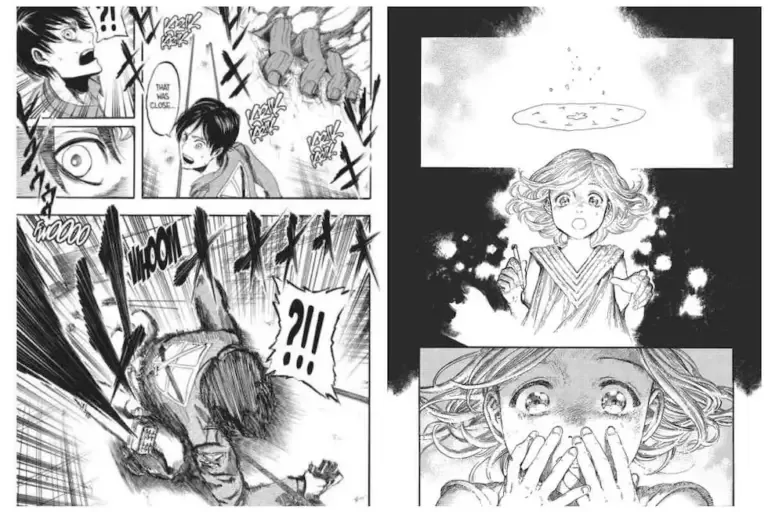
It is worth highlighting that the Kodansha publisher is responsible for successful works such as “Ghost in the Shell” by Masamune Shirow, “Attack on Titan” by Hajime Isayama, and “Witch Hat Atelier” by Kamome Shirahama; the latter two works are among the best-selling not only in their country of origin but worldwide. The case of “Attack on Titan” is striking because its author was a beginner in drawing when serialization began, which did not prevent it from selling more than 130 million copies over 11 years.
How can one enter the Japanese industry? The publisher launched Kodansha Manga Academy, an English website that shows, step by step, how to become a mangaka (comic creator) and publish in Japan from anywhere in the world. It is not a portal to learn how to draw. It is a guide on how this industry works where the author is at the center.
Read more Magnitude 4.8 earthquake recorded in Lurín, according to the IGP report
There are already foreign creators working in Japan. This is the case with Juan Albarrán, illustrator of the series “Matagi Gunner.” It also happened with other publishers, such as Shueisha, which published “Dr. Stone” with art by Korean Boichi. Time to dust off the pencils, the next success won’t draw itself.
At the end of the interview, this writer asked the editors the following: “I was reading an interview with Hiromu Arakawa [author of “Fullmetal Alchemist”] and she said that the mangaka needs a balance between work and rest. Is the Japanese industry currently prepared to look after the mental health of its artists?” Chiba: “I would say no.” What the editor said was immediate, almost a reflex action. Later, both talked about the steps being taken in the Asian country so that artists better take care of their health.
There are authors who have openly talked about their work schedules; for example, Eiichiro Oda, creator of “One Piece” [Shueisha publisher], said that at one point he only slept three hours a day. The rest of the time he dedicated to creating the work that has sold more than 600 million copies worldwide. Oda used to publish weekly without fail; things have changed for him: now it is more common that, after a few chapters, he takes a week off.
Imamura tells this newspaper that now that digital platforms serve to spread manga and paper no longer is the only medium, there is “some flexibility to manage deadlines,” and for about five years there have been publishers recommending health care for editors and mangakas, covering related expenses. Chiba, for her part, says that in her country things are done differently. “Working in Japan can be difficult or hard, but editors, companies, are trying to improve the work environment for everyone to make it more bearable. Being able to work and complete those tasks and deadlines that exist.”
Read more Barça Play free today: who broadcasts Barcelona vs Al Ahly for the 2026 Joan Gamper Trophy
- “The Prince of Tennis 477”: How did the manga end after 27 years?
- The “Hunter x Hunter” manga returns: confirmed date for chapter 411
- “Saint Seiya: Tenkai-Hen” Manga: Complete Chapter 2 of the Heaven Saga
- George Morikawa, creator of “Hajime no Ippo,” hospitalized and the manga goes on hiatus
- The new season of a legendary Netflix series reaches almost 20 million views in 4 days: what it is and how to watch it