




![Alberto Beingolea: “If they insist on not giving [the powers], they are complicating life for Peru”](https://insightermedia.com/wp-content/uploads/2026/09/bb3fa9e11304ea13fe2cd333955007bc-150x150.webp "Alberto Beingolea: “If they insist on not giving [the powers], they are complicating life for Peru”")


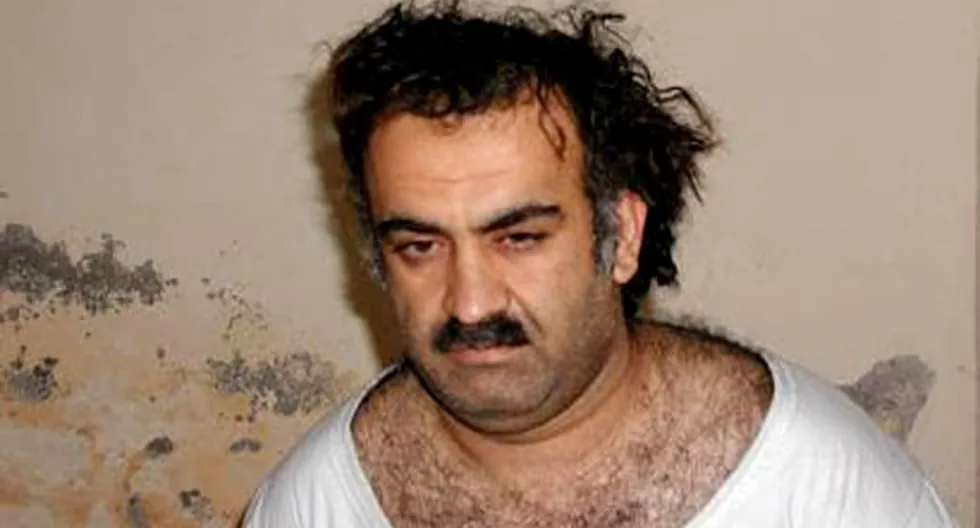
The prosecution had requested that the trial be held in January 2027. However, Air Force Lieutenant Colonel Michael A. Schrama said in a filing that the additional 18 months are necessary to resolve pre-trial disputes, including disagreements over what evidence can be presented.
The other two accused are Walid bin Attash and Mustafa al Hawsawi. The first is a Saudi-Yemeni citizen and member of Al Qaeda who is accused of participating in the planning of the attacks and carrying out intelligence tasks to prepare the operation. The second is Saudi and is accused of being a financial and logistical facilitator who helped some of the terrorists responsible for 9/11.
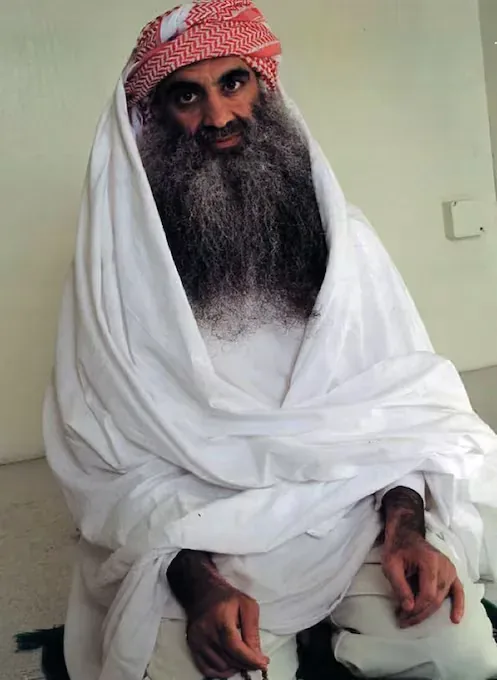
Mohammed was arrested on March 1, 2003, in Pakistan and transferred to a network of secret CIA facilities, including one located in Poland, where he remained in clandestine custody for three years before being sent to Guantánamo in 2006. During his initial captivity, he was subjected to torture, including interrogation techniques such as simulated drowning or waterboarding.
These practices are among the reasons why the admissibility of evidence became one of the main obstacles to the start of the trial, notes El Comercio’s Francesco Tucci, director of the Communication and Journalism program at the Peruvian University of Applied Sciences (UPC).
“The accused passed through secret CIA centers before being transferred to Guantánamo and were subjected to interrogation methods that have been denounced as torture. This caused evidence contamination and sparked a years-long legal battle to determine which evidence could be admitted and which had to be discarded for violating U.S. law”, he says.
Tucci adds that this is compounded by the particular system created to try detainees from Guantánamo. Instead of bringing them before ordinary federal courts, the United States established military commissions.
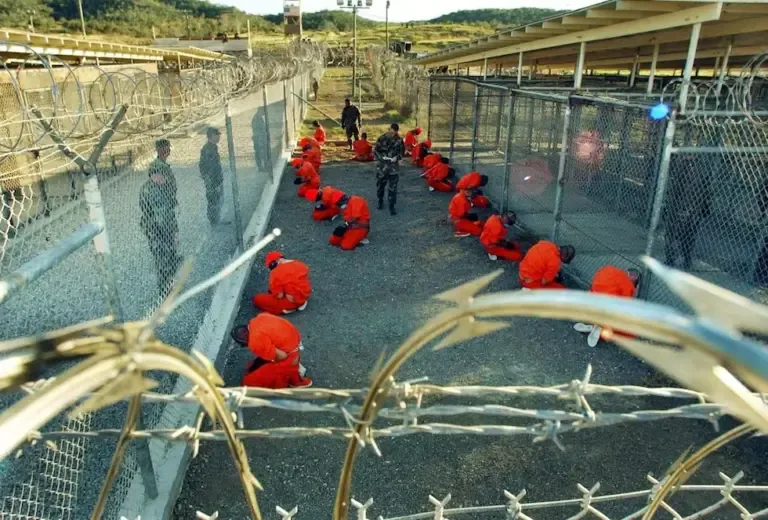
For Tucci, the successive changes to the rules on military commissions by Congress, and Supreme Court decisions declaring some provisions unconstitutional, ended up creating a complex legal scenario.
“There was a tangle related to the system for trying these terrorists and alleged terrorists”, summarizes the analyst.
Another factor complicating the process was negotiations to reach a plea agreement. In 2024, Mohammed and other defendants agreed to plead guilty in exchange for avoiding the death penalty and receiving life imprisonment. However, the agreement was later revoked by then-President Joe Biden, so the possibility of a death sentence remains on the table.
Tucci indicates that the logistical dimension of the process will be a huge challenge, as it requires civilian and military lawyers, prosecutors, judges, translators, and witnesses, factors that make organizing hearings in Guantánamo difficult.
He adds that there is another less visible obstacle: the enormous amount of classified information related to the case. “There are millions of pagesof secret documents that must be reviewed, which has slowed the exchange of information between the prosecution and the defense.”
Why don’t they take them to the United States?
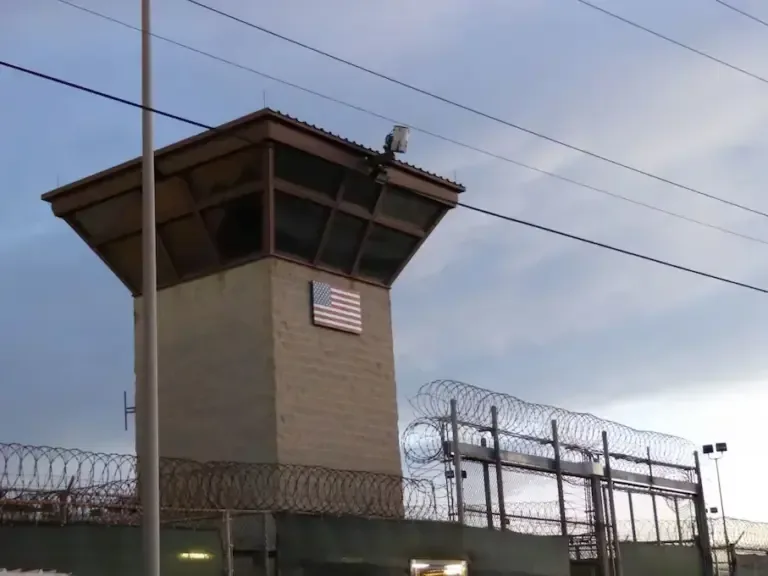
Tucci argues that transferring the accused to the U.S. mainland to subject them to a federal court would have created a complex legal problem. The decision to keep them in Guantánamo was due to the intention to create a space different from federal courts, which might not endorse certain practices.
The reason? “Their detention was in a gray area. They spent years imprisoned without charges,” he specifies.
The analyst emphasizes that Guantánamo is a “black hole of law”, both from the U.S. and international perspectives, and considers that this condition was deliberately sought from the establishment of the detention center during George W. Bush’s administration.
“No one has closed Guantánamo, neither Barack Obama, who promised it, nor Joe Biden”, Tucci states.
The specialist also questions the contradiction between the role of the United States as a critic of human rights violations in other countries and the existence of Guantánamo. “It’s called double standards”, he says.
The analyst argues that this is not a new phenomenon and recalls that during the Cold War Washington supported or tolerated allied governments accused of serious human rights violations. For Tucci, U.S. foreign policy is often conditioned by its strategic interests.
“When it suits the United States, human rights are not in the top three priorities”, he states.
He refers that the case of Guantánamo is precisely an example of this tension between the U.S. discourse of defending human rights and the decisions made when security interests and its power policy are at stake.
How were the 9/11 attacks and what was Mohammed’s role?
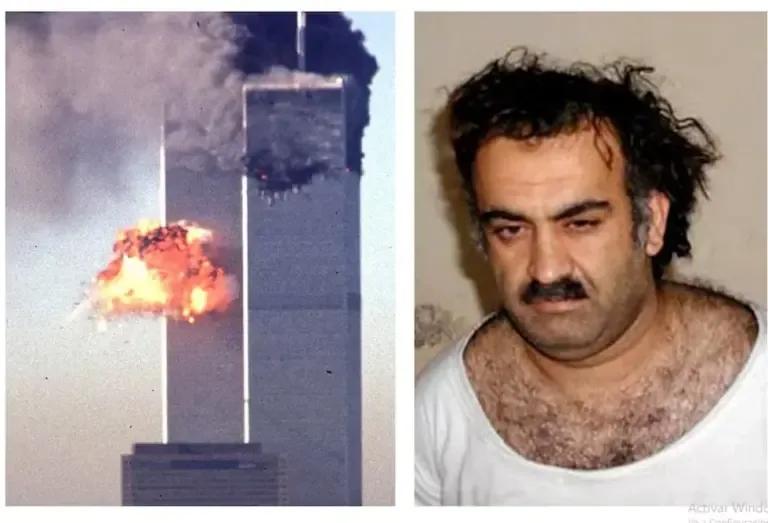
On the morning of September 11, 2001, two passenger planes hijacked by Al Qaeda terrorists crashed into the World Trade Center Twin Towers in New York, marking the start of a series of coordinated attacks that day against the United States. Then, another plane was directed at the Pentagon and the fourth crashed in a field in Pennsylvania. Nearly 3,000 people died that day and thousands more were injured.
Initially, the intellectual authorship of the attacks was attributed to Osama Bin Laden, the Saudi terrorist leader of Al Qaeda. However, it was later known that he was the financier of the operation and authorized the attacks, but the mastermind was really Khalid Sheikh Mohammed.
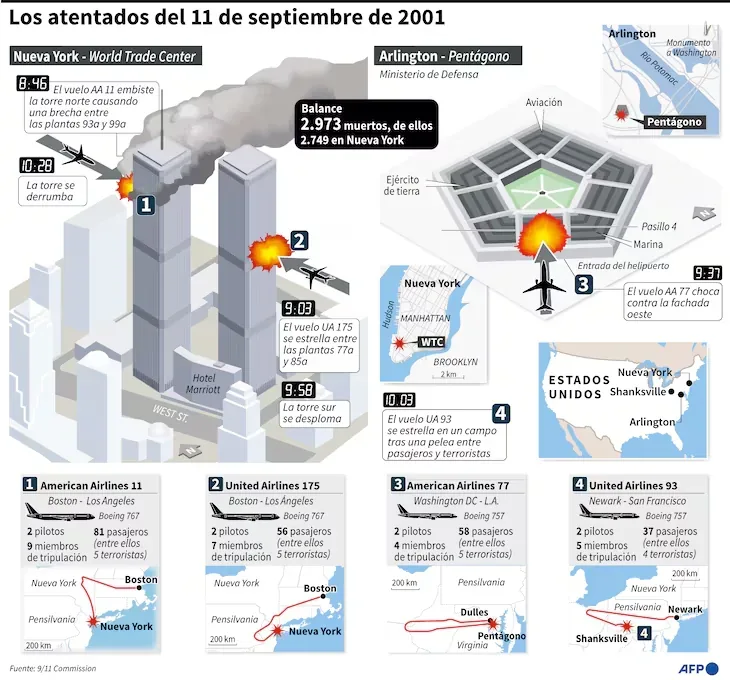
The report of the 9/11 Commission, an independent and bipartisan body created by U.S. Congress law, says that Mohammed was a “contract terrorist” who had the motivation and ideas for the attacks, but not the financing or logistics needed to carry them out.
Khalid Sheikh Mohammed was born on March 1, 1964, in Kuwait. He is of Baluchi origin and his parents came from Pakistan.
He spent much of his childhood in his country and later studied in the United States: in 1986 he obtained a degree in mechanical engineering from North Carolina Agricultural and Technical State University (NC A&T), in Greensboro, North Carolina.
According to the 9/11 Commission, Mohammed and Bin Laden met in Afghanistan during the war against the Soviet Union in the 1980s.
They met again in mid-1996 in Tora Bora, Afghanistan. Mohammed had returned to that country after fleeing Qatar.
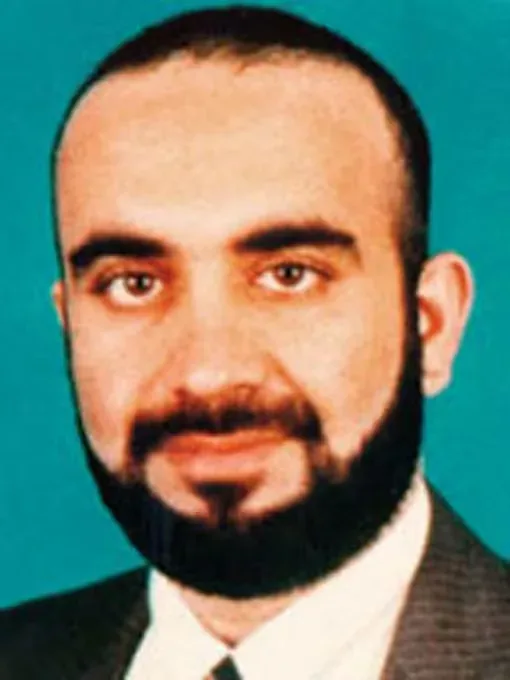
Through Mohammed Atef, then military chief of Al Qaeda, he managed to meet Bin Laden. There he presented several proposals for attacks against U.S. interests, including the idea of hijacking 12 U.S. planes departing from the Middle East to blow them up.
That idea evolved into the 9/11 plan, which was to use planes as weapons to attack buildings on U.S. soil.
After being captured in Rawalpindi, Pakistan, in 2003, Mohammed was taken by the CIA to secret prisons in Poland for interrogation. Within a month, he was subjected to simulated drowning 183 times.
He was also tortured through sleep deprivation and painful positions.
According to a U.S. Senate investigation, all his confessions under torture turned out to be false.
However, after his transfer to Guantánamo in September 2006, he confessed to a military tribunal that he was “responsible for the September 11 operation from A to Z”, according to an AFP agency report.
He also said he was behind another thirty operations related to Al Qaeda in Bali and Kenya, as well as the kidnapping and death of American journalist Daniel Pearl, which occurred in February 2002 in Pakistan.