




![Alberto Beingolea: “If they insist on not giving [the powers], they are complicating life for Peru”](https://insightermedia.com/wp-content/uploads/2026/09/bb3fa9e11304ea13fe2cd333955007bc-150x150.webp "Alberto Beingolea: “If they insist on not giving [the powers], they are complicating life for Peru”")
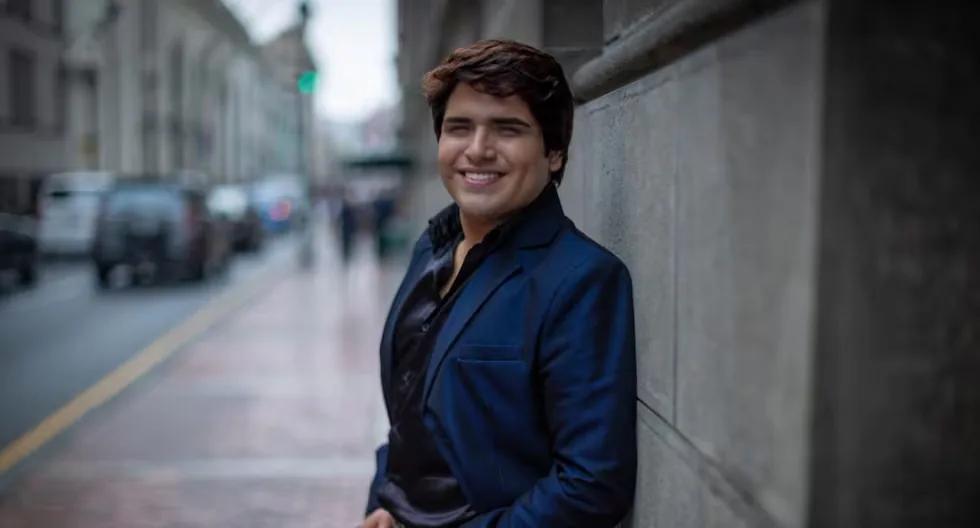
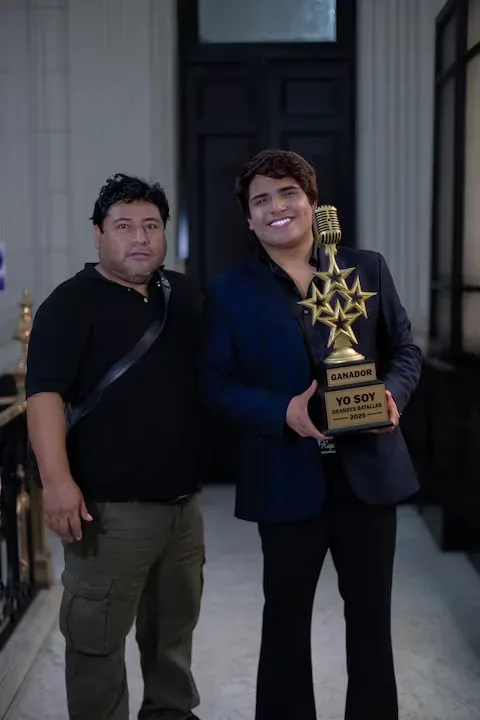
Before hearing his name as the winner of “Yo Soy: Grandes Batallas”, Josué Rivaldo Quispe awaited the result embraced by the Pedro Infante impersonator. The euphoria had not yet reached him. In his mind, rather, the possibility of an old scene repeated itself: another final, the same rival beside him, the same lump in his throat, and the feeling that second place could await him again. But this time he won. And while the set erupted in applause, he only wanted to see his parents. He searched for them with his eyes in the stands and saw them crying with happiness. “I never imagined I could win,” he admits.
His victory was not a stroke of luck. It came after an absorbing, exhausting, and emotionally tough process. The show, he says, took away entire hours with his son Bastian, who is barely two and a half years old.
“I lost very valuable things by being in the contest, like accompanying my son in such an important stage, right now that he is going to nursery. But I know that when he grows up, he will feel very proud. And it is also for him that I do all this,” he reflects.
That effort was not only emotional. It also took a toll on his body. In the final stretch, he sang while being sick. The show thought he had overstrained his throat, but that was not the case.
“Actually, I am in delicate health,” he explains. “My little son caught a cough and flu at nursery and ended up infecting me. These days I have had a fever, I am completely unwell. But, as I always say, the audience at home does not have to know. The show must go on,” he points out.
The pressure did not come only from the body. It also came from the jury, from the criticisms, and from that persistent feeling of not being fully understood. They told him that his imitation of Raphael seemed like a parody, that it was exaggerated, histrionic, that he overacted and overflowed on stage. And although today he recognizes that those comments ended up helping him improve, there were moments when they broke him. More than once he thought about quitting. He even talked to production about not returning to “Grandes Batallas.”
“Yes, I thought about quitting several times. I came in with very high expectations and wanted to feel that I was doing well, that the jury noticed it. But their comments were always very strict with me and that affected me a lot. At the time I was frustrated because I felt I was giving everything and didn’t understand why it wasn’t enough. Later I understood that, although they hurt me, they also helped me grow,” he recalls.
Musical origin
His story with music began long before the spotlights. As a child, he sang Creole music, cumbia, and salsa at school. Then came the first imitations of Nino Bravo, Camilo Sesto, and José José, that music he calls “of memory.”
“My parents told me to do more commercial, more danceable music, but I didn’t want to. And look, who would have thought I would end up making a living with what I really like,” he says with a smile.
His first time on “Yo Soy” was as José José. He came to Raphael later, by intuition, but also by stubbornness. When the pandemic broke out, the shows fell through and life became uncertain. Later, when the possibility of returning to the Latina show arose, he already had his son and a greater burden on his shoulders. But there was something he was clear about: he wanted to return. What he still didn’t know was with which character. So he sent his video as Raphael. They rejected him twice. He insisted. He went to the in-person casting. “I have nothing to lose,” he thought. And that time they accepted him.
Playing Raphael was not a comfortable choice. It was perhaps one of the most difficult. Not only because of the voice but because of the weight of the character, the history, the gestures, and the controlled excess of an artist who seems to exist fully on stage.
Read more T’aqrachullo: Why did this gigantic completo remain off the radar for so long?
Josué not only had to study him, he had to get into his skin. He prepared for half a year with absolute discipline, slept little, and obsessively polished every detail: the hands, the gaze, the Spanish accent, and that unique way of inhabiting each song.
“The hardest part was carrying the weight of an artist like Raphael,” he explains. “His music, like that of José José or those great singers of the past, will endure through all generations. And achieving that transcendence is something very few accomplish. Raphael, being one of them, is one of the most complicated artists I have had to portray,” he assures.
It was not just about reaching his vocal range. The real challenge, he says, was in his intensity. “Beyond his vocal quality, which no one disputes, Raphael is a monster in the best sense of the word. There is his interpretation, his histrionics, those crazinesses he manages on stage. In many interviews, he himself says he doesn’t act, that he is like that. And that was what cost me the most: I acted like him, but I still didn’t interpret him from a place more my own, closer to what Josué would do.”
Real bond
That meticulous work not only gave him a solid character on stage. It also gave him his own audience. Today Josué no longer sings just to convince a jury or hold a gala. He has a small community that follows him, defends him, and celebrates every step he takes. They call themselves Las Loquillas, a fan club that was born in his first season on “Yo Soy,” when a group of girls began to track every detail about him with almost detective enthusiasm.
“They took out my date and place of birth, my birth certificate… like the FBI,” he recalls with laughter. The name appeared one night, in a TikTok live. One of them dropped the phrase and he made it his own. Since then, the group has not stopped growing. Today it has about 600 people.
READ MORE: “Yo Soy Grandes Batallas”: Raphael impersonator crowned season champion
That affection also feeds another dream, a more intimate and old one: to meet Raphael. He has never been to one of his concerts, but that could change soon. The renowned Spanish singer will return to Lima on October 3, at the Parque de la Exposición, and Josué already imagines that moment.
“I would like to see him, greet him, thank him, tell him that without his music I would not have been able to build anything of what I live today. And if I could sing with him, on stage, it would be a luxury, very beautiful, a dream come true,” he confesses.
While that day arrives, life keeps moving at full speed. Besides the trophy, Josué received 20 thousand soles as a prize for his victory, but he does not plan to touch them yet. He prefers to leave them untouched, as a silent reserve, while he focuses on what he really enjoys: the reunion with the audience. There, he says, he relaxes. There he truly feels the thermometer of affection.
“The audience applauds you, tells you: ‘Raphael, what beautiful songs,’ and that helps me a lot to de-stress as well,” he says.
But beyond the imitation, Josué is already starting to look toward another horizon. He will continue performing alongside Pedro Infante, with whom he already had several shows scheduled even before “Grandes Batallas”. Now he wants to make the most of this victory, enjoy it, and let it mature. And then yes, show the singer behind the character. “Josué Rivaldo as a solo artist is also coming,” he emphasizes with emotion.
Read more 1926: Police information