




![Alberto Beingolea: “If they insist on not giving [the powers], they are complicating life for Peru”](https://insightermedia.com/wp-content/uploads/2026/09/bb3fa9e11304ea13fe2cd333955007bc-150x150.webp "Alberto Beingolea: “If they insist on not giving [the powers], they are complicating life for Peru”")


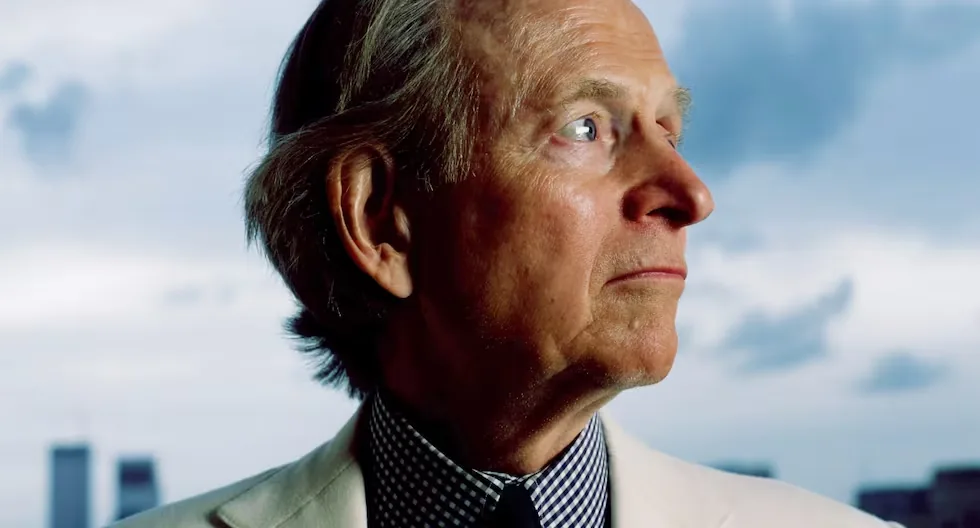
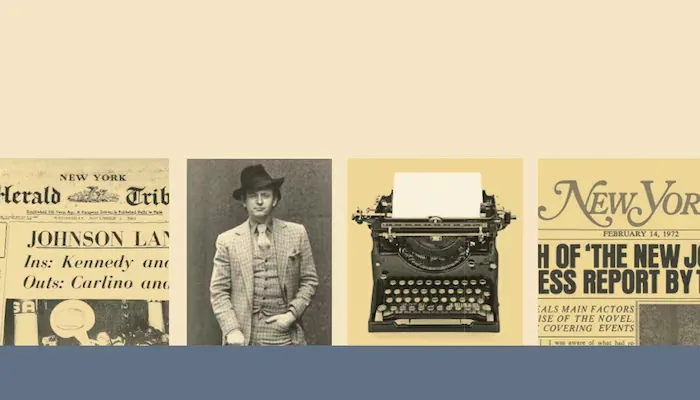
Impeccable in his three-piece white suit and starched collar shirt, the man considered the father of new journalism never believed in responsible fatherhood. He never felt like a cultural reference of the second half of the 20th century, and rather declared war on those who thought they were: Norman Mailer, for example.
Read more Spider-Man by profession: the surprising stories of Peruvians who put on the spider mask
LOOK: The first two-wheeled accident in Lima and other chaotic stories from the first cycling ‘boom’ in Peru
Despite being born in Richmond, Virginia, in 1930, Tom Wolfe could be considered part of New York’s urban furniture, the city where he lived since 1962, when he started working at the “New York Herald Tribune,” a newspaper where he made a name for himself in literary journalism and journalistic novel. He insisted that the only way to tell a good story was to go out and report it, cultivating a freedom always supported by Clay Felker, the director of that newspaper, who always encouraged his reporters to go beyond objective journalism. It was then that Wolfe, along with authors like Truman Capote or Gay Talese, contributed to the creation of a hybrid style that broke with conventional ways of narrating news. Called new journalism, this movement sought to tell reality through the richness of literature, with narrative techniques typical of fiction, but always respecting the rigor of the facts.
In 1973, Wolfe decided to make immediate memory and account for the phenomenon, writing an ironic manifesto that would serve as a subjective theoretical framework for an anthology in which he gathered what, in his reading, represented the best pens of the movement. The topics are extremely diverse, ranging from something as frivolous as rhythmic gymnastics competitions with a baton – described by Terry Southern – to something as serious as the Vietnam War – narrated by Nicholas Tomalin. The texts stand out because they do not conform to the standard model of impartial and objective journalism; instead, they incorporate literary resources present in works of fiction.
Wolfe’s reflection that heads “New Journalism” is a diatribe against the American novel, which he considers has reached a dead end by moving away from the realism that made it shine in the 1930s. He believes that, since the late 1950s, journalism became much more relevant to account for the country’s reality and that, for this, it had been nourished by the techniques of the great realist masters of the 19th century: from Émile Zola to Charles Dickens, passing through Gogol and Smollett. In his analysis, Wolfe pointed out four decisive technical aspects: scene-by-scene construction; the recreation of realistic dialogue; narration from the third person; and, finally, attention to environmental detail.
Interpreting the world
By writing his furious chronicles about pop culture, addressing topics such as power, racism, corruption, and sex, Wolfe earned a reputation as a progressive author. Two decades later, that same audience decided to consider him a conservative by unmasking the intellectual imposture of the left in his country. In magazines like “The New Yorker,” “Esquire,” or “Harper’s Bazaar,” he wrote against political correctness and vindicated realism as an aesthetic, just as his beloved Honoré de Balzac and Émile Zola did in 19th-century France. Likewise, he ridiculed his colleagues’ reluctance to confront social problems and warned that both self-absorption and academic circles would kill the novel. He was amazed that no author of his generation had written a great realist novel about New York, and he ended up doing it himself in his ambitious “The Bonfire of the Vanities.”
Too literary for journalists and too journalistic for literati, Wolfe was both a literary upstart who scorned the formality of the establishment and a gentleman from the best schools. Beyond any label, his was the most lucid nonconformity.
Read more Businessman shot a criminal during an attempted robbery on Av. Universitaria
“New Journalism”
Author: Tom Wolfe
Publisher: Anagrama
Year: 2026
Pages: 224