





![Alberto Beingolea: “If they insist on not giving [the powers], they are complicating life for Peru”](https://insightermedia.com/wp-content/uploads/2026/09/bb3fa9e11304ea13fe2cd333955007bc-150x150.webp "Alberto Beingolea: “If they insist on not giving [the powers], they are complicating life for Peru”")



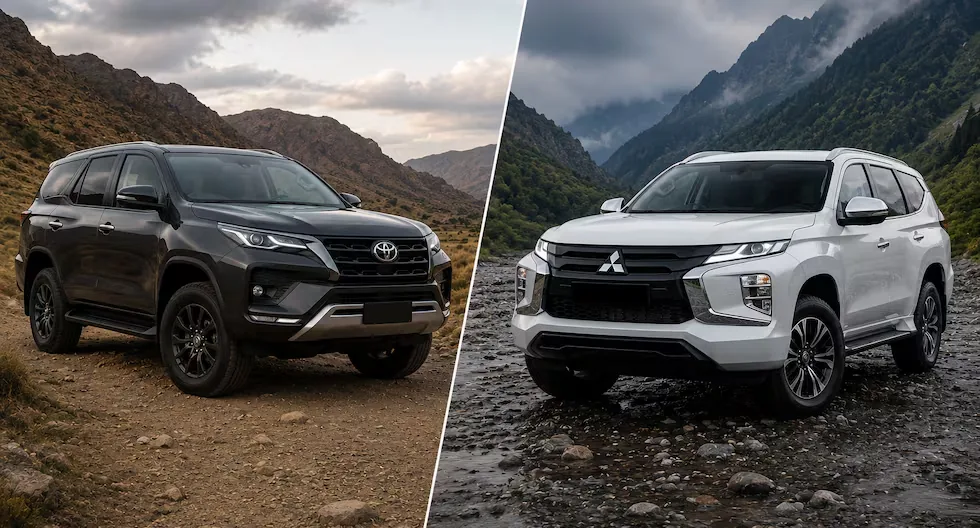
Choosing a three-row SUV with off-road capability is not an easy decision, especially when it comes to two models with a long history and a strong presence in the Peruvian market. The Toyota Fortuner 2.8 Adventure D-Lux 4×4 AT and the Mitsubishi Montero Sport 4×4 2.4 HP TDI GLS A/T share a familiar formula: turbo diesel engine, seven passengers, automatic transmission, and 4×4 traction. However, their proposals have important differences.
Read more La Caribeña Live Draw: Results for Today, Thursday, August 20
The Fortuner bets on more power, torque, and ground clearance, as well as a reputation built around durability and resale value. The Montero Sport, on the other hand, seeks to differentiate itself through an eight-speed transmission, a Super Select 4WD-II traction system, and a higher level of electronic driving aids.
ALSO READ: It’s not a Ferrari or a Lamborghini: what is the imposing 682 HP SUV that Lionel Messi drives in Miami like?
The question, then, is not only which has the best technical sheet. It is which SUV responds better to the different conditions a driver may encounter in Peru.
Toyota Fortuner vs. Mitsubishi Montero Sport: main differences
| Engine | 2.8 L Turbo Diesel 1GD-FTV | 2.4 L MIVEC Turbo Diesel 4N15 |
| Power | 201.2 hp | 178.5 hp |
| Torque | 500 nm | 430 nm |
| Transmission | 6-speed automatic | 8-speed automatic |
| Traction | 4WD H2, H4 and L4 | Super Select 4WD-II: 2H, 4H, 4HLc and 4LLc |
| Front suspension | Double wishbone | Double wishbone |
| Rear suspension | Four Link | Three-link system |
| Ground clearance | 279 mm | 218 mm |
| Approach angle | 29° | 30° |
| Departure angle | 25° | 24.2° |
| Tires | 265/60 R18 | 265/60 R18 |
| Passengers | 7 | 7 |
| Airbags | 7 | 7 |
| Warranty | 5 years/150,000 km | 5 years/100,000 km |
Engine: more power for the Fortuner
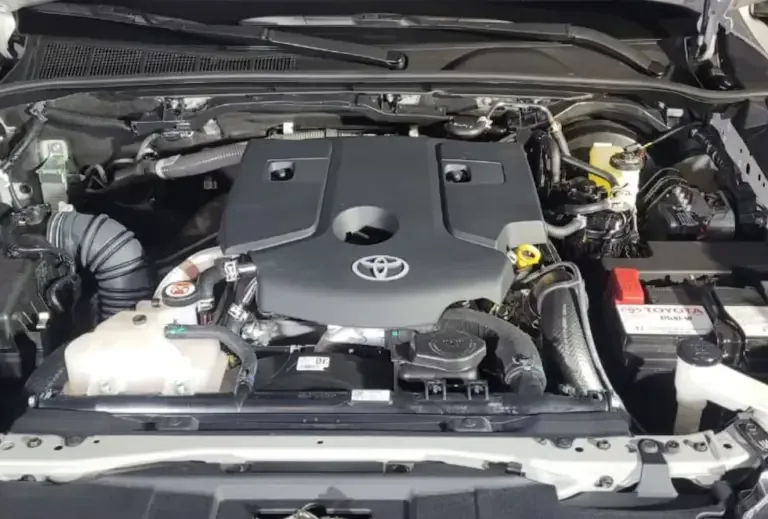
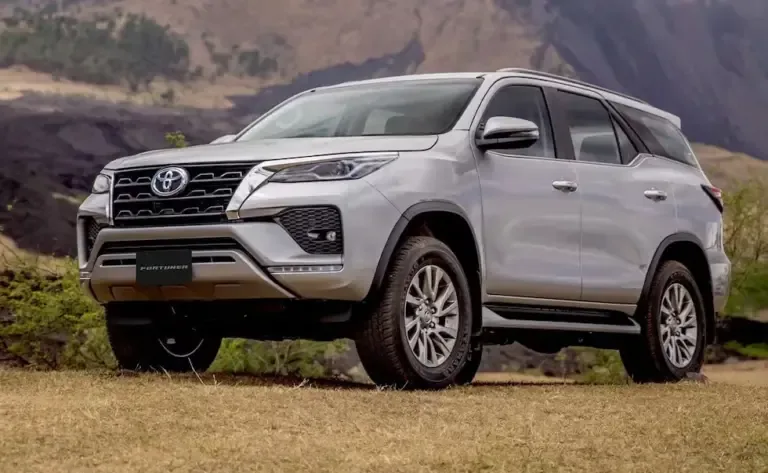
In the mechanical section, the advantage of Toyota is evident. The Fortuner uses the well-known 2.8-liter 1GD-FTV turbo diesel engine, capable of developing 201.2 hp and 500 nm of torque, the latter available from low revs.
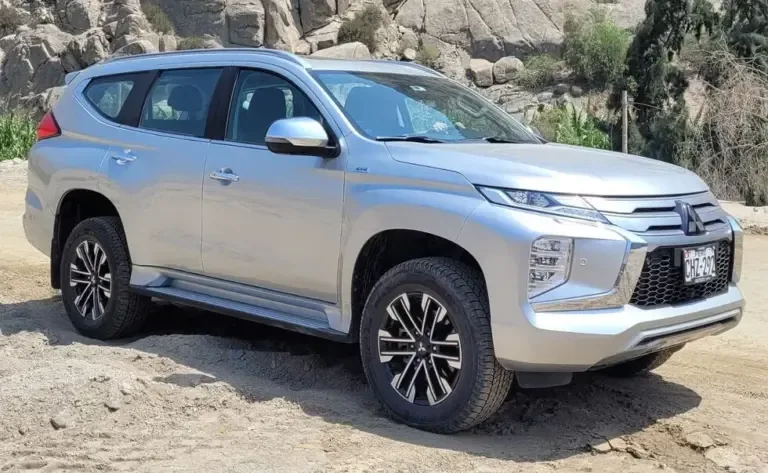
The Montero Sport uses a 2.4-liter 4N15 turbo diesel engine, with 178.5 hp and 430 nm of torque. Although its figures are lower, it does not mean it is a slow or incapable vehicle. On the contrary, the engine response is adequate for both urban use and interprovincial trips.
The difference becomes more evident when the vehicle is loaded with passengers and luggage, especially when facing steep slopes. In those circumstances, the Fortuner’s 500 nm provide a greater power reserve for overtaking, climbing slopes, or tackling mountain roads.
Mitsubishi’s advantage appears in the transmission. Its eight-speed automatic gearbox allows better gear staging and keeps the engine in a more appropriate operating range. The Fortuner uses a six-speed automatic, a simpler configuration but also proven in different usage conditions.
On the road: two ways to understand comfort
On the road, the Montero Sport offers a ride more oriented to comfort. The eight-speed gearbox allows the engine to work progressively and relaxed during long trips. This is a feature that can be especially appreciated on journeys along the Panamericana or during interprovincial trips.
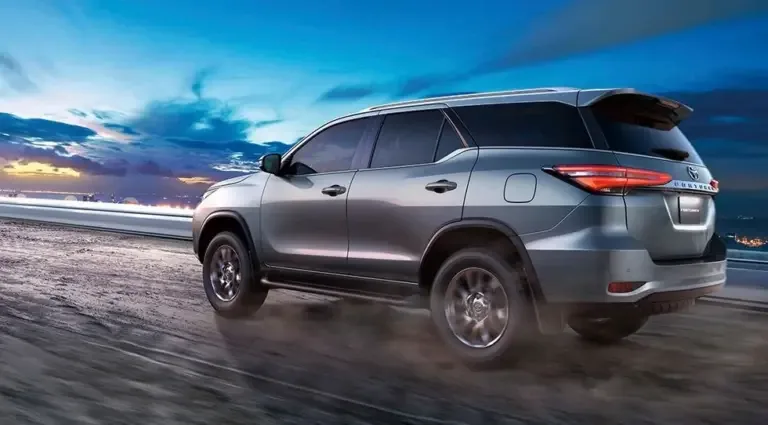
In contrast, the Fortuner conveys a more robust feeling. Its engine delivers a strong response when acceleration is needed, and its tuning prioritizes stability and control. At highway speeds, it feels like a firm vehicle, especially when driving with a load.
The difference also appears in the suspensions. Both use double wishbone in the front axle, while the rear uses different configurations. The Fortuner employs a Four Link setup, while the Montero Sport uses a three-link system.
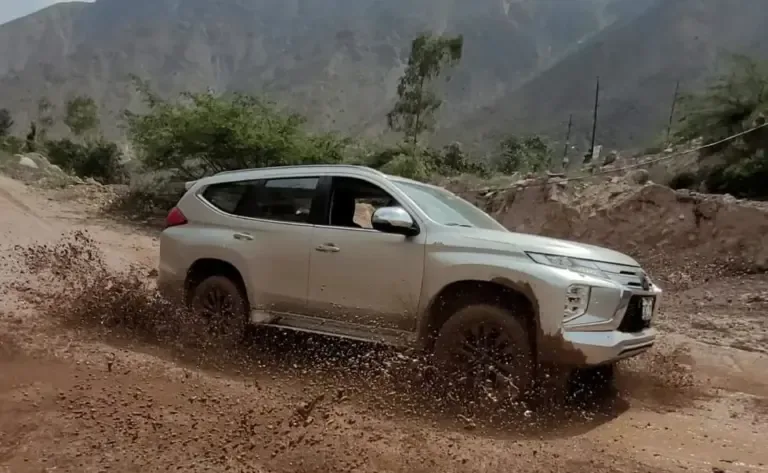
In general terms, the Mitsubishi may be more comfortable on rough surfaces and tracks with irregularities, while the Toyota conveys a feeling of greater solidity when the vehicle is pushed.
Off-road: the Fortuner has more height, the Montero a more versatile 4×4 system
This is probably the section where the comparison becomes most interesting. The Fortuner has 279 mm of ground clearance, a figure considerably higher than the 218 mm of the Montero Sport. That 61 mm difference can be decisive when encountering rocks, ditches, unevenness, or especially deteriorated roads.
Toyota uses a 4WD system with H2, H4, and L4 positions, as well as electronic rear differential lock and traction control systems. Its higher ground clearance and 29° approach angle allow it to overcome obstacles with greater margin.
Mitsubishi responds with one of its main arguments: the Super Select 4WD-II. This system offers 2H, 4H, 4HLc, and 4LLc positions, allowing different configurations depending on the surface.
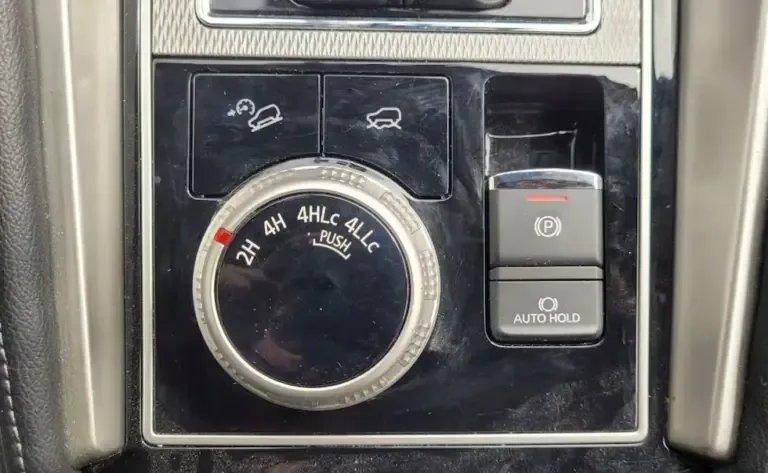
One of its advantages is the possibility of using all-wheel drive in certain asphalt and low-traction surface conditions, without being limited exclusively to off-road terrain. On wet, gravel, or constantly changing traction roads, this versatility can be especially useful.
Therefore, both have different arguments. The Montero Sport offers greater versatility in traction management, while the Fortuner has an important physical advantage thanks to its ground clearance.
On a severe dirt road with high obstacles, the Toyota’s height can make the difference. On the other hand, for those who combine paved roads with low-traction paths, Mitsubishi’s Super Select 4WD-II offers a more flexible alternative.
Load and work capacity
Both SUVs come from a formula oriented to withstand demanding use and can carry up to seven occupants. However, the Fortuner takes the lead again when the use approaches heavy work.
Its 2.8 engine and higher available torque allow moving the vehicle more easily when loaded. Added to this is the robustness of its platform and a clearance that favors travel on work roads.
Read more Trump threatens to bomb Oman out of desperation over his inability to control Hormuz, warns analyst
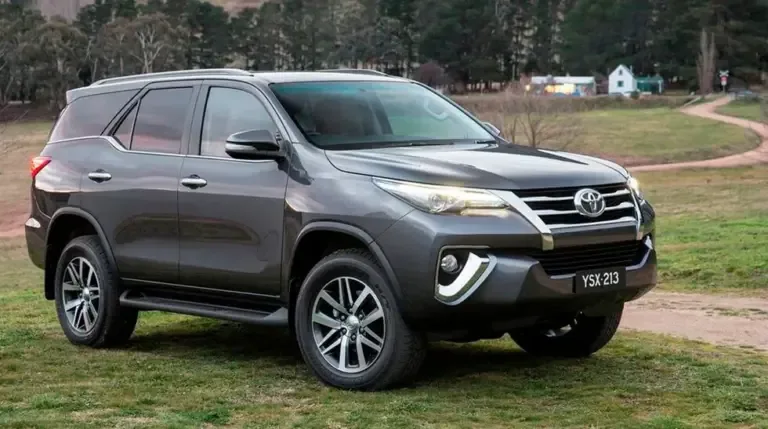
This can be relevant for users who travel with tools, equipment, or large amounts of luggage, as well as for those who use the vehicle to travel to rural, mining, or hard-to-reach areas.
The Montero Sport is not excluded from this scenario either. Its ladder frame construction and 4×4 system make it a capable alternative for demanding trips. Its orientation, however, seems somewhat more balanced between family use and off-road outings.
Interior: functionality versus technology
Inside the cabin, both models offer three rows and capacity for seven occupants. The third row is more suitable for children or adults on short trips, something common in this segment.
The Fortuner Adventure D-Lux incorporates a 9-inch multimedia screen, wireless Android Auto and Apple CarPlay compatibility, dual-zone climate control, rear seat air vents, wireless charger, and an electric tailgate with Kick Open function, among other features.
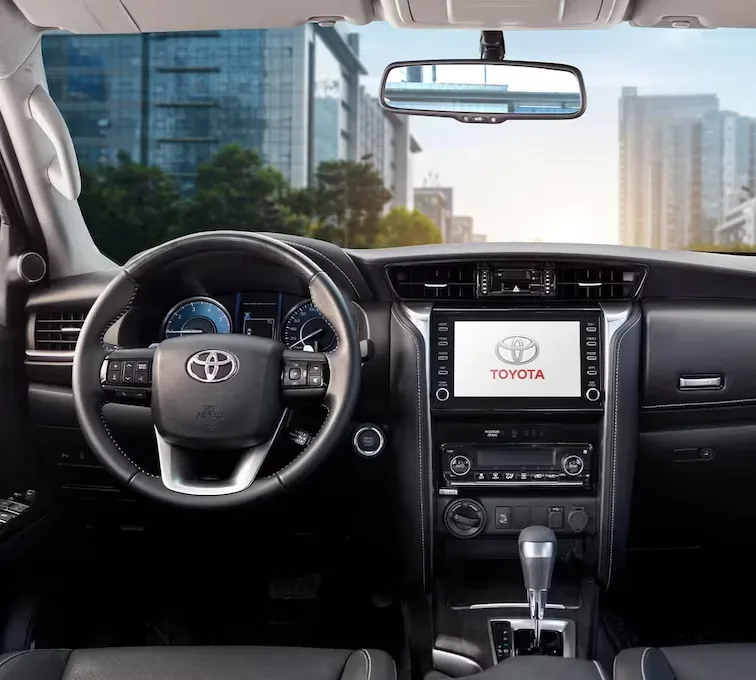
Its interior maintains a functional orientation, consistent with the model’s general philosophy. The Montero Sport, on the other hand, opts for a somewhat more technological presentation. It features an 8-inch multimedia screen, 360° camera, 8-inch information panel, keyless entry and start, and electric sunroof, depending on the version’s equipment.
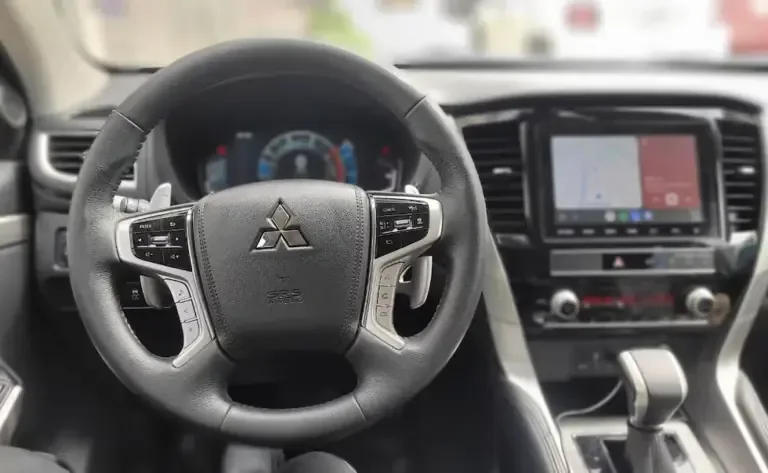
The third-row configuration, which can be folded to expand the available luggage space, also stands out.
Safety: Mitsubishi’s technological advantage
Both models have seven airbags, electronic stability and traction controls, ABS, and hill assist. The Fortuner includes, among other systems, downhill control, hill start assist, active traction control, and trailer sway control.
The Montero Sport adds a broader set of electronic aids in this version, including autonomous emergency braking, blind spot alert, rear cross-traffic alert, and lane change-related assists.
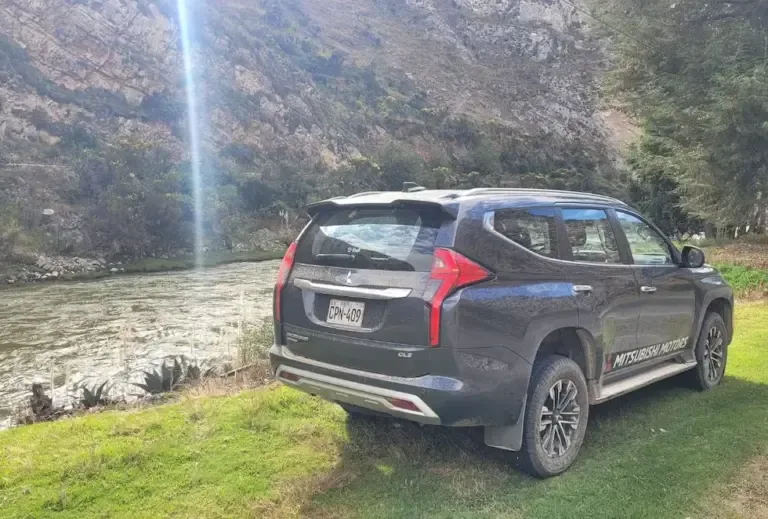
Therefore, although both comply with an important safety equipment, Mitsubishi has an advantage when specifically analyzing the level of advanced driving aids.
Price, warranty, and resale value
The Toyota Fortuner Adventure D-Lux positions itself as one of the most equipped versions of the range and its price in Peru is around US$70,000, while the Montero Sport GLS seeks to compete with an equipment and technology proposal that may be more attractive to certain buyers. The Montero Sport 4×4 2.4 HP TDI GLS A/T, on the other hand, is offered at approximately US$65,000.
Another point to consider is the warranty. Toyota offers five years or 150,000 kilometers, while Mitsubishi establishes five years or 100,000 kilometers.
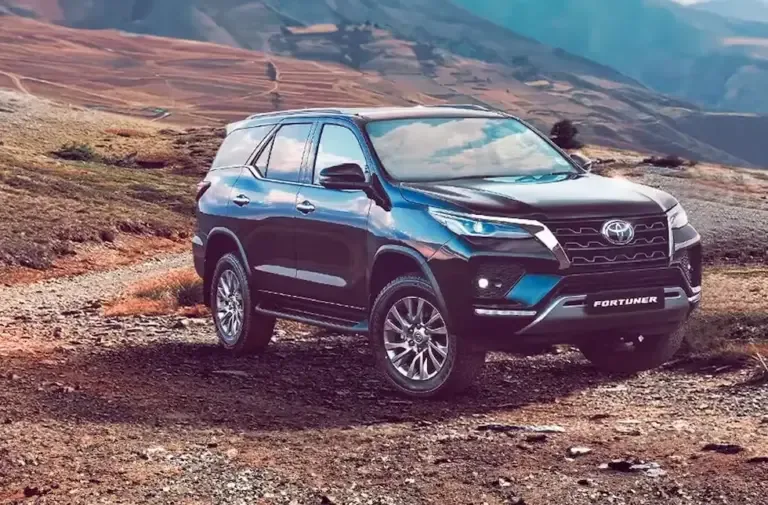
Additionally, the Fortuner has an extra advantage that does not necessarily appear on a technical sheet: its strong reputation in the Peruvian market. Toyota’s wide presence, its service network, and the demand for its used vehicles help sustain a particularly attractive resale value.
Verdict: Fortuner or Montero Sport?
The answer depends on what is expected from a 4×4 SUV. The Toyota Fortuner 2.8 Adventure D-Lux is the most logical alternative for those who prioritize power, torque, ground clearance, durability, and resale value. Its 201.2 hp engine, 500 nm of torque, and 279 mm of ground clearance give it especially strong arguments to face mountain roads, dirt tracks, and demanding work conditions.
On the other hand, the Mitsubishi Montero Sport 2.4 HP TDI GLS offers a more balanced proposal. Its engine is less powerful but is accompanied by an eight-speed gearbox and a Super Select 4WD-II system that offers a greater variety of traction configurations. Added to this is a comfortable ride and a more complete safety assistance package.
In other words, the Fortuner seems made for those who need the vehicle to respond when the road gets tough, while the Montero Sport is for those who seek to combine that capability with a higher level of technology and refinement in daily use.
If the usual scenario is Lima, highway, and occasional family trips off-road, the Mitsubishi can be a very complete option. But if the routes frequently include the highlands, difficult dirt tracks, loads, deteriorated roads, or conditions where the 279 mm clearance can make a difference, the Toyota has a hard-to-ignore advantage.
There is no absolute winner. The best 4×4 SUV for Peru will be the one that adapts to the type of Peru each driver faces: for some, it will be the robustness and strength of the Fortuner; for others, the versatility and technology of the Montero Sport.
Read more Colombia records 314 deaths ten days after the 7.4 magnitude earthquake