




![Alberto Beingolea: “If they insist on not giving [the powers], they are complicating life for Peru”](https://insightermedia.com/wp-content/uploads/2026/09/bb3fa9e11304ea13fe2cd333955007bc-150x150.webp "Alberto Beingolea: “If they insist on not giving [the powers], they are complicating life for Peru”")



Iran and Oman are two coastal states of the Strait of Hormuz, separated by this strategic route that connects the Persian Gulf with the Gulf of Oman and the Arabian Sea.
Read more Colombia records 314 deaths ten days after the 7.4 magnitude earthquake
Through the strait pass the ships that transport oil, gas and other energy products from the Gulf countries to international markets. To regulate this traffic, there is a separation scheme adopted by the International Maritime Organization (IMO) in 1968, with separate lanes for ships entering and leaving the Gulf. Transit has always been free.
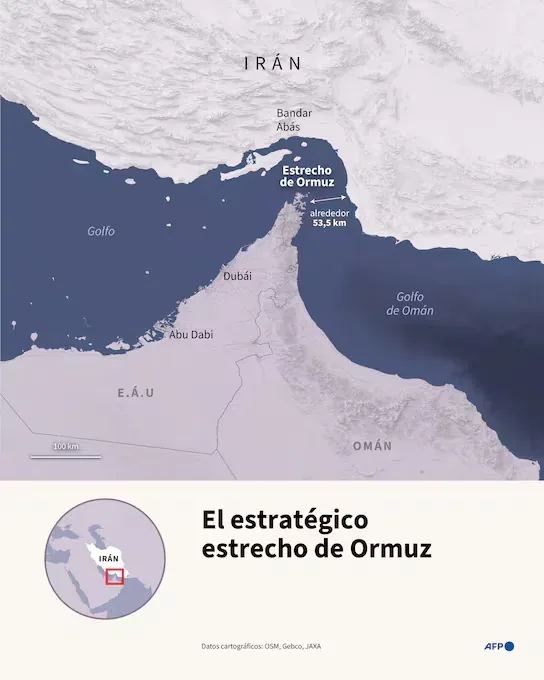
Since the start of the war in Iran on February 28, with simultaneous attacks by the United States and Israel, Tehran militarily closed the strait, which disrupted the global crude oil trade and pushed the price per barrel above 100 dollars. Almost six months later, the situation has not normalized, despite Trump’s efforts to reopen it.
In the context of the negotiation between Iran and Oman, the threat from Trump emerged unexpectedly.
On Monday, August 17, during a phone interview with Trey Yingst, Fox News correspondent, Trump said: “If Oman stands in the way (in the dialogue with Iran), we will bomb it to pieces.”
In the same interview, Trump also stated that there is an unofficial communication channel for peace talks with Iran through the Islamic Revolutionary Guard Corps, something the Tehran government denies.
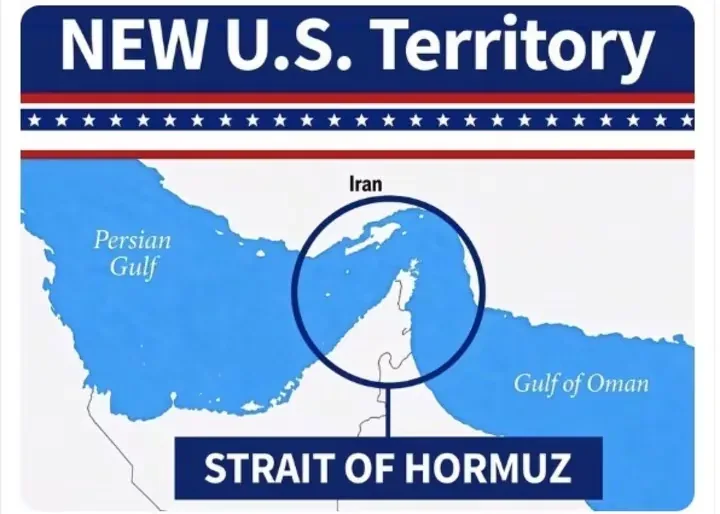
On Tuesday, Trump said the Strait of Hormuz is a “new U.S. territory,” posting a map and that designation on Truth Social.
Nevertheless, negotiations between the United States and Iran are at a standstill, and the 60-day deadline to reach an agreement on ending the war ended on Monday. This deadline began when the two countries signed a memorandum of understanding that was supposed to pave the way for substantive talks, which did not happen.
The United States has military access to Omani facilities, but on a smaller scale compared to Qatar or Bahrain, Gulf countries where Washington maintains large permanent military installations.
What are Iran and Oman negotiating?
For several months Iran and Oman have been negotiating an agreement on navigation through the Strait of Hormuz. This possible pact would contemplate separate routes for ships: one under Iranian control to enter the Gulf and another under Omani control to exit. It could even include tolls.
Publicly, Oman has not provided detailed information about the talks, while Iran has stated that a joint declaration is being finalized.
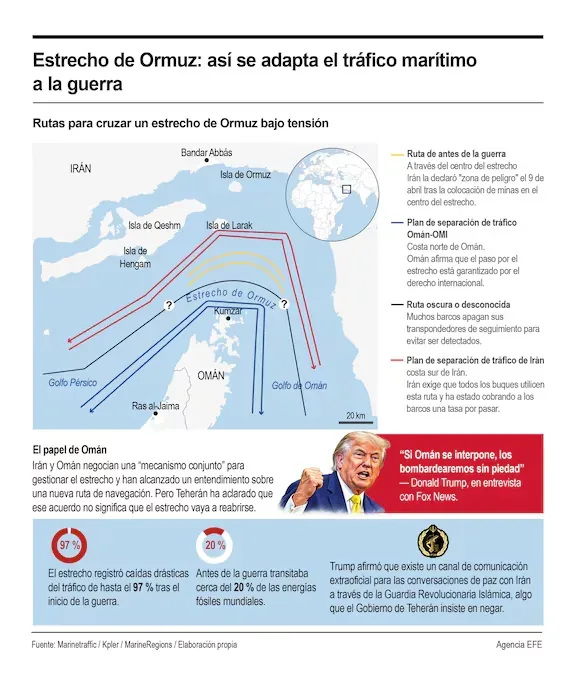
Furthermore, before Trump’s threat, the spokesperson for Iran’s Ministry of Foreign Affairs, Ismail Baghaei, assured the press that Tehran had reached an agreement with Muscat to establish safe maritime routes through the Strait of Hormuz.
However, any agreement between Iran and Oman would depend on the United States lifting the blockade it maintains on Iranian ports.
Through an agreement signed in 2019, Oman expanded U.S. access to the strategic ports of Duqm and Salalah and to certain Omani facilities.
Trump reveals his frustration over Hormuz
According to international analyst Carlos Novoa, specialized in Middle East issues, Trump’s threat to Oman reveals the growing frustration of the White House over the lack of progress toward an agreement on the Strait of Hormuz.
For Novoa, Trump’s primary objective is to pressure Oman not to obstruct Washington’s interests, at a time when negotiations with Iran have stalled.
“Trump wanted to get Oman’s attention. It’s not the first time he has done so, because, in one way or another, he is frustrated by not reaching an agreement, or by not controlling the agenda regarding the Strait of Hormuz,” he says.
He points out that the threat against Oman is an additional sign that the U.S. strategy is not producing the expected result and that “the issue of the Strait of Hormuz is getting out of hand because it is not being controlled.”
The analyst also considers that behind Trump’s stance there is a concrete concern: who ends up controlling the strait and under what conditions navigation resumes.
Novoa believes the president’s statement presenting Hormuz as U.S. territory is significant.
“That Trump says Hormuz is U.S. territory reveals a concern, a desperation”, he explains.
Regarding Oman’s role in the war, Novoa believes it is uncomfortable for Trump that the sultanate maintains relations with both the United States and Iran and presents itself as neutral.
He adds that this policy does not mean Oman is an adversary of Washington. On the contrary, he maintains that the sultanate has been a strategic and logistical ally of the United States.
However, he insists that the problem for Trump is precisely that Oman keeps its diplomatic channels open with Iran.
For Novoa, the pressure on Muscat is, in that sense, a tool to try to change its behavior in the negotiations over Hormuz.
Could Trump really attack Oman?
Despite the harshness of the threat, Novoa considers it unlikely that Trump would order an attack on Oman.
“I don’t see the United States bombing or attacking Oman”, he states. He explains that a possible attack would place Washington in a difficult strategic contradiction to justify, as it would be acting against a allied country that also serves a useful function for U.S. interests in the region.
He estimates that the threat will lose strength and that the need to maintain the relationship with Muscat will prevail. “In the end, common sense will prevail.”
He adds that in any case Trump needs Oman as a direct channel to Iran.
For Novoa, the episode should also be interpreted within the U.S. political scenario. He considers that the war against Iran and the current dispute over Hormuz are increasing the political costs for Trump just months before the November midterm elections.
“Trump is accumulating strategic foreign policy mistakes that could cost him in the midterm elections.”
“Attacking Iran may have been the most unfortunate decision Trump has made in this second term”, Novoa concludes.
Read more Cerro vs. Palmeiras LIVE — what time is the match and where to watch it ONLINE for Copa Libertadores