


![Alberto Beingolea: “If they insist on not giving [the powers], they are complicating life for Peru”](https://insightermedia.com/wp-content/uploads/2026/09/bb3fa9e11304ea13fe2cd333955007bc-150x150.webp "Alberto Beingolea: “If they insist on not giving [the powers], they are complicating life for Peru”")


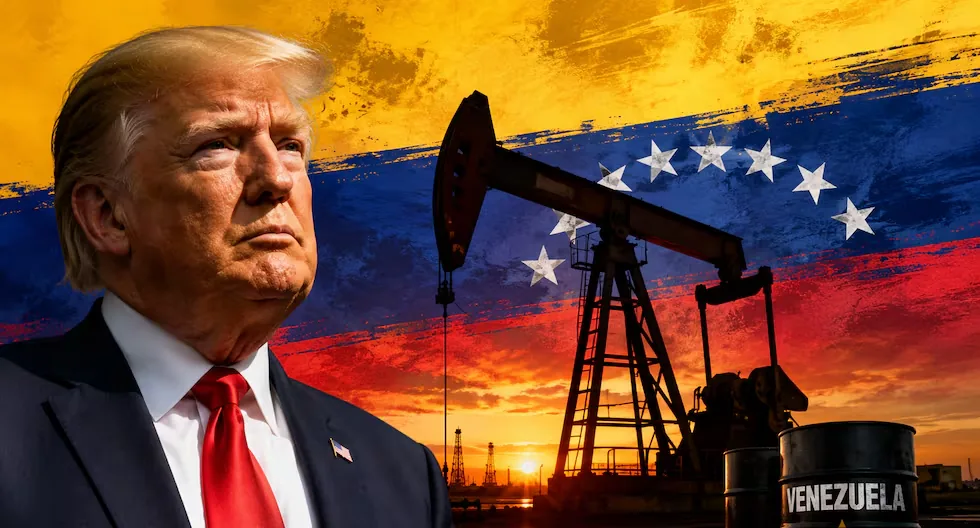
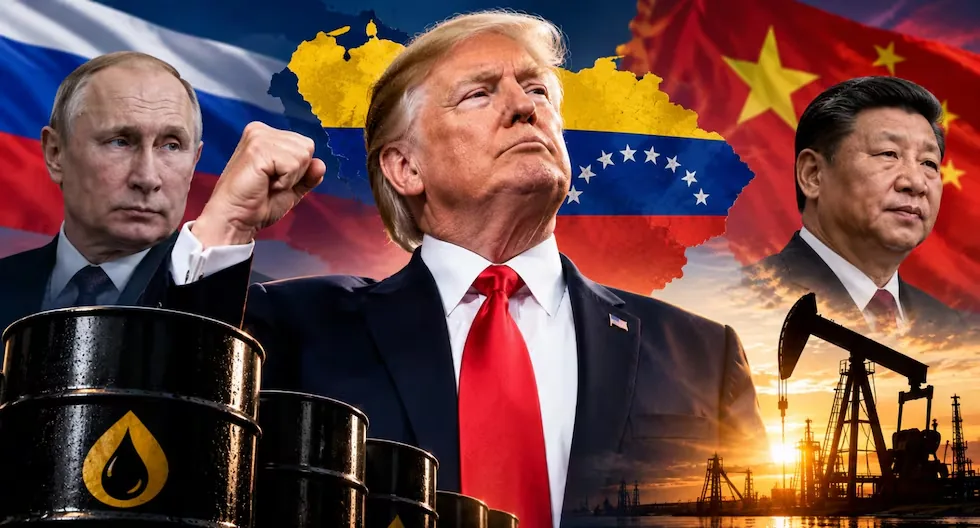
Immediately after the military operation on January 3, 2026, in which the United States overthrew and captured Nicolás Maduro, Trump declared that major U.S. oil companies would invest billions of dollars in Venezuela.
Read more Police shoots a woman in Times Square who seriously stabbed two people | VIDEO
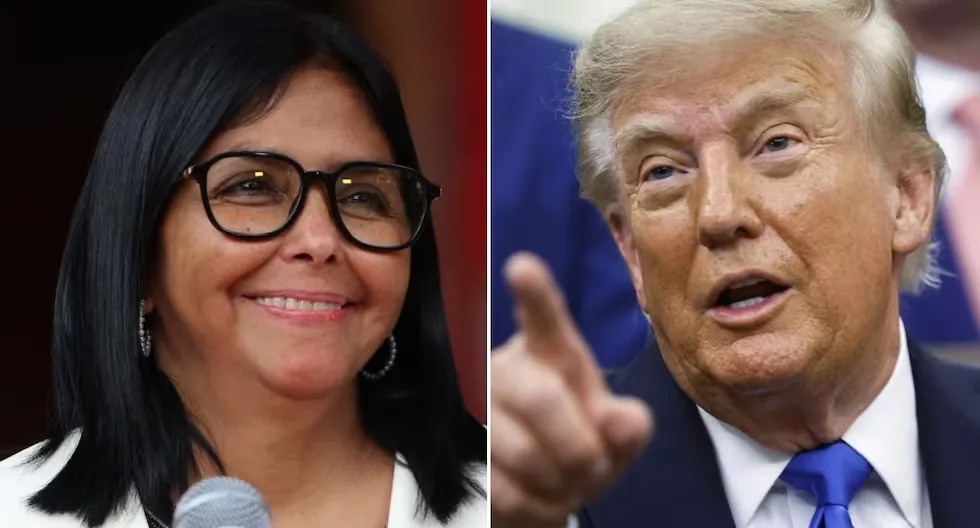
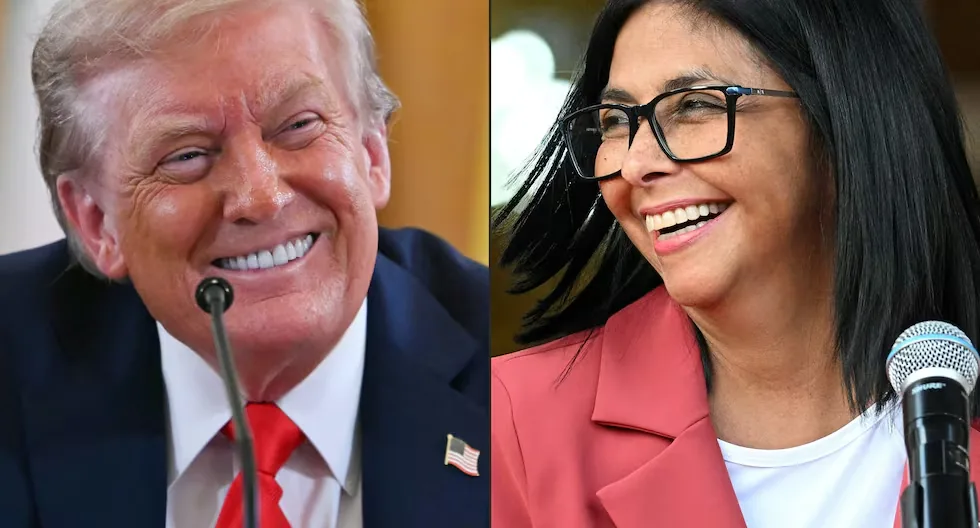
Seven months later, Trump announced “the largest oil deal in world history” in Venezuela, while Rodríguez highlighted the million-dollar investments the country will receive, something that, she assured, will impact economic recovery and the modernization of the local oil industry.
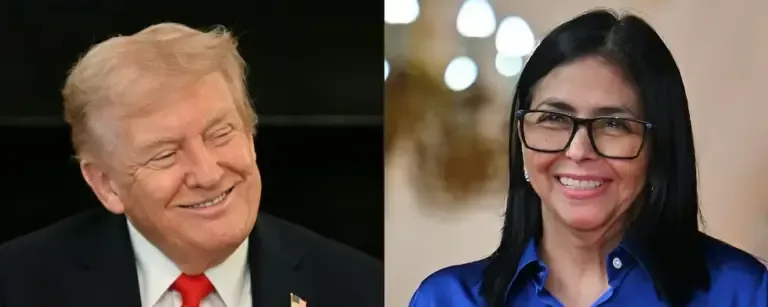
The White House confirmed that Trump will receive senior executives from the oil industry on Tuesday to discuss reducing gasoline prices in the United States, one of the goals of the pact with Venezuela.
These are the key points of the agreement:
The terms of the pact
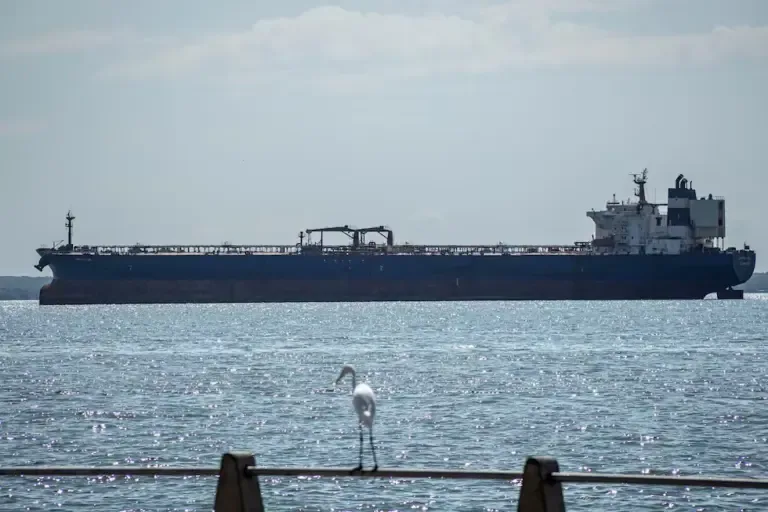
Not all the terms of the pact are known yet. Trump reported on Truth Social that the U.S. will have “majority control” over more than 65 billion barrels of proven Venezuelan oil reserves “at no cost to the American taxpayer.” This represents 21% of the crude reserves of that South American nation.
Venezuela has around 303 billion barrels of proven oil reserves, the largest figure in the world and equivalent to 17% of global reserves.
Trump revealed that the agreement was negotiated by Secretary of State Marco Rubio, Secretary of War Pete Hegseth, and Delcy Rodríguez.
The leader specified that the agreement involves the development of 17 strategic fields in the Orinoco Belt and Lake Maracaibo and an investment of more than 100 billion dollars. He estimated “a production target exceeding 1.5 million barrels per day.”
He said that tax revenues for the Venezuelan State will be about US$209 billion, based on a price of 65 dollars per barrel.
He emphasized that Venezuela will retain “ownership and sovereignty” over its oil.
According to Trump, the agreement will double the proven oil reserves of the United States, which had 46.4 billion barrels of crude and condensate at the end of 2023.
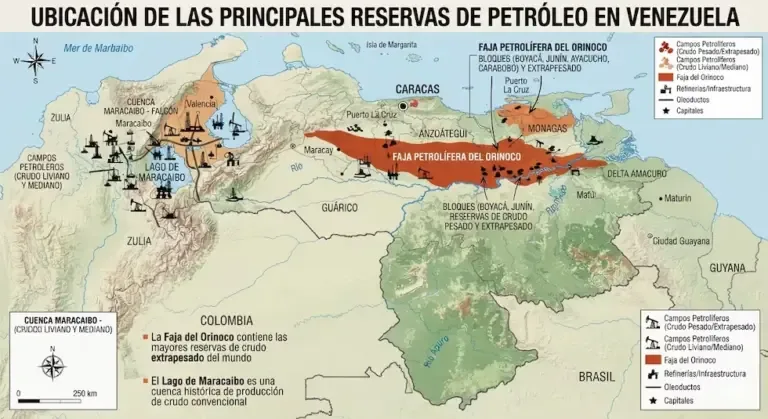
The magnitude of Venezuela’s reserves does not automatically translate into high production because most correspond to extra-heavy crude from the Orinoco Belt, much more difficult to extract, transport, and refine than light crudes. In fact, the country has had to import lighter crudes to blend with its own and make processing viable in refineries.
The Pentagon and the exploitation of Venezuelan oil
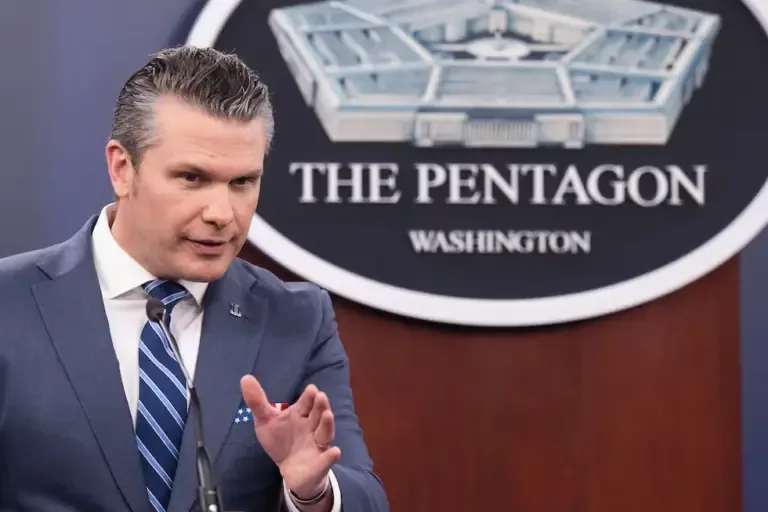
After Maduro’s fall, Trump wanted U.S. companies to quickly take a dominant role in the Venezuelan oil business, but they have shown reluctance to accelerate their participation. In response, his administration designed a formula for the U.S. Government itself, through a Pentagon office, to become a direct investor in a private company that would obtain long-term rights over Venezuelan oil reserves.
According to an investigation by The Wall Street Journal, the Trump administration seeks to obtain a 35% stake in North American Blue Energy Partners (NABEP), a company linked to Venezuelan businessman Alejandro Betancourt, which will obtain rights over the 17 oil fields with reserves of 65 billion barrels.
According to the WSJ, the United States would obtain preferential rights to buy 20% of the company’s production at cost price.
The investment would be structured through the Pentagon’s Strategic Capital Office, using financial instruments known as “penny warrants”, which grant the holder the right to acquire shares of a company at a nominal exercise price, usually just a few cents.
Thus, through this mechanism, the U.S. Government will be able to obtain an equity stake in the business without initially making a large capital investment.
Regarding Betancourt, the WSJ explained that he has been an intermediary in Venezuelan energy operations and has close ties with Delcy Rodríguez.
It added that his company, NABEP, has become the second largest private oil producer in Venezuela, after Chevron.
Additionally, the newspaper mentioned that Betancourt has faced investigations for alleged money laundering in Spain and Switzerland, although these have not resulted in formal charges.
Meanwhile, the Spanish newspaper El País describes Betancourt as one of the “bolichicos”: young people who, without prior experience in sectors like oil or electricity, obtained multimillion-dollar public contracts during Chavismo.
In summary, Trump’s plan will grant the U.S. Government an economic stake and preferential rights over projects covering a huge amount of Venezuelan reserves.
“The US$100 billion figure should be interpreted with caution”
Economist Asdrúbal Oliveros considers that the figure of more than US$100 billion in announced investments should be interpreted with caution, as it does not necessarily correspond to capital already committed or to be disbursed immediately.
“More than an investment to be executed immediately, we are talking about an estimate of the volume of resources that could be required to recover an oil industry with decades of accumulated deterioration,” he explained to El Comercio.
Oliveros points out that the agreement may be relevant because it opens the possibility for Venezuela to regain sustained access to capital, technology, specialized services, and international markets. If the scheme allows significant participation of private companies and offers an attractive contractual structure, he argues, it could initiate an important process of field rehabilitation, infrastructure recovery, and production increase.
Read more The dollar closes at S/3.37 amid higher local demand and tension in global markets
However, he warns that the recovery of the Venezuelan oil industry will be a long-term process. “Venezuela has extraordinary reserves, but turning reserves into commercial production requires investment, infrastructure, and time,” he states.
According to the economist, some fields could see relatively rapid increases through the recovery of existing wells, but bringing Venezuelan production back to several million barrels per day would require several years and probably more than a decade.
Therefore, Oliveros recommends not focusing solely on the US$100 billion figure, but observing three factors: how much capital is really committed, under what legal and economic conditions the investment will be made, and what the execution schedule will be.
Oliveros considers that Venezuela faces a “historic opportunity,” although its exploitation will depend on the country’s ability to build institutions and rules that allow sustaining investments over the coming decades.
“Few economies have the possibility of attracting such a volume of investment to a sector where there is already such a large resource base,” he affirms.
He adds that a recovery of oil capacity could have a significant impact on exports, fiscal revenues, employment, infrastructure, and private activity.
However, he warns that oil alone does not guarantee economic transformation. He recalls that Venezuela already received enormous oil revenues in the past and that did not prevent institutional deterioration nor the subsequent crisis.
“The lesson is precisely that having natural resources does not replace strong institutions,” he maintains.
For the new investment cycle to be sustainable, Venezuela will need stable rules, respect for contracts, legal security, transparent dispute resolution mechanisms, a competitive tax regime, and an institutional architecture that limits political discretion, he specifies.
Oliveros emphasizes that oil investments of this magnitude have horizons of 20, 30, or even 40 years, so investors cannot make decisions of that scope based solely on the current oil price or a temporary political agreement.
“Success will not be measured only by how many additional barrels Venezuela produces, but by whether those resources help build a more stable, productive, diversified economy capable of generating well-being beyond oil,” he concludes.
The U.S. negotiated from a position of enormous advantage
Venezuelan political analyst Leandro Rodríguez Linárez tells El Comercio that the agreement reflects a broad negotiating advantage of the United States over the government of Delcy Rodríguez.
“Delcy Rodríguez’s capacity for discussion is nil. Practically, what she does is accept everything the United States proposes,” he maintains. He explains that the political situation of the interim government of Chavista origin considerably limits its negotiating margin and allows Washington to impose conditions favorable to its own interests.
However, Rodríguez says the agreement is not necessarily negative for Venezuela, but argues it could have been negotiated under better conditions.
“Trump, knowing all this and the conditions the remaining Chavismo now has, takes advantage and benefits U.S. companies, U.S. oil companies,” he points out.
Rodríguez also makes a distinction between the effect the agreement may have on Delcy Rodríguez vis-à-vis the United States and within Venezuela.
“Facing the United States, it certainly strengthens her, but facing the country, the reactions have been extremely contrary,” he states. The pact has received criticism from both opposition sectors to the regime and dissident Chavismo sectors, he notes.
“So, internally in the country it weakens her, but with the one who has the power of her permanence, the tutelage, that relationship comes out strengthened,” he insists.
The analyst warns that there are still important questions about the concrete terms of the pact. Among them, he mentions its duration and the participation conditions of other foreign companies currently working in Venezuela.
He believes companies from countries like Italy, Spain, Russia, and China could maintain their presence in Venezuela, although he emphasizes that their future participation will depend on how the Venezuelan political landscape evolves and the final conditions of the agreement reached with Trump.
Read more La Kábala Draw on Tuesday, September 1: schedule, how to play, and broadcast