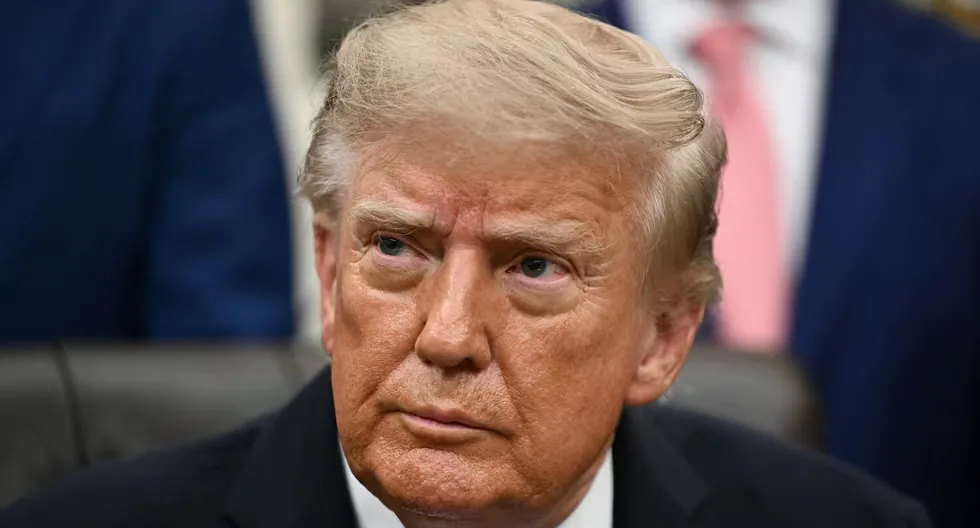









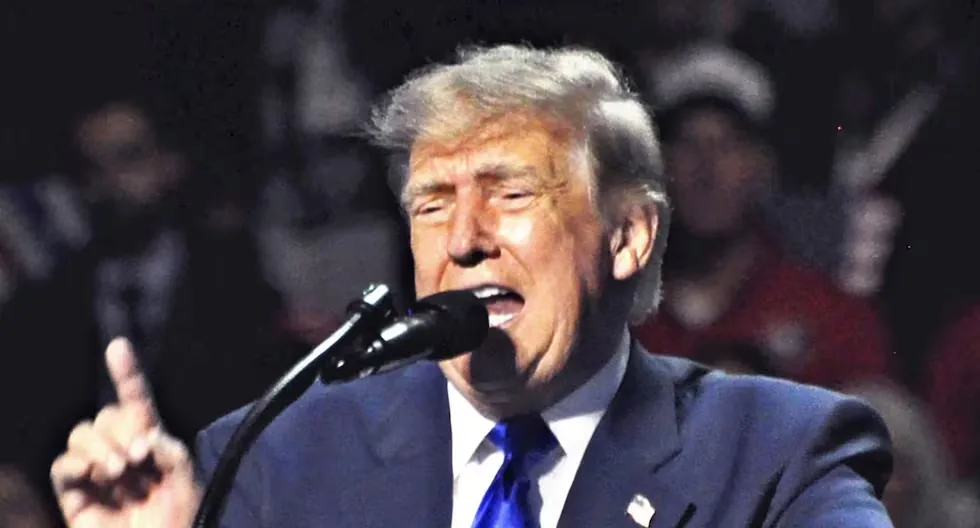
On Wednesday night, Trump was the main speaker at the Republican Party Convention held at the American Airlines Center in Dallas, Texas, and driven by him.
Read more Peru vs. Venezuela: match broadcast for date 3 of the 2026 South American Volleyball Championship
According to a survey published over the weekend by Focaldata/Financial Times, support for Trump’s administration is only at 33%.
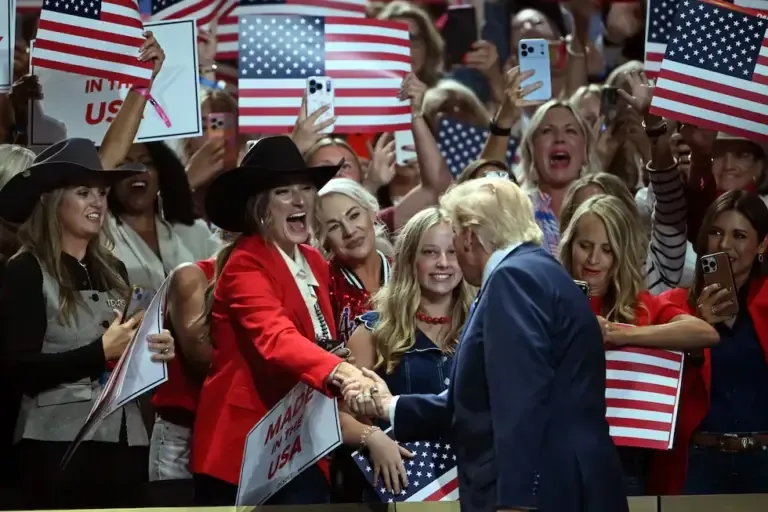
Additionally, 46% of Republican voters believe that Trump’s direct involvement and low popularity make it difficult for candidates from that party to gain control of Congress in the November elections.
The electoral data firm Decision Desk HQ, cited by AFP, forecasts that the Democrats will win the House of Representatives by 230-205 seats and that the Senate will also end 51-49 in their favor in November.
The $5,000 for every adult American
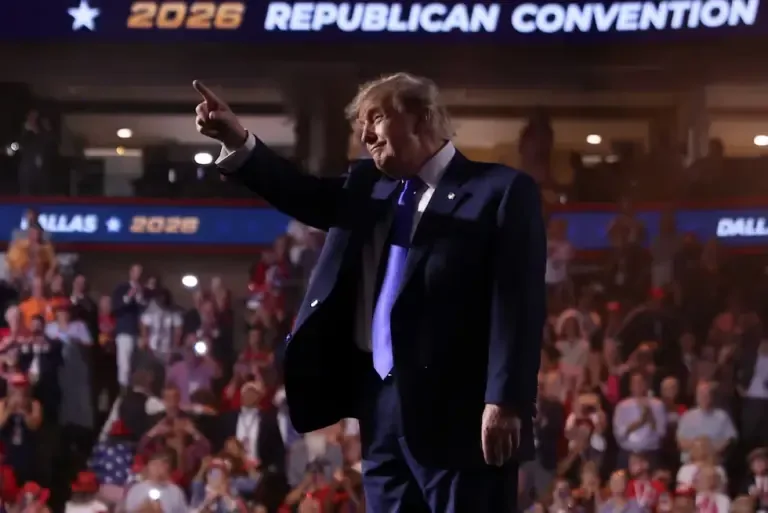
In this context, Trump has decided to personally take on the electoral challenge. During his speech, he made an unusual promise: to pay $5,000 to every adult American if the Republicans maintain control of both chambers of Congress.
“This is my promise. If the Republicans win the U.S. House of Representatives and Senate, both… I will issue a $5,000 dividend to every adult U.S. citizen,” he announced.
The president did not specify where the resources to fulfill the offer would come from. He only said that the United States “is making a lot of money due to our tremendous economic success.”
Reuters calculated that, taking as a reference about 270 million adult Americans, the payout would be around $1.35 trillion.
Meanwhile, the AP agency stated that Congress would have to approve the payment. It also reminded that the United States already carries an annual deficit close to $1.8 trillion and a national debt that has just surpassed $40 trillion.
On Thursday, CBS asked Trump if Congress would have to approve it, and he replied that he thinks not.
International analyst Francisco Belaunde Matossian tells El Comercio that this promise reveals Trump’s concern about the electoral outlook.
“It expresses desperation because the polls are not favorable to him. He is anticipating that a defeat is finally coming,” Belaunde says.
“He tries anything to try to reverse what is coming: a serious defeat for them and the loss of at least one of the chambers,” he adds.
Belaunde also questions the feasibility of the proposal. His doubt points to how a measure of such magnitude would be financed and says the proposal is “very unrealistic” and difficult to execute. Therefore, he estimates it would have a limited electoral impact.
“It seems like a kind of promise that is false, that he will never be able to fulfill,” he emphasizes.
For journalist and international analyst Carlos Novoa, this promise by Trump reveals the president’s concern and anxiety about the possibility that Republicans lose the majority in Congress.
He explains that the announcement also reflects the way Trump exercises power and seeks to react when he perceives that things may get out of his hands.
“It is the imprint of the almighty who assumes, who imposes, and seeing that things are getting out of his hands, puts money, puts cash,” he states.
He considers that the announcement should also be understood as a high-impact measure aimed at capturing the electorate’s attention and mobilizing his base before the elections.
“What matters here is that this is a stunt, as Trump has always handled it,” he says.
“Vote as if I were on the ballot”
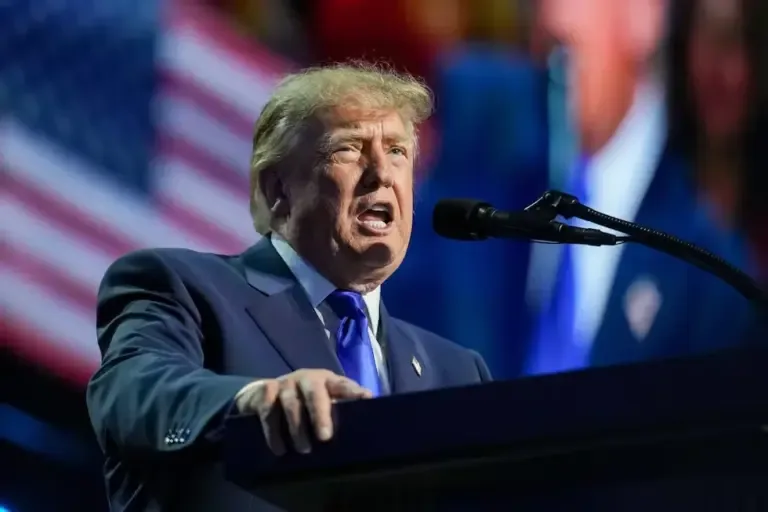
In Dallas, Trump also explicitly asked Republicans to face the elections as if he were on the ballot.
“I ask you to imagine that I am on the ballot. I am on the ballot. I am on the ballot. Just one more time,” he said.
Trump’s argument is that when he is listed as a candidate, his supporters turn out to vote in greater numbers.
For Belaunde, Trump’s intention would be to turn the legislative elections into a kind of referendum on his government. However, he considers that this strategy is contradictory due to the president’s current low popularity.
“His unpopularity is what is dragging the Republican Party to defeat,” he states.
Belaunde believes that Trump should do the opposite and allow Republican candidates to distance themselves from a figure who, according to his analysis, could become an electoral burden.
“It makes no sense to turn the election into a plebiscite on his administration. There you realize that Trump is a person who is not in reality, who is totally in his own world,” he says.
Novoa also believes that “tacitly Trump seeks a referendum on his presidency”.
He points out that although midterm elections usually function as an evaluation of the incumbent president, he considers that in this case the component is even stronger due to Trump’s governing style and the changes pushed since his return to the White House in January 2025.
Novoa warns that several of the main problems Trump faces could end up weighing electorally. Among them, he mentions the war with Iran, the increase in fuel prices, shortages, and tariffs.
The analyst identifies a contradiction that could be exploited by the Democrats: while Trump insists that the U.S. economy is growing strongly, citizens face an increase in fuel costs.
Trump and the end of the war in Iran

Before his participation in Dallas, Trump said that the war in Iran will end immediately after the November 3 elections.
“I think the war will end immediately after the elections because (the Iranians) can no longer resist,” he told the press.
Trump also stated that Iran is “desperate to try to influence the elections, so that we can have a nice and weak group there, and leave them alone and allow them to have their nuclear weapon.”
Belaunde questions the logic of that statement and considers that there is no concrete explanation that allows anticipating the end of the war on that date.
What would happen if the Democrats win Congress?
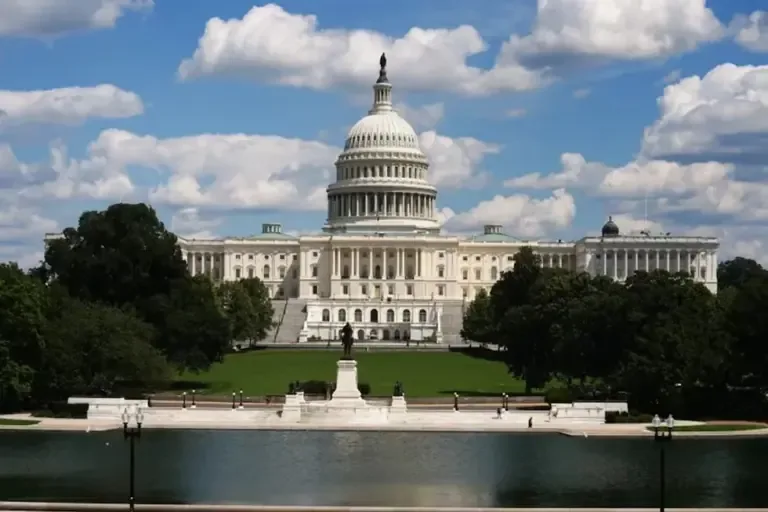
Belaunde indicates that the scenario that worries Republicans the most is that the Democrats recover at least the House of Representatives. But if they also managed to take the Senate, the confrontation between Trump and Congress could intensify considerably.
“If that happens, it will be a two-year administration with a lot of conflict,” he anticipates.
The loss of one of the chambers would limit Trump’s ability to push his legislative agenda, Belaunde says.
According to the analyst, the presidential veto would be one of the main tools left to Trump to block initiatives approved by a Congress controlled by the Democrats.
The possible electoral defeat could also change the balance of power within the Republican Party itself. Belaunde suggests that some congressmen could start distancing themselves from Trump if they conclude that his leadership has become an obstacle to their own political aspirations.
He explains that so far many Republicans have remained aligned with the president due to his ability to influence primaries and campaign financing.
Unlike the first stage of his government, when Trump was able to project an image of a president with great capacity to advance through executive orders, an adverse Congress could block several of his initiatives, he predicts.
For Novoa, a possible Democratic majority in Congress would limit the president’s ability to act and establish greater controls over his decisions, both in domestic and foreign policy.
Read more Spanish National Lottery LIVE: check numbers and tickets for Thursday, September 10