




![Alberto Beingolea: “If they insist on not giving [the powers], they are complicating life for Peru”](https://insightermedia.com/wp-content/uploads/2026/09/bb3fa9e11304ea13fe2cd333955007bc-150x150.webp "Alberto Beingolea: “If they insist on not giving [the powers], they are complicating life for Peru”")



The Executive is preparing a request for powers to legislate for 120 days on various matters, including tax issues. A preliminary draft of the bill, which has not yet been presented to Congress and may undergo modifications, proposes changes to business regimes, incentives related to employment and training, as well as other adjustments to the Income Tax Law (IR).
Read more WATER CUT: schedules and affected areas in Lima TODAY, Friday, July 31
One of the main proposals is to establish a single corporate IR with marginal and increasing rates. According to the document, the change would seek to promote formalization and competitiveness of companies, respect the principles of tax equity, and meet fiscal revenue objectives.
However, the draft does not specify what the rates would be, how many brackets would apply, on what basis the tax would be calculated, or which current regimes would be replaced.
Currently, there are four tax regimes: the New Simplified Single Regime (NRUS), the Special Income Regime (RER), the MYPE Tax Regime (RMT), and the General Regime. Each establishes different conditions, obligations, and ways to calculate the tax, depending on the type of taxpayer, their income, and the activity they carry out.
For example, the RER applies a monthly fee equivalent to 1.5% of net income. In the RMT, the annual tax is calculated on profit, with a rate of 10% up to the first 15 tax units (UIT) and 29.5% on the excess. The General Regime, meanwhile, applies a rate of 29.5% on profit.

A path for growth
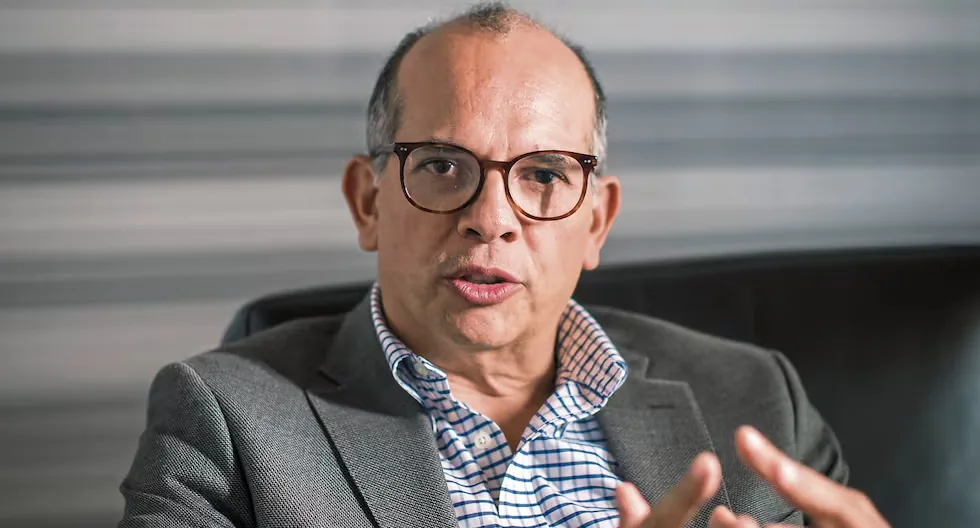
Luis Miguel Castilla, former Minister of Economy and Finance, explained that a single regime with marginal rates would allow building a progressive scale in which tax and accounting obligations increase as the company grows. Under this system, the highest rate would apply only to the additional profit bracket and not to the total earnings.
In his view, the change could eliminate the abrupt jump that occurs when a company exceeds the limits of one regime and must move to another with greater obligations.
“The single regime would align tax incentives with business expansion, formal hiring, and base broadening,” he said.
Castilla considered that the current system may encourage some companies to remain small, split their operations, or underreport sales to avoid moving to a regime with a higher burden. A continuous scale, he noted, would allow businesses to gradually advance to higher rates as their profits increase.
However, Francisco Pantigoso, Law professor at the University of the Pacific, warned that the outcome would depend on the rates and brackets ultimately established.
The specialist considered that the proposal could incorporate elements of a previous proposal called “Tributa Fácil,” which contemplated eliminating the RER and RMT and replacing them with a five-bracket scheme based on the difference between income and expenses.
According to Pantigoso, the rates considered in that proposal could be higher than those currently applied in the first bracket of the RMT. If that design were resumed, he warned, the change could be counterproductive for certain smaller companies.
Pantigoso stated that beyond simplifying regimes, tax culture should be promoted and taxpayers trained to facilitate compliance.
The challenge of informality
Experts also showed differing views regarding the proposal’s ability to incorporate new taxpayers into the system.
Castilla pointed out that the effect on revenue would have to be evaluated dynamically. If eliminating jumps between regimes leads more companies to declare their real income and move to higher rates as they grow, the tax base could gradually expand.
“It is not about raising taxes generally, but about organizing the system, closing leaks, and strengthening compliance so that revenue increases gradually and sustainably,” he said.
Read more Earthquake in Colombia today, Friday, July 31: see epicenter of the latest tremor according to SGC
Pantigoso, on the other hand, argued that modifying regimes alone would not solve informality. In his opinion, it would also be necessary to facilitate compliance, review the sanction system, and reduce obligations that affect business cash flow.
One of the problems he mentioned is that the tax obligation corresponding to the General Sales Tax (IGV) can arise with the issuance of the payment voucher or delivery of the good, even though the company has not yet collected the operation. In those cases, the taxpayer must finance the tax with their own resources, he indicated.
“What would be done once again is legislating for formal companies and not tackling informality so that everyone pays taxes according to their ability to pay,” he criticized.
Incentives for training and youth employment
The draft also proposes recognizing the deduction of personnel training expenses and granting tax credits for hiring young people and training workers. However, it still does not determine the amount of benefits, the requirements to access them, or the duration for which they would be in effect.
Castilla explained that the measures would operate through two mechanisms. The deduction would allow certain expenses to be deducted from the base on which the tax is calculated, while the tax credit would be applied directly against the amount payable.
“Temporarily lowering the cost of the first formal job attacks the vicious cycle of youth exclusion,” Castilla said.
For the former minister, temporarily lowering the cost of hiring young people could help facilitate their entry into formal employment. However, he considered it necessary to define the age range of beneficiaries, the cap and duration of the incentive, the minimum period of payroll permanence, and measures to prevent companies from replacing existing workers solely to access the benefit.
Pantigoso noted that some of the announced measures would not be entirely new. “Currently, personnel training is already deductible from IR,” he said. Likewise, the Young Entrepreneur Law includes a tax incentive related to hiring young people.
Therefore, he considered it necessary to know what additional elements would be incorporated through the eventual legislative decrees. He also warned that the rules should include controls to prevent simulated hiring aimed solely at reducing the tax payable.
Pending clarifications
In addition to these measures, the draft would allow establishing incentives, exemptions, credits, deductions, and special and temporary tax treatments to promote formalization, investment, entrepreneurship, employment, innovation, and certain productive sectors.
Castilla considered that before presenting the request to Congress, the thresholds and rates of each bracket of the single regime, the base on which the tax would be applied, and the transition rules for taxpayers currently belonging to the RER, RMT, or General Regime should be defined.
He also deemed it necessary to include mechanisms to prevent the artificial division of companies to remain in brackets with lower rates, as well as quantify the fiscal impact of the measures and verify their compatibility with fiscal rules.
Pantigoso stated that the real scope of the proposals could only be evaluated when the specific legislative decrees are known. “What is evident is that they would mostly be simple ‘patches’ to aspects that need improvement, without a comprehensive tax reform as the country needs,” he said.
For the specialist, the central problem still pending would be expanding the taxpayer base. The simplification of regimes, he added, would have to be accompanied by measures directly aimed at identifying and incorporating those who currently carry out economic activities outside the tax system.