




![Alberto Beingolea: “If they insist on not giving [the powers], they are complicating life for Peru”](https://insightermedia.com/wp-content/uploads/2026/09/bb3fa9e11304ea13fe2cd333955007bc-150x150.webp "Alberto Beingolea: “If they insist on not giving [the powers], they are complicating life for Peru”")



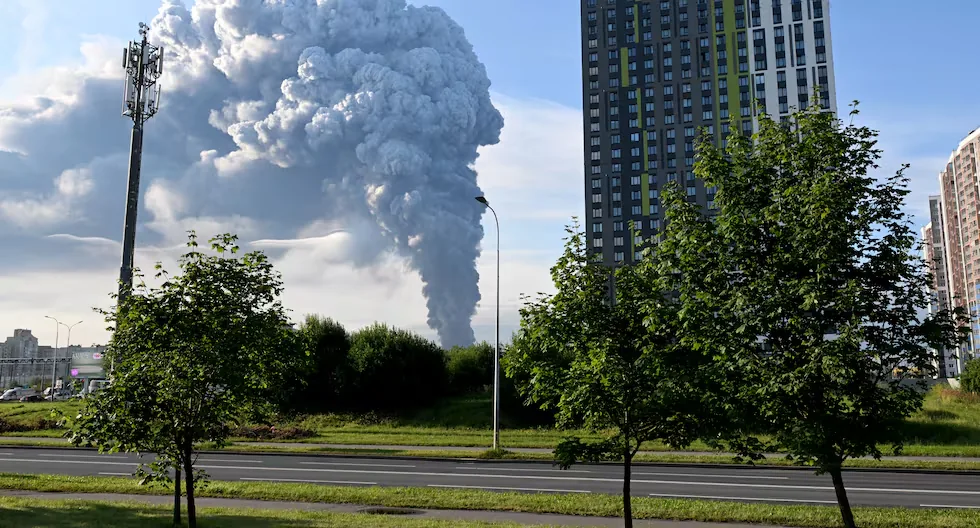
The scene is shocking. A video captures the moment a Ukrainian drone falls on a Russian beach on the Black Sea, leaving at least seven dead and 40 injured. This is not an isolated incident. It is part of a strategy with which Kiev seeks to bring the war to the heart of Russia, far from the front lines. As part of this pattern, in recent weeks Ukraine has also been targeting the e-commerce giant Wildberries, “the Russian Amazon,” and numerous refineries, which are key to fueling the economy that keeps President Vladimir Putin’s war machine running.
Read more Quini 6 draw 3397 on Wednesday, August 5: where to watch the Santa Fe Lottery
According to the Institute for the Study of War (ISW), the video of the attack on the beach of Arkhipo-Osipovka, in the Krasnodar region, shows Russian mobile fire groups trying to intercept the Ukrainian drone. At one point, the device explodes, causing the death of seven people, including three children.
WATCH: Hamas will disarm after 40 years: what will happen now with Gaza and how far will Israel withdraw?
The governor of Krasnodar, Veniamin Kondrátiev, said that people on the beach died “when debris from a UAV fell.” So far, there is no conclusive information determining whether the drone was shot down by Russian defenses, neutralized by electronic warfare, or exploded due to the attack itself.
🇷🇺🇺🇦 A drone has crashed onto a tourist beach in Gelendzhik, Russia, killing at least 3 and injuring 13.
— Mario Nawfal (@MarioNawfal) August 3, 2026
Gelendzhik is a prominent resort town located on the northeastern coast of the Black Sea, in Russia’s Krasnodar Territory.
The incident occurred during an overnight raid,…
What is clear is that the attack reflects Ukraine’s new strategy to bring the war inside Russia.
The offensive in recent weeks is the most intense against Russian territory since the invasion began in February 2022, with attacks no longer limited to military targets but also hitting economic infrastructure and high-ranking military officials.
Since the weekend alone, at least 28 people have died in Russian territory due to Ukrainian attacks.
On Tuesday, five people died and ten were injured in a drone attack on a Wildberries warehouse in the Moscow region, less than 70 kilometers from the Kremlin.
Since July 18, Ukraine has attacked 21 Wildberries logistics centers, which is now one of its main strategic targets.
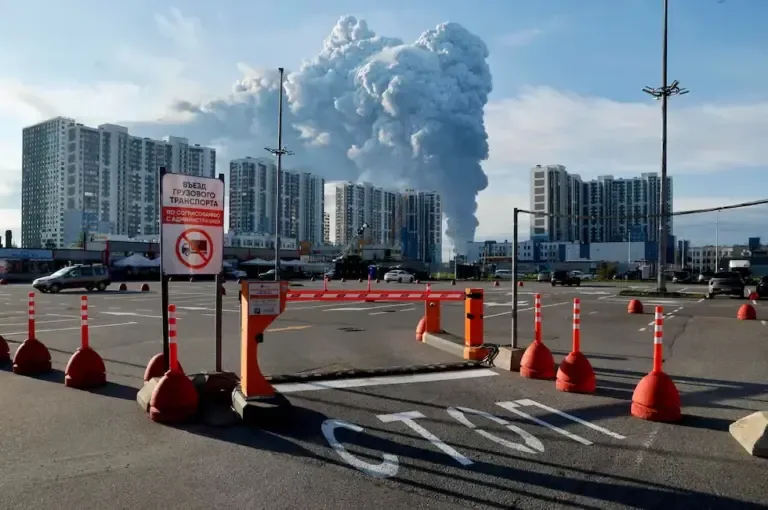
Another two people died also on Tuesday in attacks against the border regions of Belgorod and Bryansk.
On Monday, a nighttime attack in Crimea left four civilians dead, according to Russian authorities.
While on Saturday, a bomb attack at a Moscow restaurant left five dead and 21 injured. The target was reportedly the commander of the Russian Aerospace Forces, Alexandr Chaiko, who survived.
At this point, it is worth noting that in the last two years Ukraine has carried out six attacks against high-ranking Russian military officials, with three generals killed in Moscow and its region.
On Tuesday, Ukrainian drones also hit the Sizran refinery in the Samara region (750 km southeast of Moscow), owned by Rosneft. The plant had already suspended operations less than a month ago after another attack.
On the Russian side, the Ministry of Defense claimed to have shot down 320 Ukrainian drones during Tuesday night over 18 Russian regions and Crimea. This is one of the highest numbers reported in a single day.
The attacks on refineries show that Ukraine’s strategy has evolved from a war focused on the battlefield to a campaign to erode Russia’s economic capacity, which is key to financing the production of more missiles, drones, and other equipment used by Moscow in the conflict.
By striking key facilities for oil processing and export, Kiev also seeks to complicate fuel supply for industry and the army on the battlefield.
As a result of the attacks, oil refining has fallen to its lowest level in more than two decades. Although the Russian oil industry has not stopped, Kiev’s actions are raising the cost of sustaining the war and forcing Moscow to allocate more money to protect and repair its damaged infrastructure.
A military, economic, and psychological strategy
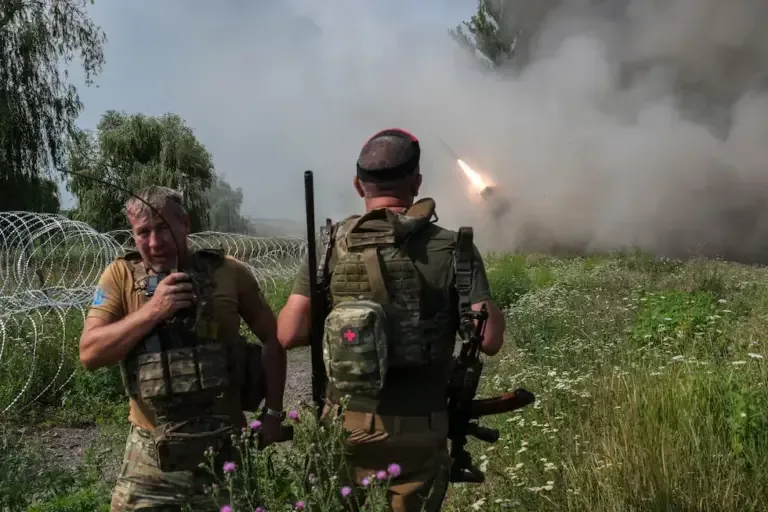
For international analyst Francisco Belaunde Matossian, Ukraine’s strategy has a military, economic, and psychological dimension. He indicates that the bombings of refineries aim to directly affect the country’s economic capacity, while attacks on logistics centers and other infrastructure seek to create problems for the population and the private sector.
“It is a military and psychological strategy. The refinery issue obviously aims to affect Russia’s economy and also cause problems for the population. That is somewhat the idea: that the population, even amid the repression implemented by Putin, increasingly feels discontent,” he says.
Belaunde states that the consequences of the attacks also reach small business owners who depend on supply chains and the activity of large companies. Therefore, he considers that damage to e-commerce warehouses can generate an economic effect that goes beyond the attacked companies themselves.
Read more JEE of Lima Centro accepts challenge filed against Daniel Urresti for the Mayor of Lima
“If those warehouses stop functioning, the businesses of small entrepreneurs are also affected. All this generates serious internal problems in Russia. That is somewhat the Ukrainian tactic”, he specifies.
A multidomain war
Andrés Gómez de la Torre, a defense and intelligence specialist, states that Ukraine’s strategy seeks to develop a multidomain war, combining military actions with a psychological and attrition offensive to achieve both military and civilian and economic objectives.
“Ukraine is proposing, strategically, a multidomain war on all levels: psychological, military, and attrition. It is acting against different targets, whether military or non-military, and using, among other resources, drones on the battlefield,” he says.
However, Gómez de la Torre considers it difficult to determine to what extent this strategy is actually reducing Russia’s military capacity, due to Moscow’s historical ability to sustain prolonged conflicts.
“It is very difficult to foresee a reduction in Russian military capacity. The experiences of wars of the former Soviet Union and of Russia itself show that it has historically enormous capabilities, due to its geographical nature and national power. It is very difficult to claim there has been a reduction in its capabilities. On the contrary, Russia has sustained and continues to sustain its war effort”, he warns.
What about Putin’s image?
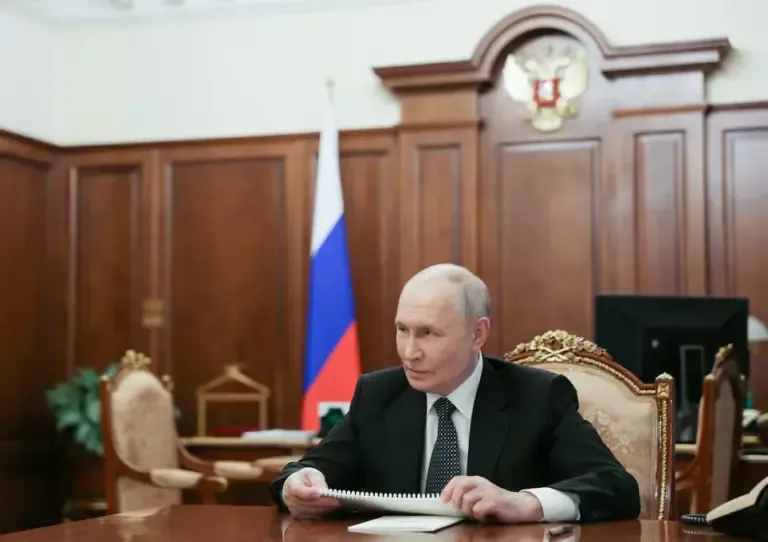
Regarding the political impact of Ukraine’s strategy, Belaunde believes the attacks may be gradually undermining the image of security and stability that Putin projects, although strong censorship and media control make it difficult to measure their true effect on public opinion.
“There is a lot of propaganda and the media are totally controlled. The message being conveyed is that what is happening in Crimea is not so serious and that the population can endure it. It’s like saying: don’t worry, nothing is happening,” he says.
However, Belaunde maintains that problems can accumulate even if there is no public expression of discontent.
“That, in any case, undermines Putin’s popularity. The thing is that it cannot be freely expressed due to repression. But, as they say, the procession goes inside,” he adds.
Ukraine’s strategy could have political consequences if attacks, economic difficulties, and business unrest continue to accumulate, he notes.
“It is a critical and psychological tactic that can gradually undermine Putin’s popularity and generate criticism among businessmen. Sometimes history accelerates and there may come a time when all this ends up taking its toll,” he warns.
For Gómez de la Torre, every war generates a political cost for those who lead it, especially when it is the country that started the conflict. However, he considers that the Russian political system offers Putin a sufficiently solid power structure to withstand pressures.
“There is always a political cost for any ruler when waging a war, and even more so when they initiated it. But it must be remembered that Putin’s power is very well established due to the characteristics of the Russian political system itself, based on a very strong and well-built structure over the years”, he says.
Therefore, he considers that talking about a possible destabilization of the Kremlin as a direct consequence of Ukrainian attacks is, for now, relative.
The risk of a greater escalation
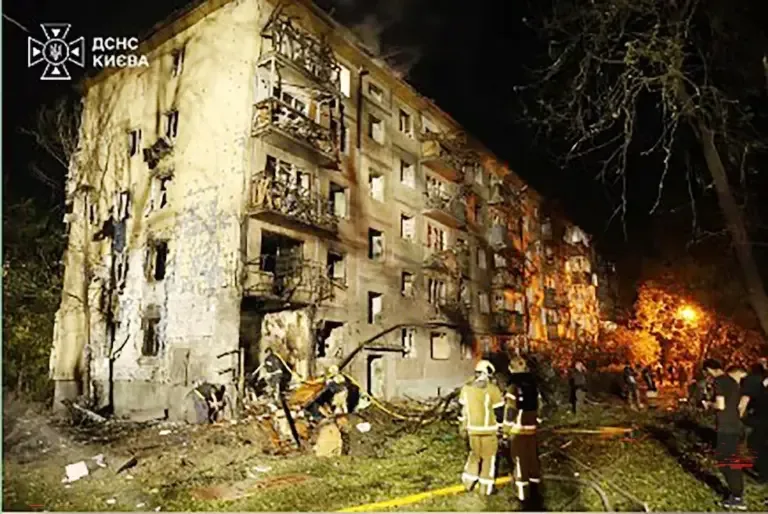
Regarding the possibility that the Ukrainian campaign could provoke an even greater escalation of the conflict, Gómez de la Torre warns that this scenario is always present. Among the hypotheses raised during the war is even the possible use of tactical nuclear weapons, although this is an extreme scenario.
“At one point, it was said that a possible escalation could eventually lead to the use of tactical nuclear weapons, though not strategic ones. Wars are fought based on many hypotheses and options, depending on how the battlefield develops and the conditions between the belligerents,” he says.
Ukraine’s ultimate goal
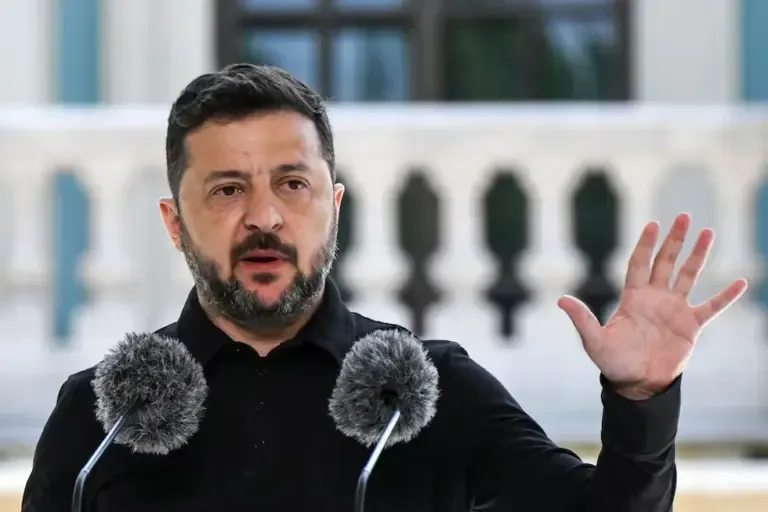
Belaunde believes that one of the central goals of Ukraine’s strategy is to increase pressure on Putin until he is forced to stop the war and sit down to negotiate. However, he warns that, so far, the Russian president does not seem willing to change his strategy.
For the analyst, the main obstacle is that power in Russia is strongly concentrated in Putin, whose priority remains to achieve his military objectives in Ukraine.
“We are facing a government that is basically in the hands of one person who controls everything. His obsession is to win the war. If he retreats or simply stops the war, he interprets it as a defeat. That is why he wants to continue”, he concludes.
Read more Earthquake in Colombia today, August 4: epicenter, magnitude, and exact time