




![Alberto Beingolea: “If they insist on not giving [the powers], they are complicating life for Peru”](https://insightermedia.com/wp-content/uploads/2026/09/bb3fa9e11304ea13fe2cd333955007bc-150x150.webp "Alberto Beingolea: “If they insist on not giving [the powers], they are complicating life for Peru”")


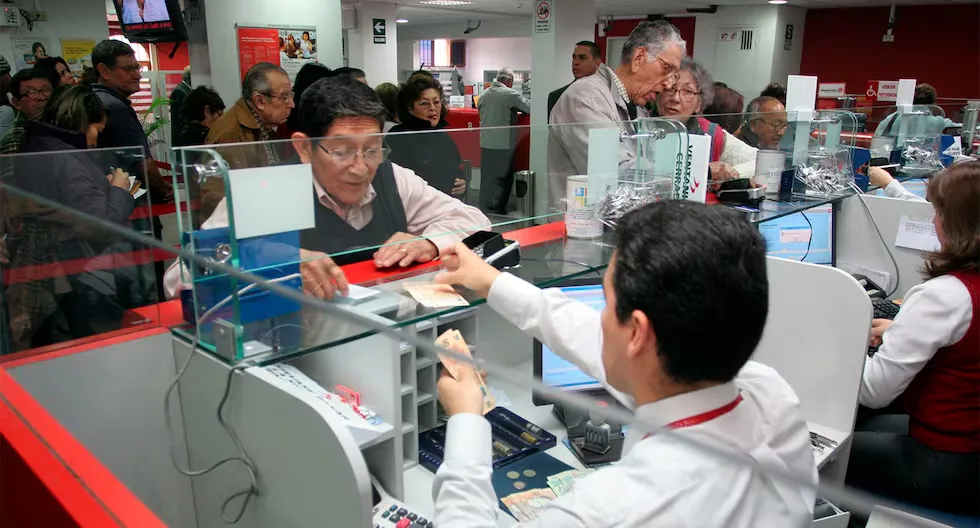
The Minister of Economy and Finance, Elmer Cuba, reported that the increase in the Minimum Living Wage (RMV), announced by Keiko Fujimori during her National Address on July 28, will be applied progressively. The measure contemplates raising the minimum wage until it reaches S/1,300. The Government proposes this mechanism to avoid a sharp impact on inflation. Likewise, it seeks to reduce the possible difficulties that the increase could generate in micro and small businesses. According to what Cuba explained, the increase will be carried out in two stages to reach the new established amount. The first increase will be S/100, while the second will rise to S/70. In this way, the RMV will gradually go from its current value to the announced S/1,300. The strategy aims to balance the improvement of workers’ income with the stability of prices and business costs.
Read more Where to watch the SOLAR ECLIPSE on August 12, 2026: schedule and places where it can be witnessed
This is the date indicated by the Minister of Economy and Finance regarding the minimum wage increase
The minimum wage increase does not yet have a defined date, despite the Government already announcing its intention to progressively raise the RMV. The Minister of Economy, Elmer Cuba, pointed out that the schedule will be coordinated with the Minister of Labor, Juan Sheput, who took office on July 28. The proposal must go through a dialogue stage before it is known when it will begin to be applied. The proposal will be taken to the National Labor Council (CNT), a space that brings together representatives of employers and workers. There, the Executive’s proposal will be discussed before defining the next steps. The process is especially relevant because the increase seeks to raise the RMV to S/1,300 in two stages. For now, the date of each increase remains unknown.
What has been the objective for which a decision was made about this wage increase?
Cuba explained that the RMV increase seeks to strengthen the purchasing power of workers who earn the minimum wage. To reach the new planned figure, the increase will be divided into two stages: a first of S/100 and a second of S/70. The strategy aims to avoid the adjustment generating an immediate impact on the economy. With this, the Government seeks to apply the measure gradually.
Read more Lima Film Festival 2026: these are the new features you can’t miss
Likewise, he stated that splitting the increase will reduce possible effects on inflation and the prices of goods and services. He also pointed out that the aim is to avoid the increase raising labor costs too much and limiting hiring in smaller companies. In this context, he reaffirmed that micro and small businesses will receive support measures during the implementation of the new RMV. The proposal seeks to balance a wage improvement with economic and business stability.
The increase to S/1,300 is insufficient for workers, so it should be raised to S/1,500
The General Confederation of Workers of Peru (CGTP) considers that raising the Minimum Living Wage to S/1,300 would not be enough to cover workers’ needs. The union argues that the new amount should have a closer relationship with the real cost of living. In response to the Government’s proposal, the union center proposes a higher figure as an immediate increase. Their demand aims to set the minimum wage at S/1,500. The CGTP’s position also generates tension around the wage increase discussion process. After the Government announced it would take the proposal to the National Labor Council (CNT), the union requested that the increase not be subject to new negotiations. For the organization, the RMV improvement should be realized without further delays. Thus, the debate faces the official proposal of S/1,300 against a union demand of S/1,500.
Read more In Latin America, Peru and El Salvador have the closest runoffs of the 21st century