




![Alberto Beingolea: “If they insist on not giving [the powers], they are complicating life for Peru”](https://insightermedia.com/wp-content/uploads/2026/09/bb3fa9e11304ea13fe2cd333955007bc-150x150.webp "Alberto Beingolea: “If they insist on not giving [the powers], they are complicating life for Peru”")



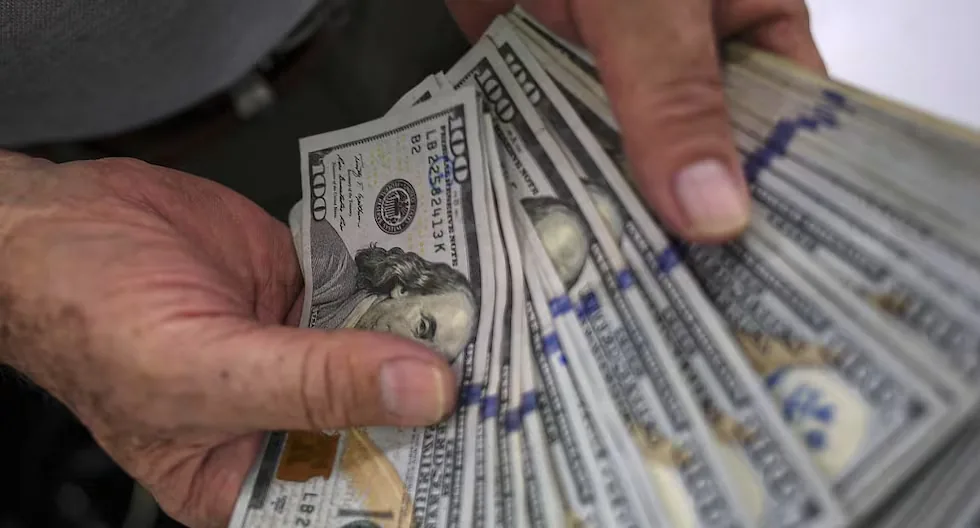
The dollar price closed the session practically unchanged at S/3.3460, amid mixed flows from local agents and a support intervention by the Central Reserve Bank (BCR). Globally, the dollar index (DXY) rose 0.17%, while several developed and Latin American currencies recorded depreciations.
Read more United States removes Syria from the list of «State Sponsors of Terrorism»
“International investors showed moderation at the beginning of the week, awaiting signals about the trajectory of interest rates from the Federal Reserve,” said Jorge Luis Huayta, FX trader at Kambista. In this context, copper closed firm above US$6.48 per pound and gold consolidated in the US$4,510 per ounce area, while Brent retreated to US$94.80 and WTI to US$86.90.
On the local front, Huayta indicated that during the second quarter, US$563 million entered Peru, showing a significant contrast compared to the 2021 elections in terms of private sector capital flight. He also noted that the Ministry of Production declared the fishing sector in emergency for 120 days due to the El Niño phenomenon, after the sector fell 51.94% in June and accumulated a contraction of 33.15% in the first half of the year.
Regarding technical behavior, the specialist explained that the FX market remains within the support range of S/3.3400 to S/3.3600, with support close to S/3.3400. In the region, the Colombian peso (-0.92%) recorded the largest depreciation, followed by the Mexican peso (-0.25%) and the Brazilian real (-0.21%), while the Peruvian sol closed practically flat.
Allisson Pérez, currency trader at Renta4 SAB, explained that during the session, demand came from corporates, while supply mainly came from the BCR, which intervened through Currency Swap Purchases for S/300 million, at an average rate of 2.93%.
The exchange rate traded in the range of S/3.3450 to S/3.3480, with a volume traded of US$344 million at an average price of S/3.3465. On the other hand, US economic data were positive and favored the dollar, showing higher manufacturing activity and a solid labor market. This could reduce expectations of Fed rate cuts and generate upward pressure on the USD/PEN exchange rate. The marginal reduction of the Fed’s balance sheet reinforces, albeit limitedly, this scenario.
The US services PMI rose strongly from 54.6 to 56.8 points, reflecting stronger domestic demand. This reinforces the idea that growth continues to rely mainly on services, although it could also maintain some inflationary pressure if that strength persists.
What are the main factors driving the dollar’s downward trend this week?
Read more Alianza Lima fans respond: 23 thousand tickets sold for the match against Garcilaso
According to Leonardo Baptista, head of Advisory at Sura Investments, the momentum responds to a combination of external and local factors, although the immediate trigger has been mainly international.
“On the external front, the market has reduced its bets on a Federal Reserve rate hike in September. This is compounded by weaker price and employment data in the United States, which have reduced investors’ preference for the dollar. Additionally, last week the US government intensified long-term Treasury bond buybacks, which helped moderate their yields. This scenario has also favored an increase in metal prices to record levels, generating additional downward pressure on the exchange rate,” he said.
Baptista considered that this downward trend could remain relatively stable during the second half of the year, as long as the sol continues to be supported by high copper prices and a favorable local environment is maintained.
Regarding a possible trend for the dollar to rise again, the Sura Investments specialist explained that “a reversal could occur if we again observe rising inflation data, greater strength in the US labor market, and an increase in long-term Treasury bond yields.”
“Locally, the main factors that could generate upward pressure on the exchange rate would be a drop in copper and gold prices, reducing the dollar supply from mining companies, or a deterioration in political confidence. Also, another risk we must consider is the effects that the El Niño phenomenon could have on inflation,” he added.
It is worth noting that the dollar had not reached this threshold for approximately six years. During that period, prior to the COVID-19 crisis, the dollar mainly moved within a range between S/3.24 and S/3.40. Subsequently, the pandemic pushed the exchange rate to levels close to S/3.60 and, later, it reached its historical high of S/4.138 in October 2021. Therefore, returning to levels close to S/3.35 is significant and reflects both the current strength of the sol and an external and local scenario that, for now, continues to be favorable for the Peruvian currency.