




![Alberto Beingolea: “If they insist on not giving [the powers], they are complicating life for Peru”](https://insightermedia.com/wp-content/uploads/2026/09/bb3fa9e11304ea13fe2cd333955007bc-150x150.webp "Alberto Beingolea: “If they insist on not giving [the powers], they are complicating life for Peru”")



The Peruvian beauty and personal care market is entering a new phase. While consumption advances and the supply is renewed with hundreds of products, an unusual wave of Asian companies is entering the country, mainly with facial treatment and sun protection proposals. Meanwhile, major international brands like Sephora and Kiko Milano are moving more cautiously as they finalize their registrations and distribution agreements.
In the first half of 2026, 70 new companies entered the Peruvian cosmetics and personal hygiene market, according to the Commercial Intelligence Study of the Peruvian Beauty and Wellness Guild – Cosmetics, Personal Hygiene, and Domestic Cleaning (Copecoh) of the Lima Chamber of Commerce (CCL). The figure represents a slowdown compared to the 80 that entered in the same period of 2025, but what is relevant is its composition: 58% of the new players come from Asia, mainly from China, South Korea, Japan, Malaysia, and Singapore.
This is not, moreover, a usual flow. According to Ángel Acevedo, president of Copecoh, normally between 10 and 15 companies entered the market in a comparable period. In all of 2025, about 230 new companies arrived, so the 70 in the first half of this year show a still significant entry rate, although it does not necessarily imply that the year will end with a similar figure.
Most of these new participants are small scale. 85% made investments under US$100,000, while 15% invested between US$100,000 and US$1 million. None exceeded this last amount. Regarding categories, facial treatment concentrates most of the bets, followed by hair care and makeup.
A S/5.060 million market
The entry of new competitors occurs in an industry that maintains an expansion pace. Between January and June 2026, the Peruvian cosmetics and personal hygiene market reached S/5.060 billion, equivalent to about US$1.5 billion, with an 8% growth compared to the first half of 2025.
The industry also mobilizes about 600,000 people, including 585,000 consultants and 15,000 direct workers, and represents around 1.5% of Sunat’s revenue and 0.9% of the national GDP, according to Copecoh.
The semester’s supply reached S/6.365 billion, between imports and production for S/5.660 billion, and inventories from previous periods for S/705 million. Consumption absorbed S/5.060 billion, while the sector maintains an inventory equivalent to between three and four months.
By categories, hair care grew the most, with a 12% increase, followed by sun protection, with 10%. Fragrances and body treatment grew 8%, makeup 6%, while facial treatment and personal hygiene advanced 5%. Fragrances remain the largest category, with 24% share, followed by hair care, with 23%, and personal hygiene, also with 23%.
“This average is not the same for all categories,” explains Acevedo.
Korea changes the beauty map
The Asian advance is not exclusive to Peru. For Copecoh, it responds to a global transformation in the industry, in which South Korea has gained prominence as a source of innovation.
Acevedo says that during a recent visit to Cosmoprof Worldwide Bologna, they identified three major trends: the growth of organic and natural products, the advance of K-beauty, and the search for higher concentrations in perfumery.
In the case of Korean cosmetics, the speed of launch is one of its main attributes. “New products in Korea come out every three months,” he said.
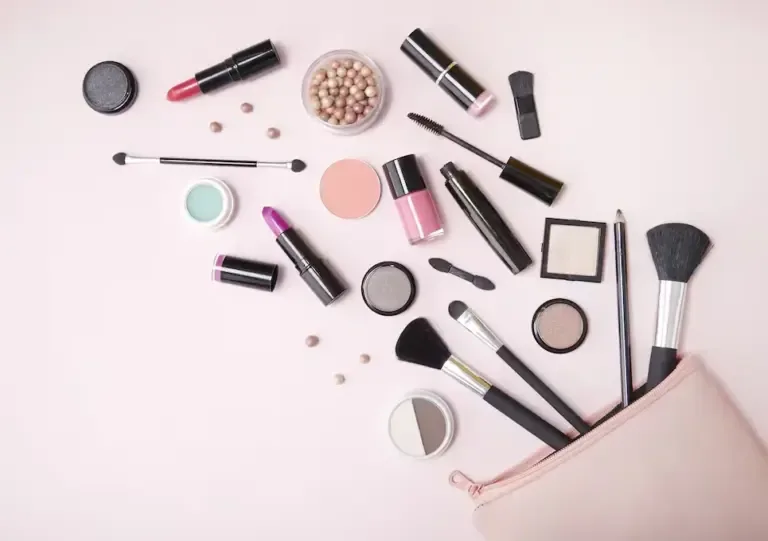
The Peruvian market begins to reflect this trend. Korean products already represent about 10% of facial treatment products and 6% of sun protection products, according to Copecoh.
Sun protection, moreover, is one of the categories that is gaining space most rapidly. Acevedo attributes part of this expansion to greater concern for skin care and the emergence of Peruvian companies developing competitive formulas.
Among them, he mentions Portugal, which has developed larger presentations also aimed at institutional use. A Peruvian regulation that requires certain employers to provide sunscreen to workers exposed to the sun has also opened a niche for this type of product.
The other side of expansion: Yobel case
But the industry’s growth is not free of interruptions. One of the factors that could alter the figures for the second half is the fire recorded at the Yobel Supply Chain Management plant, manufacturer and supplier of Belcorp.
Acevedo estimates that the impact will be felt especially in local production. Currently, about 25% of the market’s billing corresponds to national production and 75% to imported products. After the fire, he projects that the weight of local production could decrease to about 20%, while imports would represent around 80%.

The effect, therefore, would not necessarily be a drop in consumption, but a change in the composition of the supply. Belcorp had to modify part of its catalog and resort to products manufactured in other countries to cover the shortage, according to Acevedo.
“We are talking about the number one company. It will be a drop in production and growth,” he said.
The consequence could be seen in upcoming market measurements, when comparing how much of the growth came from national production and how much from imports.
Effects of the El Niño phenomenon
Another risk factor adds to this scenario: the El Niño phenomenon. Copecoh analyzed the historical behavior of beauty categories during previous episodes and found that the impact is not uniform.
Read more Datum Survey for America: Keiko Fujimori’s approval drops from 60% to 42% in one month
The most exposed categories would be makeup and fragrances, while personal hygiene could benefit from increased demand associated with health and contamination problems that usually accompany these phenomena.
Acevedo noted that the guild reviewed five decades of information and found favorable behavior for hygiene categories, particularly in regions like Puno, Cusco, and Arequipa. In a higher demand scenario, some of these categories could grow above 10% and reach up to 12%.
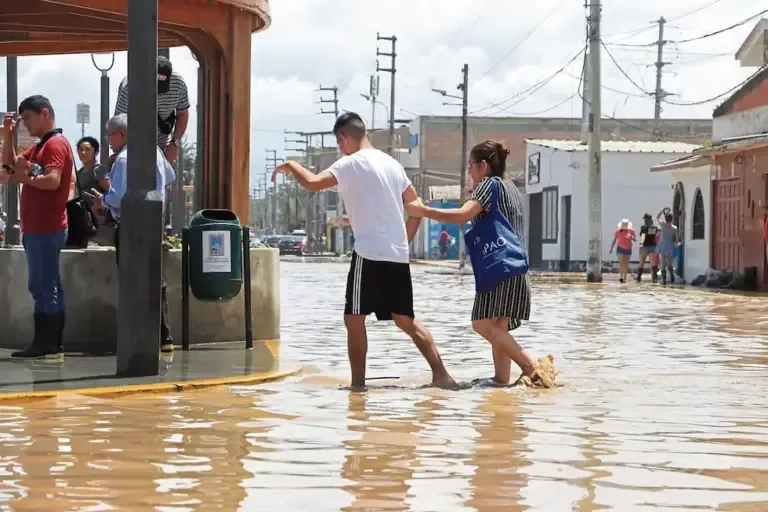
The effect will also depend on logistics. A significant part of cosmetics sales outside Lima is done through direct sales, so possible interruptions in transport and supply could affect distribution.
The risk does not end there. A scenario in which oil prices reach US$150 per barrel, for example, could raise costs and pressure companies to compete on prices rather than innovation. For Acevedo, this could lead to a more aggressive discount market.
Direct sales lose ground
The market change is also reflected in sales channels. Fifteen years ago, about 60% of the industry’s billing came from direct sales. Today it represents between 40% and 42%, while retail has gained ground.
The growth of shopping centers and greater access to credit explain part of this transformation. Peru currently has more than 350 shopping centers and more than 10 million people with cards, according to figures cited by Copecoh.
Direct sales, however, maintain a relevant presence, particularly outside Lima. The logistical challenge for companies entering from Asia is that, for now, many concentrate in the capital and still do not have an equivalent presence in the provinces.

Meanwhile, the consumer is also changing. Men went from representing about 5% of beauty product consumption a decade ago to nearly 15% currently, with greater demand for creams, hair treatments, and other products beyond fragrances.
And although young people represent an important part of the population, the group growing most in consumption is those aged 40 to 60, due to their greater purchasing power.
Why haven’t Sephora and Kiko Milano arrived yet?
The arrival of new Asian players contrasts with the slower landing of major international chains like Sephora and Kiko Milano.
According to Acevedo, a brand entering Peru must first resolve two fronts: brand registration with Indecopi and procedures related to formulas and products with Digemid. The process of protecting a large portfolio of products can take time, especially for companies managing thousands of brands and formulas.
In Sephora’s case, Acevedo estimates the complete process could take about two years. The chain would have to first register its brands and then proceed with the formulas of the products it will market. Under that calculation, its arrival could be towards the end of 2027, although there is no official confirmed date.
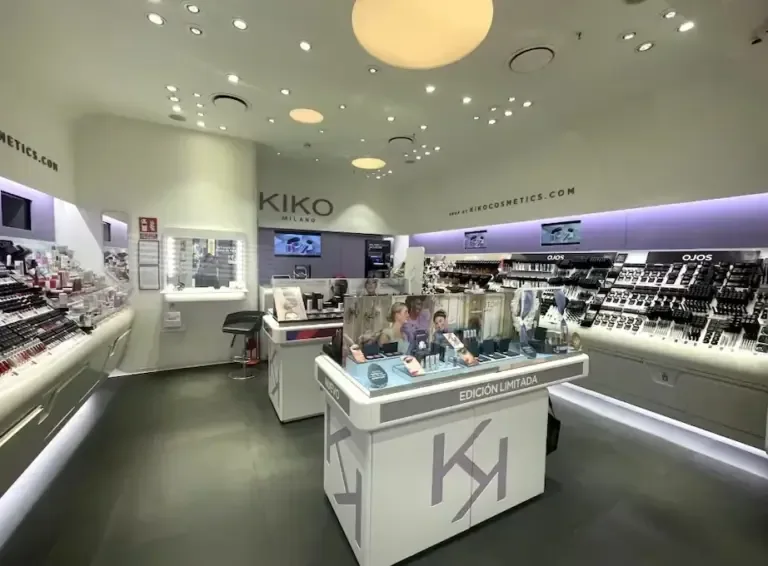
Kiko Milano also faces another discussion: the distribution model. According to Acevedo, the brand is negotiating its presence in the country with DBS and Aruma, who seek to define whether they will have exclusivity or if the brand will be distributed by several operators.
“It is a different problem from what small Asian brands face. While these enter with reduced portfolios and investment amounts under US$1 million, international giants need to resolve a much broader structure of intellectual property, products, distribution, and positioning,” he emphasized.
Beauty market by 2030
The industry starts from a considerable scale. Copecoh estimates that the Peruvian beauty and personal care market bills around US$3 billion annually, equivalent to about S/10 billion, approximately double the size of the pharmaceutical industry, according to Acevedo.
The projection towards 2030 remains optimistic, although with different scenarios. Copecoh’s model contemplates a five-year compound annual growth of 4% in a conservative scenario, 8% in a standard one, and 10% in an optimistic one.
The scenario that finally materializes will depend on the evolution of consumption, the entry of new brands, local production capacity, imports, and external factors such as El Niño and logistics costs.
For now, the market seems to be moving towards a more diversified industry with more Asian brands, greater weight of facial treatment and sun protection, male and adult consumers with greater spending capacity, and retail continuing to gain ground over direct sales.
“The 70 companies that entered in the first half are mostly small. The challenge for them — and for the big players preparing their landing — will be to transform the growing Peruvian demand for beauty into a sustained presence,” concluded Acevedo.
Read more Earthquake in Piura via IGP: latest minute of earthquakes in Peru, magnitude and epicenter
- A smarter consumer? This is how the Peruvian buyer changes to make their money go further amid rising prices
- Cienciano: hotel, museum, sponsors, and the goals of the project with which the “Papá” seeks to be champion also off the field
- Peruvian cuisine to the Middle East and Maldives: Jaime Pesaque, chef and entrepreneur owner of Mayta and 500 Grados, prepares new restaurants