




![Alberto Beingolea: “If they insist on not giving [the powers], they are complicating life for Peru”](https://insightermedia.com/wp-content/uploads/2026/09/bb3fa9e11304ea13fe2cd333955007bc-150x150.webp "Alberto Beingolea: “If they insist on not giving [the powers], they are complicating life for Peru”")


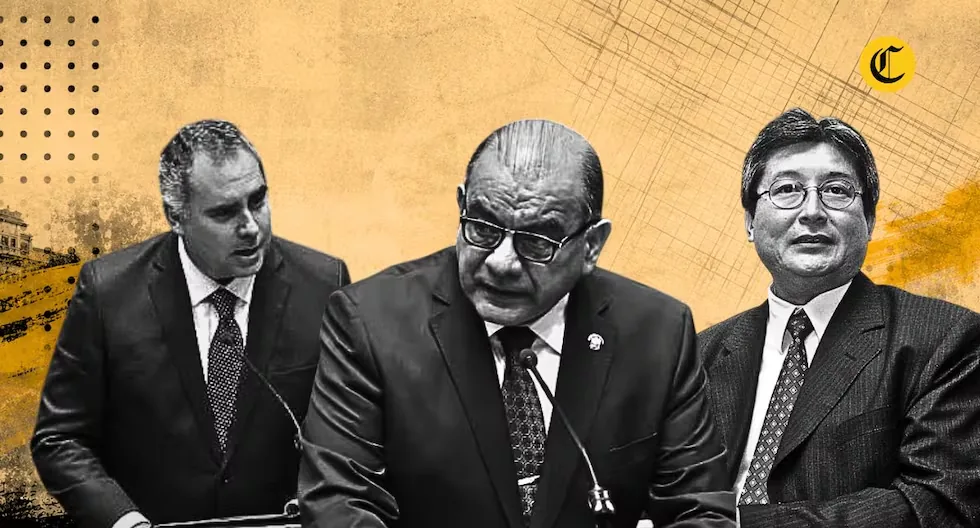
The motions were filed against the Ministers of Defense, Rafael Belaunde Llosa, and Energy and Mines, Guillermo Shinno. The first is questioned, in a set of 43 questions, about the use of the Armed Forces and the National Police in the protection of mining facilities and security in Pataz (La Libertad).
Meanwhile, the second is asked to appear before the full Congress due to the increase in fuel prices, the shortage of diesel, and the measures taken in response to transporters’ protests.
Meanwhile, the third motion, which will be filed against César Astudillo, Minister of the Interior, according to Deputy Analí Márquez (Juntos por el Perú), will seek to question the head of the Ministry of the Interior due to the lack of results in security matters.
According to data from the Department of Parliamentary Research and Documentation, this figure of three motions presented in the first month of administration is the highest in the last 15 years.
For example, in the first month of Pedro Castillo’s government, between July 28 and September 1, 2021, only one interpellation motion was recorded. This was filed against then Minister Iber Maraví (Labor) for his ties to Conare-Sutep, a union organization linked to Movadef, a front organization of the terrorist movement Shining Path.
During the first month of former President Pedro Pablo Kuczynski’s (PPK) administration, between July 28 and September 1, 2016, no motions were recorded. The first was only presented on November 23 of that year. It was filed against then Minister Jaime Saavedra (Education) for the alleged targeted purchase of computers for education sectors, delays in organizing the XVIII Pan American Games of 2019, among other reasons.
The motion was reported on November 24, 2016, and admitted for debate on December 1 of that year. Finally, Saavedra appeared before Parliament on December 7 and was later censured with votes from the then Fujimorist majority.
On September 30, 2011, during the first month of former Head of State Ollanta Humala’s administration, an interpellation motion was filed against then Minister of Women and Social Development, Aída García-Naranjo.
The issue was the death of three children in the hamlet of Redondo, Cachachi district, Cajamarca region, after consuming food provided by the National Food Assistance Program — PRONAA.
The minister appeared before Congress on October 6, 2011.
—List of questions for new interpellations—
Now the interpellations focus on the figures of the new cabinet. In the list of questions of the interpellation motion against the head of the Ministry of Defense, the Juntos por el Perú caucus asks about measures to prevent harm to the rights of small miners and the mining formalization process.
They also inquire about his security strategy in Pataz, the protection of fundamental rights during military operations.
“How does the Minister of Defense differentiate artisanal miners in the process of formalization from illegal mining and criminal organizations?” reads one of the questions.
Another asks: “What coordination do you maintain with the Ministry of Energy and Mines regarding Reinfo and the mining formalization process?“.
Besides that, the list contains questions about Evangelina Arias de Sologuren, president of the board of Minera Poderosa. It also places special emphasis on an agenda in favor of informal mining.
Juntos por el Perú also presented an interpellation motion against the head of Energy and Mines.
In the document accessed by this newspaper, it was learned that the interpellation list of 57 questions is subject to 10 topics, including the increase in fuel prices, protests and social conflict, Petro-Perú and national supply, and vertical integration and energy policy.
Read more Donald Trump assures that Russia “will not attack” NATO territory
They also highlight the stabilization fund and compensation measures, about supply and the most affected regions, Osinergmin and price formation, about inter-institutional coordination, energy transition, and the contingency plan.
Among the questions stand out the following: “What specific actions is the sector executing to prevent the conflict from spreading to Puno and other regions?”.
“What is currently Petroperú’s real capacity to produce, import, store, transport, and market B5 diesel and what is the utilization percentage of each of these capacities?”, reads another question.
Elsewhere it states: “What concrete measures has the Ministry of Energy and Mines adopted to guarantee Petroperú’s operational continuity without generating additional risks for public finances?”.
—Positions—
Regarding the case, Deputy Flor Meza (Fuerza Popular) assured that these political control actions “are not used just for the sake of using them.” She considered it premature to file any interpellation against ministers of state when President Keiko Fujimori’s government has been in office for less than a month.
“It is very premature to think about an interpellation. That is, first the ministers should appear before the respective committees that each deputy is part of, and then talk about an interpretation of any process, we have only been in government for almost 30 days and we are asking for results or let’s say answers even from past administrations. We have to be aware,” she said in an interview with this newspaper.

Deputy Luis Quispe Candia, from the Good Government Party, called the announced interpellation motions against various ministers of Keiko Fujimori’s government “out of place.”
He argued that it is not the time to interpellate ministers.
“The Good Government Party is a party made up of people, I believe, serious, sensible. We confess that we are in opposition, because that is what the population chose, but we are not irrational, in any way. So those proposals from some congressmen seem out of place to us. It is not the time to interpellate ministers, the time will come,” he said on RPP.
This newspaper tried to contact the Juntos por el Perú party but by the time of this edition’s closing, it had not responded to our communications.
In this regard, Victor Piñán, from the Civic Works Party, opined. In an interview with El Comercio, he considered that the interpellation filed against the Minister of Defense, Rafael Belaunde, is very premature.
“We do not agree on everything, about the Minister of Defense, for example, we believe it is very premature to be presenting that interpellation. About the Minister of the Interior, we have not yet read the argument,” he stated.
Analysis
César Ipenza, an environmental law specialist, considered it “curious” that in the interpellation motion against Rafael Belaunde Llosa there are interests regarding illegal and informal mining.
“They could not impose or force anything about illegal mining on Minister Shinno, but yes in this case with Minister Rafael Belaunde,” he said in an interview with this newspaper.
The expert opined that the Chamber of Deputies and Congress in general should facilitate governance.
“The oversight work they perform is important, it is part of their role but in one month of government these issues are not resolved, especially in a context of global energy crisis, and watch out for the background of these measures aiming to pressure the government so that finally different interests such as illegal mining continue to impose themselves,” he said.
Read more Sudden flood leaves at least 362 dead and more than 1,400 missing between Nepal and Tibet | VIDEOS