




![Alberto Beingolea: “If they insist on not giving [the powers], they are complicating life for Peru”](https://insightermedia.com/wp-content/uploads/2026/09/bb3fa9e11304ea13fe2cd333955007bc-150x150.webp "Alberto Beingolea: “If they insist on not giving [the powers], they are complicating life for Peru”")



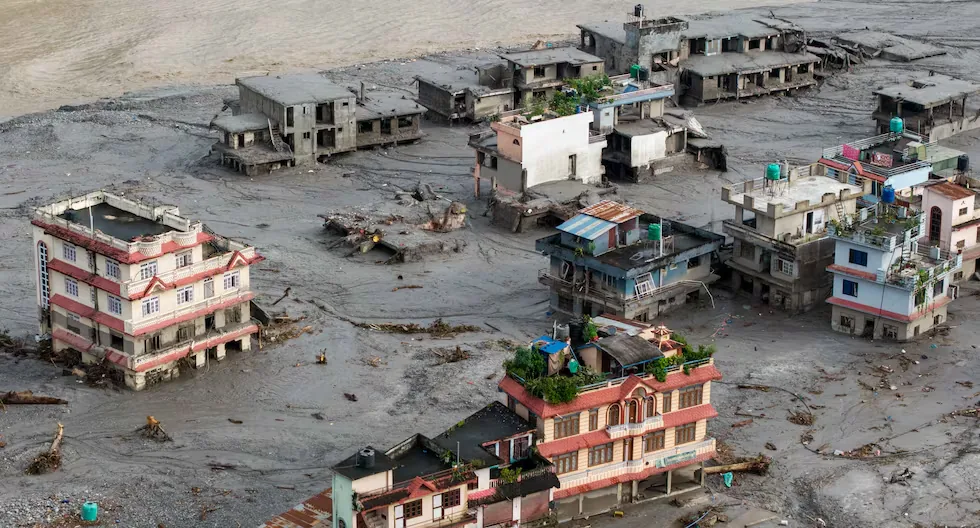
The devastating avalanche on Wednesday in northern Nepal, next to Chinese Tibet, killed at least 359 people, according to a new toll released by the Nepalese police. Chinese state media reported three deaths on its territory, bringing the provisional total to at least 362 dead and more than 1,400 missing.
A terrifying surveillance video taken from the Chinese side shows how, on Wednesday morning, a fierce wall of mud and debris engulfs a multi-story building while dozens of people run to save their lives.
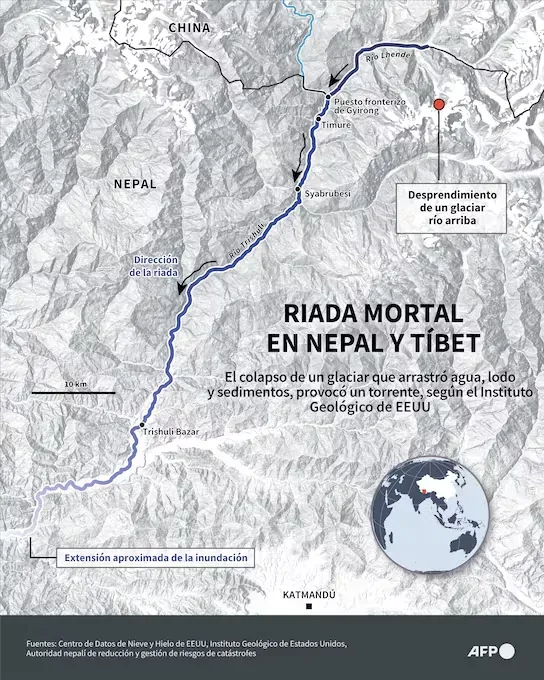
The imposing torrent of water and mud, similar to a tsunami, was caused by the partial collapse of a glacier, so violent that it was recorded as a 5.2 magnitude “seismic event,” according to the United States Geological Survey (USGS).
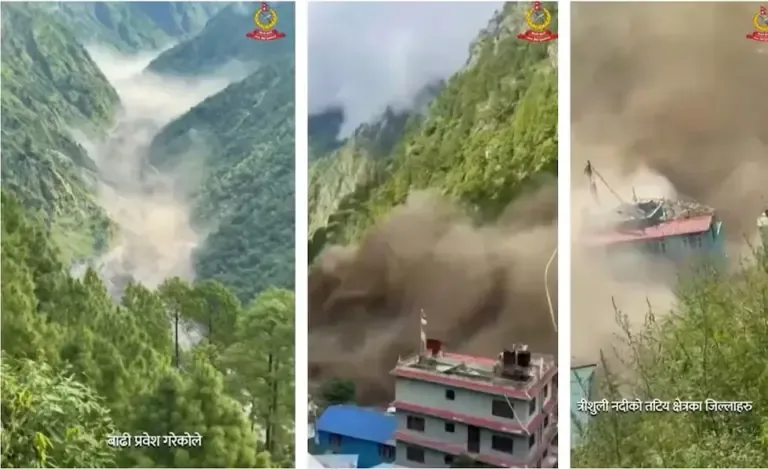
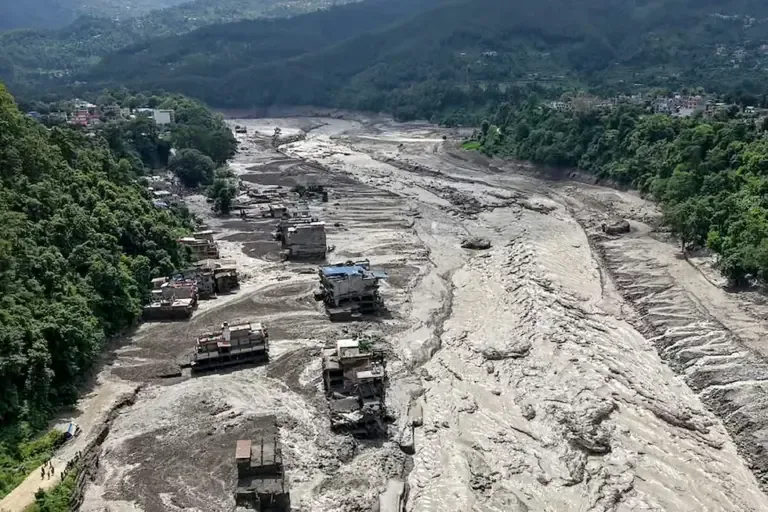
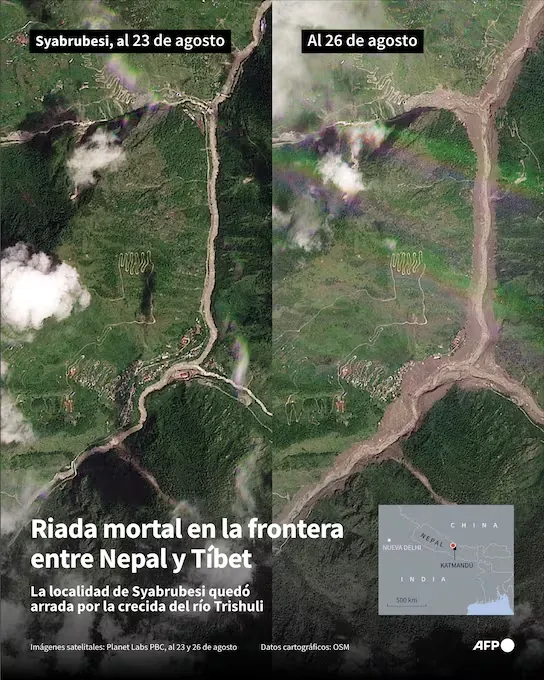
The flood swept through Nepal’s Trishuli River valley in Nuwakot district, north of Kathmandu, and the Bhote Koshi valley, east of the capital.
“It’s all over,” Omkar Joshi, 35, a refugee in the hills of the Nepalese town of Timure, told AFP. “It’s nothing more than a gigantic cemetery.”
Today, a flash flood has swept through markets, settlements, and hydropower projects along the Bhotekoshi River in Timure and Syabrubesi, Gosainkunda Rural Municipality, Rasuwa District, Bagmati Province, Nepal. pic.twitter.com/DWVsGQpRzV
— Weather Monitor (@WeatherMonitors) August 26, 2026
Devastating CCTV footage from the Chinese side of the Nepal-China border shows the massive flood sweeping through the area with incredible force, giving a stark glimpse of how suddenly it was struck. pic.twitter.com/s2eVfOzd7G
— Everest Today (@EverestToday) August 26, 2026
Twenty-four hours after the disaster, Nepalese authorities are still missing 823 people, including 517 foreign tourists.
Among them are 178 Indian citizens, 65 from the United States, 53 from Ukraine, 51 from Malaysia, 35 from Australia, 33 from the United Kingdom, and 25 from Canada, the Tourism Office specified. Spain said four of its citizens are unaccounted for.
On the other side of the border, Chinese state media reported 558 missing, including 260 foreigners, although it did not specify their nationalities.
The Chinese Foreign Ministry indicated that about one hundred Chinese citizens were missing on the Nepalese side.
Both Chinese Prime Minister Li Qiang and his Nepalese counterpart Balendra Shah visited affected areas to oversee search and rescue operations, according to Chinese state media and the Nepalese leader’s office, respectively.
Scary visuals from today show people desperately running for safety as the flash flood hits Gyirong Port, China, but they couldn’t find a safe place to escape.
— Weather Monitor (@WeatherMonitors) August 26, 2026
The flood later hit Nepal, with hundreds reported missing, including 126 Indian tourists. pic.twitter.com/4wzPFeYWYJ
Search through the mud
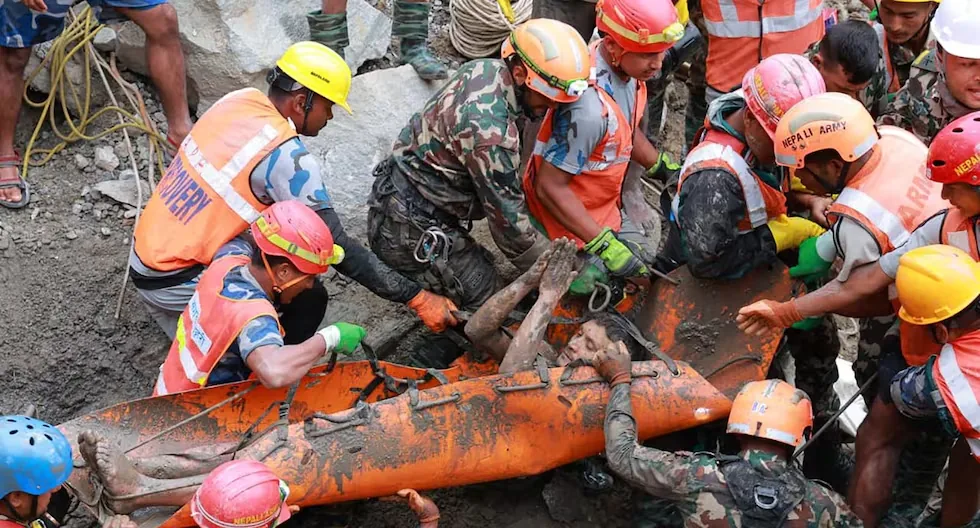
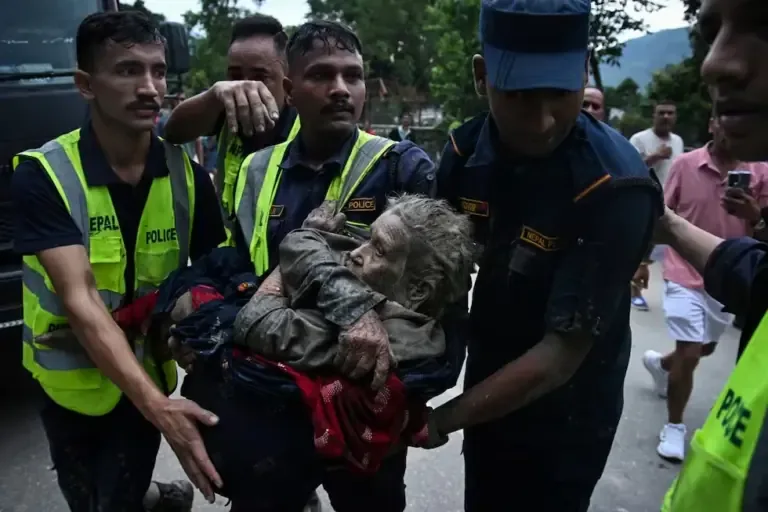
On the ground, rescuers are trying to make their way through the thick layer of mud and debris in search of survivors, with the help of tracking dogs.
Among those searching for their relatives was Subash Khatani, who told AFP he was trying to find his brother.
“He is among the missing in (the district of) Rasuwa, that’s why we went out to look for him,” he said.
The director in Nepal of the International Federation of Red Cross and Red Crescent Societies (IFRC), David Fisher, warned about the scale of the catastrophe, after which “entire villages and market areas have been devastated.”
The United States pledged $500,000 in aid.
Meanwhile, experts warn that a persistent blockage in a river could cause a new flood.
“Since there is still a blockage in the upper part of the border river between Nepal and China, authorities warn that a second flood could occur,” Qianggong Zhang, head of climate and environmental risks at the International Centre for Integrated Mountain Development (ICIMOD), based in Kathmandu, told AFP.
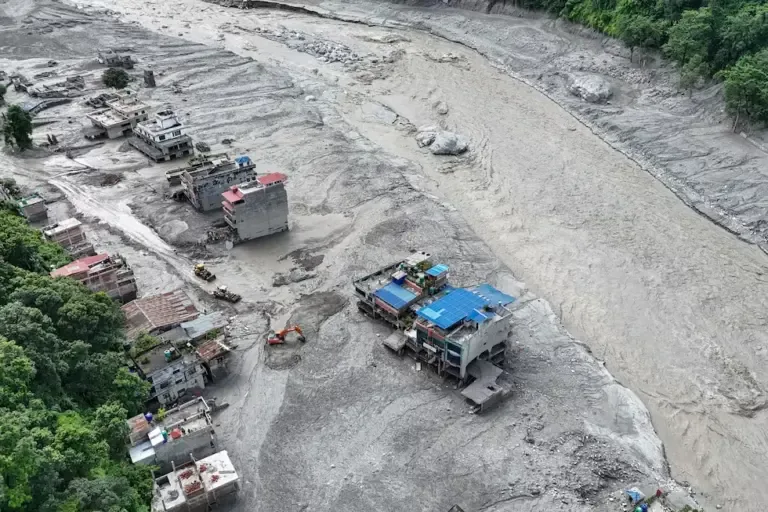
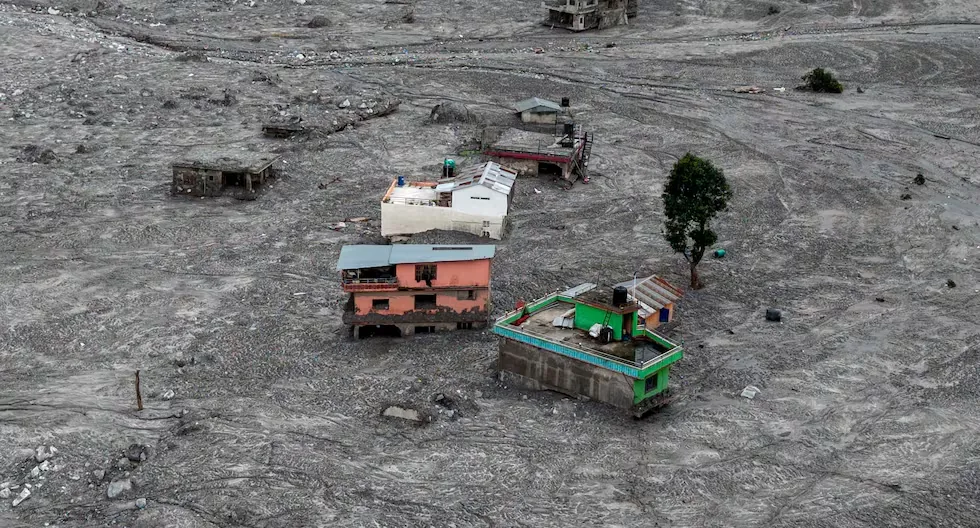
Videos released by the Nepalese police captured how the floodwater rose up one of the rivers and swept away entire houses in its path, as well as AFP images showing the upper floor of a house protruding from the muddy ground.
The Nepalese Army is conducting overflights in the area and reported that 105 people were evacuated and medical supplies and emergency humanitarian aid were dropped.
Chinese President Xi Jinping said “the most urgent task is to do everything possible to search for and rescue missing people,” according to that broadcaster.
The Dalai Lama said Thursday that he prays for all the victims and called for “appropriate relief measures.” The spiritual leader of Buddhism is considered by Beijing as a rebel and separatist, after fleeing Tibet to exile in 1959 following Chinese troops suppressing an uprising in that region.
Meanwhile, Pope Leo XIV expressed being “saddened to learn of the loss of lives and devastation” and sent “his deepest condolences to the families of the victims,” the Vatican said.
The monsoon rains, from June to September, usually cause deadly floods and landslides throughout South Asia.
Scientists say climate change is increasing the frequency and intensity of such extreme weather events.
Read more The U.S. will revoke up to 200,000 visas: who will be affected and what will happen to them?