




![Alberto Beingolea: “If they insist on not giving [the powers], they are complicating life for Peru”](https://insightermedia.com/wp-content/uploads/2026/09/bb3fa9e11304ea13fe2cd333955007bc-150x150.webp "Alberto Beingolea: “If they insist on not giving [the powers], they are complicating life for Peru”")



El Niño Phenomenon LIVE: latest news, Senamhi alerts and prevention actions in Peru
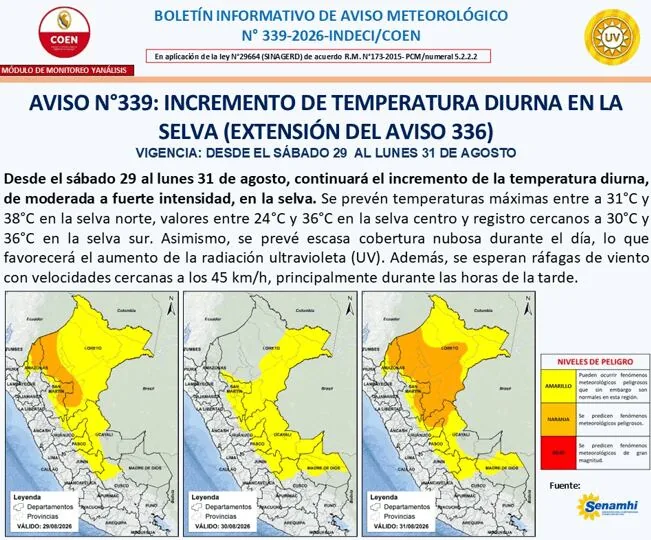
INDECI reported that from August 29 to 31 there will be an increase in daytime temperature in the jungle, from moderate to strong intensity.
Enfen maintains Coastal El Niño alert and foresees extraordinary magnitude until January 2027
- The multisectoral commission estimates a 62% probability that the event will reach an extraordinary magnitude between September 2026 and January 2027.
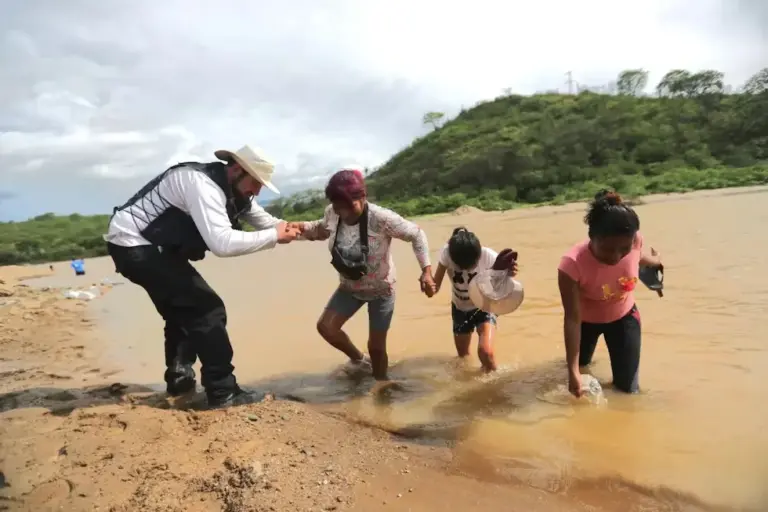
Coastal El Niño would have an extraordinary magnitude between September 2026 and January 2027. (Photo: Andina)
- The Multisectoral Commission in Charge of the National Study of the El Niño Phenomenon (Enfen) maintains the state of “Coastal El Niño alert” due to the high probability that this event will persist until the summer of 2027, according to its official statement No. 15-2026.
- In the Niño 1+2 region, located off the coasts of Peru and Ecuador, there is a 62% probability that Coastal El Niño will reach an extraordinary magnitude between September 2026 and January 2027. For February and March 2027, the magnitude would be between strong and extraordinary.
- El Niño has intensified by 37% due to climate change
- El Niño worsens droughts, floods, wildfires, or coral bleaching episodes; and has significant impacts on agriculture and public health
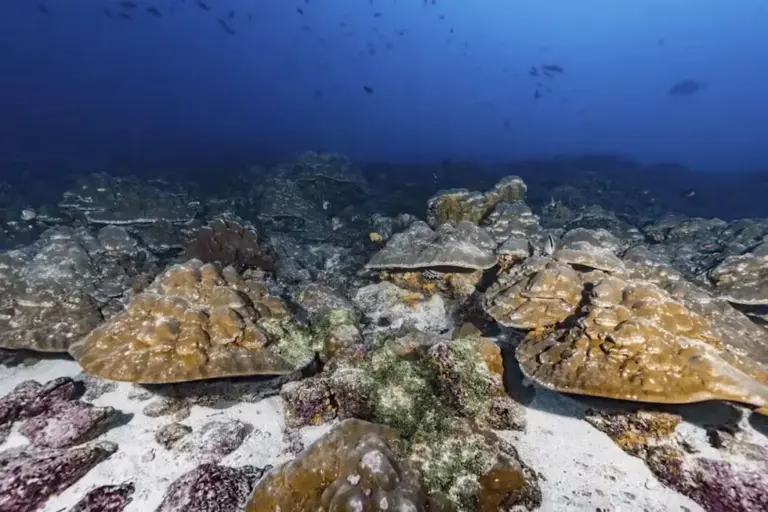
A new analysis of millenary corals from the Galápagos Islands (Ecuador) confirms it: climate change is amplifying the El Niño-Southern Oscillation phenomenon, which today is 37% more intense than in the preindustrial era, according to a study by researchers
- A new analysis of millenary corals from the Galápagos Islands (Ecuador) confirms it: climate change is amplifying the El Niño-Southern Oscillation phenomenon, which today is 37% more intense than in the preindustrial era, according to a study by British and American researchers published in the journal Science.
- This natural climatic phenomenon occurs when the surface waters of the central and eastern Pacific Ocean warm intensely and interact abnormally with the atmosphere, altering climate patterns worldwide.
- El Niño worsens droughts, floods, wildfires, or coral bleaching episodes; and has significant impacts on agriculture and public health.
- In recent decades, several unusually intense El Niño events have occurred, with warming extending over much of the tropical Pacific.
- However, due to data scarcity and the high natural variability of the phenomenon, it has been difficult to determine whether its severity is caused by human-induced warming.
- The answer lies in the corals
- To verify this, the study authors used high-resolution paleoclimate models, specifically they reconstructed sea surface temperatures over the last 1,000 years using geochemical measurements obtained from both modern and fossilized corals from the Galápagos Islands.
- Since the Galápagos are located in the center of the region affected by El Niño , in the eastern Pacific, the chemical composition of their corals provides a sensitive record of ocean temperature changes related to the phenomenon.
- Corals grow between one and two centimeters per year by secreting layers of calcium carbonate. And the chemical composition of these layers provides a record of the sea water temperature in which they grew.
- Researchers checked whether the observed changes could be explained by natural variability by comparing them with preindustrial climate simulations (before approximately 1850) from 12 climate models.
- 40-year anomaly
- The results show that El Niño variability has increased considerably alongside global warming and that the most pronounced increase has occurred in the last 40 years.
- Modern variability is, specifically, 36.5% greater than during the preindustrial era, largely because El Niño events are more frequent and intense.
According to the latest official statement available from ENFEN, Coastal El Niño in the Niño 1+2 region could reach a magnitude between strong and extraordinary until summer. This area mainly includes the sea off the northern coast of Peru, where ocean warming can directly influence atmospheric conditions.
The El Niño Phenomenon keeps Peru on alert due to the persistence of warm conditions in the Pacific Ocean. As of Friday, August 28, 2026, ENFEN maintains the Coastal El Niño Alert and foresees that the event will continue over the coming months, with possible significant effects during the 2026-2027 summer.
- On August 26, temperatures exceeding 30°C were recorded in Piura, Lambayeque, and Tumbes, in what Senamhi considered an extremely hot day.
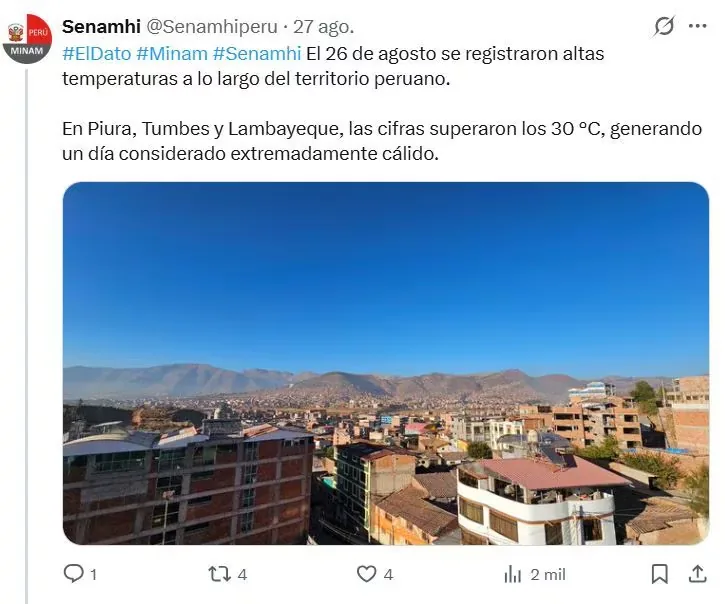
- Senamhi reported that from August 28 to 31, atmospheric conditions conducive to wildfires will occur. According to the agency, these conditions could favor the occurrence and spread of wildfires in the northern and central highlands.
- Senamhi chart on UV radiation in districts of Lima
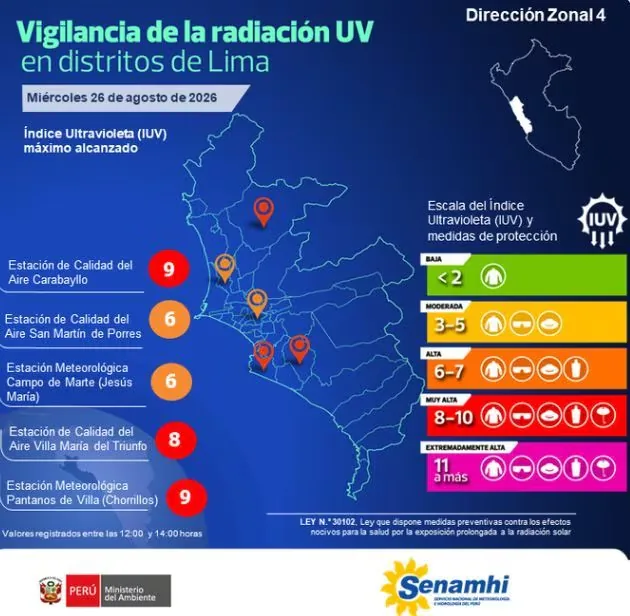
- According to Senamhi , on August 26, districts located north and south of Lima recorded, around midday, very high levels of UV radiation . In Carabayllo and Chorrillos UV indexes of up to 9 were reached, a category considered very high.
- Check in this note from El Comercio the latest news on how different regions of Peru are preparing for the threat of the El Niño Phenomenon. Also, you can learn about the latest reports from Senamhi, Indeci, and COEN regarding how this climatic event is affecting the country.