





![Alberto Beingolea: “If they insist on not giving [the powers], they are complicating life for Peru”](https://insightermedia.com/wp-content/uploads/2026/09/bb3fa9e11304ea13fe2cd333955007bc-150x150.webp "Alberto Beingolea: “If they insist on not giving [the powers], they are complicating life for Peru”")



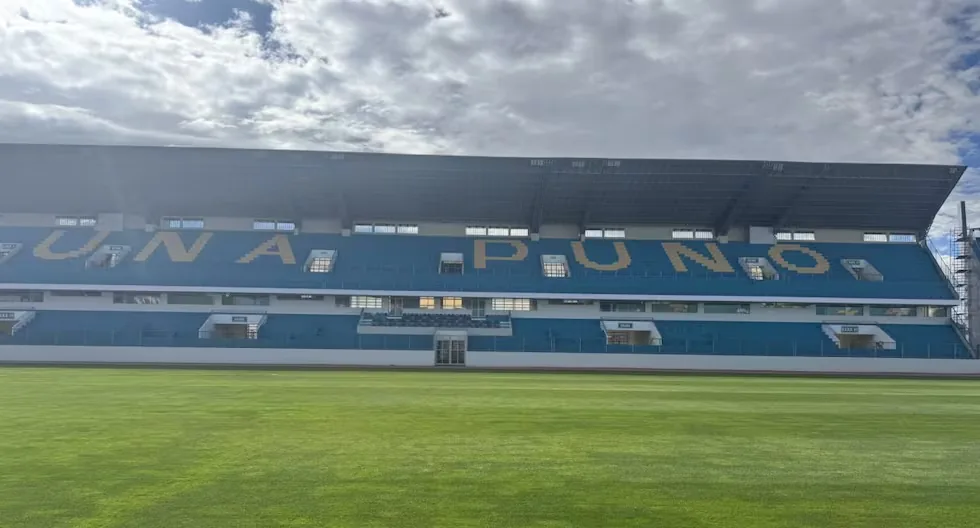
In Puno, football is not only played with the feet. First, and most importantly, before touching the ball you have to learn to breathe. There, at 3,822 meters above sea level, the ball seems to weigh a little more, the air is scarce, and every run has a price. It is precisely in that territory where the Peruvian national team wants to build a new home.
After the two previous trips to Puno, the FPF delegation led by coach Mano Menezes and the general director of football, Jean Ferrari, will be present again this week in the city to fine-tune the details of one of the most ambitious projects of the new management: to turn the Monumental stadium of the National University of the Altiplano (UNA) into a regular venue for the national team during the next Qualifiers.
The first evaluations were positive. On X, Ferrari thanked the willingness of Dr. Paulino Machaca, rector of UNA, on the last trip made in mid-August. Now, the visit to be made in the first days of September will be to close a key decision. The FPF plans to install lighting at the UNA stadium, which has a capacity for 35,000 spectators.
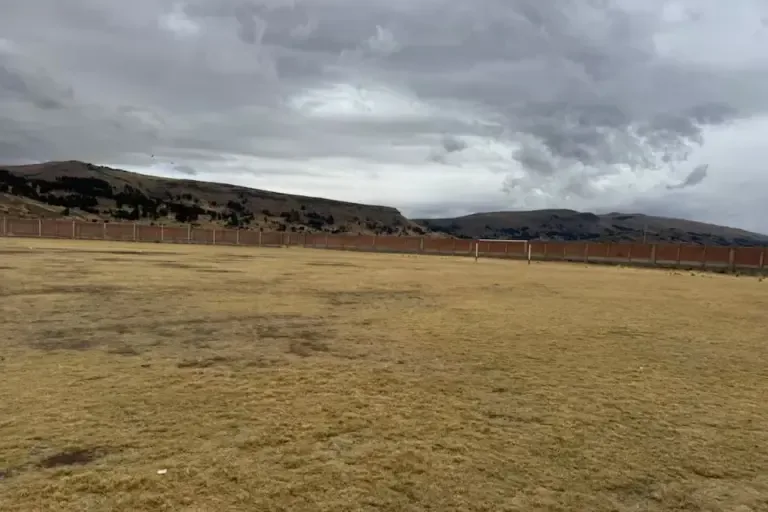
The other important step in the coming days will be the meeting they will hold with the mayor of Puno, Javier Ponce Roque. The Federation seeks to sign an agreement jointly with the Provincial Municipality of Puno and the National University of the Altiplano to carry out the construction of a small training center in the district of Paucarcolla, which is located almost 15 kilometers from the center of Puno, about 23 minutes by car.
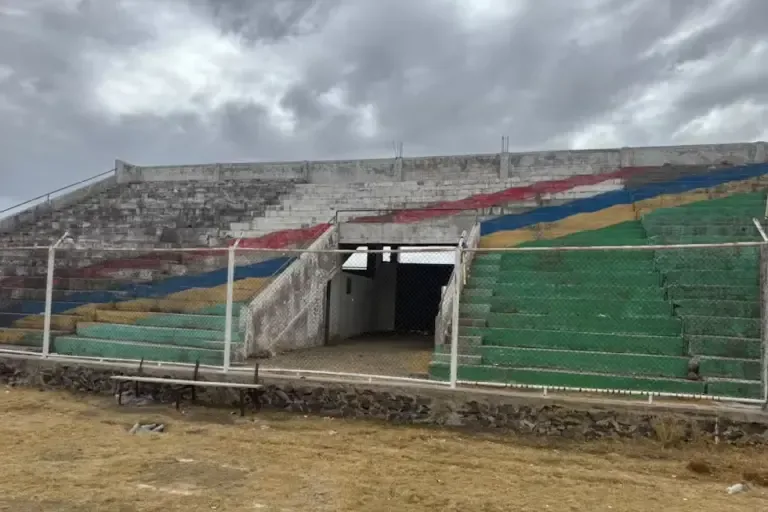
The lands currently occupied by the Puno Departmental League were also evaluated as a possible training venue, but the space in Paucarcolla is advancing as the favorite for the FPF.
Although the intention was born in the San Luis offices, it would also be sought that the construction of the small training center could also have the support of the Central Government. The idea is that this venue will be available from the start of the next Qualifiers, which are scheduled to begin in September 2027.
The project has not been free of conflicting opinions. Playing at altitude always generates debate: for some it is a sporting advantage; for others, a decision that must be managed carefully. But the FPF seems to have already chosen the path.
Puno wants to become a second home for the national team. A home with less oxygen, colder, and a ball that flies differently.
In Puno moving forward, thanks to the rector of UNA Dr. Paulino Machaca, also checking places for training. pic.twitter.com/M7Zz4TQAEn
— Jean Ferrari (@jferrari5) August 18, 2026
The map of the rivals
El Comercio was able to learn that with the idea of taking Peru to play in Puno, there is already a kind of map of rivals that the FPF has been defining.
Read more On this day, September 4: What happened in the world on a day like today?
Brazil, Argentina, Uruguay, and Colombia appear as the main candidates to have to go up to the Altiplano. Chile could also enter that list. The logic is simple: these are teams that Peru considers especially dangerous and against which the altitude factor could become an ally.
Not all rivals would have the same fate. Matches against Bolivia, Paraguay, Ecuador, and Venezuela would be played, by default, at another venue.
Menezes’ bet is that altitude stops being a circumstance and becomes a tool. That Peru arrives prepared, acclimated, and with players used to breathing where others need oxygen.
And if the plan succeeds, the Brazil jerseys, with Vinícius at the head, and post-Messi era Argentina will have to make an uncomfortable trip to the Altiplano. Also Uruguay, Colombia, and maybe Chile.
At 3,822 meters, the Bicolor wants the Qualifier to start before the ball rolls. Because in Puno you will not only have to play. You will have to be up to the altitude.
Mano’s “big” list
On his visit to Arequipa a week ago to see Melgar-Alianza up close, Mano Menezes declared in front of the L1MAX cameras about his next call-up, which should be known by mid-September.
“We are going to expand the call-up a bit, there is the possibility of using more players, so we are going to expand the list a bit to avoid the risk of losing players and not maintaining consistency. They are all great opponents, they come from playing the World Cup and reaching the round of 16, and they will be very important matches,” Menezes said.
When he refers to “expanding,” Mano would be thinking of 30 called-up players for the next FIFA date in which they will face Mexico, the United States, Canada, and Colombia. This expansion of call-ups would bring altitude players into the list. The call-up of players from Cienciano, now in the quarterfinals of the Copa Sudamericana, and Melgar, contenders in Liga 1, will be the base for the road to the 2030 World Cup.
Read more Two workers rescued alive from a tunnel ten days after the flood in Nepal | VIDEO