




![Alberto Beingolea: “If they insist on not giving [the powers], they are complicating life for Peru”](https://insightermedia.com/wp-content/uploads/2026/09/bb3fa9e11304ea13fe2cd333955007bc-150x150.webp "Alberto Beingolea: “If they insist on not giving [the powers], they are complicating life for Peru”")



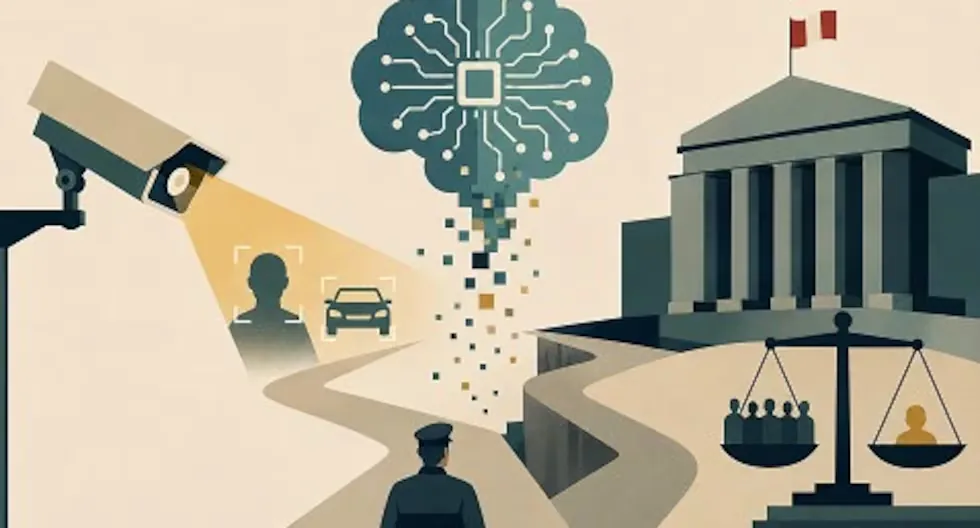
Last September, the Ministry of the Interior reported that a new data center would process information from 3,282 surveillance cameras and use artificial intelligence to identify faces and license plates of vehicles linked to judicial warrants. The idea is that if a camera detects a wanted person, the system can alert the Police.
It sounds good on paper, but the problem arises afterward. What happens when the technology finds the suspect? Who verifies the information? What if the system is wrong? Who is responsible for the error?
These questions matter because we are used to thinking of technology as if it were a kind of layer that we can place on top of any institution to make it work better.
But a more sophisticated camera does not correct a corrupt police officer, nor does an algorithm magically connect two institutions that do not share information. Finally, a computer capable of processing millions of data points does not guarantee that someone will make a good decision with them.
Mixed results
The risk is not only how accurate the algorithm is at recognizing a face, but where it gets its data from and who decides what to do with it. That problem, letting an institution’s past define its future, has been clearly seen in similar systems in the United States, which for years tried to anticipate where crimes would occur to decide where to send police officers.
The problem with this approach is that the past may be full of the same mistakes we want to avoid.
In Weapons of Math Destruction, mathematician Cathy O’Neil explained how a predictive system can end up creating a difficult-to-break cycle. If the Police monitor a neighborhood more, they will probably find more crimes there. That data feeds the algorithm and then the algorithm recommends monitoring that same neighborhood again. The machine seems to be discovering an objective reality when, in part, it is learning from decisions the Police themselves made before.
The evidence also does not allow these systems to be presented as a miracle solution. A predictive policing experiment conducted in Philadelphia, USA, did not find statistically significant reductions in much of the crimes evaluated and was classified as ineffective in an evaluation by the U.S. Department of Justice. In Plainfield, New Jersey, an investigation of more than 23,000 predictions from a commercial system found that less than 0.5% matched recorded crimes.
Read more The art of celebrating, eating well, and feeling good
The institutions
This does not mean we should return to a Police force without technology. On the contrary, research on surveillance of high-crime areas shows that using data to decide where to concentrate resources can work. But there is a huge difference between using information to help a police officer and giving an algorithm the illusion that it can decide for them.
Political scientist Virginia Eubanks reached a similar conclusion from another field. In Automating Inequality, she studied how automated systems used by public institutions could end up reproducing existing inequalities. Automating a decision does not necessarily make it fairer. Sometimes it simply makes its consequences faster and harder to question.
That should be our main concern now that Peru is beginning to incorporate these tools. The question should not be how much AI can do for the Police, but how much a well-organized Police can do with artificial intelligence.
A State that shares information, investigates well, reduces corruption, and has officials capable of being accountable for their decisions can leverage cameras, data analysis, and artificial intelligence to pursue criminal organizations much more effectively.
A State that has not solved these problems can use advanced technology to expand its capabilities without having yet improved the institution that controls them.
Technology does not arrive in an empty society. It arrives with our officials, our laws, our incentives, and our customs. That is why, before asking ourselves if AI can help us fight crime, it might be worth asking what kind of State we want to put behind it.
A machine could recognize a face in a crowd but, the difficult part remains getting the State to do the right thing after recognizing it.