




![Alberto Beingolea: “If they insist on not giving [the powers], they are complicating life for Peru”](https://insightermedia.com/wp-content/uploads/2026/09/bb3fa9e11304ea13fe2cd333955007bc-150x150.webp "Alberto Beingolea: “If they insist on not giving [the powers], they are complicating life for Peru”")


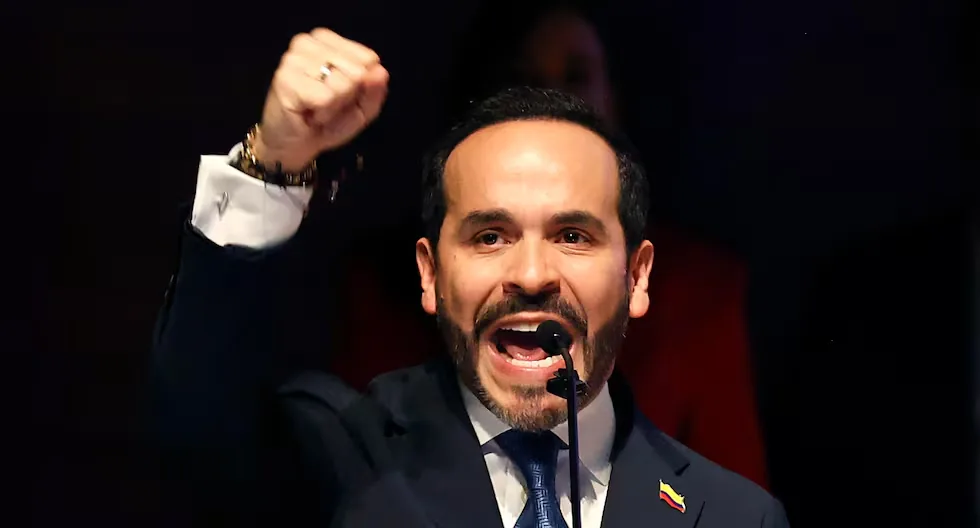
This Friday, August 7, Abelardo de la Espriella will assume the Presidency of Colombia. He has promised changes and, for now, will start by changing the location of the ceremony, which will take place in Cali, the capital of Valle del Cauca, leaving behind the city of Bogotá, as was traditionally done. This will be the first difference that will mark a contrast with the outgoing administration of Gustavo Petro.
The expectation is high, as is the climate of tension. And in recent days, both politicians have exchanged a series of accusations that do not remain only in adjectives.
What will this new beginning in Colombia be like? What message does changing the venue for the inauguration send?
In communication with El Comercio, international analyst Rafael Piñeros Ayala specified that “there is no legal provision that says it must be done in Bogotá,” although traditionally the swearing-in has been held in up to three venues: the Capitol of Congress, Bolívar Square, and the Palace of San Carlos.
“Legally, there is no rule that tells us it has to be done in Bogotá. There have been changes of location within Bogotá, but not necessarily outside Bogotá. The law says that a quarter of Congress must be present and the president of the Senate, who administers the oath to the president, must be there. That is important to carry out,” emphasized the professor from the Universidad Externado de Colombia.
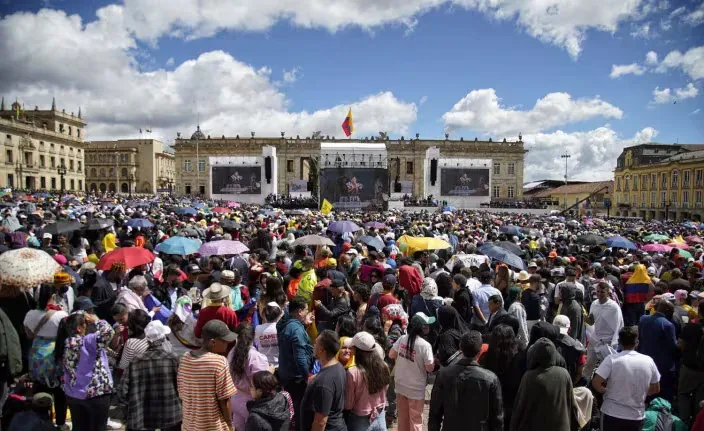
But there is also a symbolic aspect.
Cali was not De la Espriella’s first choice for the unprecedented ceremony. In recent weeks, there was consideration of holding it in a military garrison in Popayán, to pay tribute to “the true heroes of the homeland.”
Fabián Cárdenas, professor at the Pontificia Universidad Javeriana de Bogotá, told the EFE agency that “what De la Espriella seeks is to send a message of returning freedom to the military powers to combat the main security problems in Colombia.” However, this controversial proposal was set aside due to the risk of an eruption of the nearby Puracé volcano, currently on orange alert.
Regarding the new venue, Piñeros Ayala considered that the symbolism of Cali “lies in showing that the national territory goes beyond Bogotá and that it is possible, without a doubt, to also legislate or carry out functions from other places.”

For analyst Jorge Chávez Mazuelos, there is also a different view towards Bogotá, especially due to the electoral result, where his rival Iván Cepeda won with 52.5% of the votes.
“We already know how Bogotá voted and that could help explain why he decided not to do it there,” said the professor from the Diplomatic Academy of Peru. In any case, he highlighted that Cali is the third most important city in the country and is an industrial hub.
The ceremony will be held in an auditorium of the Universidad Santiago de Cali. Although it is a modern facility, it does not have the solemnity of traditional centers. There, King Felipe VI and the presidents of Argentina, Javier Milei; and Paraguay, Santiago Peña, among others, will be received.
But it is not the only change. According to the EFE agency, the Colombian capital is not in De la Espriella’s plans even for governing. The president-elect seeks to decentralize the Administration and therefore wants to make Barranquilla an alternate capital of Colombia, and Cali and Medellín satellite seats of the Presidency.
Civil disobedience and Gustavo Petro
Another shift that Colombia will experience will be led by the opposition (Historic Pact) and the ruling party (Defenders of the Homeland).
“Clearly, as long as there are differences, there will be a Copernican shift on a series of issues, there will be a 180-degree turn and, therefore, there will surely be a lot of tension between the Historic Pact and De la Espriella’s government”, said Chávez Mazuelos to this newspaper.
Most of these differences, explains the international analyst, would be in security policy, defense, drug fighting, environmental matters, foreign policy, and social policy.
Read more How the Hamas Disarmament Agreement Depends on a Key Israeli Decision in Gaza
Another possibility is the establishment of a shadow cabinet, in which the opposition bloc has a series of parliamentarians called shadow ministers. “What they do is political control, but specializing in a sector. So, there is a ‘minister’ who audits and verifies everything the minister in office does,” Chávez details.
This strategy is joined by the so-called civil disobedience proposed by the opposition. According to Iván Cepeda, in the coming days there will be no “mobilizations or marches,” but three “gatherings” in Cali, Barranquilla, and Bogotá, within the democratic sphere. But the president-elect himself described civil disobedience as “a euphemism to try to destabilize democracy and I will not allow it.”
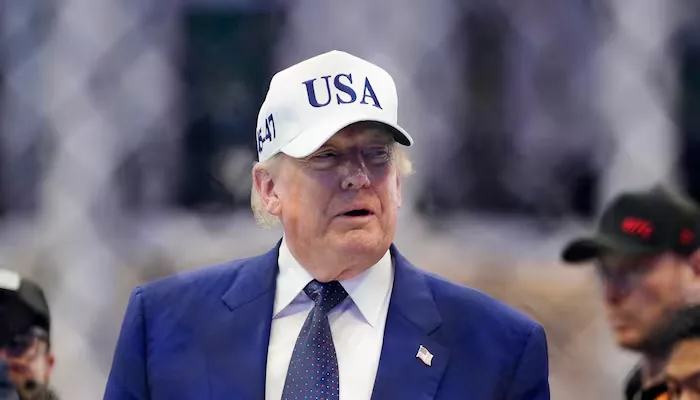
Another change in Colombia is in international relations, where the doctrine respice polum stands out, which consists of “looking towards the North Star, that is, looking towards the United States,” says Chávez Mazuelos. This doctrine has existed since 1918, when the United States was taken as a partner. “De la Espriella is resuming that alignment, that close orientation towards the United States. It is not that Petro broke relations with the United States, but there has been a lot of tension,” explains the analyst. Another change compared to Petro’s government will be the possible break of relations with Cuba and Nicaragua. Relations with Israel would also be resumed, and integration into the Shield of the Americas is pending. This alliance of countries, conceived by Donald Trump, would have an office in Medellín.
Although it is a legitimate mechanism, Piñeros Ayala indicated that “the opposition makes a mistake by trying to claim that civil disobedience will be constant”. He even commented that within the left there are critical voices regarding the tactical position that this implies.
“More than adding, it seems to me that it can subtract,” he warned.
And within the opposition is also the figure of Petro. Both seem to be at opposite ends. They have had controversies both politically, ideologically, and even culturally.
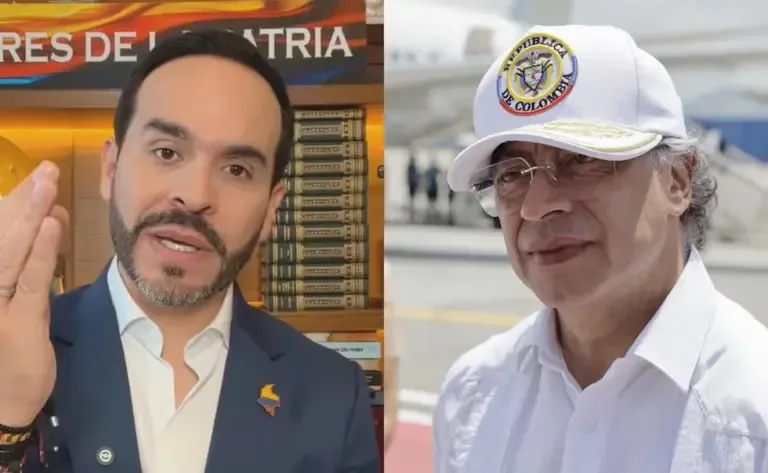
Experience says, as Piñeros Ayala recalled, that among former presidents “they give the new government a kind of margin of maneuver.” With Petro, this may be different.
“Petro likes debate, he likes confrontation, currently through social networks. It is a margin that is yet to be seen. They will not be friends. They will not be seen having coffee. They will not be seen taking a photo, maybe, a meeting,” he said in communication with this newspaper.
The terrorist threat
This is another topic discussed in recent days. Colombian intelligence has warned of an alleged “terrorist plan” by the guerrilla of the National Liberation Army (ELN) to disrupt the dates before and after the inauguration.
According to Colombian media, their targets would be military and police bases, such as the police station that suffered an attack last Saturday in Cúcuta.
SEE: Milei states that the alliance with the U.S. is the “key” to recovering the Falkland Islands
Adding to this situation is Petro’s warning. “We know of the existence of dozens of tons of explosives in Cali,” he said, referring to the fact that drug trafficking groups would be willing to use them “terroristically to give the excuse for the internal commotion.”
According to an EFE report, the state of internal commotion allows the Government to issue decrees to counter a serious disturbance of public order for a maximum of 90 days.
Piñeros Ayala indicates that “the climate today is one of tension”; however, the responsibility for security remains with Petro’s government and Cali has been hit by terrorism, by attacks of different kinds from the ELN, FARC dissidents, and the Gulf Clan.
“There have been various problems that have affected Cali in the last decade, or in the last two decades, and of course, they put it in a difficult situation,” said Piñeros Ayala. He listed the recent appearance of vandalism, looting, the arrival of displaced people, as well as the effects of the pandemic. This is how Colombia arrives for the new government of Abelardo de la Espriella.
- Milei reiterates his accusations against Lula da Silva: “He is a thief, he is corrupt”
- Morocco recognizes 40,000 migrant entries into Ceuta and 11 deaths on its territory
- Iran says it is advancing with Oman towards an agreement on the future management of the Strait of Hormuz