




![Alberto Beingolea: “If they insist on not giving [the powers], they are complicating life for Peru”](https://insightermedia.com/wp-content/uploads/2026/09/bb3fa9e11304ea13fe2cd333955007bc-150x150.webp "Alberto Beingolea: “If they insist on not giving [the powers], they are complicating life for Peru”")



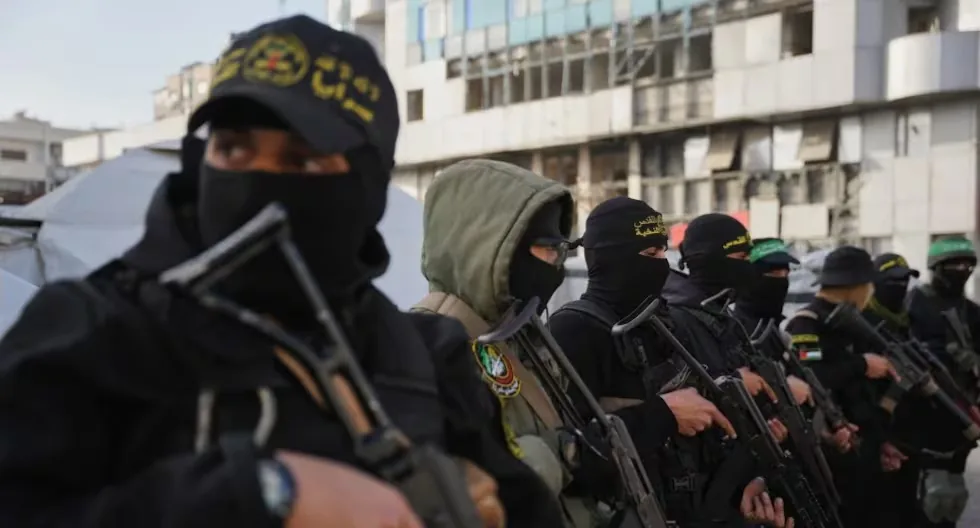
For the first time since its founding nearly 40 years ago, Hamas has accepted a roadmap to move towards its disarmament, a shift that could redefine the future of Gaza and open an unprecedented window for a diplomatic solution to the conflict with Israel. However, the agreement faces a crucial obstacle: while the Palestinian Islamist group conditions the surrender of its weapons on a gradual withdrawal of Israeli troops, the government of Prime Minister Benjamin Netanyahu demands exactly the opposite, that Hamas disarm completely before its troops leave the enclave.
Last week, the United States announced that Hamas and other Palestinian factions had accepted a document establishing a roadmap for their disarmament, as part of a broader plan to end the war in Gaza. The announcement was presented by President Donald Trump as a historic breakthrough.
“Today, the Peace Board reached a HISTORIC agreement for the COMPLETE DISARMAMENT of Hamas and all other armed groups in Gaza. This is a momentous step towards lasting peace and security,” wrote Trump Thursday night on Truth Social.
Hamas confirmed on Friday that it accepts the Peace Board’s plan but set conditions.
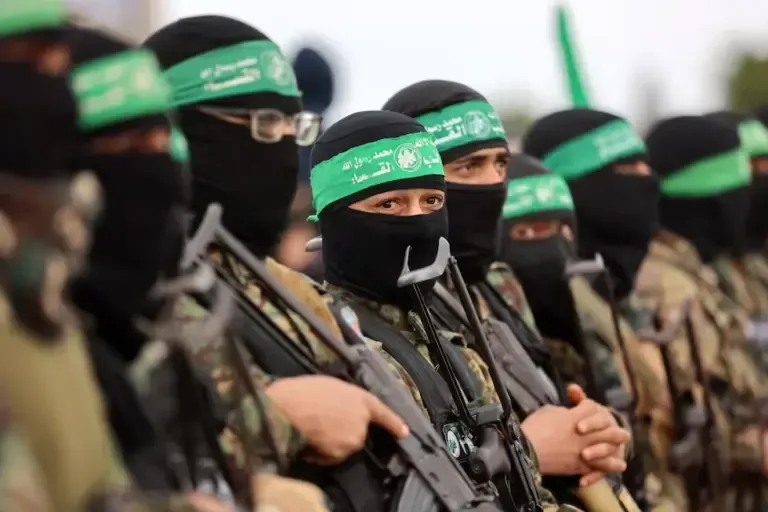
In a statement, Hamas stated that the surrender of its heavy weaponry is conditioned on Israel withdrawing its forces from Gaza and ending “all forms of aggression.” It added that this is a “fundamental requirement” to move forward with the agreement.
But on Monday the Peace Board assured that the “total withdrawal” of the Israeli Army “beyond the yellow line” in Gaza will occur when Hamas is fully disarmed.
Hamas confirmed that the heavy weaponry it surrenders will be stored under the responsibility of the National Committee for the Administration of Gaza (CNAG) of the Peace Board.
The CNAG is a provisional transitional government composed of 15 independent Palestinian technocrats, created in January this year to manage civil services, reconstruction, and daily operations in Gaza once the war ends.
According to Axios, the agreement is based on the principle that Gaza will have a single government, a single legal system, and a single legitimate security authority. The demilitarization process is expected to last between 200 and 250 days and will be phased.
The war in Gaza began on October 7, 2023, following Hamas’s attack on Israel that left 1,200 dead and more than 250 people kidnapped. Since then, the Israeli military offensive in Gaza has left more than 73,000 Palestinians dead.

The plan stipulates that first the Hamas civil police will transfer their weapons to a new Palestinian police force that will be under the command of a technocratic government.
Then, Hamas’s heavy weapons will be deactivated and stored in secure locations, while their tunnels and weapons factories would be dismantled.
Small arms would be collected in accordance with Palestinian law, Axios specifies.
All other Palestinian militias in Gaza, including Hamas’s enemy factions that were armed by Israel during the war, will also be required to surrender their weapons.
At the end of the process, the CNAG technocratic government and its police force would have a monopoly on weapons in Gaza, a Peace Board official said.
According to the agreement, an international stabilization force will help train the new Palestinian police, assist in weapons collection, and deploy between Palestinian-controlled areas and Israeli forces.
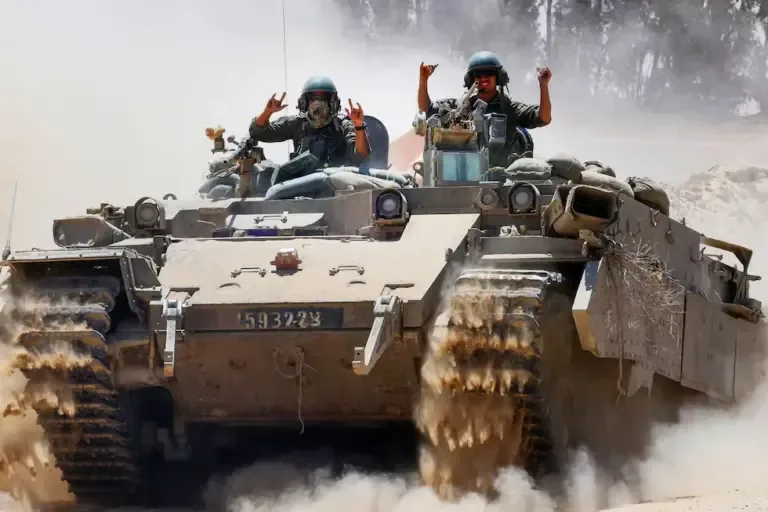
As for the Israeli withdrawal, it would be carried out gradually according to a schedule that is still being developed.
However, on Monday Israel said it conveyed its concerns to the United States about the plan.
“Israel has conveyed its observations and concerns about the proposed framework to our U.S. counterparts. The version that has been made public does not reflect Israel’s positions,” Doron Spielman, spokesperson for Prime Minister Benjamin Netanyahu’s office, told AFP.
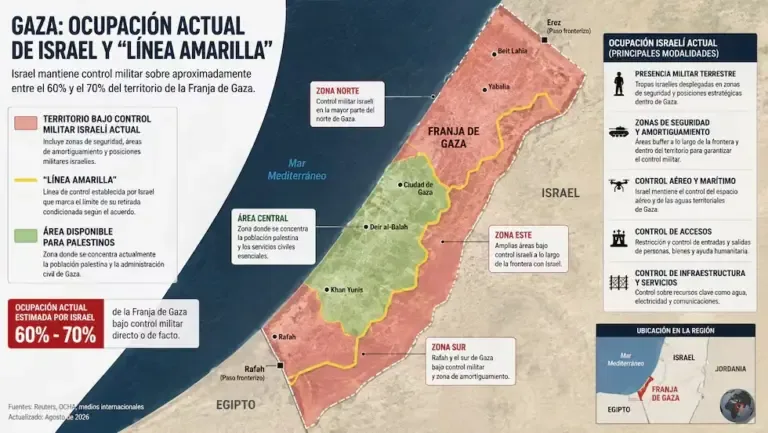
According to the most recent reports, Israel maintains direct or de facto military control over between 60% and 70% of Gaza, mainly through deployed troops and a control line known as the “yellow line”, as well as security zones and areas under military control.
An unprecedented turn, but the result of a strategy
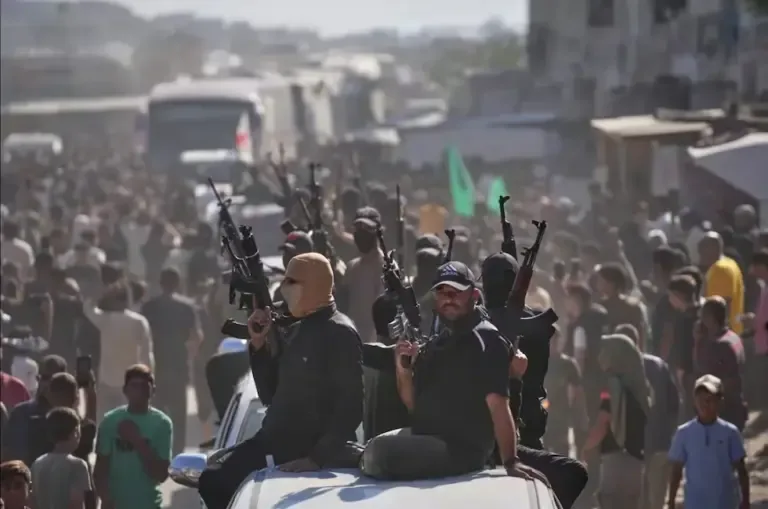
For journalist and international analyst Carlos Novoa, specialized in Middle East issues, Hamas’s willingness to accept a roadmap for its disarmament is a historic change, as the organization had never before opened the door to such a possibility. However, he clarifies that this move should not be interpreted as a spontaneous decision, but as part of a strategy.
Novoa explains to El Comercio that the Islamist group arrives at this point deeply weakened by nearly three years of war, with significant military and political wear, although it maintains influence over much of the Gaza Strip.
“There is a weakening of Hamas and a fatigue caused by the war. At the same time, it needs to regain some stability,” he states.
The exact number of fighters and weapons Hamas retains is unknown. An estimate cited by Israeli sources calculated at the beginning of 2026 about 20,000 fighters and around 60,000 assault rifles, although there is no independent verification of these figures.
The main obstacle: who takes the first step?
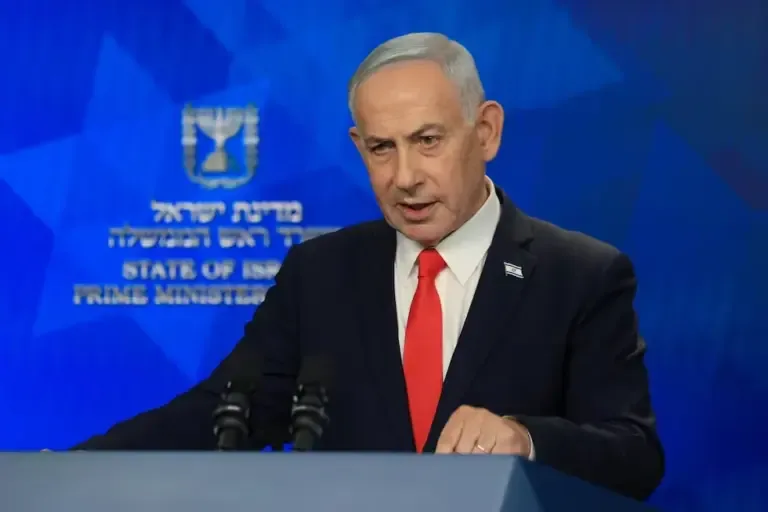
Novoa considers that the biggest problem with the agreement lies in the difference in conditions posed by both parties. While Israel demands that Hamas surrender its weapons first, the Palestinian movement conditions disarmament on the total withdrawal of Israeli forces.
“Israel demands disarmament. Hamas accepts, but with one condition: that Israel withdraws first. That is the crux of the matter,” he emphasizes.
The analyst doubts that the Israeli government is willing to completely abandon Gaza, especially when it maintains a military presence in a significant part of the territory.
“For Hamas to comply, Israel would have to do precisely what it has so far refused to do: completely leave the Gaza Strip,” he stresses.
Novoa believes that it is unlikely that Hamas will surrender its entire arsenal without guarantees that Israel will definitively relinquish control of Gaza.
He explains that fighters who remain hidden in tunnels and other positions consider their weapons as the last defense mechanism against possible reprisals.
“The militants will not surrender their weapons if they have no guarantees that Israel will not maintain any control over Gaza. Weapons are the last and only thing they have to defend themselves,” he indicates.
He adds that complete disarmament would radically change the military balance in the area.
“If Hamas surrenders all weapons, the main armed opposition to Israel taking absolute control of the Strip would practically disappear,” he argues.
“There is a need for this agreement to start moving forward, but ultimately the key lies with Israel,” he insists.
He adds that the success of the process will not depend solely on Hamas’s willingness to move towards disarmament, but on Israel’s acceptance to completely withdraw its troops from the territory, a condition that, for now, seems unlikely.