
![Alberto Beingolea: “If they insist on not giving [the powers], they are complicating life for Peru”](https://insightermedia.com/wp-content/uploads/2026/09/bb3fa9e11304ea13fe2cd333955007bc-150x150.webp "Alberto Beingolea: “If they insist on not giving [the powers], they are complicating life for Peru”")

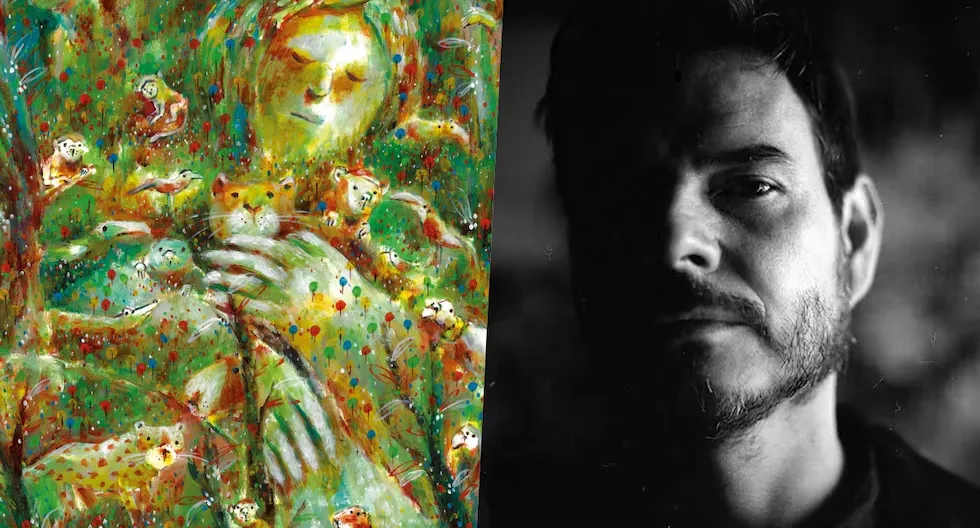
The first time Ecuador was guest of honor at the Lima International Book Fair was in 2010. Until then, there was talk of isolation, a slow shaking off of regionalism, and the emergence of young authors established in literary modernity. In the local literary community, there was still a complex about not having a representative in the so-called Latin American ‘boom,’ an absence that led, in the seventies, Carlos Fuentes to jokingly invent the Ecuadorian author Marcelo Chiriboga to fill that gap. Today, that somewhat arrogant joke by the Mexican author has lost all its charm, as the current projection of Ecuadorian letters is evident. Names like Gabriela Alemán, María Fernanda Heredia, Leonardo Valencia, Solange Rodríguez, Sabrina Duque, or Eduardo Varas are some examples.
Read more Earthquake in Mexico today, July 20: seismic reports according to the SSN
LOOK: The first two-wheeled accident in Lima and other chaotic stories from the first cycling ‘boom’ in Peru
To paint that new cultural portrait, we turn to the popular illustrator Roger Ycaza, part of the Ecuadorian delegation soon to arrive at FIL Lima. He will be the one to add color to his country’s official presence at the fair, as he does with our cover. “Ecuador is in a moment of creative effervescence. There are already identifiable names, especially at the Hispanic American level. However, its cultural voice is still not as recognized as in countries like Colombia or Mexico. Recently, we have great representatives, especially women, but we still need to create more community and collective work ties. We need to unite more parts so that those voices, somewhat scattered, can be identified as a national authorial voice, and not just as individual authors,” he comments.
Reading Ecuador
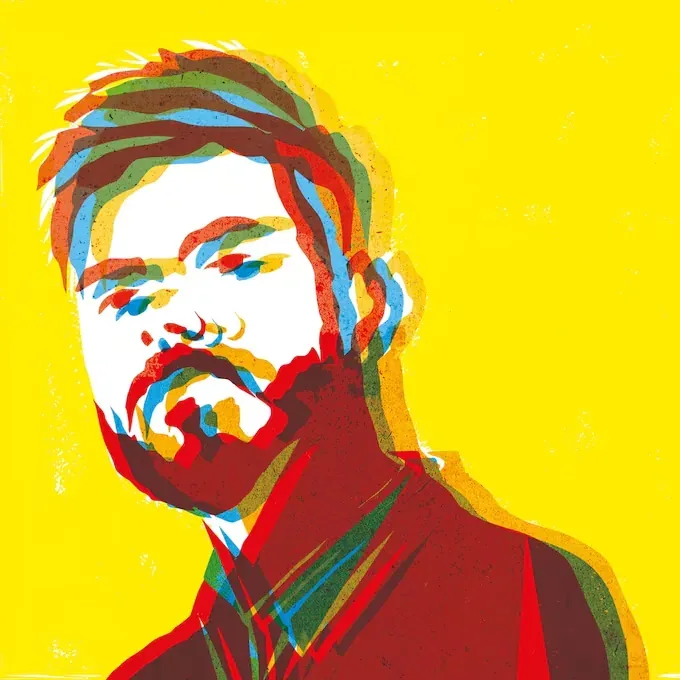
In the northern neighbor, a celebrated tradition for decades has been that of the illustrated book for the youngest readers, something that, for the Ambato artist, stems from the country’s pictorial tradition. Ycaza, whose books are largely published by the Fondo de Cultura Económica, assumes influences ranging from the combination of beauty and cruelty of the viceregal Quito School to the paintings of Eduardo Kingman, who was an essential reference for Guayasamín. “Ecuador gave me the roots to become who I am. But I have always tried to see things in a universal way. That is why, in my graphics, I do not stay only in my territory,” he explains.
“Children have a keen and restless gaze. They mix naivety with rebellion. With that perspective, many things can happen.”
Roger Ycaza | Ecuadorian illustrator
Indeed, in his illustrations, Ycaza manages to reflect the landscape of his country, rich in oral traditions, legends, and ancestral myths, but he can also create universal spaces so that readers from other latitudes can identify with them. Likewise, although he does not forget that the core of his work is aimed at childhood, he tries to offer a broad view, hoping that his picture books will also be enjoyed by adults, as they address complex themes such as migration, death, or displacement. And how do you talk to a child about violence?, we ask him on purpose. “First, without underestimating them,” he warns. “They have a different gaze: keen, restless. They mix naivety with rebellion and, with that perspective, many things can happen. “Obviously, you have to look for a language that is perhaps more reduced and very specific. Many times I tell a story only with images, and when I work on a book like that, it is beautiful. The fact of not having text allows children to start telling their own stories.”
Roger Ycaza will present the book “Diabluras” (Fondo de Cultura Económica) on July 23 at 4:00 p.m. at FIL Lima 2026, in the Surco district.
Read more Horoscope for Monday, July 20: forecasts on love and health