




![Alberto Beingolea: “If they insist on not giving [the powers], they are complicating life for Peru”](https://insightermedia.com/wp-content/uploads/2026/09/bb3fa9e11304ea13fe2cd333955007bc-150x150.webp "Alberto Beingolea: “If they insist on not giving [the powers], they are complicating life for Peru”")


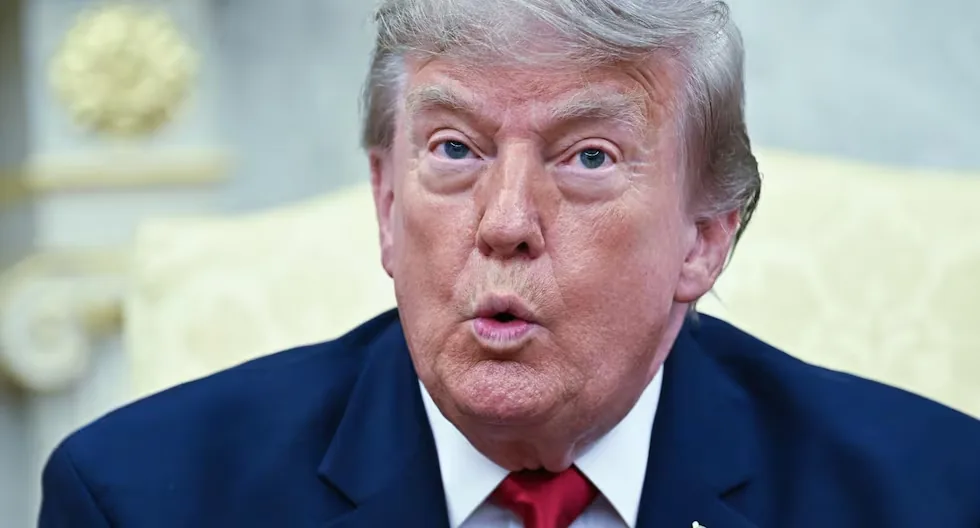
“After very productive conversations with Middle Eastern leaders, I have decided to replace the 20% refund rate from the United States with trade and investment agreements that the various Gulf States will make in the United States”, detailed Trump in a social media message.
SEE: The revelation about how Marco Rubio acts as the de facto ruler of Venezuela
“Those investments will be HUGE but, at the same time, extraordinarily good for them and their future,” he added.
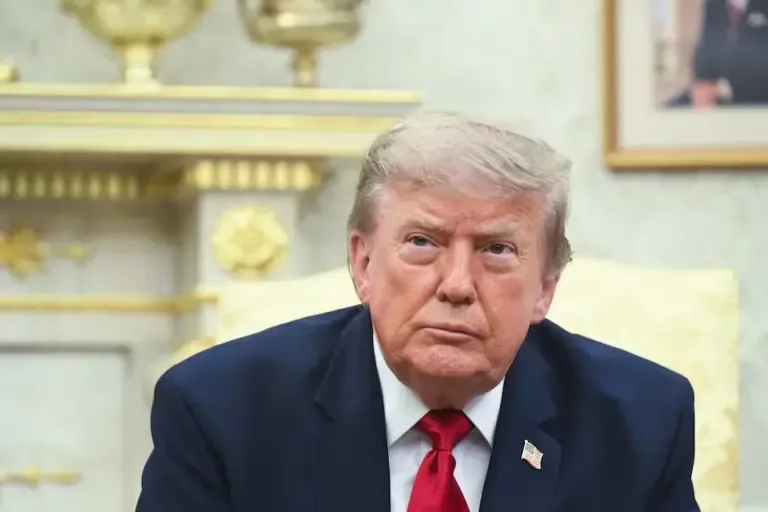
He also stated that “the Strait of Hormuz is open to all maritime traffic, except that of Iran”, and emphasized that the United States will impose “a total blockade, but only on ships arriving at or departing from Iranian ports, or carrying anything related to Iranian cargo“.
The Strait of Hormuz, located between Iran and Oman, is a key maritime route through which one-fifth of the world’s oil production passes.
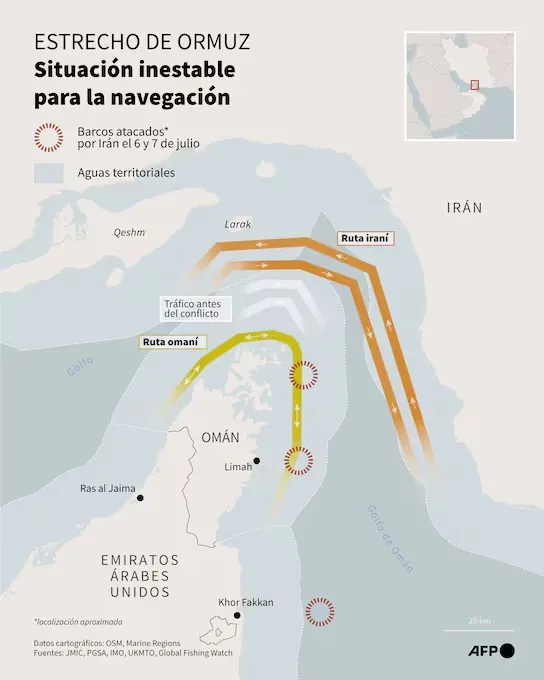
On Monday, amid a new military escalation, Trump announced a radical change in the United States’ strategy for the Strait of Hormuz by proposing to charge a fee equivalent to 20% of the value of the cargo transported by ships passing through it in exchange for the military protection Washington would provide them.
According to his statements, the idea was based on the fact that the United States is allocating enormous military resources to keep the maritime passage open while other countries — especially large oil importers — benefit without bearing those costs. Trump even claimed that the U.S. would be the “guardian” or the “guardian angel” of the strait and that, for that protection, it should be compensated.
Trump’s proposal amounted to transforming the U.S. military protection of the Strait of Hormuz into a service funded by the users, an unprecedented model for a maritime route considered of international interest.
On Iran’s side, Tehran seeks to strengthen its influence over the Strait of Hormuz through total control and to turn that strategic position into an instrument of political and diplomatic pressure. Although there has been speculation about the possibility that it could impose a toll on maritime transit, so far there is no official Iranian proposal nor evidence that this initiative has been incorporated into negotiations with the United States.
On Monday, the Iranian Foreign Minister, Abbas Araghchi, categorically rejected Trump’s proposal and called it “economic extortion.” He stated that his country has been and will continue to be the sole guarantor and guardian of security in the Strait of Hormuz.
What does international law say?
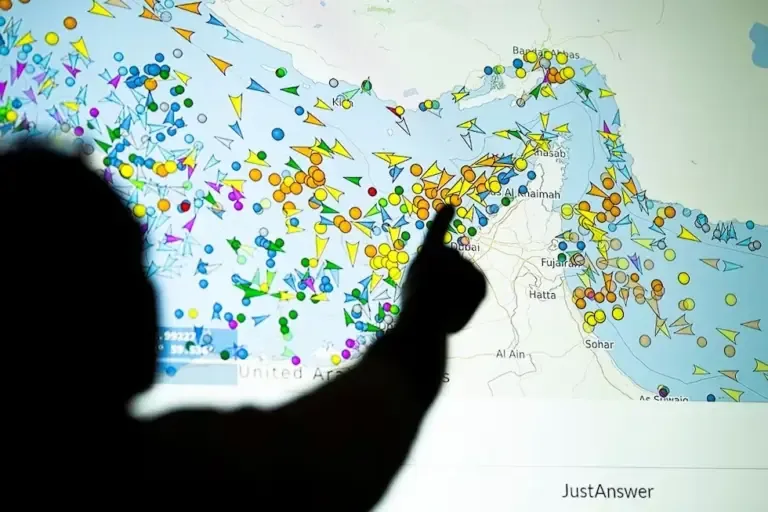
Regarding the legal basis for Trump’s claim, the International Maritime Organization (IMO), a specialized United Nations agency, reiterated on Monday that there is no legal basis to impose mandatory fees for transit through international straits and stated that such a measure contravenes the existing legal framework on freedom of navigation.
Meanwhile, the United Nations Convention on the Law of the Sea establishes that straits used for international navigation, such as Hormuz, are subject to the regime of “transit passage”, which guarantees the continuous and expeditious passage of ships and aircraft between one part of the sea and another. In general terms, coastal states cannot prevent such transit nor impose tolls, although they can adopt measures related to security, environmental protection, and compliance with navigation rules.
Although the United States and Iran have not ratified this Convention, Washington has maintained for decades that these provisions are part of customary international law and, therefore, are of general application.
The situation is different in the Panama and Suez Canals, because they are not natural straits but artificial infrastructures built and managed by a state or competent authority. In both cases, the charging of tolls is supported by international law and treaties.
“It was just another bluff”
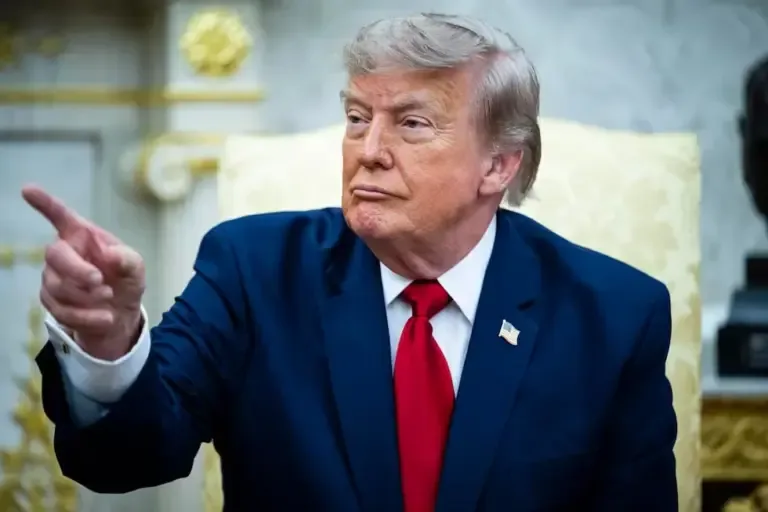
Journalist and international analyst Carlos Novoa told El Comercio that the quick withdrawal of Trump’s proposal indicates it was a pressure strategy against Iran, consistent with a method that has characterized his way of negotiating in foreign policy.
“Trump, true to his style, was seeking a pressure mechanism against Iran. It was just another bluff“, said Novoa, who opined that maintaining that measure would have had a high economic cost, by raising the price of international trade and ultimately affecting U.S. consumers themselves. ”If he had maintained that measure, everything worldwide would have become more expensive and mainly U.S. consumers would have turned against Trump“, he warned.
Read more Yvonne Frayssinet, Johanna San Miguel and Andrea Luna star in the comedy “Corazón de Loba”
However, Novoa indicated that the episode affects the credibility of Washington’s foreign policy, although he insisted that it is not an isolated event. “It does affect, but it is like another stripe on the tiger, because U.S. foreign policy is subordinated to the will or the situational thinking of Trump“.
He mentioned that the president has demonstrated this pattern of behavior in “almost all international issues” he has faced during his term.
Regarding the impact of the shift on the international perception of the United States, Novoa considered that the problem does not lie in the country’s military capacity, but in the uncertainty generated by the president’s decisions. “There is no doubt that militarily the United States remains very powerful; it could take down whoever it wants. That is not the point“, he said.
Instead, he stated that the main concern lies in the consequences these changes may have on Washington’s commercial and political interests. “You have to watch Trump day by day. Today he says one thing, tomorrow another, and the day after another“.
Trump was going to end up justifying Iran’s claims
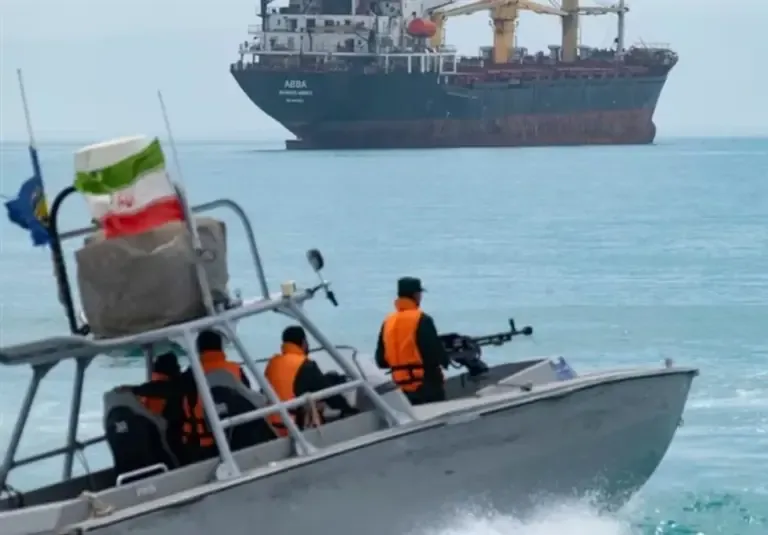
For international analyst Francesco Tucci, professor of Political Science and International Relations at the Peruvian University of Applied Sciences (UPC), Trump’s proposal was a contradiction with the stance Washington has maintained regarding freedom of navigation and, paradoxically, ended up legitimizing an aspiration of Iran if it finally establishes a toll.
Regarding the consequences, Tucci indicated that a measure like the one Trump proposed “could have even doubled the final price of products passing through the strait and significantly raised the cost of oil and other hydrocarbons”.
Tucci warned that if such an initiative were to materialize, it could change the rules that have governed international navigation for decades.
“The possibility of charging a toll will be justified and that will change international rules. It could be a dangerous precedent“, he said.
The analyst recalled that both Secretary of State Marco Rubio and Vice President JD Vance had defended the need to preserve free transit through international straits and rejected the possibility of imposing tolls.
He added that this type of U-turn by Trump “is not new. He has accustomed us to inconsistencies and backtracking on statements he had made; so honestly, it does not surprise me“.
He also recalled that Trump often uses high-impact announcements as part of his negotiating strategy.
“We are used to Trump’s politics: to negotiate he proposes complex things, takes critical stances, and then backtracks“, he explained.
Finally, the analyst stated that the controversy around Hormuz reflects a broader transformation of global geopolitics, where “straits and canals are becoming a means of pressure. They can be used as a tool of power, especially to exert political and economic pressures“, he concluded.
Read more Was it a red card? Olise’s hard tackle on Rodri sparks controversy in Spain vs. France | VIDEO