




![Alberto Beingolea: “If they insist on not giving [the powers], they are complicating life for Peru”](https://insightermedia.com/wp-content/uploads/2026/09/bb3fa9e11304ea13fe2cd333955007bc-150x150.webp "Alberto Beingolea: “If they insist on not giving [the powers], they are complicating life for Peru”")



The attacks are recorded amid the stalemate in negotiations, after Iran reported on Monday that it was halting dialogue due to Israel’s threat to expand its operations against Hezbollah in Lebanon and even attack targets in Beirut.
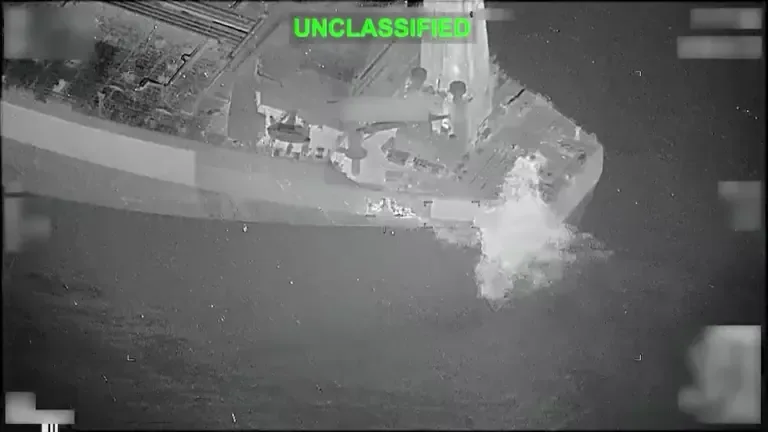
The Iranian Revolutionary Guard stated on Wednesday that it attacked a US ship in response to a previous US attack on an Iranian tanker near the Strait of Hormuz, which has remained closed by Tehran since the start of the war on February 28.
“Last night, the aggressive US military attacked an Iranian tanker near the Strait of Hormuz with an aerial projectile, damaging the engine room. In response (…), the Panaya ship, belonging to the US Zionist enemy, was attacked with naval missiles,” the Revolutionary Guard said in a statement.
Meanwhile, the US Central Command (Centcom) reported that it fired a missile at the engine room of an unladen tanker flying the flag of Botswana that was sailing towards Kharg Island, Iran’s main oil port. According to Washington, the vessel attempted to break the maritime blockade imposed by the US and ignored repeated warnings before being attacked.
The Revolutionary Guard also denounced a US attack on one of its communication towers, located on Qeshm Island, something confirmed by Centcom.
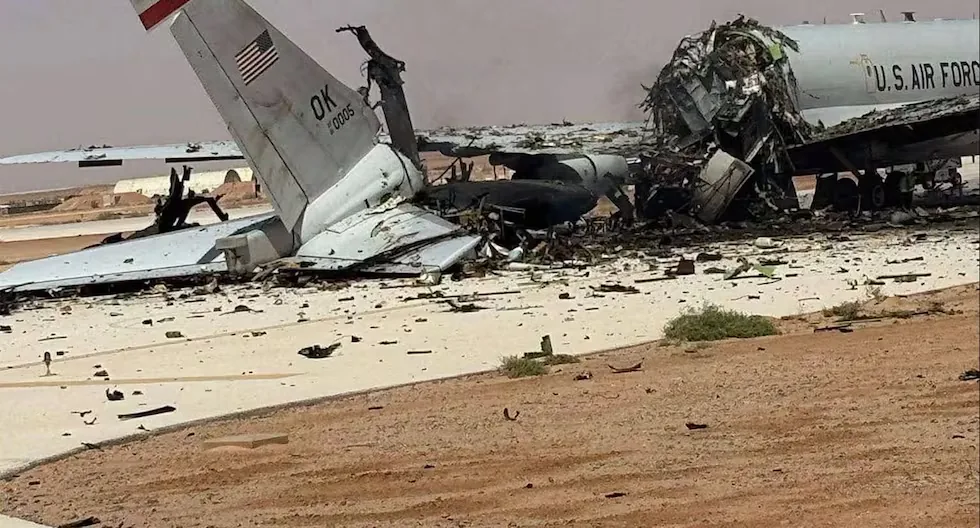
The United States said it attacked this military ground control station after Iran launched ballistic missiles towards Kuwait and Bahrain.
Tehran also confirmed missile and drone attacks against a US airbase and military helicopters in a Gulf country whose location was not specified. It also claimed to have attacked the headquarters of the US Fifth Fleet in Bahrain in response to the bombing of the Qeshm communication tower.
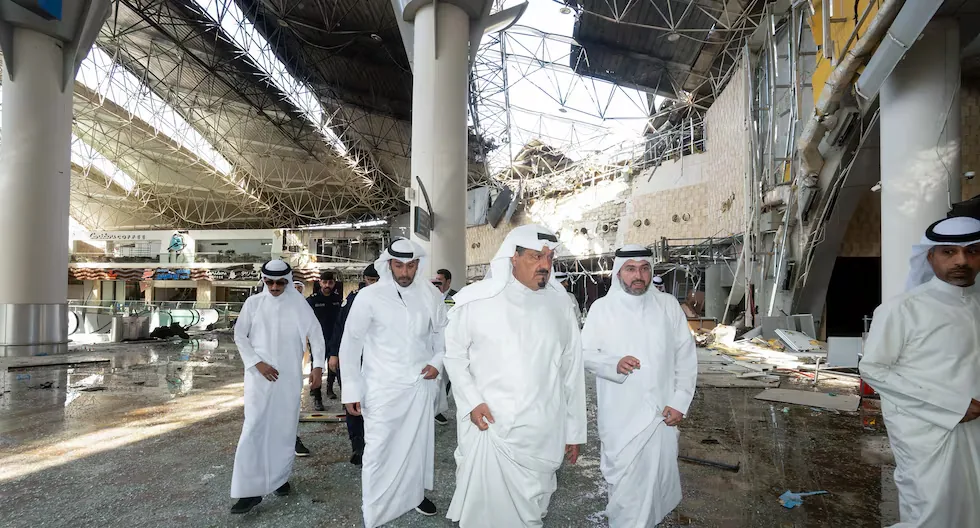
The most serious incident occurred in Kuwait, where a drone attack on the international airport left one dead and 63 injured, as well as damage to the terminal.
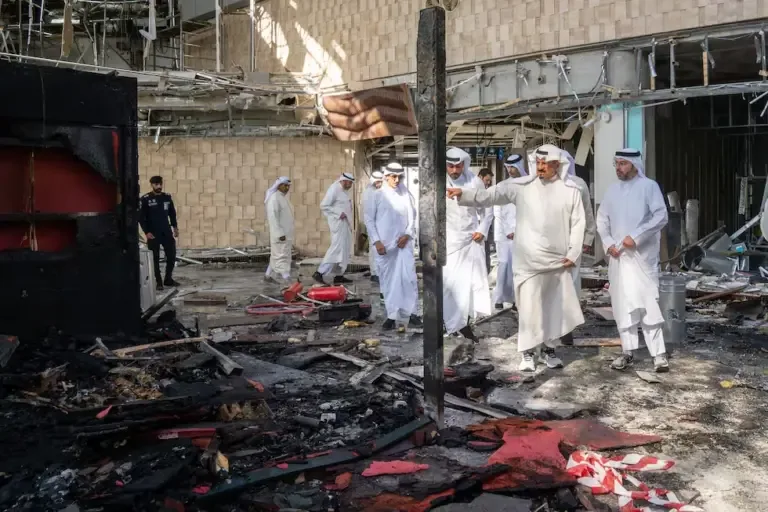
The Kuwait Ministry of Foreign Affairs condemned “in the strongest terms the brutal and continuous Iranian attacks with ballistic missiles and drones, the latest of which took place early today and again targeted vital civilian facilities, including Kuwait International Airport, causing the death of one person and injuries to several others.”
The authorities of Kuwait also reported that their defense systems detected and responded to a total of 13 ballistic missiles and 17 drones launched by Iran against the Arab country.
Meanwhile, the Indian Embassy in Kuwait expressed condolences in a statement on its X account for “the tragic death of an Indian citizen due to the attack carried out today at Kuwait airport.”
Regarding the talks, President Donald Trump said on Tuesday that contacts with Iran continued “uninterrupted.”
Additionally, in an interview published Wednesday in the New York Post, the US president expressed his desire to meet with the Iranian Supreme Leader, Mojtaba Jamenei.
“We are at the most critical moment of this truce”
For international analyst Francisco Belaunde Matossian, the ceasefire is going through its most delicate phase and its continuity will largely depend on Washington’s reaction in the coming hours and days.
“With these attacks, which also respond to previous US actions, the truce is in serious danger”, he said. In his view, the main factor to watch is the US response, as a new round of bombings could accelerate a definitive break.
Although he acknowledged that the risk of escalation is real, he recalled that President Trump has signaled that he does not want to open a new war front.
“It is clear that Trump does not want to return to war. Even Secretary of State Marco Rubio said the war was over, yet this new escalation occurs,” he said.
For Ambassador Juan Álvarez Vita, it is still premature to say that the truce is on the verge of collapse, although he recognizes that recent attacks and reprisals have brought the situation to a particularly delicate point.
He warned that the scenario has become increasingly complex because neither side wants to appear before their public opinion as the one that gave in or was defeated in the conflict.
He explained that both Washington and Tehran face internal pressures that make reaching quick agreements difficult. In Trump’s case, he said his political discourse is closely linked to projecting strength and international leadership, which reduces his margin to make visible concessions.
Álvarez Vita also considered that the signals recently sent by the White House seek to convey that the United States maintains control of the situation, even amid tensions with its regional allies such as Israel.
Why doesn’t Trump have an easy way out?
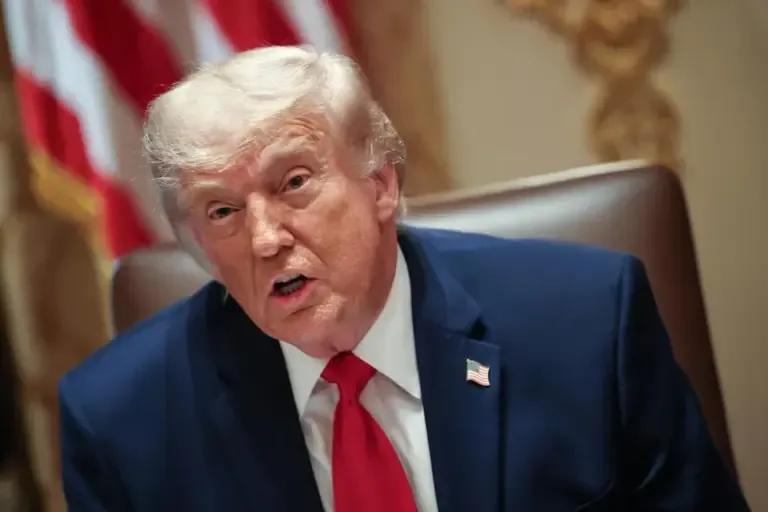
According to Belaunde, Trump’s difficulty in sealing a deal with Iran was already foreseeable from the start of the conflict. In his opinion, many specialists warned that an offensive against Iran would have difficult-to-control consequences.
One of the main factors is Iran’s ability to disrupt maritime traffic in the Strait of Hormuz, one of the world’s most important energy routes.
“All analysts said it was perfectly feasible to affect traffic through the strait. It only takes a few means or limited attacks for shipping companies and insurers to decide not to take risks,” he said.
Belaunde added that it was also foreseeable that Tehran would seek to extend pressure to other oil-producing countries in the region.
Read more La Tinka LIVE Wednesday, June 3: what time the draw starts and what is the million-dollar jackpot
“It was known that Iran would also attack neighboring oil-producing countries. It was obvious,” he said.
Álvarez Vita said that the US administration may have underestimated Iran’s resilience and the global economic consequences of the war.
“Everything indicates that Trump is regretting having entered this war with Iran,” he said.
In his view, Washington faces an adversary that retains significant military capabilities, especially in drones, ballistic missiles, and the ability to pressure the Strait of Hormuz.
For Álvarez Vita, Trump’s difficulty in ending the conflict is not only due to military factors. Diplomatic, economic, and political variables also play a role simultaneously.
“It will not be so easy for Trump to end this war,” he said.
Added to this is that the United States can hardly abandon one of the central objectives that justified its intervention: preventing Iran from advancing uranium enrichment for military purposes.
“Iran knows Trump is desperate to end this war”
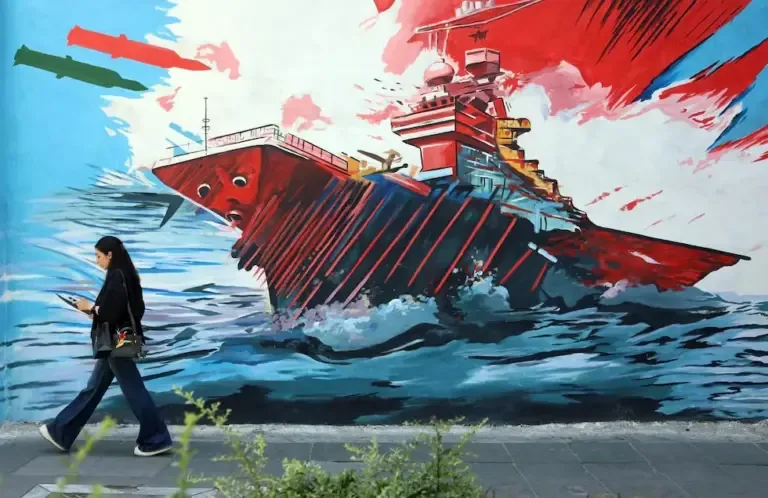
Belaunde indicated that the Iranian leadership perceives that time is on its side.
“Iran knows that Donald Trump is desperate because, for political reasons, he has to stop this war,” he said.
The analyst considered that the conflict has begun to generate internal political costs for Trump, especially ahead of the upcoming legislative elections in the United States.
From this perspective, he stated that Tehran would have little incentive to make quick concessions at the negotiating table.
“There is a sector of the Iranian leadership willing to remain in this state of semi-war,” he explained.
Added to this is the perception that the United States faces economic and military limitations regarding advanced ammunition to maintain an extensive campaign.
“They know that the United States has problems supplying ammunition and missiles. They know this war costs a lot of money and that there is a very serious deficit problem,” he said.
Álvarez Vita considered that Tehran seeks to demonstrate that any future attempt at military pressure will have high costs for the United States and its allies.
“Of course it does,” he responded when asked if Iran is trying to send the message that Washington should think “a thousand times” before starting another war.
According to the ambassador, Iran reaches this stage of the conflict with a strengthened position due to the political support of powers like Russia and China.
What if the war returns?
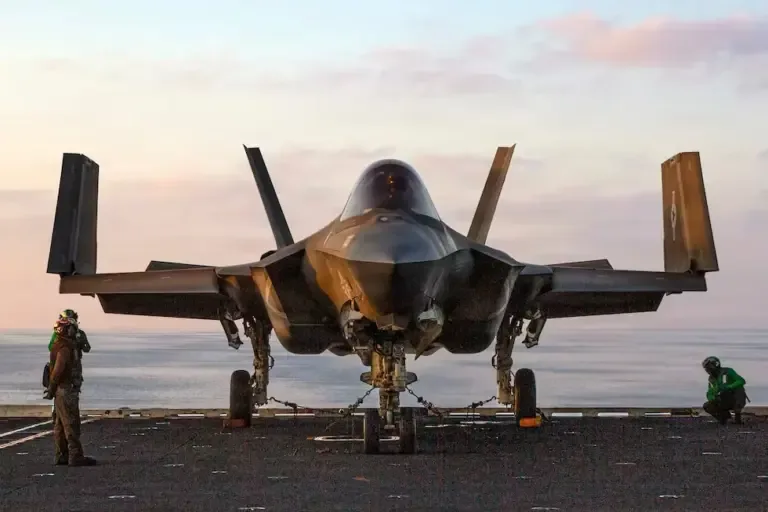
Belaunde warned that the most dangerous scenario would arise if Trump interprets the latest attacks as a personal or political humiliation.
“If he feels humiliated, he may react with fury and order massive attacks against Iran,” he said.
A decision of that nature could trigger an equally forceful response from Tehran, he emphasized. “It is already seen that it still has means to respond.”
The result would be a regional expansion of the conflict with global economic consequences. “Everything catches fire. Economically it would be a disaster,” he warned.
Beyond the Iranian front, Belaunde believes that the prolongation of the war poses another problem for Washington: the wear and tear of its military reserves.
“Every missile that the United States keeps spending is a missile that might be needed for another future crisis,” he explained.
Belaunde specifically mentioned the possibility of a potential crisis in Asia related to Taiwan and China.
“If it keeps spending that amount of missiles, later it may need them for any other international crisis that arises,” he concluded.
Read more Petro-Perú and lost investments: an analysis of recent financial bailouts