




![Alberto Beingolea: “If they insist on not giving [the powers], they are complicating life for Peru”](https://insightermedia.com/wp-content/uploads/2026/09/bb3fa9e11304ea13fe2cd333955007bc-150x150.webp "Alberto Beingolea: “If they insist on not giving [the powers], they are complicating life for Peru”")


LOOK: Keiko Fujimori meets with the Nation’s Prosecutor, Tomás Gálvez, at the Government Palace
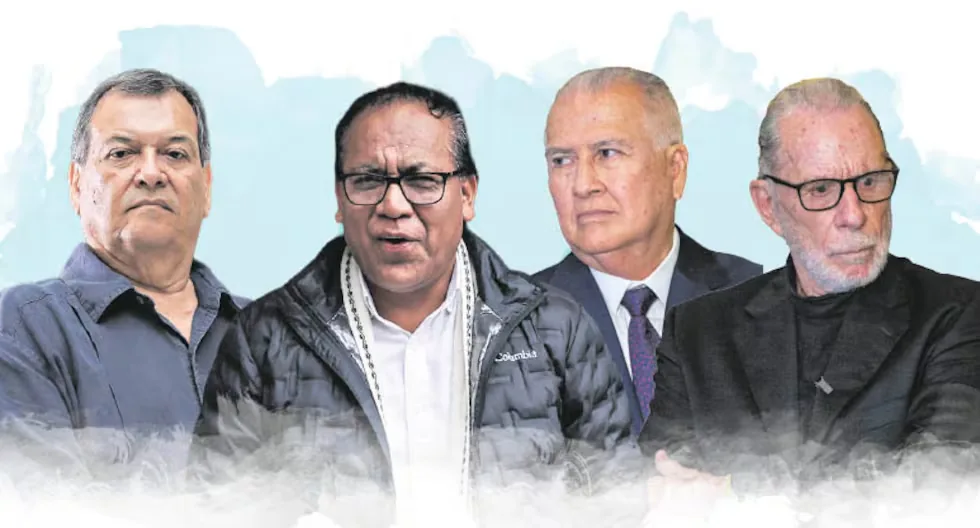
Jorge Nieto, revealing that ideologies remain mixed, recounted that they argued a lot that time and the result was named Consensus for Democracy. A right-wing alliance would have had a more combative name. The ‘Big Brother’ Ricardo Belmont was indeed enthusiastic and launched a pun with the 4 acronyms: “Now the nation will make a good government and together for Peru we will do works.” The next day, due to a treacherous vote, they lost the senate together. It is easier to align two right-wing benches than four left-wing ones.
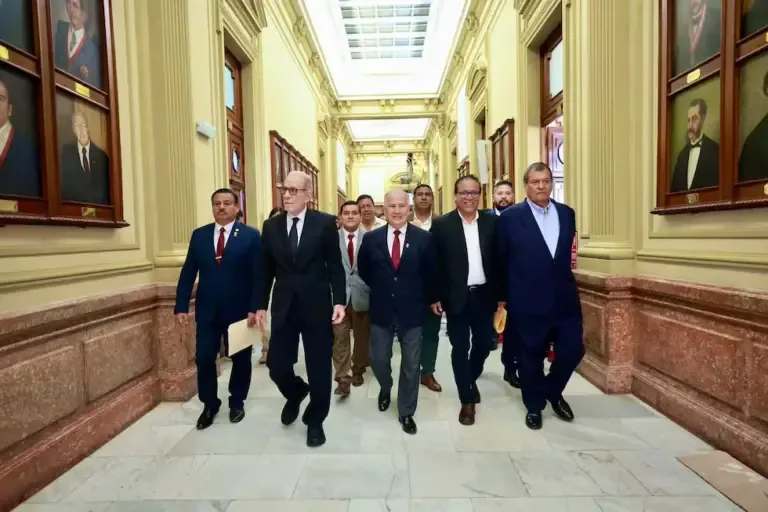
I have cited this old story from two weeks ago because its consequences are still very much alive. It confirmed that the differences are several but not insurmountable in precise circumstances; and reconfirmed that within the largest bench of the 4, Juntos Por el Perú (JP), there is a ‘sanchista’ wing and a ‘castillista’ wing, so the block is actually 5 and not 4. Someone who participated in the negotiations for the ‘consensus’ told me: “We had to talk to Castillo, because we were not sure if it was enough to talk only to one part.” The speed with which Roberto Sánchez processed the suspicion about Silvana Robles and announced her separation is partly explained because he is from the castillista wing. There they have not defended her either. They assume that Castillo, a naive person used to betrayals, overlooked Silvana’s closeness to Vladimir.
“We are concerned about two national emergencies, El Niño and citizen security. Everything else should be sent to us as legislative initiatives and will be given priority. Now, about security, it must be debated.”
Daniel Barragán, secretary general and spokesperson senator of Obras.
The rest of the benches preferred to leave JP processing its internal intrigue alone. It was not a matter to question the alliance. The case of deputy Julián Pérez Mallqui, also from JP, almost triggered a dissent. Ernesto Zunini, spokesperson for the JP deputies, tried to defend him against his flagrant arrest, later turned into an investigation for physical and psychological violence against his ex-partner. Women from Ahora Nación and other benches were pushing a statement against Pérez just when Zunini backed down and announced the separation of the alleged abuser. Daniel Barragán, the parliamentary leader of Obras, told me that he talked with AN to apply pressure and publicly declared against that JP mistake, corrected at the last minute.
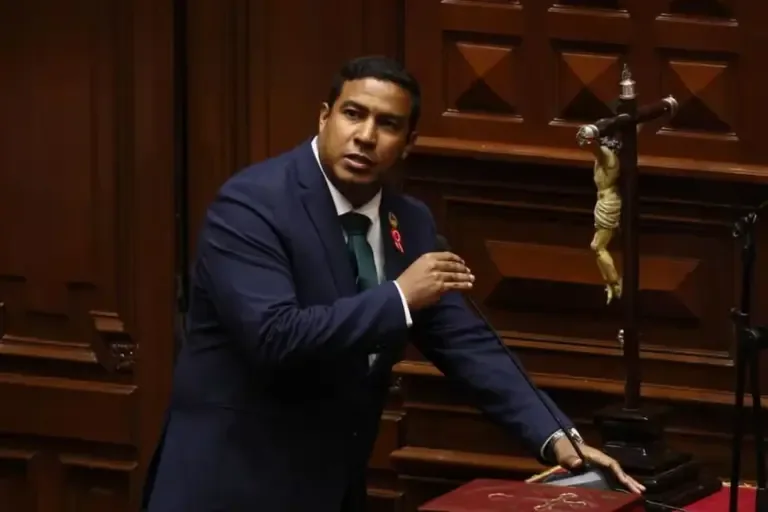
After that timely withdrawal, the Pérez Mallqui case ceased to be a threat of division in the block. But the allies were left confused. Why did the sanchista Zunini try to defend Pérez, who is from the castillista wing? Why was he not as harsh as Sánchez was with Silvana Robles? The answer may lie in that Silvana is a former Perulibrista without bases; while Pérez is an important coca grower leader with the capacity to mobilize people and resources. The castillista wing will have to resign to losing him, starting with 120 days of suspension when the Ethics Commission is activated. If the case escalates to disqualification, his substitute would be the Cusco native María Luz Huacac, affiliated with JP since 2021, long before the pact with Castillo; therefore, from the sanchista quarry.
LOOK: Betssy Chávez in Mexico: The story of the decision to grant her safe conduct
If the Good Government Party is given the role of being the swing vote in the Congress, who is the swing vote within the opposition block? Well, I would say Ahora Nación (AN). Its leader, Alfonso López Chau, tried by all means, since the second round, to seek unity of the 4 in key positions. I asked Mirtha Vásquez, AN senator, former president of the Congress and former prime minister, if her bench feels like that ‘swing’. “JP tends to be extreme and the Good Government Party [PBG] sometimes tries to be too neutral, and we try to harmonize,” she answered me.
Why would it be important to seek a block vote instead of each bench focusing on its own?, I ask Mirtha. “Because you achieve collective weight, you have more capacity to oversee and control, you get closer to fulfilling the objective you set,” she replies. Let’s see what could happen with the unbalanced five-legged table facing its main big challenge: the request for legislative powers that Keiko Fujimori announced will be sent to them next week.
I also spoke with Daniel Barragán, secretary general of Obras and spokesperson of his bench in the senate. He assures that his group is more uniform than said and that all share essential criteria. Ricardo Belmont is the party leader –“he leads the party; I, as secretary general, am an operational executor,” Barragán defines himself– who for now will be focused on his municipal campaign. “I tell the other leaders, ‘we are not opposition, we are solution’,” he tells me with a spiel that seeks to appear ‘de-ideologized’. His political career is also so: retired captain of the FAP, advisor to the UPP bench when coordinated by José Vega Antonio (skillful, sometimes Machiavellian, conciliator of left and center) and Minister of Defense in the last stretch of Pedro Castillo. “I resigned because I refused the request to deploy tanks, that would have had a political reading against democracy,” he tells me. He assures he is neither friend of Antauro, whom he barely knows, nor of Cerrón, whom he does not know. He also advocates for the block vote, from his moderation.
Draft and clean slate
When a document with the items on which the Executive was thinking of requesting legislative powers was leaked, there were so many that several congressmen wondered: ‘and what the hell are we here for, do they want to take away our job?’. The benches had not even sat down in their offices and they were already grimacing at a gigantic request. Minister Juan Sheput had to quickly come out to say it was a ‘draft’ that had been leaked, listing the topics to consider but not implying a prior stance on them. Keiko herself had to clarify that, despite what the draft suggested, there would be no cancellation of holidays nor reduction of labor benefits. She told her cabinet, overenthusiastically, that last Sunday, August 2, they would analyze and have the request ready; but a realistic review postponed the matter to the coming days.
The opposition benches and even RP’s are, therefore, waiting for the order to digest it. Only some members of JP, extreme of extremes, have said a principled ‘no’. The others prefer the standard protocol response: ‘once we receive the document we will evaluate it and announce our position’. After talking with my congressional sources, I translate this preliminary intuition: they could agree to quickly approve what concerns El Niño, because it is a national emergency and not appear before the country as the intransigents of the movie; negotiate citizen security and delay the rest.
“You achieve collective weight, you have more capacity to oversee and control, you get closer to fulfilling the objective you set.”
Mirtha Vásquez, senator of Ahora Nación, explains why they seek the block vote.
Barragán told me: “We are concerned about two national emergencies, El Niño and citizen security. Everything else should be sent to us as legislative initiatives and will be given priority. Now, about security, it must be debated. I do not agree that the military emphasis is the immediate solution. It is necessary to agree on a regulatory framework that includes the preparation time of the military for an area for which they are not trained.” Nieto, from PBG, who has also been Minister of Defense and has retired military personnel, has an equivalent approach. In JP and AN, on the contrary, there is an allergy to the militarization of citizen security and to the military per se, a legacy of the traumas caused by military dictatorships last century.
Another figure who is usually present in almost all negotiations between benches is José Castillo Terrones, Pedro’s brother. But he has a silent participation, as if taking notes for his political learning from scratch. Despite this, his senate bench has appointed him spokesperson. He practically does not give interviews to national media. That is already a ‘statement’: ‘we are not interested in communicating to the press, only exercising parliamentary power to fulfill our agenda’. PBG and AN, on the other hand, do believe in political communication, as do the right-wing benches.
The government’s dilemma, therefore, is to find the right size package of powers so as not to provoke a stoning rejection in block of everything that is not an El Niño emergency. When I asked about specific negotiation topics, Mirtha Vásquez told me that “the repeal of pro-crime laws could be an element to reach an agreement on security.” Keiko’s promise to appoint a commission – she did not explain if to inform her benches or the government itself – to evaluate law by law, remains unfulfilled. There is a pending issue that could complicate the request for powers in security matters.
Parliamentary time is longer than executive time, even more so with bicameralism. The benches are absorbed in their induction to politics, just getting to know each other, and in JP’s case, focused on their internal impasses. They have already resolved the tension before Ethics, but there will be another flare-up among them or with their table allies. When the request for powers arrives, it will test agendas and existential questions: are we going to say no to everything? Do people expect us to say yes to the most urgent? Do we try to vote as a block? How do we avoid ‘breaking ranks’ and each one negotiating what they can, as in recent governments? Let the request not be delayed. We want to see powers in action and reaction.
- Rafael, love for pork, a chronicle by Fernando Vivas about López Aliaga and the elections for the Mayor of Lima
- Keiko and her male choir, a chronicle by Fernando Vivas about the Ministerial Cabinet
- Keiko, the assumption of the orange, a chronicle by Fernando Vivas about President Fujimori
- Vladimir, ampay I saved you, a chronicle by Fernando Vivas