




![Alberto Beingolea: “If they insist on not giving [the powers], they are complicating life for Peru”](https://insightermedia.com/wp-content/uploads/2026/09/bb3fa9e11304ea13fe2cd333955007bc-150x150.webp "Alberto Beingolea: “If they insist on not giving [the powers], they are complicating life for Peru”")




That is the revelation of a recent report by The New York Times, which claims that the Mossad developed a secret operation to recruit the former president and prepare him as the leader of Iran if the war caused the collapse of the ayatollah regime.
Read more Earthquake in Venezuela today, Thursday, July 16: see epicenter according to FUNVISIS report
How was he recruited and why did the incredible plan fail?
According to U.S., Iranian, and Israeli officials cited by the newspaper, the Mossad detected that Ahmadinejad had distanced himself from Ayatollah Ali Khamenei and the regime after he was prevented from running for the Presidency on three occasions. The politician had been president of the country between 2005 and 2013.
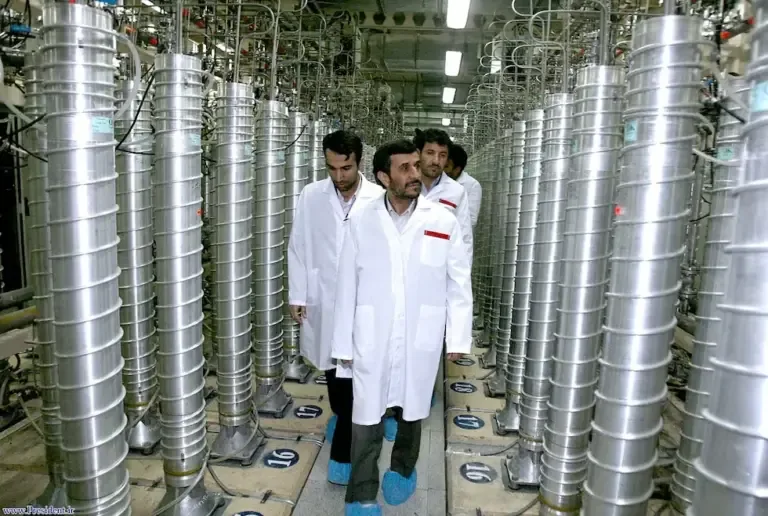
Additionally, Ahmadinejad had begun to abandon his hardline and radical rhetoric and was starting to emerge as a pragmatic politician.
Convinced that he still retained a popular base, Israeli intelligence services began to maintain secret contacts with him during his trips abroad.
Those trips were secretly organized by Israel to recruit Ahmadinejad. The Israelis reportedly discreetly financed part of his travel and accommodation.
The most important meetings took place in Budapest, Hungary, in 2024 and 2025, taking advantage of conferences organized by Ludovika University as a cover.
The operation was considered so important that the then head of Mossad, David Barnea, personally traveled to Hungary to meet with Ahmadinejad.
According to the NYT report, Ahmadinejad would not have acted for money but for his ambition to return to power.
After being vetoed three times as a presidential candidate, the politician concluded that he could only govern if the current ayatollah system fell. He even told people close to him that if he returned to power, Iran would recognize Israel and normalize diplomatic relations, joining the Abraham Accords promoted by U.S. President Donald Trump.
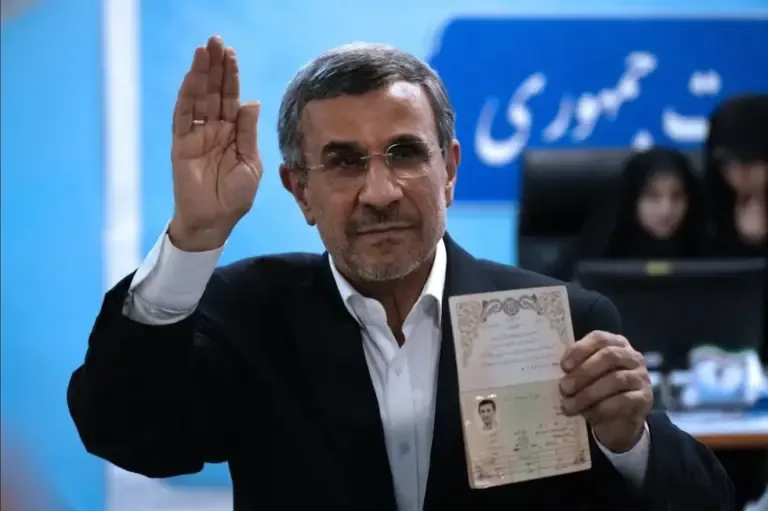
The plan reached its peak at the start of the war. On February 28, Israel bombed the complex where Ahmadinejad lived in Tehran. Then, Mossad agents secretly extracted him from the area and moved him to a clandestine shelter inside Iran to launch the operation that would culminate in regime change.
However, the operation failed because Ahmadinejad became disillusioned with the Israeli project and left the shelter under circumstances that remain unclear. The report does not specify exactly what caused this change of attitude.
Subsequently, Iran discovered Ahmadinejad’s contacts with Israel. After the failed operation, Iranian intelligence services reconstructed his communications and meetings with Israeli agents. According to four senior Iranian officials cited by the newspaper, he is currently under the custody of the Revolutionary Guard intelligence and under house arrest.
Ahmadinejad had not appeared in public for months until last Monday, when he attended the funeral procession of Ayatollah Ali Khamenei, assassinated on the first day of the war.
The Mossad and a long tradition of covert operations
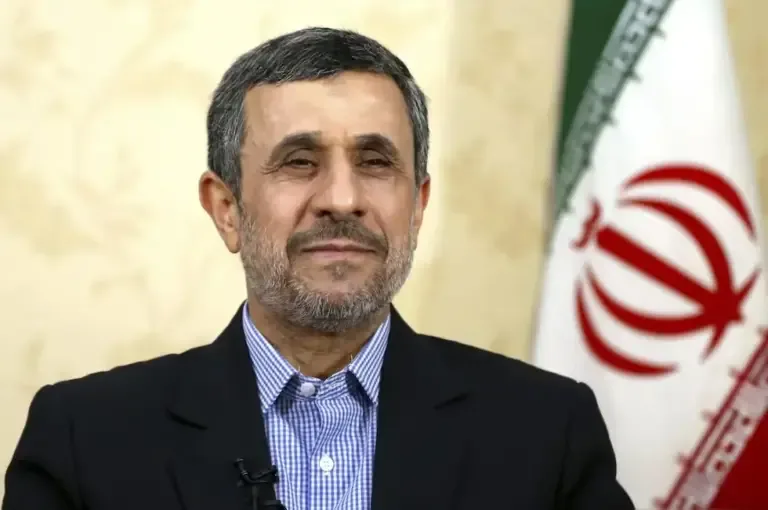
Defense and intelligence specialist Andrés Gómez de la Torre indicates that the alleged attempt by Israel to recruit Ahmadinejad should not be understood as an isolated event, but as part of a modus operandi that characterizes the main intelligence services in the world.
He emphasizes that in recent years espionage agencies have strengthened their capabilities and taken on an increasingly aggressive role in international conflicts.
“We are in a global process of revaluation and deep aggressive activity by intelligence services. Russia, Ukraine, Iran, Israel, and even the CIA have refined much more intrusive and bold practices for this type of wars”, he tells El Comercio.
Gómez de la Torre recalls that the CIA director himself announced, upon taking office, his intention to make the U.S. agency “much more aggressive” and less bureaucratic, a trend that, he says, is also observed in other countries.
The analyst explains that the importance Israel gives to espionage dates back to the creation of the Israeli state in 1948, when intelligence became one of the pillars of its national defense strategy.
In that framework, Mossad shares functions with other agencies such as AMAN, the military intelligence service, and Shin Bet, responsible for internal security and counterintelligence. Although each agency has different competencies, Mossad is the one that has gained the most notoriety for its operations abroad.
He recalls operations that marked Mossad’s international reputation, such as the capture of Nazi criminal Adolf Eichmann in Argentina in 1960 or the participation of Israeli services in other special operations that consolidated its image as one of the most effective intelligence agencies in the world.
Read more July bonus: how to turn this extra income into an opportunity to strengthen personal finances?
Why Ahmadinejad?
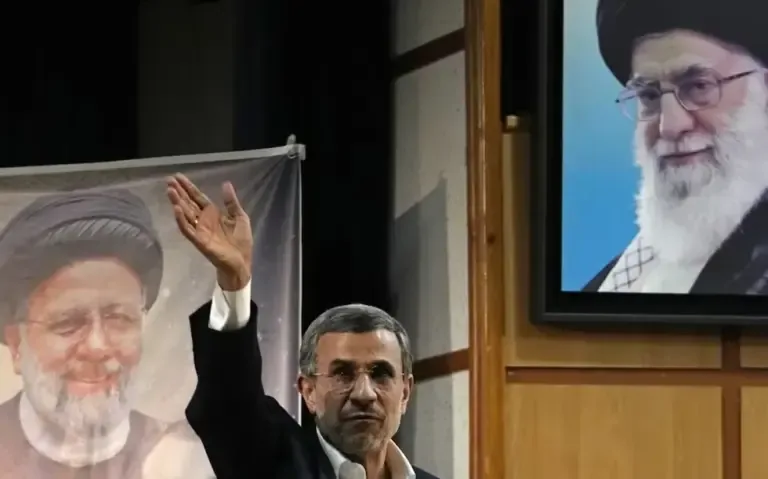
At first glance, the possibility that Israel tried to recruit Mahmoud Ahmadinejad seems contradictory, since during his presidency he was very hostile towards the Israeli state.
However, Gómez de la Torre argues that intelligence services do not evaluate a person in moral or ideological terms, but by their strategic usefulness.
“Intelligence services never start from the logic of someone being good or bad. What they analyze is whether they can be useful to achieve certain objectives”, he points out.
He explains that recruiting political figures is part of a wide range of tools that include infiltration, propaganda, sabotage, counterintelligence, and the use of double agents.
“Recruiting people is a classic intelligence technique. It is part of a set of covert activities aimed at influencing the political scene of a country,” he states.
An old enemy with political weight
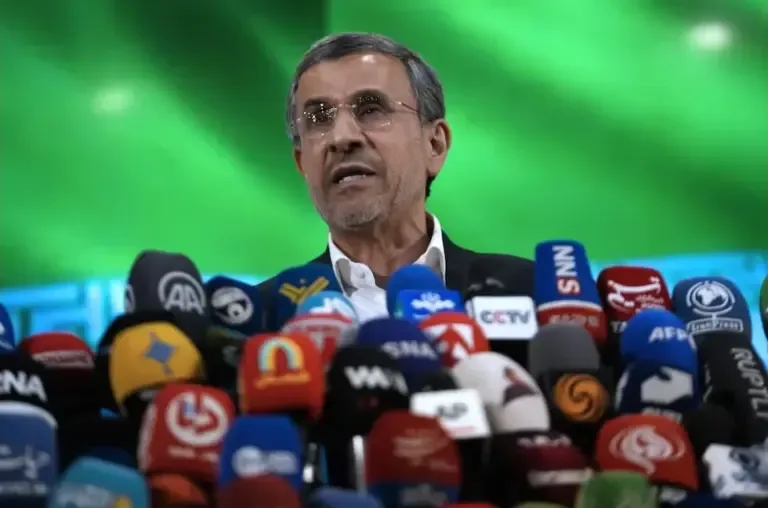
Gómez de la Torre recalls that Ahmadinejad was one of the architects of Iran’s regional strategy to encircle Israel through non-state armed actors, such as its regional proxies.
“We are talking about a leader who was one of the main drivers of Iran’s unconventional warfare strategy and the strengthening of Tehran’s allied militias to harass Israel,” he emphasizes.
Precisely because of that past, he argues, the alleged interest of Mossad in Ahmadinejad reflects how an intelligence operation can set aside old enmities when it identifies a strategic opportunity, an open flank.
The goal: regime change
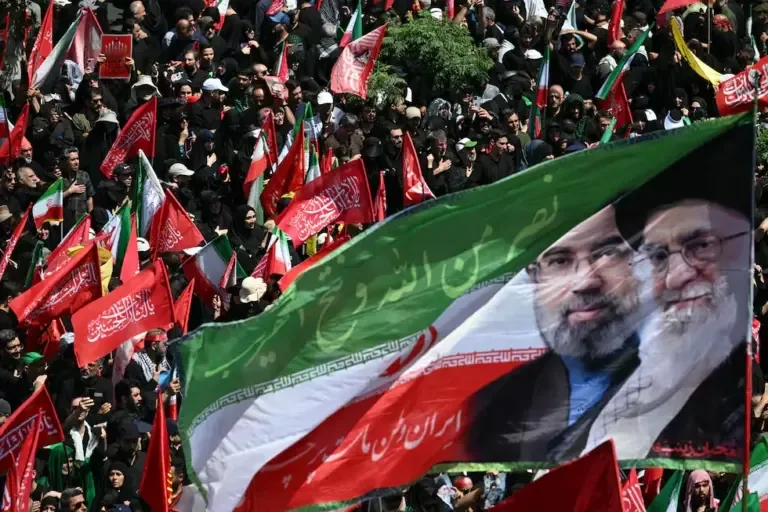
According to Gómez de la Torre, the alleged plan revealed by the NYT should be understood within a much broader objective pursued by the United States and Israel: to provoke regime change in Iran.
Initially, he explains, one of the figures considered to lead a possible transition was Reza Pahlavi, son of the last Shah of Iran and exiled in the United States.
However, intelligence services rarely bet on a single candidate, he says.
“Intelligence services always play multiple angles, multiple cards. They never rule out alternatives. They probably considered that Ahmadinejad could have better conditions to lead a transition”, he says.
He adds that this type of operation is usually planned over years and is part of strategies aimed both at destabilizing and facilitating the installation of new governments, a practice that he recalls has been present in various episodes of the Cold War and Latin American history.
“Intelligence services never work with a single plan”
Regarding the outcome, although the operation attributed to Mossad did not achieve its goal, Gómez de la Torre avoids labeling it as a definitive failure.
He assures that a common characteristic of intelligence agencies is to develop multiple scenarios simultaneously and keep different options open until the last moment.
“Intelligence services do not necessarily talk about failures. They work with a Plan A, a Plan B, and a Plan C. They never put all their objectives on a single option”.
He warns that a failed operation does not imply abandoning the strategic objective.
“Maybe a battle was lost, but not the war. Intelligence services always keep other alternatives open to achieve their goals,” he clarifies.
Read more Earthquake today in Mexico, Thursday, July 16: epicenter, time, and magnitude via SSN