




![Alberto Beingolea: “If they insist on not giving [the powers], they are complicating life for Peru”](https://insightermedia.com/wp-content/uploads/2026/09/bb3fa9e11304ea13fe2cd333955007bc-150x150.webp "Alberto Beingolea: “If they insist on not giving [the powers], they are complicating life for Peru”")


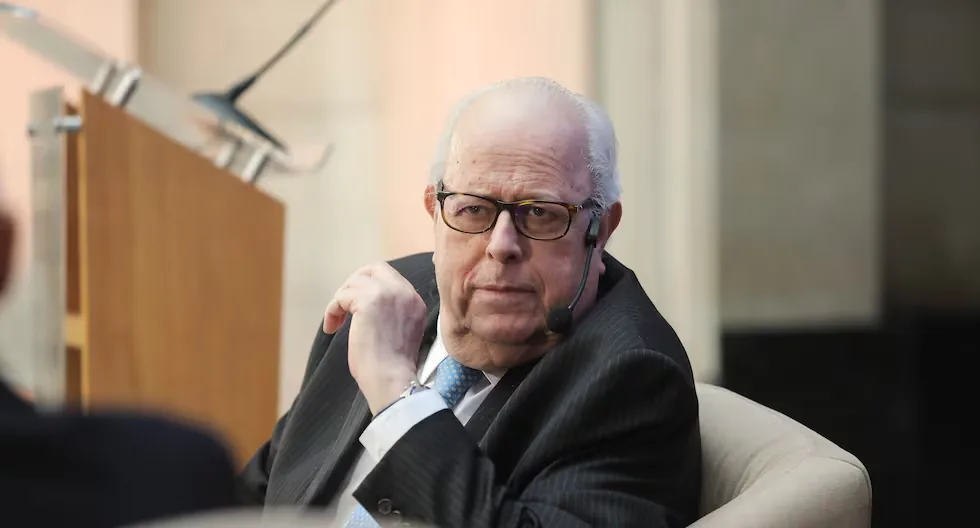
In Peru, where political instability and institutional precariousness have been constant, continuity and excellence in public management are exceptions that deserve to be highlighted. The career of Julio Velarde at the helm of the Central Reserve Bank of Peru (BCRP) is, without a doubt, one of them.
Read more These are the top 15 bakeries in Lima, according to the Somos Awards 2026
Since 2006, the country has had ten presidents. In that same period, the BCRP has maintained firm, technical, and autonomous leadership. This apparent paradox reflects two realities: on one hand, the fragility of our institutions; on the other, the concrete possibility of good public management when meritocracy, independence, and the common good are prioritized.
The results are evident. In the last two decades, Peru has managed to maintain an average inflation of 3.7%, far from the 107.4% recorded in previous years. International reserves have multiplied tenfold, recently surpassing 100 billion dollars, and our currency has been one of the most stable in Latin America. These achievements are not by chance: they reflect responsible and consistent monetary policy.
But even more important is what these indicators represent: trust. Trust to invest, to generate employment, and to plan for the future. In sectors like construction, where projects are long-term and require predictable conditions, this stability is fundamental.
It is worth remembering, especially at times when voices arise that minimize the importance of macroeconomic stability or relativize the autonomy of the BCRP. Peru’s economic history offers strong lessons about the consequences of ignoring these principles: hyperinflation, extreme devaluation, and prolonged crises that severely affected millions of Peruvians.
From the Peruvian Chamber of Construction (Capeco), we are convinced that the country needs more institutions like the BCRP: solid, technical, and oriented towards the long term. The experience of recent decades shows that when the “house is kept in order,” Peru is better prepared to face crises, as happened during the pandemic.
Likewise, the role of the BCRP has been key to promoting the development of mortgage credit, boosting investment, and contributing to closing gaps in infrastructure and housing. These are essential elements to achieve sustainable growth and improve citizens’ quality of life.
Recognizing Julio Velarde’s work is not only paying tribute to a person but reaffirming a public management model that the country must preserve. In a context where confrontation often prevails over consensus, his career shows that technical solvency and responsibility can generate lasting agreements.
Peru still faces enormous challenges ahead. To face them, we need stability, strong institutions, and technical leadership. What has been built in these two decades should not be taken for granted.
Because as the Spanish thinker George Santayana said, “Those who cannot remember the past are condemned to repeat it.”