




![Alberto Beingolea: “If they insist on not giving [the powers], they are complicating life for Peru”](https://insightermedia.com/wp-content/uploads/2026/09/bb3fa9e11304ea13fe2cd333955007bc-150x150.webp "Alberto Beingolea: “If they insist on not giving [the powers], they are complicating life for Peru”")



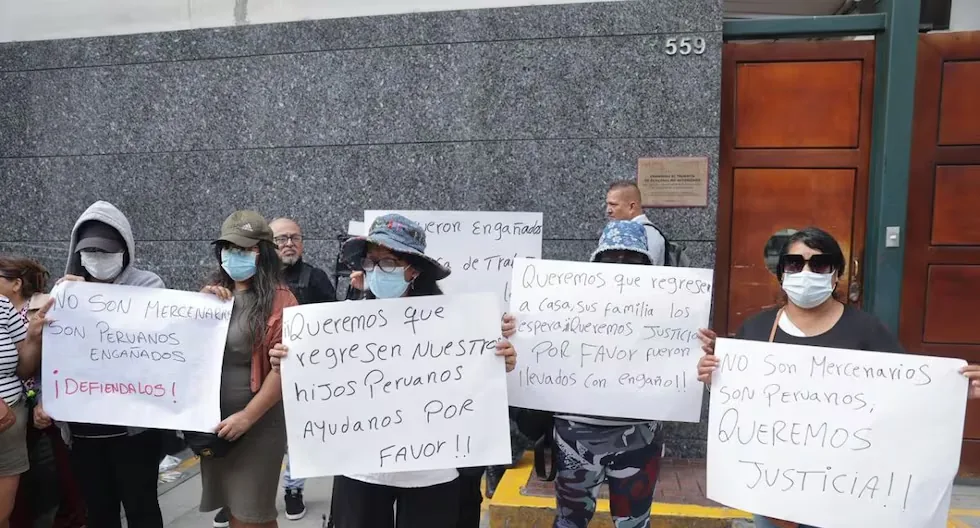
The Ministry of Foreign Affairs reported that four young Peruvians in vulnerable situations were recently repatriated from Russia, after having been deceived into providing services in that country. Two of them managed to escape forced recruitment and received assistance from the consular section of the Embassy of Peru in Russia. The other two were assisted at the end of July.
The four are already in Peru along with their families. To complete their return, the Ministry of Women and Vulnerable Populations and the Ministry of Health also participated.
The new repatriation, however, represents only part of a much larger crisis. According to official information released by the Ministry of Foreign Affairs, so far 31 compatriots have been evacuated, 28 returned to Peru, and 3 remain in Europe by their own decision.
The same report states that it is officially known that 459 Peruvians enlisted in Russia. Of these, there are 11 deceased, 114 missing, and three captured by the Ukrainian army.
The promise: a job in Russia for thousands of dollars
The complaints that began to accumulate during the first months of 2026 describe a recruitment mechanism that had as starting point the job offers.
Citizens were offered positions that, apparently, had no relation to the armed conflict, such as security jobs, cooking, transportation, assistance, or service tasks. In some cases, relatives reported that recruiters offered entry bonuses of thousands of dollars and monthly salaries much higher than what young people could earn in Peru.
El Comercio documented testimonies from relatives who reported offers with bonuses of up to 20 thousand dollars and monthly salaries between 4 thousand and 5 thousand dollars. The offered positions included surveillance, cooking, and security tasks.
An April investigation also identified that the victims were not necessarily contacted to perform military functions. Relatives reported that the international recruitment network mainly sought ex-military personnel, security staff, and people with guarding experience, to whom these proposals were presented as a job opportunity in Russia.
The offers could include security jobs in embassies, hotels, or public entities, as well as positions such as cooks or guards. One of the relatives interviewed then said that her partner was offered a security position in embassies, along with a 20 thousand dollar bonus and a high salary.
How the recruitment mechanism works
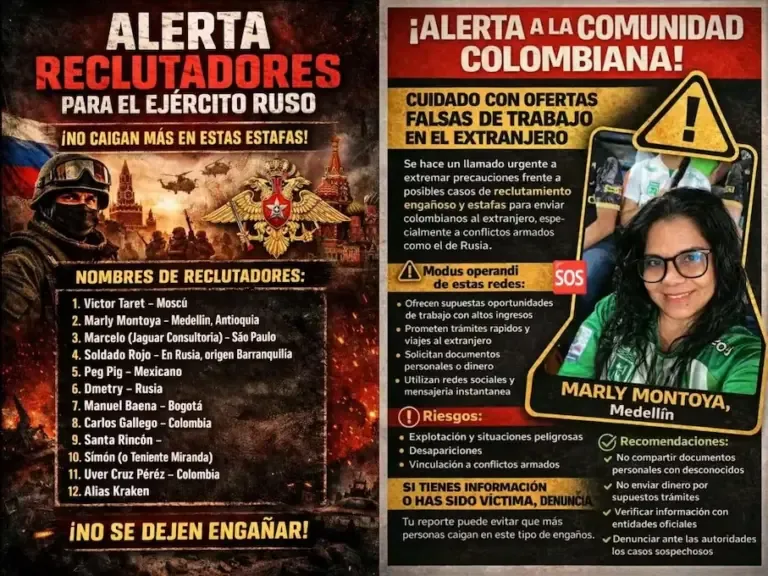
According to testimonies collected by El Comercio, recruiters mainly operated through Instagram, TikTok, and WhatsApp, although they also used personal contacts and recommendations among acquaintances.
Aliases such as “Halcón” and “Kraken” appeared in the complaints, as well as Colombian, Mexican, and Peruvian citizens who acted as intermediaries in the recruitment process.
According to relatives, the trips could be arranged in just three days. Recruiters covered tickets, passports, and accommodation, a mechanism that generated trust among applicants. Flights could include layovers in countries such as France, Turkey, Panama, or the Netherlands before finally arriving in Russia.
One element that caught the families’ attention was the instruction that young people should not say at the airport that they were traveling to Russia, but rather that they were leaving the country for tourism.
“Everything was through WhatsApp. It was not in person, it was not official. When they arrived at the airport, they were told not to say they were going to Russia, but that they were going on a trip,” said María Pachas, sister of one of the affected, in April.
According to the complaints, the mechanism allowed applicants to travel convinced that they would be hired to perform civilian tasks and only discover the true nature of their recruitment once they were outside Peru.
The Specialized Prosecutor’s Office for Human Trafficking Crimes in Lima and North Lima opened preliminary investigations in May regarding this mechanism. The investigations seek to determine if Peruvian citizens were recruited through deceptive job offers to work as security agents or perform other functions and ended up forced to participate in combat actions.
Arrival in Russia: documents withheld and incomprehensible contracts
The problem arose once citizens arrived in Russia. According to testimonies collected by El Comercio, the situation changed abruptly in Russian territory where Peruvians were forced to sign documents written entirely in Russian, without translation or clear explanation.
Relatives reported that once in Russia, citizens were informed that they had to join the Russian military service. In some cases, the young people did not know the language.
“They told them that everyone there was obligatorily going to the Russian military service. My husband doesn’t know any Russian, but they forced him to sign,” explained Yovana Muñoz, wife of one of the recruited Peruvians.
Added to this was the retention of personal documents. Relatives reported that some affected had their passport, ID, and cell phone taken away.
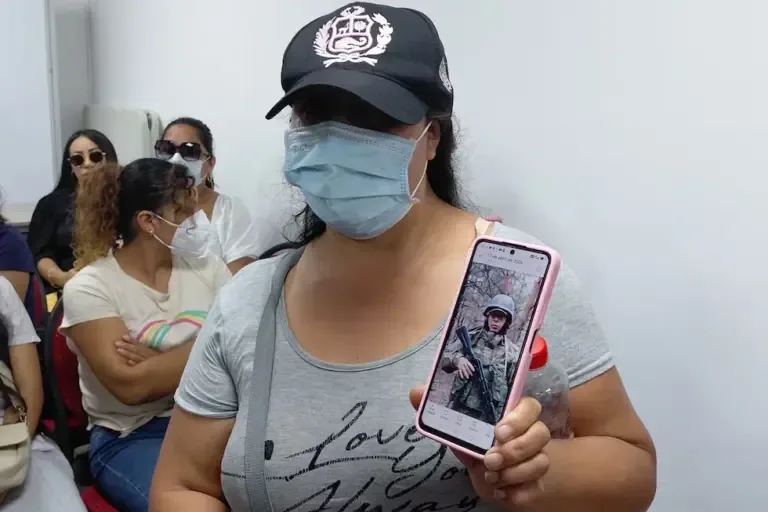
In some cases, young people were also informed that they had a debt of between 16 thousand and 20 thousand dollars for transportation costs and that they would have to pay it off through their service in the Russian army.
“They made him sign a contract for 16 thousand dollars. Since he had no way to pay, they took him to the Russian army to exchange that debt,” denounced Luz Carrión, a relative of one of the affected, in April.
Some relatives even claimed that the alleged Peruvian recruiters continued demanding money from Lima while their relatives were already trapped in the war zone.
The complaining families also decided to protect their faces for fear of reprisals. According to their accounts, after filing complaints, they began receiving threats on their phones to avoid publicly exposing the cases. The warnings, they said, included the possibility that their relatives would suffer consequences if they continued speaking.
From the job offer to combat
First comes the offer destined for Russia, and the promised payment is difficult to compare with usual incomes in Peru. Then comes the trip and signing of documents so that, finally, the supposed worker ends up incorporated into the Russian forces and is transferred to areas related to the conflict.
The investigation published by El Comercio in April collected testimonies according to which some citizens arrived in Russia convinced they would perform civilian jobs and ended up in basic military training. In some cases, the transfer to the front line would have occurred in just one week.
“My son thought he was going as a cook, but he ended up on the front line,” said Miriam Flores, who then had not heard from her relative for weeks.
Another relative, Sara Chero, said her husband managed to send her his location from the border with Ukraine along with a desperate message.
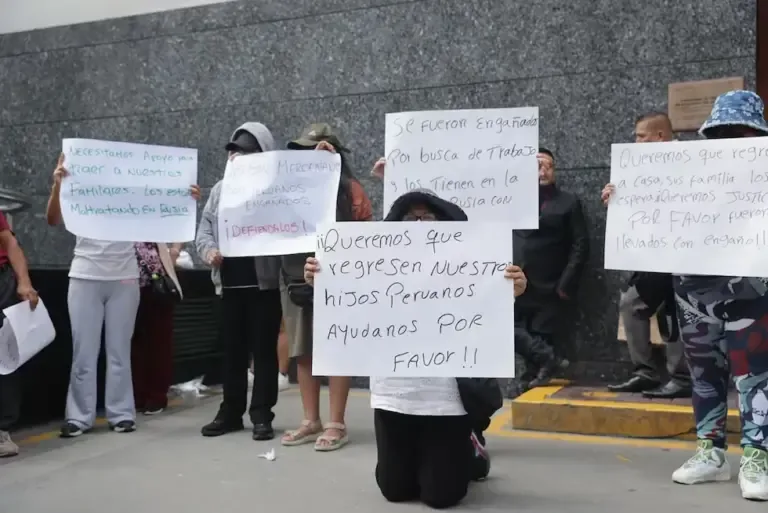
“We have been sent to the front line. Help me, please. I don’t know what to do.”
A citizen who managed to communicate with his relatives described a similar process. He was first taken to a camp inside Russia and, seven days later, transferred to another camp in Ukraine before being told he would be sent to the front line.
According to testimonies, many remained cut off because their phones were taken away and they only had brief and supervised access to their cell phones. Other relatives reported that the affected received punishments or threats if found with unauthorized devices.
International law expert Gian Vega warned in the April investigation that the case could constitute an alleged human trafficking network for exploitation in armed conflict. He explained that the retention of documents, threats, and coercion could nullify any initial consent.
Internationalist Farid Kahhat, for his part, stated that this type of recruitment takes advantage of the economic vulnerability of ex-military personnel and people linked to security work, to whom high incomes in Russia are offered. He also warned that once these people are incorporated into foreign military structures, the Peruvian state’s response capacity is reduced, so he considered diplomatic intervention necessary.
Wounded, missing, and dead
The return of four young people does not close the problem for families whose children still remain in Russia or for those who have no information about their whereabouts.
Read more The rise of American socialists
The most recent official figure released by the Ministry of Foreign Affairs states that 114 Peruvians are listed as missing and that another 3 were captured by the Ukrainian army. Additionally, 11 compatriots are counted as deceased.
These figures must be differentiated from the records handled by lawyers representing the families. Percy Salinas, lawyer for the affected, reported in June more than 300 cases linked to Peruvians transferred to Russia and indicated that the number could exceed 350. He also stated that 15 compatriots had died, although he specified that it was up to the Ministry of Foreign Affairs to officialize the information. This number increased, as in April he declared that the deceased were 13.
The difference between both records highlights the difficulty of officially identifying each citizen, establishing their situation, and determining who voluntarily went to Russia and who was deceived into going.
In April, when El Comercio published its investigation, families then reported more than 120 affected Peruvians, at least eight confirmed dead, and several wounded or missing. Since then, the official number of enlisted and missing citizens has increased.
The tragedy already had fatal consequences then. Some relatives reported that compatriots remained in Russian morgues, while others had been injured in drone attacks or by gunfire.
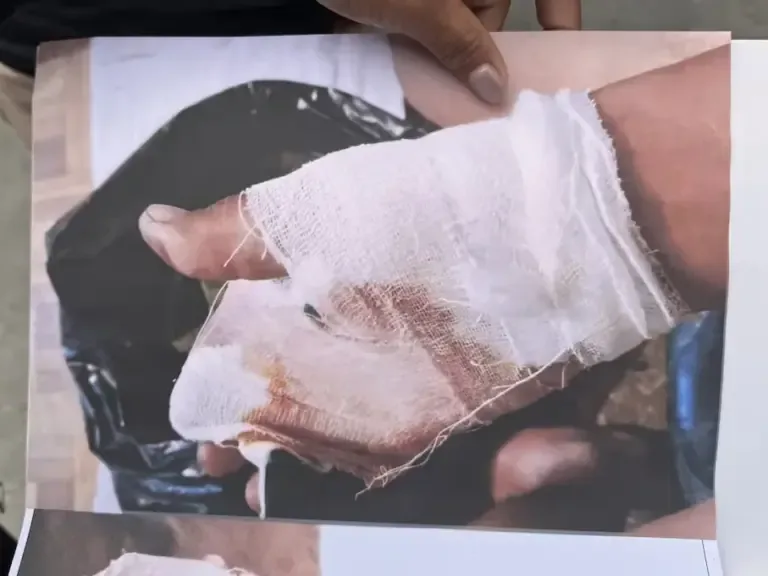
Yovana Muñoz said that her husband had been shot in a hand while fighting and that, according to her account, Russian soldiers abandoned him after he was wounded.
“They shot him and left him lying to die. He walked wounded until he reached a small health center in Ukraine. He only tells me he wants to return to Peru because this has been torture,” she said.
Sara Reyes also reported that her brother had been missing since April 13.
“All we want is to know where they are and to bring them back. There are children waiting for their parents,” she said.
Cases still awaiting a response
Uncertainty persists among relatives due to the lack of information about citizens who remain in combat zones.
One of the cases reported by families corresponds to a young chef who traveled with the premise of working in troop feeding but was later transferred to operational zones. His family lost contact with him on April 9, 2026, after he sent a photo of his military identification badge.
Another case corresponds to the family of Edwin Quispe Villavicencio, who received contradictory information about his supposed death in a combat camp. His relatives are still waiting for official confirmation about his situation.
Cases of Peruvians who ended up as prisoners of war were also known. In June, the legal defense of the families reported that four compatriots who had been taken to Russia under alleged false job promises had surrendered to Ukrainian forces and remained detained.
In May, the families’ lawyer also reported that at least 15 Peruvians had died in the conflict, while relatives continued collecting photos of identification badges and other items to try to verify the identity of citizens reported as dead.
Families had already asked the State for help
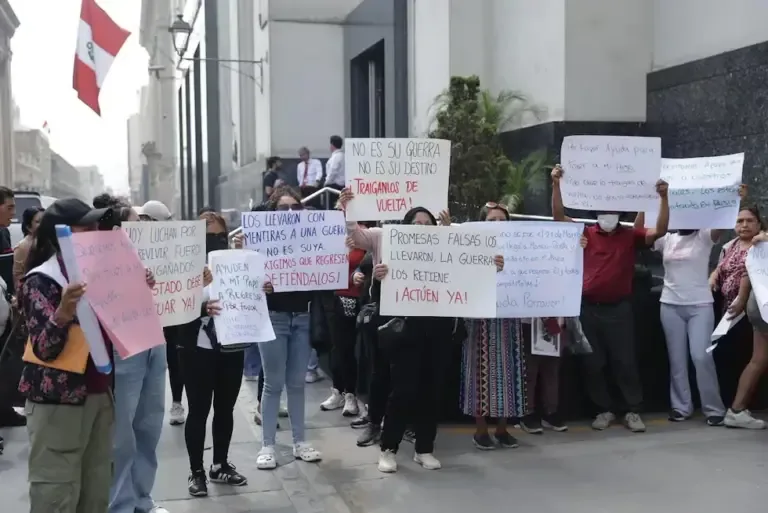
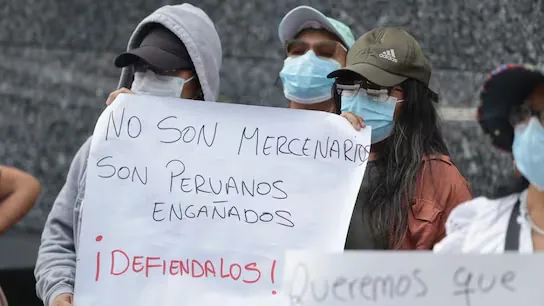
The relatives of the affected went to the Division of Investigation of Crimes against Human Trafficking and the Ministry of Foreign Affairs to request diplomatic assistance and the repatriation of their relatives.
The April investigation collected complaints from families who considered the state response insufficient given the scale the problem was taking.
Promises of jobs in construction and security were the bait to attract the affected. Photos: Hugo Pérez /@photo.gec
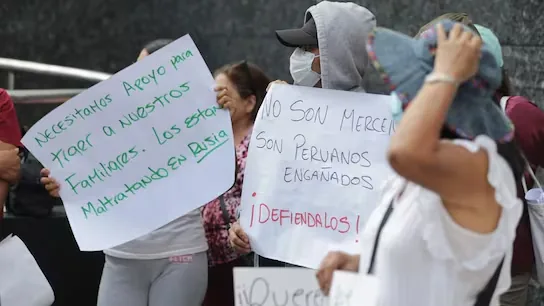
The war between Russia and Ukraine continues to generate impacts that even affect foreign citizens. Photos: Hugo Pérez /@photo.gec
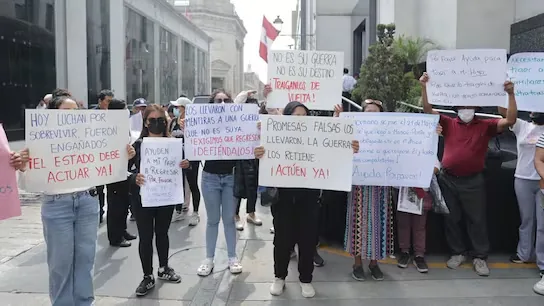
Peruvians are sent to battle lines after just three weeks of indoctrination in military training camps. Photos: Hugo Pérez /@photo.gec
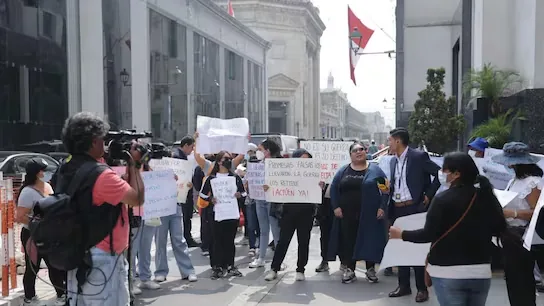
They arrive with the promise of receiving salaries between 4 thousand to 20 thousand dollars. Photos: Hugo Pérez /@photo.gec
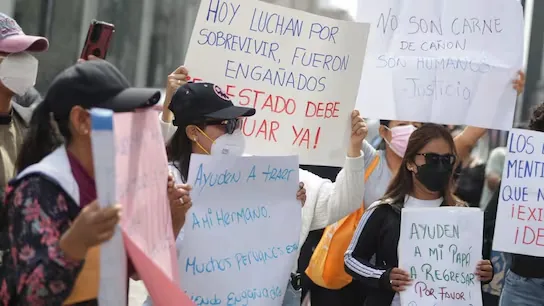
Experts warn about networks offering jobs abroad without guarantees or legal backing. Photos: Hugo Pérez /@photo.gec
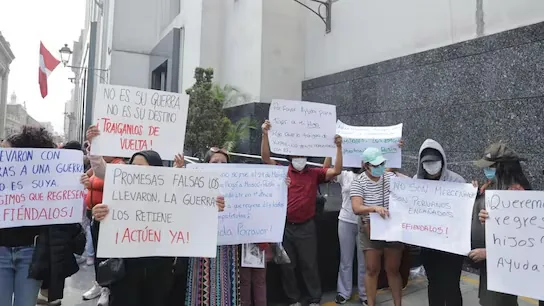
The lawyer for one of the families indicated that they have requested the intervention of the International Red Cross to facilitate the care of the wounded and the situation of the deceased. Photos: Hugo Pérez /@photo.gec
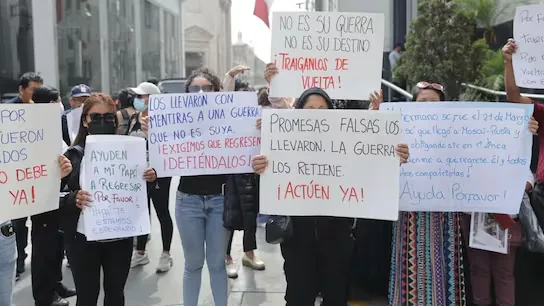
They filed a formal complaint with the Division of Investigation of Crimes against Human Trafficking (DININCRE) of the National Police of Peru (PNP). Photos: Hugo Pérez /@photo.gec
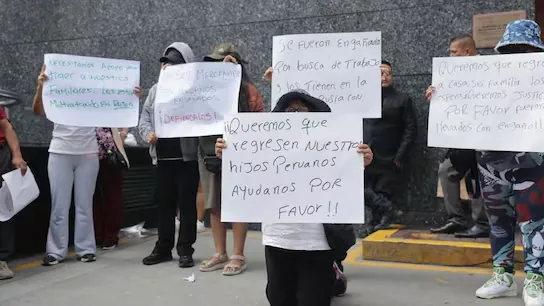
Currently, there are 8 deceased Peruvians awaiting repatriation of their bodies. Photos: Hugo Pérez /@photo.gec
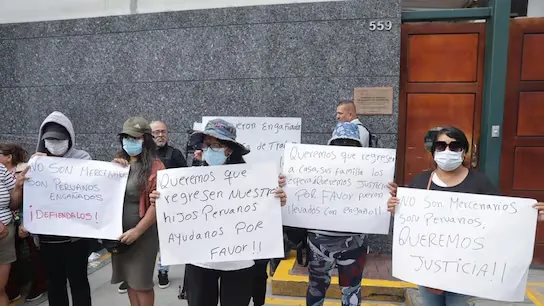
Relatives say many lost contact with their loved ones after their transfer abroad. Photos: Hugo Pérez /@photo.gec
The situation was even investigated as a possible case of aggravated human trafficking, because authorities received complaints from relatives who claimed that their relatives had been transferred abroad under false pretenses and later forced to participate in combat actions.
The Ministry of Justice also reported in April that its Public Defense had begun providing legal support to relatives of Peruvian citizens deceased and injured in conflict zones. Until then, nine relatives had requested the sponsorship of public defenders for victims.
A warning that remains valid
For the Ministry of Foreign Affairs, the case warns that citizens should not accept job offers abroad without first verifying who offers them, what the contract conditions are, and what functions they will actually perform.
The Ministry of Foreign Affairs asked Peruvians not to be deceived by false job offers due to the risk of falling into criminal networks linked to human trafficking. It also urged to report recruiters to the Public Ministry and the National Police of Peru.
📄Press Release 033-26: Ministry of Foreign Affairs coordinates repatriation of four young Peruvians in vulnerable situations in Russia.
— Cancillería Perú🇵🇪 (@CancilleriaPeru) August 9, 2026
👉 https://t.co/OeKAeyn9QF pic.twitter.com/CYis0EfKoc
The ministry also reminded that joining the military service of a foreign state requires prior authorization from the Peruvian government, according to the Constitution.
While four young people have already been able to return home, hundreds of families still remain attentive to obtaining information about their relatives. For some, the wait is to confirm if their child is alive; for others, to know where they are; and for those who have already received fatal news, to have their relatives identified and able to return to Peru.
Read more Netanyahu rejects Trump’s plan for Gaza: these are the reasons and what may happen now
- Government removes Jaime Moreno from the executive presidency of EsSalud due to loss of trust
- Keiko Fujimori starts with 60% approval, where does she have the most support?
- Piura facing the El Niño Phenomenon: Comptroller warns of prevention gaps