



![Alberto Beingolea: “If they insist on not giving [the powers], they are complicating life for Peru”](https://insightermedia.com/wp-content/uploads/2026/09/bb3fa9e11304ea13fe2cd333955007bc-150x150.webp "Alberto Beingolea: “If they insist on not giving [the powers], they are complicating life for Peru”")


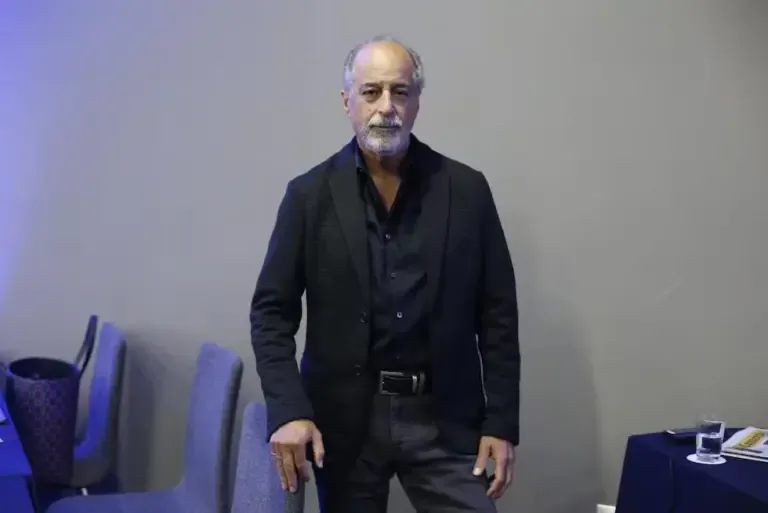
What future awaits journalism in an industry that changes at full speed? That was one of the questions that ran through the LATAM Media Leaders Summit 2026, a meeting that brought together journalists, editors, and media leaders from different countries in the region in Lima. Among the participants was Gabriel Escobar, editor and senior vice president of The Philadelphia Inquirer, with whom we talked about the challenges facing the press, new ways to connect with audiences, the direction the media are taking, and the impact of artificial intelligence.
Read more Bayern-Union Berlin LIVE TODAY with Luis Díaz: ONLINE broadcast of the Bundesliga match
Born in Bogotá, Colombia, and raised in New York City, Escobar holds a degree in Creative Writing from Queens College (CUNY) and a master’s degree in Journalism from the University of Maryland. He is also currently a member of the Pulitzer Prize Board.
—The Philadelphia Inquirer reaches millions of people through its various platforms. How do you decide where to put your resources and what content deserves to be developed for each platform?
The main investment is purely digital. We have technology teams to improve content distribution, but a very important part is maintaining local coverage at all levels. Another defining part is coverage of local governments in the region, because we see that readers are very interested in knowing what is happening in their neighborhoods, in their local governments… maintaining a level of journalism focused on this makes us successful.
—In your experience, what type of content is working best today to attract and retain audiences?
It’s a very interesting question, there are several things. In Philadelphia, the health industry is very important, there are very advanced hospitals, universities with a very important track record of innovation, the COVID vaccine, for example, was developed by the University of Pennsylvania. So, we focus on the health industry in Philadelphia and that helps us a lot.
The other things are more obvious: sports, Philadelphia Eagles, Philadelphia Phillies. That always attracts the audience. We also focus a lot on social media, on topics about the restaurant industry, since people are very well known for their signature, for food like Lima, and it is important to write in depth about that, because it has a quite significant impact with the people, because that generates a lot of coverage.
—What is being done to convert that massive audience into subscribers or regular readers of the newspaper?
That is the daily struggle because we will not be successful if we do not expand the audience. We have products aimed at establishing not only the base of readers and subscribers but also establishing a process that itself frequently attracts readers who do not have to pay. There comes a point where we do ask them for information, email or other things to register them. On the other hand, there is a percentage of readers who read the Inquirer’s articles and coverage and a percentage over time, and sometimes it’s a matter of months, but we keep seeing how they find the Inquirer, how much time they spend, why they leave, and we have a campaign, this is all on the marketing side. It has nothing to do with the news, but they follow that audience in a very fixed way and that yields results.
The same with the cost of the Inquirer. The cost of the newspaper is not fixed. Technology allows us, for example, to say that in this area where incomes are higher, we will charge more. In this area, instead of hitting the wall after reading two articles, they have 20. So, technology does allow that kind of experimentation and that helps a lot.
—What is the main difference you identify between how a Latin American media outlet reports and one from the United States?
This conference was very interesting because I saw that not only were there traditional organizations, El Comercio, for example, but also many small companies that have established their space and that also happens in the United States. As someone said: nowadays the era of media monopolies no longer exists. There are many media, many voices, and that is always good for the people and for democracy.
—How do you think AI is changing the way news is reported worldwide?
Yes, that has been a very interesting point of discussion here. I think it already has a profound impact. I consider that it has enormous advantages and can help journalism a lot, but there is also a very high risk and not only because artificial intelligence uses the information we produce, for example at the Inquirer, and does not pay us for it.
So the companies, the technology monopolies are getting rich with the content of organizations like these and that is a threat. I believe newsrooms can embrace artificial intelligence responsibly to help the development of journalism and the development of journalists.
—What kind of decisions or actions should not be delegated to AI?
Producing content without human oversight or participation. At the Inquirer that has been a very intense debate. We have been at it for two years and have rules, practices, and controls to ensure this does not happen because that is when you start losing the trust of the people who are paying for the news you produce, convinced that there is a human journalist, with sense, asking questions and writing articles.
—What should a digital media outlet do to stay relevant in the coming years?
You have to continue reinforcing the importance of journalism. Journalism is a key point in the development of society. You have to maintain the people’s trust in journalistic work. Artificial intelligence, technology, diversified media, that creates confusion among the people and readers have to see it, and this has to be reaffirmed every day, that independent journalism has great value.
—Currently, many bet on immediacy and digital media. But, what reflection do you have about the printed newspaper?
I will give you a complete example. The basketball team in Philadelphia, the 76ers, as everyone knows, signed LeBron James. When that news came out, that day we spent two hours designing the front page of the Inquirer. The demand the next day was enormous and we sold it every day because the Inquirer has a digital warehouse and it sells every day. Someone is still buying the front page of the news that came out two months ago.
Why does this happen? Because the page has a lot of impact, digital disappears. The front page is permanent. The Inquirer issue from July 4 of this year, when the United States turned 250 years old, is also something people want. And the same is happening with that page. The design of that cover also has impact because it is the beginning of the Declaration of Independence. That for me reaffirms that there is value in paper.

Gabriel Escobar has extensive experience as a journalist and editorial executive. He worked for 16 years at The Washington Post, where he was a reporter for the local and national sections, correspondent in South America, and city section editor. At The Philadelphia Inquirer he has held the positions of managing editor, deputy managing editor for Metro, and assistant managing editor of News. He also worked at The Hartford Courant, Philadelphia Daily News, and The Dallas Morning News, where he was an editorial writer and columnist. He was appointed editor of The Philadelphia Inquirer in November 2020.
- LATAM Media Leaders Summit 2026 closes with a focus on the future of media and the impact of AI
- LATAM Media Leaders Summit 2026: “Media must stop chasing only traffic and prioritize value, community, and trust”
- PISA 2025: high SES students fall more in Reading, while 77% of low SES students do not reach the minimum level
- Naval High School: Keiko Fujimori announces that administration will pass from the Navy to the Ministry of Education after alleged sexual assault complaint