




![Alberto Beingolea: “If they insist on not giving [the powers], they are complicating life for Peru”](https://insightermedia.com/wp-content/uploads/2026/09/bb3fa9e11304ea13fe2cd333955007bc-150x150.webp "Alberto Beingolea: “If they insist on not giving [the powers], they are complicating life for Peru”")


The bill — announced last July 28 by Fujimori herself during her message to the Nation — was finally approved by the Council of Ministers last Thursday the 27th and sent the following day to Congress. Specifically, it will be the Chamber of Deputies that must initially address and discuss the proposal in its entirety before it passes to the Senate, the Upper House. That said, the Government has requested that its proposal be processed “with the status of very urgent” in Congress.
Read more Buse, pre-US Open training: latest news from New York
However, to understand the magnitude of the measures the Fujimori Government seeks to legislate over 120 days, it is not enough to review only the bill on delegation of legislative powers, but also — and above all — the statement of reasons, contained in another file of more than 400 pages.
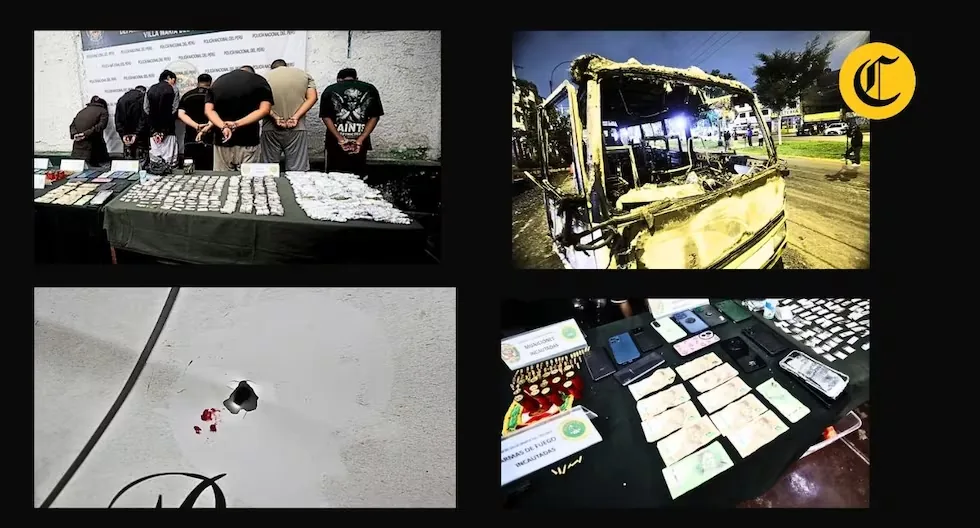
The proposal contains, regarding security, measures ranging from modifications to the Penal Code and the Criminal Procedure Code to changes in the penitentiary system and the framework for the intervention of the Armed Forces, among others [see graphic]. However, the Government has also presented proposals in economic matters, productive development, State reform, and even regarding housing and sanitation. But let’s go step by step.
POWERS TO TACKLE INSECURITY
Criminal organizations as terrorists
Declare and classify certain criminal organizations as terrorist organizations, in addition to establishing provisions for their classification and registration.
Modify the rules on territorial jurisdiction and transfer of jurisdiction for the investigation and prosecution of crimes linked to organized crime and criminal gangs.
Modify the rules applicable to high-risk crimes, especially extortion, contract killing, and kidnapping, including procedural simplification mechanisms and rules on sentence conversion.
Strengthen the DINI and more
Modification aimed at strengthening the National Intelligence System (SINA) and the National Intelligence Directorate (DINI).
Modify the regulatory framework regarding tracking, location, geolocation, control, registration, traceability, line deactivation, and blocking of mobile terminal devices used illicitly.
Intervention of the Armed Forces in support of the PNP
Strengthen and optimize the regulatory framework for the intervention of the Armed Forces in support of the police against threats to the rule of law, citizen security, and internal order.
Establish a legal framework that allows exercising the fundamental right to legitimate defense, including rules on the rationality of the response to aggression and a presumption of innocence whose destruction requires qualified motivation.
Modify the regulatory framework regarding citizen security, infrastructure, and equipment to improve the operational capacity of police services, including training, police health, criminal investigation, intelligence, interoperability, and joint action.
Control of weapons, ammunition, and explosives
Modify the regulatory framework on firearms, ammunition, explosives, and pyrotechnic products for civilian use, to strengthen their control, traceability, and supervision, as well as the conditions for their access, acquisition, possession, and use.
Reform of the penitentiary system
Reform the national penitentiary system to strengthen security and social reintegration.
Criminal organizations and more
In its powers bill, the Government proposes “establishing the legal framework that declares criminal organizations as terrorist organizations,” in addition to establishing provisions for their classification and registration.
In the statement of reasons, the Executive supports this proposal on the advance of transnational organized crime and mentions, among other cases, the “Tren de Aragua” and various linked factions or structures, such as “Los Gallegos” and “Los Hijos de Dios,” related to crimes such as extortion, homicide, contract killing, kidnapping, human trafficking, and arms trafficking.
The objective, it is indicated, is to establish a legal framework that allows declaring and classifying as terrorist organizations those criminal organizations that, due to the severity of their actions, “employ terror, extreme violence, collective intimidation, or coercion mechanisms as means to achieve their illicit ends.”
Another highlighted proposal is a new adjustment to the powers of the DINI, created to provide the head of State and the president of the Council of Ministers with intelligence for decision-making regarding national security. Although the project presented to Congress uses a more general formulation, reserving details for a future decree, the Government has been explicit in its intention for the DINI to regain operational intelligence capabilities.
It is important to remember that, in 2015, during Ollanta Humala’s government, the DINI was declared under reorganization following allegations of espionage against opposition politicians and even from the ruling party. After the enactment of Law No. 30535 in January 2017, the actions of the DINI were limited solely to the strategic intelligence field, not operational.
In the statement of reasons now presented by the Government, it is pointed out that Peru currently faces “significant challenges,” so these “threats require an intelligence structure that not only coordinates information but, at specific moments, can deploy specialized technical and operational capabilities with tactical autonomy and legal flexibility.”
Therefore, the text points out that the DINI “must have real operational capabilities” to anticipate threats such as transnational organized crime, the expansion of illegal mining and environmental crimes, or threats to democratic stability and constitutional order.
“The restoration of the operational capabilities of the DINI is legally viable, constitutionally legitimate, and strategically necessary. Current threats require that the DINI can operate not only as an information coordinator but as an executor of strategic intelligence and its inputs,” it states.
In an interview with El Comercio, Danilo Guevara, former head of the DINI, considered this proposal a wise measure as it will allow strengthening the capabilities to obtain information, which in turn will enable producing useful, timely, and higher-quality intelligence.
Read more El Niño is the ‘brief’
“Expanding the powers and functions of security agencies raises a legitimate citizen concern worldwide because overflows can eventually occur. To prevent and avoid undesirable situations, rigid protocols must be established that set normative parameters, while Congress and judicial authorities exercise careful supervisory action,” he emphasized.
Legal assessment of the proposals against insecurity
According to criminal lawyer Carlos Caro, the powers bill proposed “is less vague” compared to the draft leaked weeks ago, with an improved standard of “specific matter” required by article 104 of the Constitution itself. However, he pointed out that the problem is another.
He stated that it is proposed that the current framework presents a series of structural gaps, but it does not evaluate why previous reforms have failed, especially when Peru has been legislating intensively on security for more than a decade.
“Normative production is confused with state capacity. A package that dedicates eight matters and one hundred twenty days to legislate, without diagnosing the effectiveness of what has already been legislated, risks repeating the cycle,” he asserted.
Regarding declaring criminal organizations as terrorist organizations, Caro pointed out that it is not legally accurate as proposed. He considered the “central defect” that the legal effects of this “declaration” are never specified, so he considered this one of the clarifications Congress should demand before approving the matter.
He explained that if the effect is to apply the anti-terrorist regime — penalties, procedural rules, and restriction of benefits — this would be determined by an administrative act. Something that — he emphasized — clashes with the principle of legality and the Constitution itself.
“There is also a conceptual problem. Terrorism is defined by its purpose, not by its method. Organized crime pursues profit. Equating them because they share extreme violence dilutes both categories. The Inter-American Court has already condemned Peru for indeterminate types of terrorism. The idea reappears from time to time and always fails for the same objection,” Caro asserted.
Now, regarding penitentiary reform, he considered it indispensable, since much extortion is ordered from prisons. However, he emphasized, “a decree does not build prisons nor hire staff; without budget and without control of internal communications, it will be a norm without material correlation.”
For his part, lawyer and former Deputy Minister of Justice Gilmar Andía questioned the scope with which the delegation of powers is proposed, emphasizing that the Constitution requires it to be express, clear, and concise.
However, he stated that in the project “there are several points” where it can be foreseen that the way it has been drafted is so broad that, if Congress does not establish delimitations, it would allow “very broad modifications of criminal and criminal procedural legislation.”
Regarding measures related to geolocation and telecommunications systems, he considered the diagnosis incomplete and that current restrictions hinder the use of this tool against organized crime. “If we do not manage to correct this situation, the norm will end up being more of the same,” he added.
He also identified another main gap in the reform of the National Police, questioning that essential issues such as increasing operational personnel, corruption, and personnel cleansing, among others, are not contemplated. Andía also considered the proposal for the Armed Forces to provide support in the external control of penitentiary centers as ineffective.
About the proposal to declare criminal organizations as terrorists, he explained that this does not create a criminal offense — as was the case with the urban terrorism proposal and others — but establishes a classification. However, he also questioned that it does not specify exactly what the legal consequence of such classification would be.
“Terrorism has certain normative elements that would not be feasible to apply to these criminal groups, so you would have to create a criminal offense. If what you are going to apply is only regulations related to terrorism, that is another matter. Therefore, the norm ends up being a bit vague, empty of content regarding operability, execution, and so on. It may be a measure that can help somewhat, but I think it needs to be complemented,” he expressed.
Changes compared to the draft
Unlike the draft leaked a month ago, in the delegation of powers bill presented by the government to the bicameral Congress, the Executive no longer proposes a regulatory change to allow private participation in the “administration, management, operation, and provision” of services related to the national specialized system of internment and social reintegration.
Instead, it only proposes “reforming the national penitentiary system to strengthen security and social reintegration.”
Additionally, it indicates that the Armed Forces will provide “temporary and exceptional” support to external security actions and operational support to penitentiary establishment personnel.
In the first text, the Fujimori Higuchi administration sought to regulate “the temporary and exceptional participation” of the Armed Forces “in the direction, security, control, supervision, and operational support” of prisons.
There were also changes regarding labor reform compared to the draft. In that document, the government planned to legislate on “improving the regime for termination of employment contracts for objective causes, correcting defects in the current regulation,” which have prevented “the necessary flexibility that companies must have in the face of changes in economic or technical reality.”
However, in the final text, this part was withdrawn, and the Executive proposes “strengthening the legal framework of private labor activity, contemplating a regime that promotes formalization, including social security, labor benefits, and protection against dismissal.”
The project presented in Parliament also withdrew the initiative to create, restructure, reorganize, merge, divide, and dissolve public bodies. Recently, different ministers have rejected the possibility of unifying and reducing ministries.
Read more Russia threatens the United Kingdom: «They are playing with fire» for supporting Ukraine
![Alberto Beingolea: “If they insist on not giving [the powers], they are complicating life for Peru”](https://insightermedia.com/wp-content/uploads/2026/09/bb3fa9e11304ea13fe2cd333955007bc.webp "Alberto Beingolea: “If they insist on not giving [the powers], they are complicating life for Peru”")