





The investigation against Flávio Bolsonaro was opened in July by the STF judge André Mendonça and remained under secrecy. Its existence became known on Friday after Mendonça ordered the declassification of 25.3 GB of documents, audios, and videos from the Banco Master case. He also ordered the declassification of all case files.
The Banco Master scandal started as a multi-million financial fraud and is now generating a major political crisis in Brazil.
According to the documents, Flávio Bolsonaro is investigated in connection with the financing of “Dark Horse”, a film about his father.
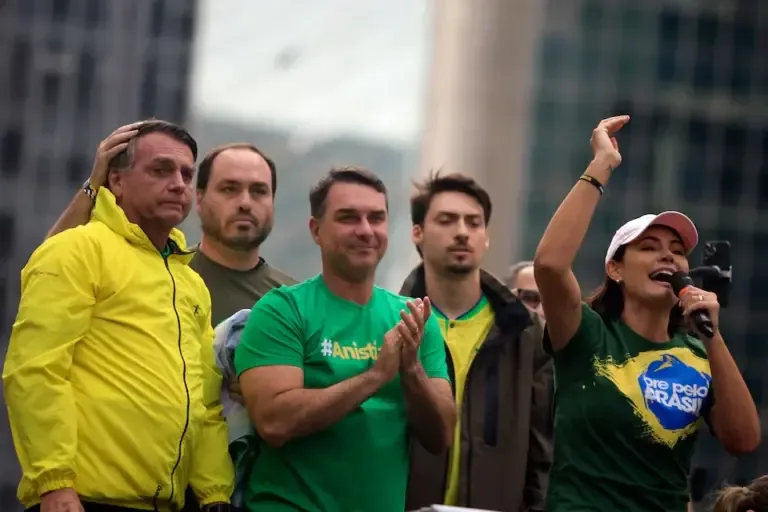
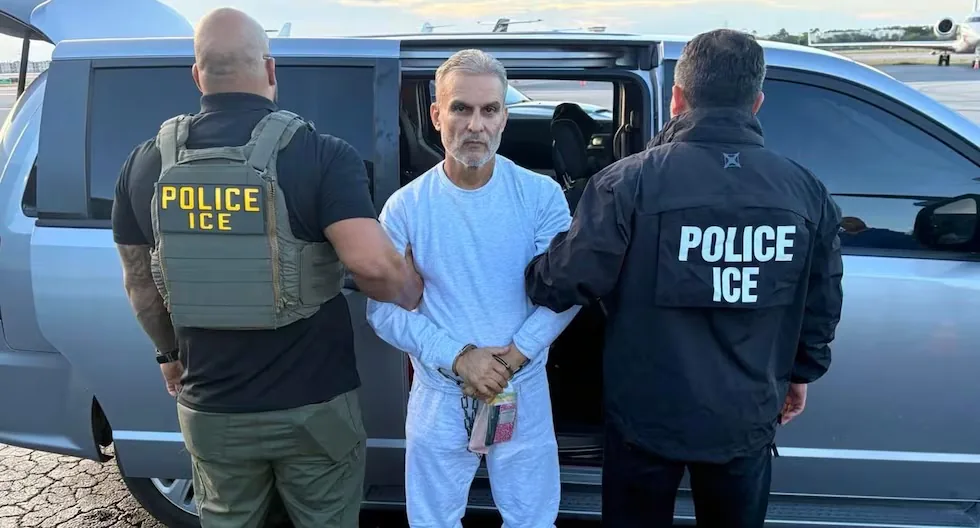
Justice suspicions focus on Daniel Vorcaro, former owner of Banco Master who is currently imprisoned. He allegedly handed over about half of the 134 million reais (US$26 million) that Flávio requested to finance the film. Police believe part of the money ended up in U.S. accounts linked to the Bolsonaro family.
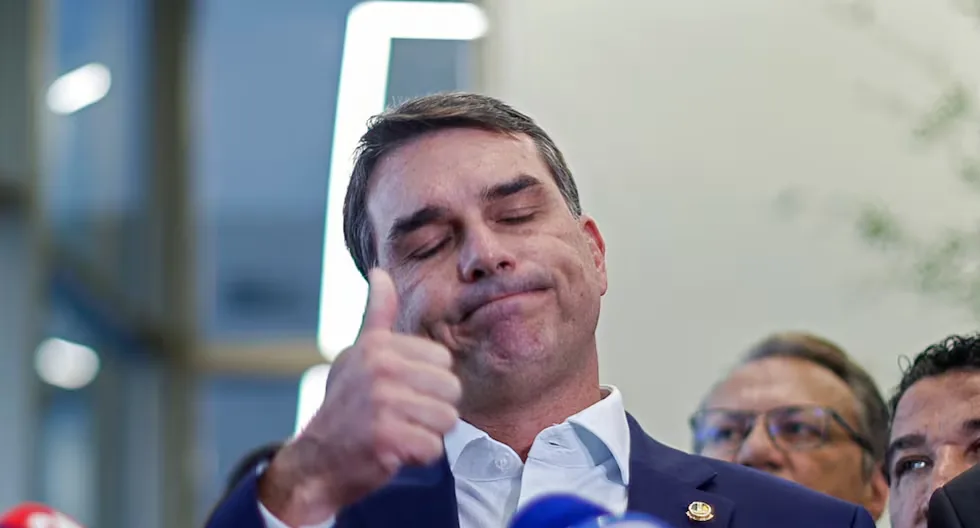
Flávio Bolsonaro has denied any wrongdoing and claims the investigation aims to interfere in the elections. He also tries to shift the focus to Lula, accusing him of having ties with Vorcaro’s intermediaries.
“I have nothing to hide, the film is completely legal,” Bolsonaro said on Friday.
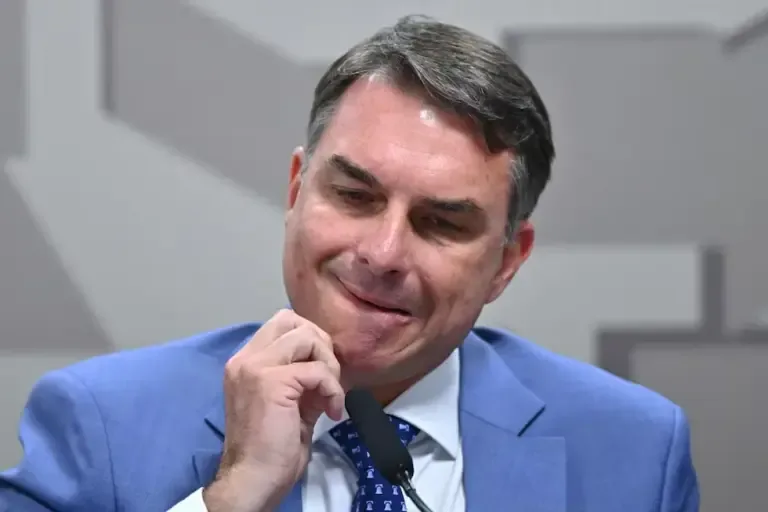
In May, Bolsonaro had admitted to asking banker Vorcaro for money for “Dark Horse.”
Vorcaro is in preventive detention due to the Banco Master case investigation, which probes an alleged scheme of financial fraud, fraudulent management, corruption, money laundering, and criminal organization.
He was initially detained in November 2025 and returned to prison in March 2026, when the Federal Police expanded investigations into possible threats, corruption, money laundering, and hacking of computer devices.
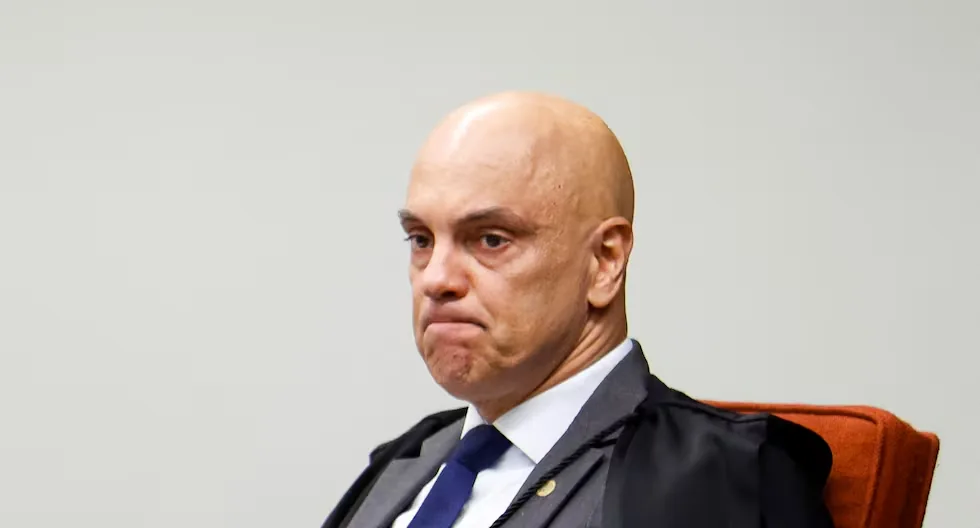
The documents declassified on Friday also implicate Supreme Court judge Alexandre de Moraes, the instructor of the trial where Bolsonaro was convicted. Vorcaro exchanged messages with him asking for intervention in investigations and consulting whether he should leave Brazil.
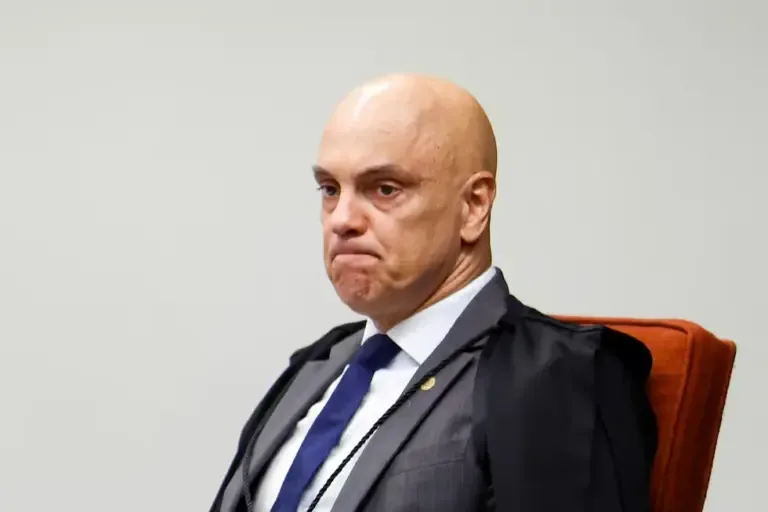
Additionally, it was revealed that De Moraes reviewed a multi-million contract between Banco Master and his wife’s law firm.
This sparked a new confrontation within the Supreme Court: De Moraes accused Judge Mendonça of acting with political motivations in investigating his relationship with Vorcaro. The full court will decide on Tuesday whether to open an investigation against De Moraes.
On Sunday, there was another declassification of documents. The revelation broadens the scope of the “Dark Horse” case: the investigation no longer only politically implicates Flávio Bolsonaro, but points to an alleged scheme of public funds diversion that could have links to the criminal gang Primeiro Comando da Capital (PCC) and involves about thirty people, including leaders of the Liberal Party led by Jair Bolsonaro.
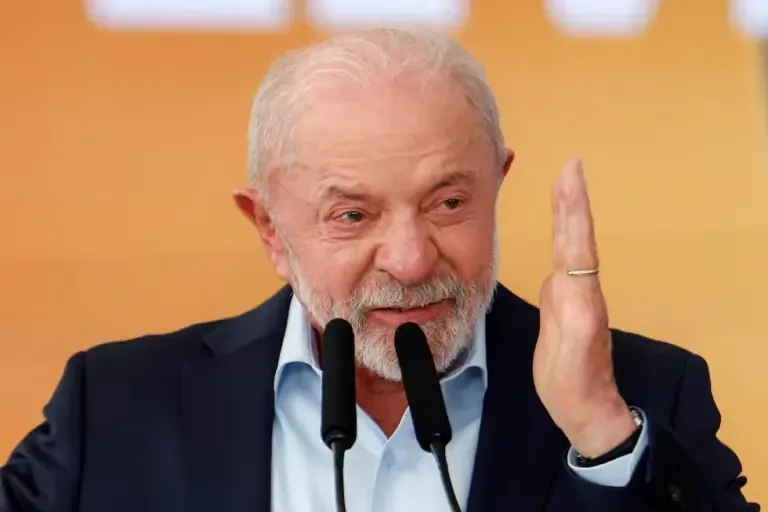
All this happens as the latest Datafolha poll became known, which on Friday gave Bolsonaro 35% voting intention against Lula’s 39% in the first round. It showed a technical tie in a possible runoff, with 44% for the Bolsonaro candidate and 46% for the president. However, the poll was conducted before the investigation revealed by the Supreme Court became known.
Jair Bolsonaro was sentenced on September 11, 2025 by the Federal Supreme Court of Brazil to 27 years and 3 months in prison for his participation as leader of a criminal organization in a plot to prevent Lula da Silva’s inauguration after the 2022 elections.
The investigation will have an electoral impact
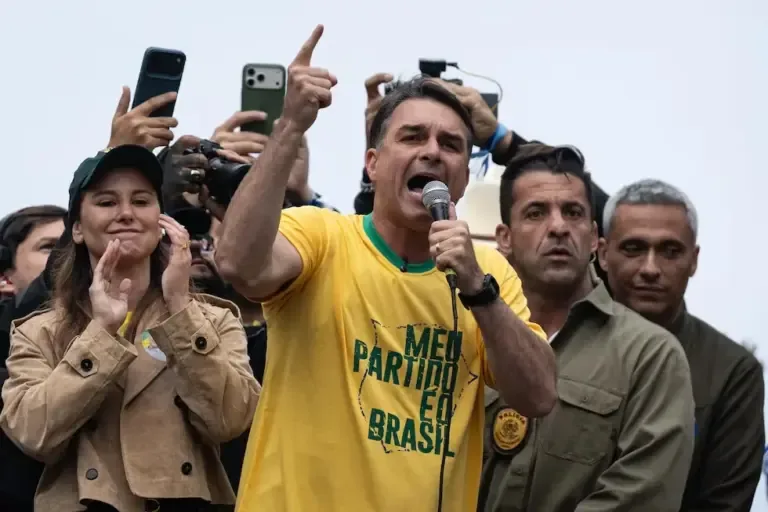
Francesco Tucci, director of the Communication and Journalism program at the Peruvian University of Applied Sciences (UPC), tells El Comercio that the revelation will necessarily have consequences in the presidential campaign, especially because it occurs just weeks before the elections. “All these scandals always have a media impact and will have an electoral impact. So, there will definitely be an impact,” he states.
However, he warns that the effect of the investigation will not necessarily be linear. Flávio could try to turn the case into a political argument to mobilize his supporters and present the investigation as persecution. “He will try to instrumentalize this situation by talking about a political attack. So, there will be instrumentalization on both sides,” he anticipates.
The international analyst considers that the timing of the investigation’s disclosure can also fuel suspicions among voters. “There will be a shadow, a suspicion, about why this type of complaint and investigation against Flávio Bolsonaro came out just now.”
Tucci indicates that the questioning of some magistrates involved in the case could also reinforce the narrative of a political dispute around the investigation.
He believes a particularly aggressive final stretch is coming. “The electoral campaign can be even tougher. It will probably enter its hardest phase right now with this type of investigation.”
Meanwhile, for ambassador Juan Álvarez Vita, the investigation should be analyzed beyond its immediate impact, since the Liberal Party candidate had already been closing the gap with Lula in the polls. He considers that the judicial intervention can have “two possible faces”: on one hand, it could affect his electoral chances; but on the other, it could reinforce among his followers the perception that he is a victim of political persecution.
“The accused sometimes generates a feeling of support, being seen as persecuted, as a victim of external forces”, explains the diplomat.
Álvarez Vita argues that this phenomenon could play in favor of bolsonarism, especially because Jair Bolsonaro has also been subjected to judicial processes and his son has managed to maintain an important electoral base despite his father’s conviction.
He even compares this situation to what Lula went through years ago, when the current president was imprisoned after being convicted of corruption, before his convictions were later annulled.
The resistance of bolsonarism
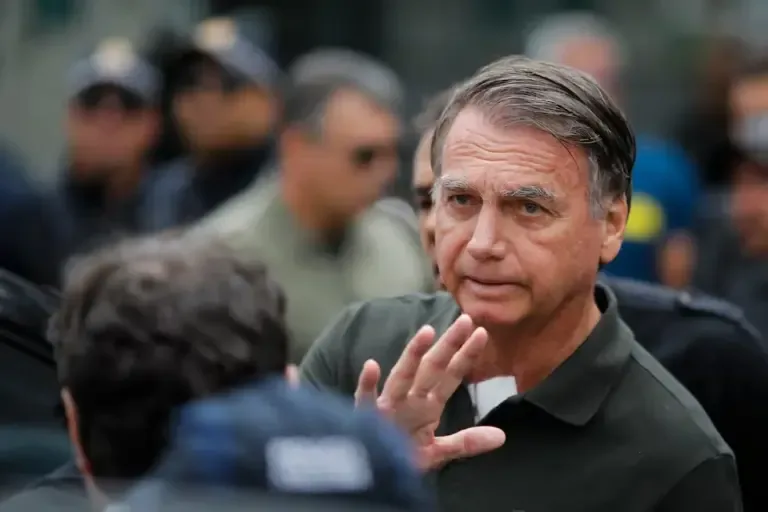
Tucci attributes the electoral strength of bolsonarism, despite the imprisonment of its leader, to a phenomenon that transcends Jair Bolsonaro’s figure: the protest vote against the Workers’ Party (PT). He indicates that the scandals that have affected the party, the Lava Jato case, investigations against Lula, and Dilma Rousseff’s impeachment damaged its reputation among part of the Brazilian electorate.
“This is happening because the opposing side is not doing well. It is a dissident vote. It is a protest vote. It is a vote against the political direction, in this case, Lula,” he states.
He indicates that this phenomenon is part of an international trend of growing polarization, driven largely by the inability of current governments to respond to social demands. He mentions that in Brazil these demands relate to citizen security, economic recovery, and infrastructure.
For his part, Álvarez Vita argues that the persistence of bolsonarism has an emotional component. “When someone is having health problems or is seen as too harassed, people immediately start feeling pity, and from there to giving political support is just a small step,” he says.
No Lula, no PT
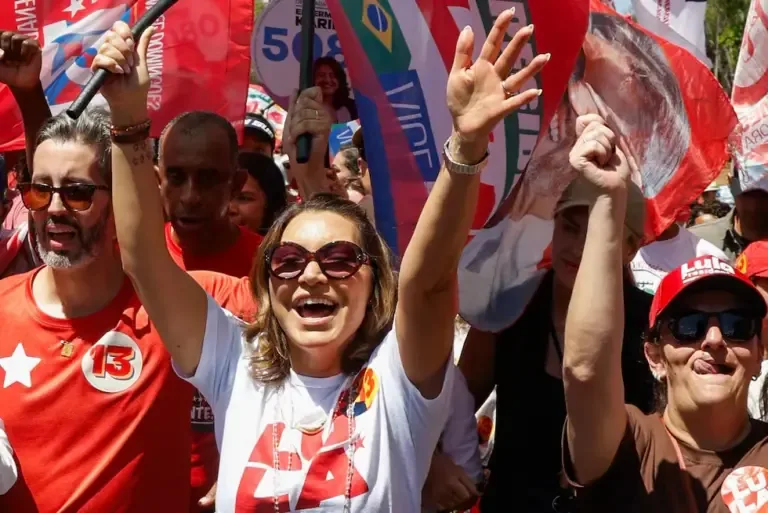
Tucci emphasizes that while Flávio Bolsonaro has assumed the role of the main presidential candidate of his father’s movement, the PT has not managed to build a figure capable of politically succeeding Lula.
“The PT is Lula. Take away Lula, the PT loses,” he states firmly. For Tucci, the party’s dependence on its leader constitutes a structural weakness, particularly in a presidential election.
“There is no continuity of Lula without Lula as there is of bolsonarism with Jair’s son,” he adds.
Read more The new threat from the Houthis that endangers the global oil supply