







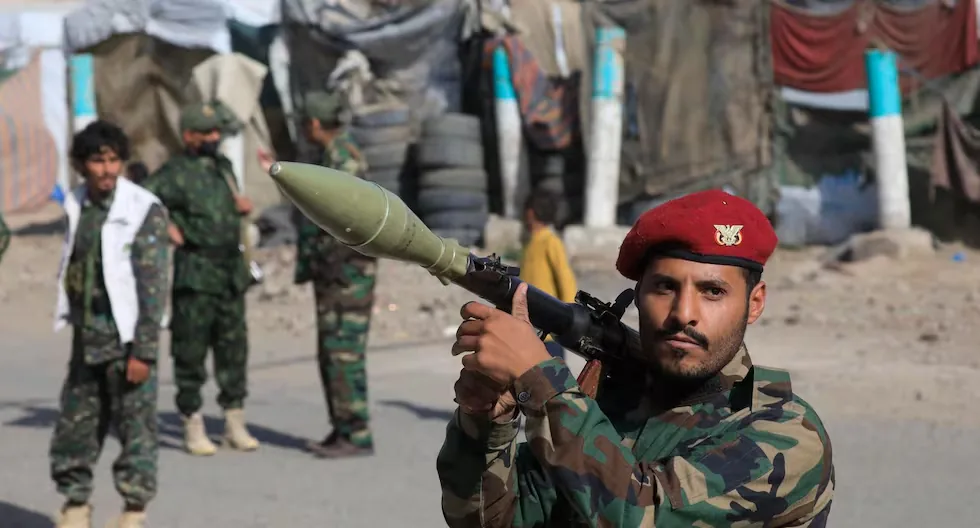
While the Strait of Hormuz is severely restricted by the pressure from Iran, another strategic point on the Middle East maritime map faces a growing threat: Bab el-Mandeb. The advance of the Yemeni Houthis towards this passage that connects the Red Sea with the Gulf of Aden, and the capture of key positions, have raised fears that the Tehran-backed group could turn this essential global trade route into a new hotspot of instability. In this scenario, Saudi Arabia has asked the United States to attack the Houthis, but President Donald Trump refused to intervene directly.
Can the Houthis really close Bab el-Mandeb as Iran has done with Hormuz, or is their capacity, for now, more limited?
At the beginning of September, the Houthis launched a large-scale offensive in Yemen that in a few days brought them to Bab el-Mandeb.
On September 10, they took the port city of Mokha, located 70 km north of Bab el-Mandeb. Then, they advanced towards Dhubab, a locality situated directly opposite the strait.

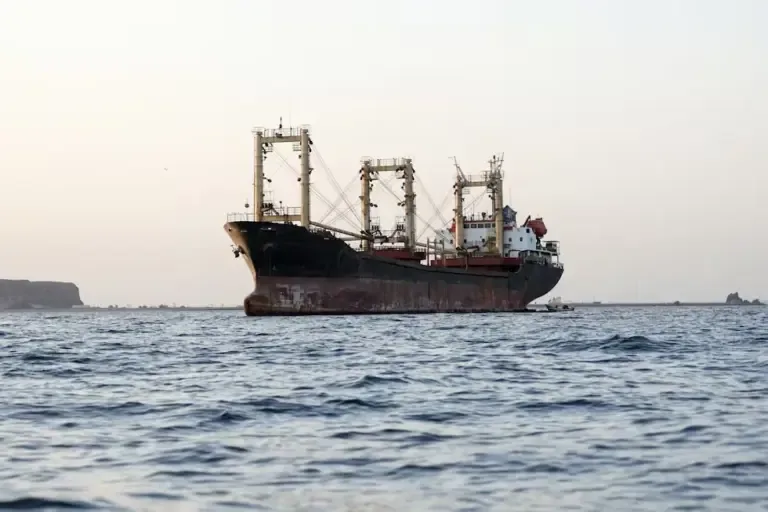
The next day they took the strategic island of Mayun, in the center of the strait. The Yemeni government forces withdrew.
They also advanced on other positions and islands in the Red Sea, expanding their control of the Yemeni coast.
The Houthis have taken de facto control of the Yemeni part of Bab el-Mandeb, which allows them to exert a much greater capacity to threaten or restrict maritime traffic.
They do not yet have absolute control of Bab el-Mandeb to “close it” in the same way that Iran did with the Strait of Hormuz after the war with the United States and Israel began on February 28.
But the capture of Mayun and strategic positions on the Yemeni coast places them in an unprecedented situation: if they consolidate those positions and manage to keep maritime traffic under threat, they could make the strait practically unusable for major shipping companies.
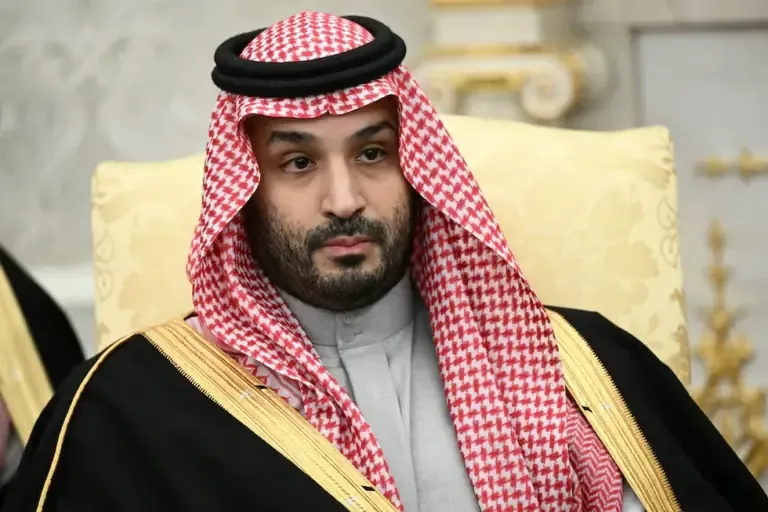
Saudi Arabia, the oil power that would be the most affected if the passage is closed, is clear about this. On Friday, the Axios portal revealed that Crown Prince Mohammed bin Salman called Trump twice to ask the United States to bomb the Houthis, but he refused.
Washington did commit to providing Saudi Arabia with intelligence information about the Houthis and data on their targets. Also, according to an Axios source, about 200 U.S. military personnel are already in that country providing non-combat support.
Axios also emphasized that U.S. military and civilian officials had already informed their Saudi counterparts that Trump’s directive is to keep U.S. forces focused on Iran and the Strait of Hormuz, and to avoid opening another front.
The confrontation between Saudi Arabia and the Houthis reignited in July, after Riyadh prevented an Iranian plane carrying senior Houthi officials from landing in Sana’a, returning to Yemen after attending the funeral of Iran’s Supreme Leader, Ali Khamenei.
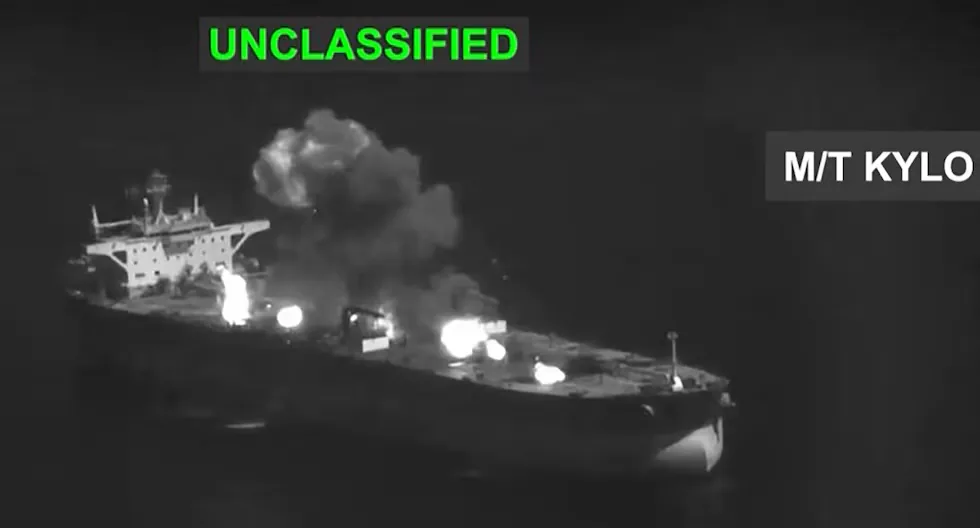
The Houthis responded with attacks on oil tankers linked to Saudi Arabia in the Red Sea and then expanded their offensive to the kingdom’s energy facilities.
Why is Bab el-Mandeb important?
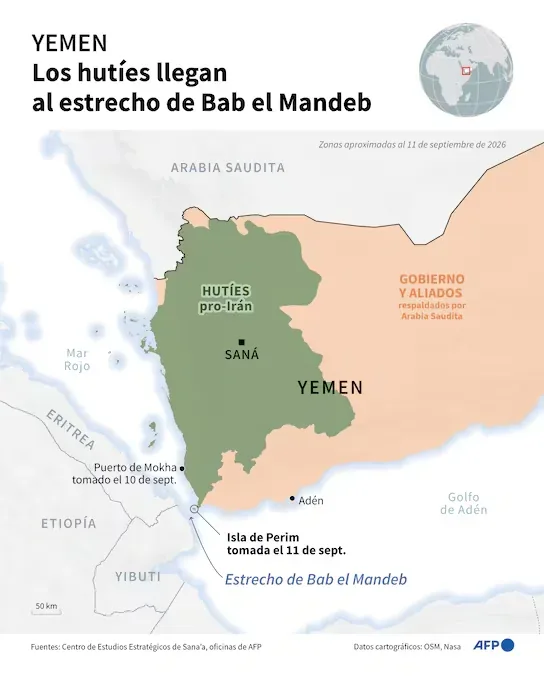
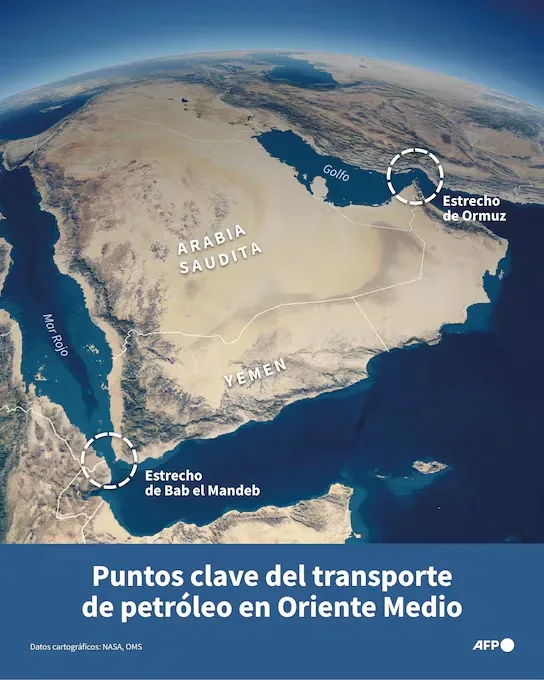
The strategic Bab el-Mandeb strait separates Yemen, on the Arabian Peninsula, from the Horn of Africa and connects Europe with Asia through the Suez Canal.
It measures about 100 kilometers long and about 30 kilometers wide between the town of Ras Menheli, on the Yemeni coast, and Ras Siyyan, in Djibouti. It also includes Eritrea.
Oil tankers and commercial ships coming from Asia pass through Bab el-Mandeb to reach the Red Sea and then the Suez Canal and the Mediterranean, and vice versa.
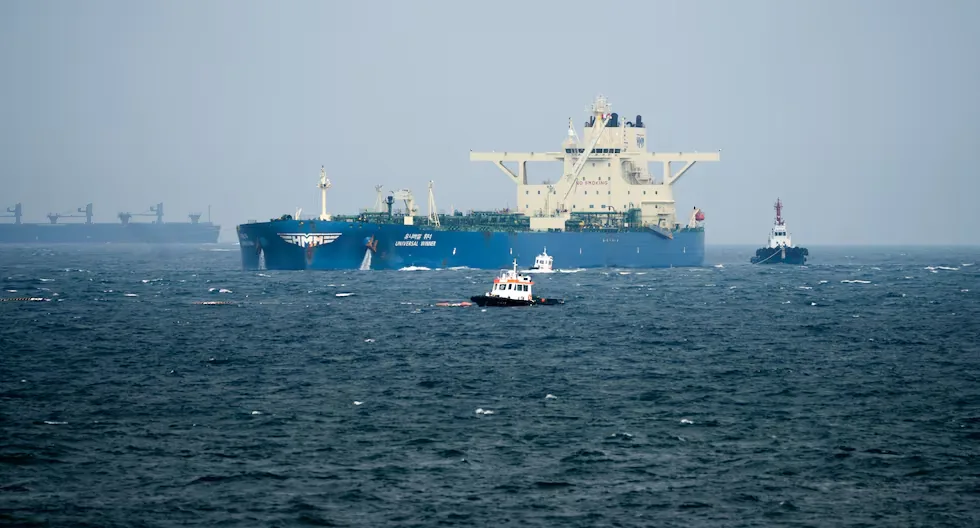
The passage is very important for Saudi Arabia because since the beginning of the war it has increased its oil exports through the port of Yanbu, on the Red Sea, to bypass the Iranian blockade of the Strait of Hormuz.
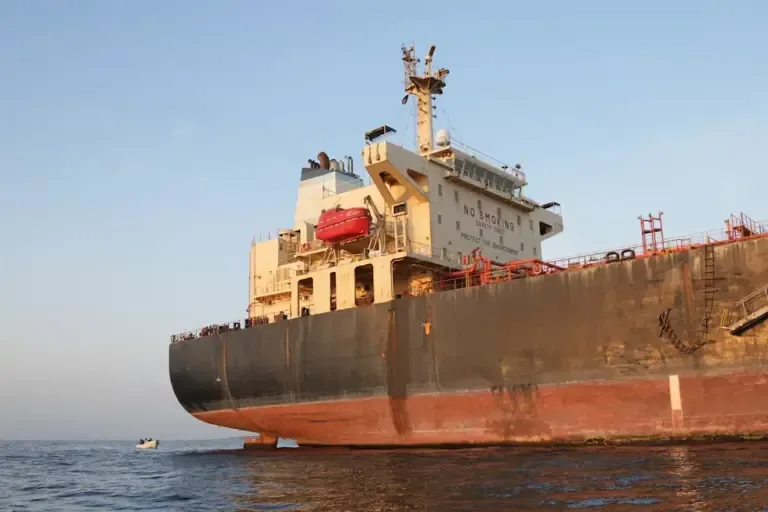
Between last March and July, Saudi crude exports from the port of Yanbu averaged 3.8 million barrels per day, five times their pre-war level in Iran.
But in August, after the Houthis resumed their attacks on Saudi ships, it fell to 1.5 million barrels.
Read more Phrases for Mexico’s Independence Day 2026: 30 messages to share on social media
According to AFP, citing 2023 figures from the U.S. Energy Information Administration (EIA), before the war in Iran, Bab el-Mandeb was a main artery for oil, with 12% of global flows.
Additionally, 8% of global liquefied natural gas (LNG) shipments pass through the strait.
At this point, it is worth remembering that before the war, 20% of global oil transport passed through the Strait of Hormuz.
Besides oil and gas, containers with electronics, textiles, machinery, and spare parts also transit through the waters of the Bab el-Mandeb strait, as well as automobiles, food, agricultural products, and chemicals. An interruption of this route, therefore, could affect not only the price of oil but also the supply chains connecting Asia with Europe.
If the Houthis finally close Bab el-Mandeb, the global impact would be significant and would force many ships connecting Asia and Europe to avoid the Red Sea and go around Africa via the Cape of Good Hope, increasing sailing times, fuel costs, freight and insurance, and generating new pressures on supply chains.
What is at stake in Bab el-Mandeb?
For Andrés Gómez de la Torre, a defense and intelligence specialist, Bab el-Mandeb is a strait of global geopolitical importance due to its location and because it is a fundamental route for international maritime traffic.
He highlighted that critical non-military assets also pass through this route, such as power and fiber optic cables, which makes the strait a relevant point both for security and for international communications.
“It is a very important maritime traffic route related to great geopolitics and, in general, not only regional but global. It is as important as the Suez Canal and the Strait of Hormuz”, he emphasized.
Gómez de la Torre stated that the situation in Bab el-Mandeb cannot be understood solely as a confrontation between Saudi Arabia and the Houthis. The conflict is part of a regional dispute involving various actors with different interests.
He recalled that the Houthis are backed by Iran and are part of Tehran’s so-called “Axis of Resistance,” while Saudi Arabia supports the Yemeni government forces. Added to this are the participation and interests of other actors such as Israel and the United Arab Emirates.
“It is a regional dispute situation with several actors involved with their own and very different interests,” he said.
He considered that, although initially the scenario may seem like a bilateral conflict between Saudi Arabia and the Houthis, it is actually connected to the broader geopolitical dispute involving Iran, Israel, and the United States.
Regarding Trump’s decision to reject the Saudi request to launch direct attacks against the Houthis, the analyst said that Washington is taking into account the political and military cost that opening a new operation in Yemen would entail, at a time when the United States is already facing significant wear due to its confrontation with Iran.
Gómez de la Torre warned that Trump’s decision could have consequences on the ground. The lack of U.S. intervention may encourage the Houthis to continue advancing towards a possible total closure of the strait, while at the same time, it could push Saudi Arabia to take a more active military role.
According to the analyst, this would further increase the risk of a regional escalation. “This military powder keg situation in the area is intensified,” he stated.
Who are the Houthis?

The Houthis, also known as Ansar Allah, are a political, religious, and military movement of the Zaidi Shia community that emerged in northern Yemen in the 1990s.
In 2014, the Houthis took Sana’a and have since controlled the capital of Yemen, much of the north of the country, and the areas where the majority of the Yemeni population lives, although the internationally recognized government retains more territory.
Militarily backed by Iran and linked to the so-called “Axis of Resistance,” the Houthis maintain a war against the Yemeni government and its regional allies.
Saudi Arabia intervened militarily in 2015 to support the Yemeni government and contain the Houthis, becoming since then one of their main adversaries.
Read more Trump denounces an alleged «sick conspiracy» against artificial intelligence