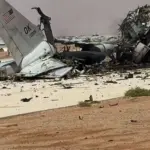







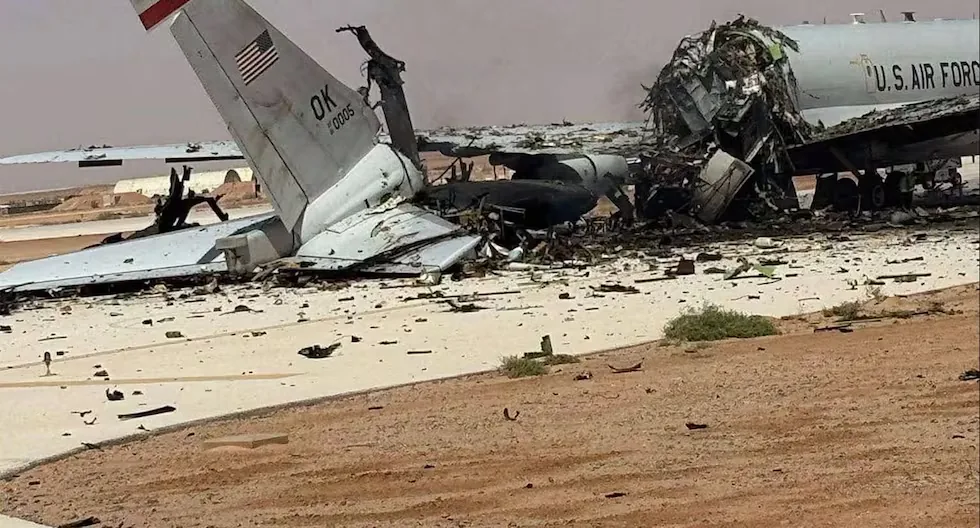
The images were exclusively published by the CBS News network, which claims they were sent by active military personnel under anonymity due to the strict press restrictions within the United States military.
Read more “United States has the technology, but the war with Iran reveals the limit of its arsenals”
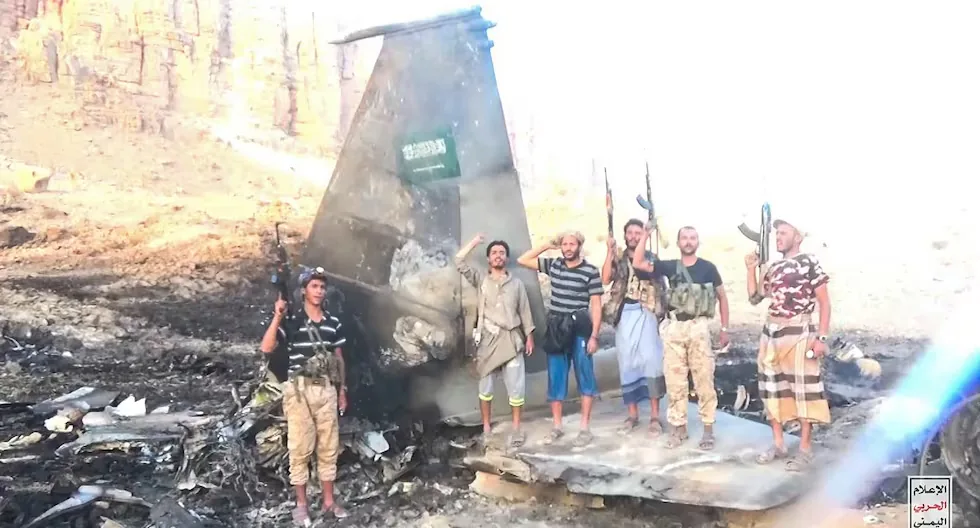
One of the photographs, taken at the Prince Sultan Air Base in Saudi Arabia, shows a direct hit on a four-engine Boeing E-3 Sentry aircraft, whose tail separated from the fuselage. This aircraft has an estimated cost of US$270 million.
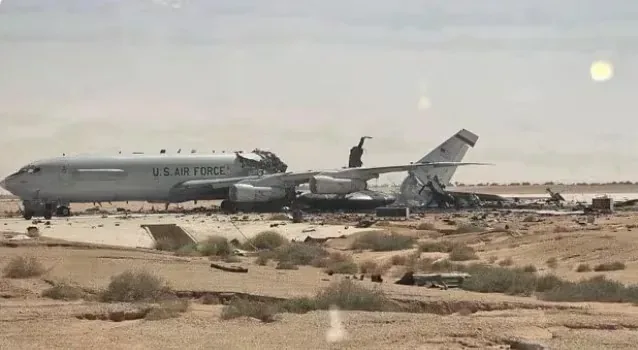
The Boeing E-3 Sentry is an early warning and airborne control aircraft (AWACS), equipped with a large radar disk on the fuselage that allows it to detect and track aircraft and other targets hundreds of kilometers away. Its strategic importance in the war lies in its function as an “air command center”, as it provides a broad view of the airspace, coordinates fighters and other aircraft, and helps direct defense and attack operations.
The loss of one of these aircraft in a high-intensity war not only means the destruction of an expensive plane but also the loss of a key platform to detect threats, manage air combat, and keep U.S. forces coordinated.
Other photos taken at the same Saudi base show buildings and barracks seriously affected by airstrikes.
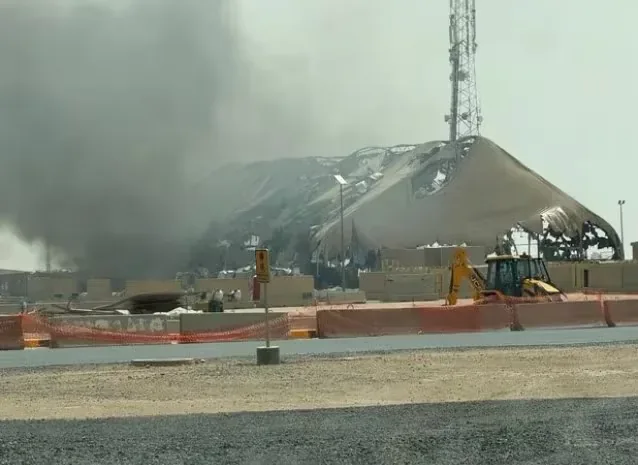
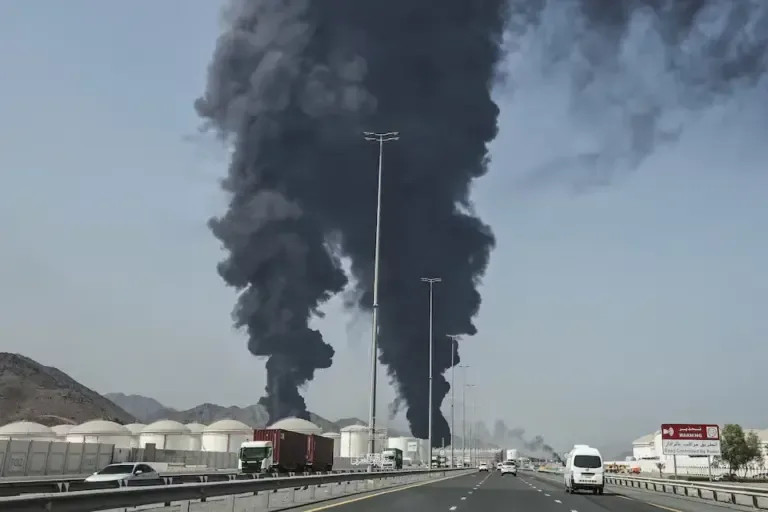
At Camp Buehring, Kuwait, which is an important concentration area for ground troops, armored vehicles and some U.S. Army aircraft are seen destroyed.
There is also a large tent-like structure reduced to rubble.
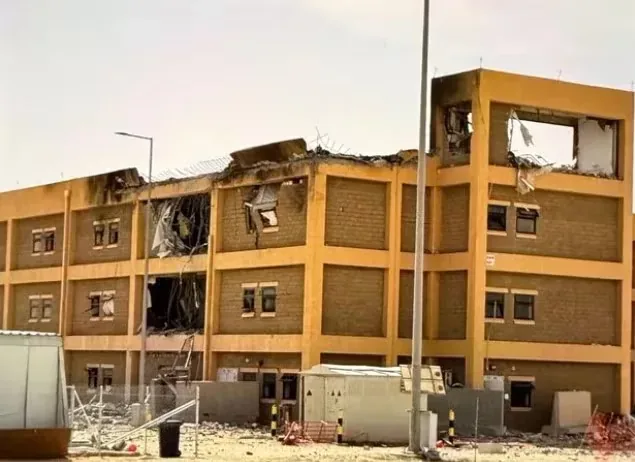
Another photo shows a four-story building damaged by an Iranian attack at Camp Arifjan, also in Kuwait.
The United States and Israel started the war against Iran on February 28. President Donald Trump stated that the goal was to prevent the Islamic Republic from obtaining nuclear weapons.
The photos were released a day after the publication of a report by the Pentagon inspector general, which states that the United States Central Command (CENTCOM), responsible for U.S. forces deployed in the Middle East, had reported widespread damage to U.S. facilities and equipment.
CENTCOM said that the Iranian attacks “damaged and destroyed hundreds of buildings and structures at U.S. bases in Kuwait, Bahrain, Qatar, United Arab Emirates, Saudi Arabia, Iraq, Oman, and Jordan,” according to the report.
“Additionally, dozens of U.S. aircraft were destroyed or damaged” during the war, it indicated.
The report notes that the U.S. naval base in Bahrain, which is a logistical center for the Navy in the Middle East region, was targeted by Iranian drone and ballistic missile attacks. As a result, CENTCOM had to relocate those functions to much more distant locations, such as Diego García island in the Indian Ocean.
According to the report, Iran also destroyed or damaged 30 MQ-9 Reaper drones, each priced around 30 million dollars.
Also, seven KC-135 tanker aircraft were damaged or destroyed, five of them hit by Iranian munitions while on the ground in Saudi Arabia.
What is behind Iran’s strategy
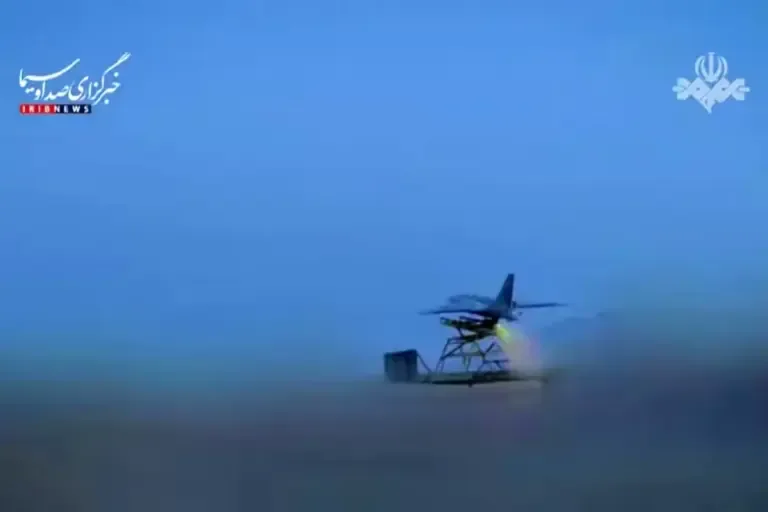
For Andrés Gómez de la Torre, a defense and intelligence specialist, the images should be analyzed within the strategy of asymmetric and attrition warfare that Iran has developed over years. He indicates that Tehran does not limit itself to defensively responding to U.S. attacks but seeks to generate costs at various points in the region and force Washington to disperse its resources.
He adds that this strategic concept explains both Tehran’s direct actions and the historical use of allied forces or proxies in different Middle Eastern scenarios.
The analyst recalls that Iran built over years a network of armed actors that allowed it to develop “indirect wars” against its adversaries. In this scheme, he places the Houthis, Hamas, Hezbollah, and Iraqi militias, which he relates to the so-called “ring of fire” around Israel.
Gómez de la Torre considers that the attacks against U.S. positions in various countries in the region are part of a larger objective: “regionalize the conflict and distract U.S. military support”.
He indicates that Iran has proposed a “multi-front war”, in which pressure is not concentrated exclusively on a specific battlefield. He adds that the logic is to force the United States to simultaneously protect numerous facilities, troops, and military assets in different countries, thus increasing the cost of maintaining the campaign.
But Gómez de la Torre warns that the effect of this strategy should not be measured only by counting damaged facilities or destroyed equipment. “The war of attrition also seeks to erode the adversary’s capacity to sustain the conflict over time”, he emphasizes.
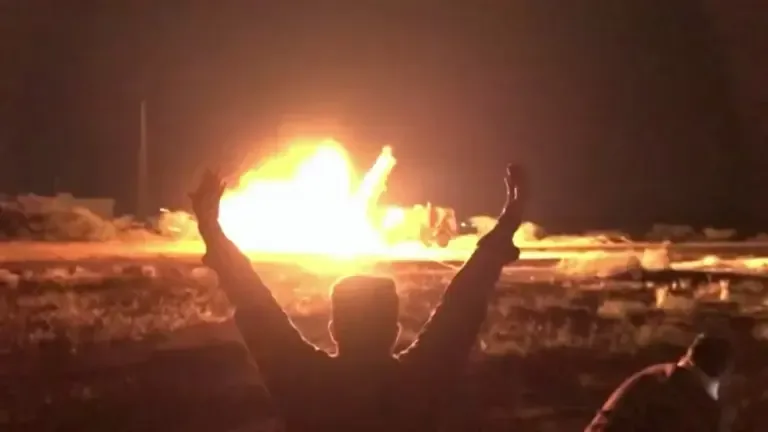
The analyst argues that Iran has demonstrated a “strategic resilience capacity despite the heavy blows received against its military infrastructure and other critical assets.” Therefore, he considers that the attacks and their consequences have a dimension that goes beyond the strictly tactical.
“It not only has a tactical effect in the military sphere, it also has a greater economic effect and weight, as well as psychological and propaganda effects”, he explains.
Thus, the images showing damage to U.S. facilities acquire additional value: “in addition to documenting material losses, they can be used by Iran as evidence that its attacks are capable of reaching targets protected by the United States, even in the face of U.S. technological and military superiority.”
Gómez de la Torre compares this dynamic to the difficulties the United States faced during the Vietnam War, where the adversary’s capacity for resistance and the prolongation of the conflict ended up becoming determining factors.
Iran is not finished, its attacks are tactical victories
For his part, journalist and international analyst Carlos Novoa points out that the images show that Iran still retains the capacity to strike Washington’s interests in the region, although he indicates that the scope of these actions should be measured with caution. He emphasizes that Tehran has a limited capacity to cause damage, but not to develop an offensive capable of decisively changing the outcome of the war.
“Iran may be in crisis, but it is not finished”, Novoa states. The analyst argues that the Islamic Republic maintains two relevant capacities: to resist and to carry out sporadic attacks against U.S. or allied targets.
For Novoa, the value of these attacks is not only in the material damage they may cause. They also have an important political and propaganda dimension for Tehran, allowing it to show that despite the blows received, it still retains offensive capacity.
“It can demonstrate that it is not only resisting but also striking and attacking”, he explains.
Novoa emphasizes that the images of destruction should not automatically be interpreted as a sign that U.S. defenses have been strategically compromised. For him, these are mainly specific Iranian successes within a conflict in which it maintains a limited attack capacity.
“It is not a strategic vulnerability, but tactical victories”, he argues.
The Gulf factor
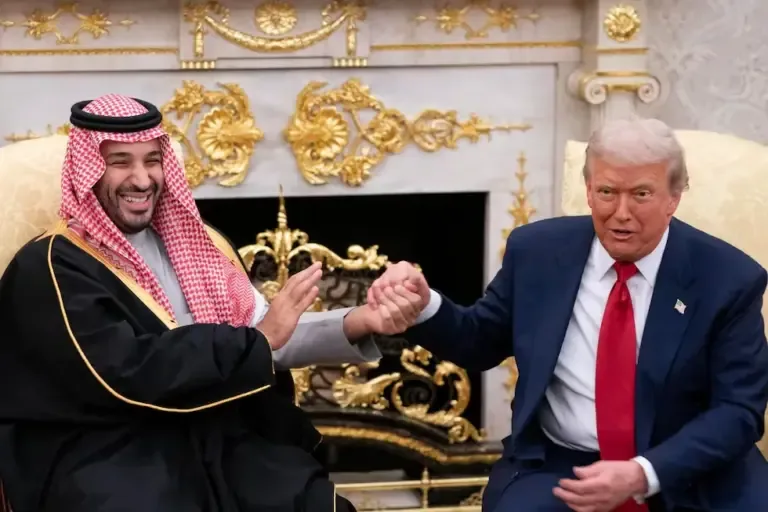
Novoa also warns that the attacks have consequences for Arab countries allied with the United States, particularly those located around the Persian Gulf, such as the United Arab Emirates, Bahrain, and Qatar. These states, he notes, could seek mechanisms to strengthen their security against Iran’s capacity to attack targets in the region.
The analyst also places the conflict within a broader regional dispute for leadership between Saudi Arabia and Iran, representatives respectively of the main Sunni and Shia currents of Islam.
Another element that Novoa considers decisive is the change in how the United States approaches the security of its regional allies. According to the analyst, Washington will no longer necessarily respond to every attack against an allied country but will prioritize those cases where its own interests are directly compromised.
“The United States will respond to the extent that its interests are attacked, and Iran knows this well”, he points out.
This logic could become especially important if Iranian attacks continue affecting countries like Saudi Arabia, Qatar, or the United Arab Emirates, but without causing direct damage that forces Washington to expand its intervention.
For Novoa, Iran also knows the political limitations faced by the Donald Trump administration. In this way, Tehran can maintain a strategy of pressure and targeted attacks without necessarily seeking a conventional confrontation it would not be able to win, he notes.
Read more The Infinix Note 60 Pro is much more than a phone with tamagotchi aesthetics | Review