







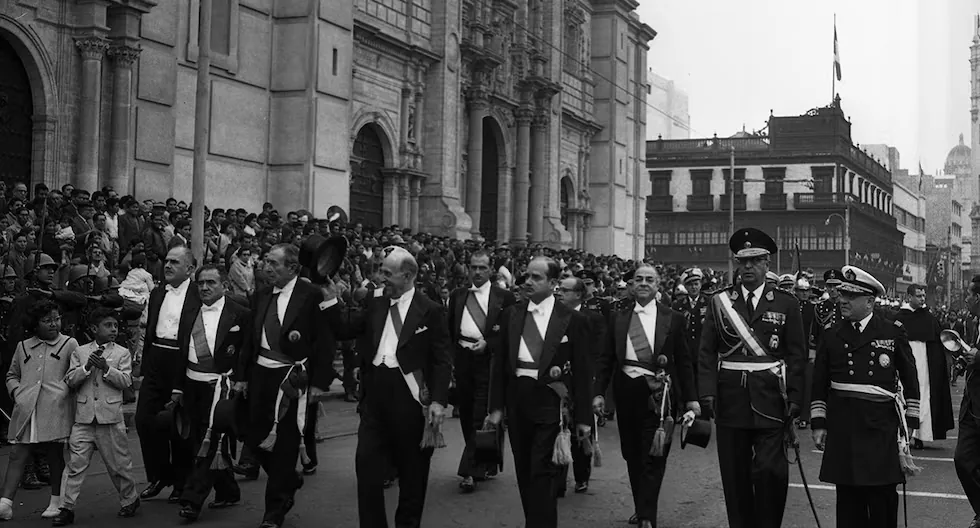
The Message to the Nation is a deeply rooted republican tradition, where the current head of state, with the presidential sash across his chest, ascends the rostrum of the Congress of the Republic to give an account and, above all, to chart the course of the nation, which is always debated between hope and disappointment.
LOOK: A pisco route in the style of Johnny Schuler: where to drink the best chilcano, capitán and pisco sour in San Isidro
From the 1940s until the end of the 20th century, El Comercio has recorded this event in national politics. An exercise in memory that allows us to return to those exceptional moments, in which presidential rhetoric has shaped the destiny of a still turbulent and changing Peru.
Let’s imagine the atmosphere of 1945. World War II was coming to an end, and in Peru, the jurist José Luis Bustamante y Rivero assumed the presidency amidst a climate of democratic optimism. His July 28th messages, imbued with a deep respect for legality, resonated in a country eager for stability. El Comercio of the time highlighted his constant call for harmony and the primacy of the Rule of Law.
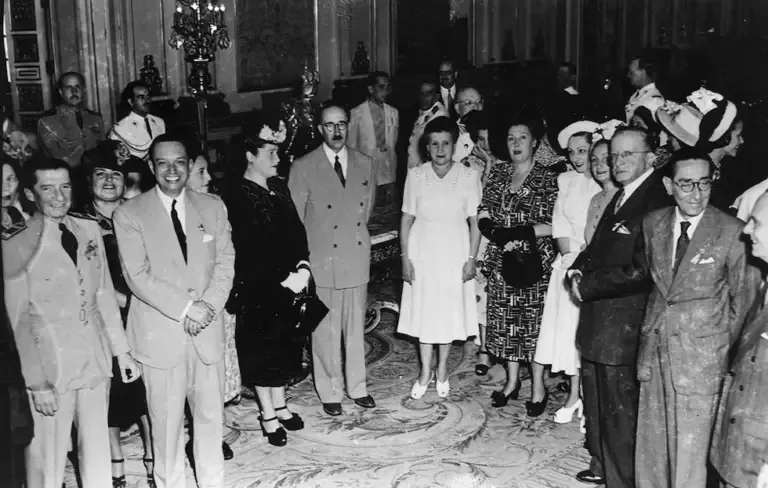
These were not times for grand populist promises, but for strengthening the foundations of a fragile institutionality. Bustamante y Rivero, with his measured oratory and impeccable legal argumentation, sought in his speeches a balance between freedom and order, aware of the political tensions simmering beneath the surface. His words were a constant reminder that the Constitution, and not political whims, should be Peru’s compass.
We skip a few years to find Manuel Prado Ugarteche, a president who embodied two distinct moments in Peruvian history. In his first government (1939-1945), his July 28th speeches were tinged with the pragmatism demanded by the world conflict, focusing on national defense and economic stability. El diario Decano then highlighted his vision of a Peru integrated into the international context, capable of facing global challenges.
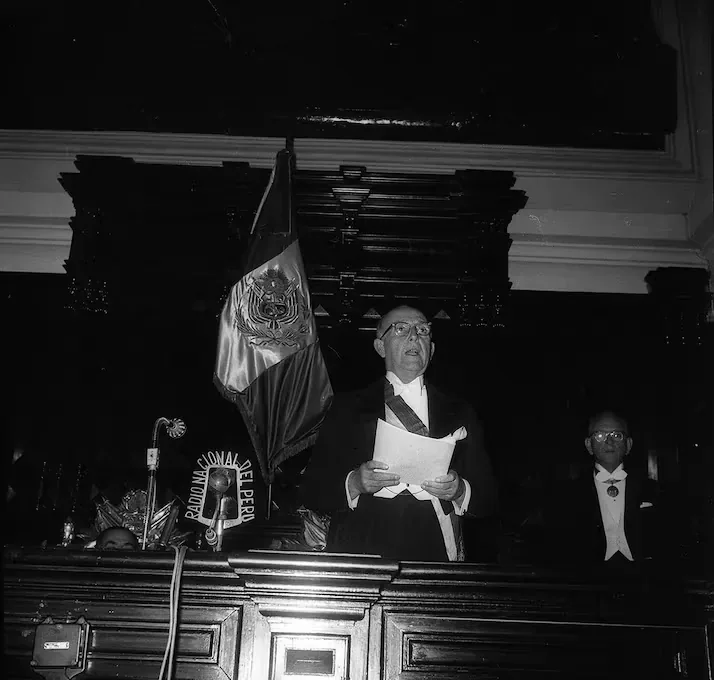
Already in his second term (1956-1962), Prado presented a speech more focused on modernization and political openness. His messages spoke of progress, foreign investment, and incipient industrial development. The journalistic chronicles of those years portray him as an orator with diplomatic skills, capable of balancing the conservatism of the elite with the new social demands that were beginning to emerge. His July 28th speeches were a mix of political courtesy and calls for national unity to boost growth.
When Fernando Belaunde Terry took the floor on July 28, he did so with the passion of a visionary. His oratory, vehement and full of optimism, was a torrent of ideas about infrastructure development and the conquest of territory. In the 1960s, his speeches resonated with the promise of “the conquest of Peru by Peruvians,” with projects like the Marginal Jungle Highway as a banner. El Comercio did not hesitate to highlight his eloquence and his ability to inspire.
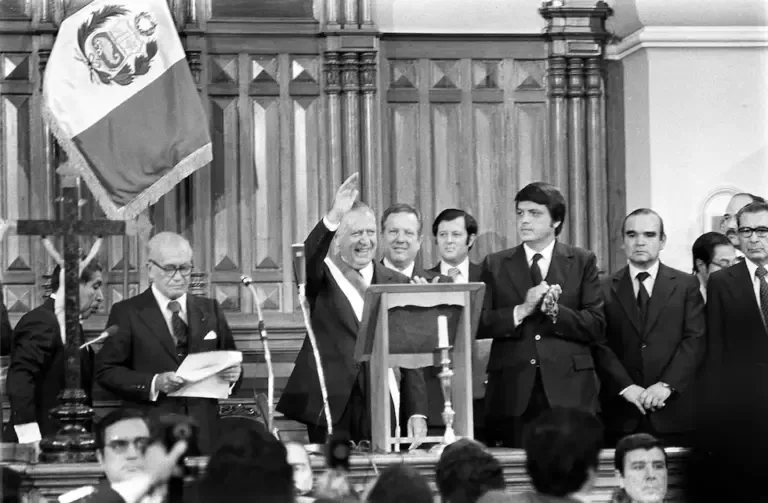
After the military interregnum, Belaunde returned to power in 1980, with a very different Peru, battered by crisis and subversive violence. His July 28th messages in this second stage had a more sober, but no less idealistic, tone. He focused on democratic restitution and the fight against terrorism, without abandoning his developmentalist vision. His words were a constant reminder of the need to rebuild the country, brick by brick, with faith in the future and in collective effort.
Few presidents have unleashed as much passion and expectation as the Aprista Alan García Pérez. His first July 28th speeches, in the mid-80s, were a true whirlwind of oratory. With his youth, his fiery rhetoric, and his social democratic proposal, García immediately connected with an exhausted citizenry. El diario Decano extensively documented the initial euphoria generated by his messages, full of bold promises, such as the “heterodox control” of the economy or the attempt to nationalize banking. His July 28th speeches were a political performance, an attempt to mobilize the nation with the power of his words.
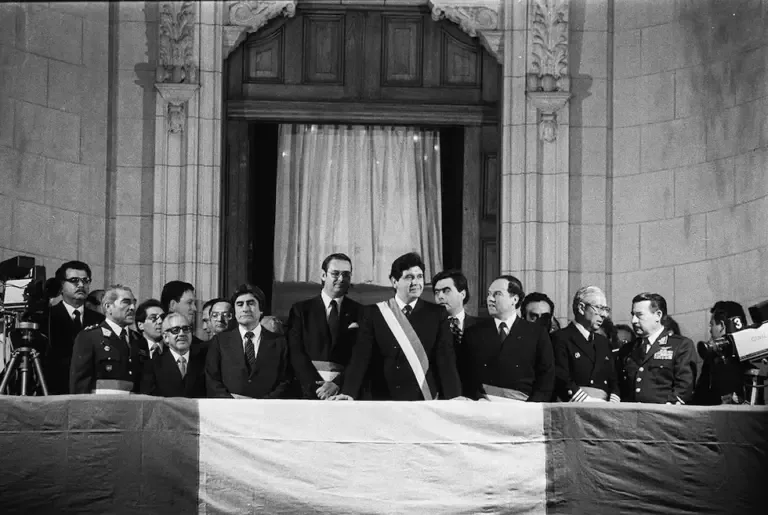
However, history was relentless. Economic problems and the resurgence of terrorism marked the course of his first government. His speeches in the following years, without losing their brilliance, reflected the growing difficulties. Years later, in his second term (2006-2011), García, now more seasoned, delivered July 28th speeches with a more pragmatic tone, focused on economic growth and poverty reduction, seeking to vindicate his figure before history.
July 28, 1990, marked the beginning of a radically different era with the assumption of Alberto Fujimori. His first Messages to the Nation were a prelude to the economic “shock” that was approaching. Far from the eloquence of his predecessors, Fujimori presented himself as an “engineer,” pragmatic and direct. His speeches, stripped of grand rhetorical flourishes, focused on economic stability, the fight against terrorism, and the implementation of structural reforms.
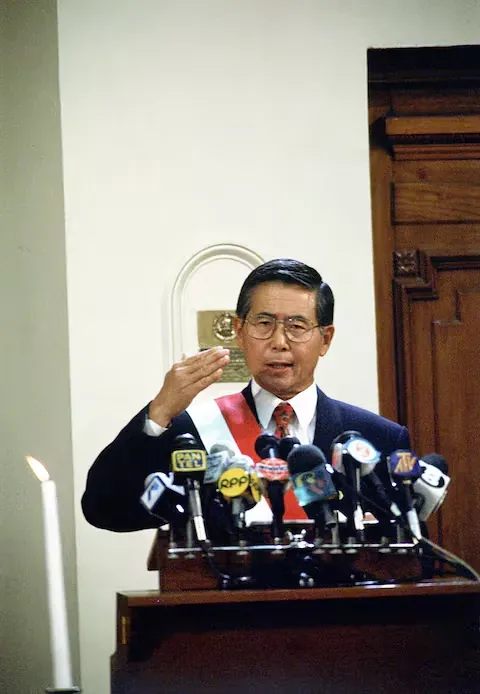
After the self-coup of April 5, 1992, his July 28th speeches adopted a more authoritarian tone, justifying the exceptional measures with the need to guarantee peace and development. El Comercio and other media recorded how his messages focused on achievements in pacification and macroeconomic stabilization, presenting them as the basis of his legitimacy. His speeches, often cold and calculated, sought to project an image of efficiency and control, marking a definitive break with the style of his predecessors. But accusations of corruption and human rights violations ended up collapsing his regime, leading to his resignation from the presidential office.
The presidential speeches of July 28, beyond protocol and pomp, have been days for reflection. With their successes and failures, these speeches brought us closer to what happened during those years; they were a way to take the pulse of the country which, each year, renewed its faith in the future, always hoping that the “presidential words” of each year would not be mere self-promotion, exaggerations, or half-truths.
Read more Silvana Robles denies alleged betrayal: “I emphatically reject having given my vote to Fujimorism”