




![Alberto Beingolea: “If they insist on not giving [the powers], they are complicating life for Peru”](https://insightermedia.com/wp-content/uploads/2026/09/bb3fa9e11304ea13fe2cd333955007bc-150x150.webp "Alberto Beingolea: “If they insist on not giving [the powers], they are complicating life for Peru”")

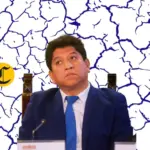


The candidacy of doctor Luis Rubio for the Mayor of Lima for Renovación Popular lasted, in practice, just 49 days. With his resignation, Rafael López Aliaga —the former mayor of Lima who left office to unsuccessfully run for the Presidency of the Republic— will remain in the race in the municipal elections as the candidate for first councilor on the party’s list. The order of the ticket will not change. However, if elected, it would be López Aliaga who assumes the position, something that experts and his opponents question by calling the maneuver a “disguised reelection.”
SEE: Samuel Daza, FP candidate for Mayor of Lima: “They told us we were going to be a world power. Of what? Traffic and crime”
On June 16, López Aliaga —who also ran for the Senate in the April general elections— announced his candidacy for lieutenant mayor for the October 4 elections. He announced it during a live broadcast on his social media, in which he also presented Rubio’s candidacy for the Municipality of Lima for his party.
“I am running as lieutenant mayor of Metropolitan Lima accompanying doctor Luis Rubio, the founder of the Solidarity Hospitals, to complete and further improve the works,” said López Aliaga. In that same statement, he reaffirmed that he would not assume the position of senator for the 2026-2031 term, despite having been elected, because —he said— it would be “endorsing fraud.”

The list for the Municipality of Lima of Renovación Popular formally requested its registration on June 19, the deadline set by the electoral schedule. Then it followed its process until being admitted, not without first overcoming the controversy generated by López Aliaga’s candidacy, who had already been elected senator. The National Jury of Elections (JNE) gave the green light to his candidacy and set a precedent. Now, however, a new controversy arises.
On the morning of Tuesday, August 4, Rubio submitted a letter to the Special Electoral Jury (JEE) Lima Center expressly communicating that, having ordered the publication of the definitive list of Renovación Popular candidates, he communicates his intention to resign from his candidacy. The decision comes on the eve of the deadline for candidate resignations and list withdrawals, according to the electoral schedule.
The document specifies that his decision is due to “strictly personal reasons” and that it is “irrevocable.” He offers no further details; he also did not respond to inquiries from El Comercio.
A new legal debate, but above all political
According to electoral law experts consulted by this newspaper, the admitted list will continue in the electoral contest, but without its candidate for Mayor of Lima. That is, the councilors who followed Rubio —such as López Aliaga— could not take his place for the remainder of the process. At least, not from a legal point of view.
José Manuel Villalobos, a lawyer expert in constitutional and electoral law, explained that the resignation “is not automatic,” but once submitted, it requires a ruling from the JEE itself.
It mainly involves verifying formal aspects, such as that the request was submitted within the deadline, that the corresponding fee was paid, and that the resigning person’s signature is certified.
Once these requirements are met, a resolution accepting it would be issued. However, except for these formal requirements, the substance of the decision could not be challenged, neither by the JEE nor by the full JNE, experts agree.
“The effect of the resignation is that the list is left without a head; that is, the list is left without a mayoral candidate. It is not that the candidate for lieutenant mayor moves up to mayor nor that the second councilor moves up to lieutenant mayor. The list remains as is (…) López Aliaga at no time becomes a mayoral candidate [with this resignation],” added Villalobos.
The expert explained that the only possibility for López Aliaga to return to the Mayor of Lima is if the Renovación Popular list wins. In that scenario, with no mayoral candidate, he would assume the position. Meanwhile, for electoral contest purposes, he remains as candidate for first councilor or lieutenant mayor.
López Aliaga’s candidacy for this position occurs when Article 194 of the Constitution expressly prohibits the immediate reelection of mayors; and stipulates that only after another term, at minimum, can they run again.
Villalobos stated that this situation reveals “a defect in our regulations,” since, after the immediate reelection of mayors was prohibited, a scenario like this was neither regulated nor prevented. He also warned that the same figure is being used by candidates from other political organizations.
“The rule has the defect that this figure can occur where by running for lieutenant mayor and there being no mayoral candidate, this person is elected mayor. It is not reelection because what will be said is that I did not run to be mayor,” he added.
Practically, the resignation will not have a visible impact on the ballot that voters will receive on October 4, since it only shows the symbols of the political organizations. The difference will be noticed in the list of candidates that ONPE will display in the secret chambers and polling stations, where the space corresponding to the Renovación Popular mayoral candidate will be blank.
Similarly, Silvia Guevara, an expert in electoral matters, explained that the consequence after the resignation is that the list “does not fall” and remains regarding the candidacy of the councilors. And that, if formally registered and winning the October 4 elections, López Aliaga would be the one to take the oath of office. “That is, his candidacy as first councilor will be maintained; there is no replacement for the mayoral candidacy,” she said.
In Guevara’s view, this “is an abuse of the law and clear evidence of a will for a disguised reelection.” Not only because of the position he already held, but because if Renovación Popular wins and López Aliaga returns to office, after even completing that new term he could run for mayor again for having been elected as first councilor candidate.
Read more Direct credit consolidates its growth rate: reaches 8.5% annually during the second quarter of 2026
“If Rafael López Aliaga wins his list, he finally takes the oath as mayor despite having participated as first councilor and later, if the rules do not change, he could easily run for mayor again,” added Guevara.
José Tello, president of the Aklla Perú Institute, indicated that a list of councilors can legally be left leaderless, but in his view it is “a disguised reelection” and that Congress should address a constitutional reform.
“A loophole in the law has been exploited. The rule must be changed so that when the mayor or governor or vice governor is reelected once, they cannot then run for any position in the regional or municipal council. It is a disguised reelection. He would take office as councilor but would exercise the mayoralty in the absence of the mayor,” he said.
Party stance
In a statement released on social media and signed by Rafael López Aliaga, he said he viewed Luis Rubio’s decision not to continue in the electoral race “with deep sadness.” “Speculating on the reasons for such an important decision is not only absurd but vile,” he added.
He also said he was not authorized “to give details,” although he indicated that “very personal circumstances prevent him from continuing.” “I have nothing more to say. Only to express my eternal gratitude to him for his commitment and courage,” he added.
In an interview with El Comercio, Renovación Popular’s general secretary and congresswoman, Norma Yarrow, said it was “a unique and very personal decision.” She also limited herself to saying that it is up to López Aliaga and Luis Rubio to provide explanations, and described the now former candidate as “impeccable.”
“We all hope this decision is due to a complex issue in handling it to such a case. Nothing more. I consider Rubio a great person,” said Yarrow.
Criticism from opponents
The Somos Perú candidate for Mayor of Lima, Carlos Bruce, questioned Luis Rubio’s resignation from his Renovación Popular candidacy and said the episode “confirms a pattern of lies driven by personal interests” by Rafael López Aliaga. Bruce said the resignation was predictable and called the case “a disguised reelection.”
– Are you surprised in any way by this resignation at this point in the campaign?
I believe this simply confirms a pattern of lies driven by personal interests. Mr. López Aliaga said, when he ran for mayor of Lima, that he would not resign to run for the presidency; and he resigned. Then he ran for president and asked people to vote for him because if he is not president he will be senator; and he did not accept being senator. Then he says that although he will not be senator it is because he wants to be lieutenant mayor, that he wants to collaborate in Mr. Rubio’s administration; and now Mr. Rubio resigns. So it is a political pattern of lies, deceiving the voter to achieve personal goals. They do not care about the country, they do not care about the city of Lima, what they care about are their personal interests and they put those interests above the common good.
– Is it a policy of lies from Renovación Popular or from Mr. López Aliaga?
From López Aliaga. Because I have information that many people within Renovación Popular do not agree with this pattern of behavior.
– Would they not agree with the resignation?
They did not agree with him resigning to be senator nor with what they are doing now with the candidacies for the Lima municipality.
– Are there political reasons behind or are these “personal reasons,” as stated in the resignation document, credible?
What is happening we already imagined would happen; this is a disguised reelection. Mr. López Aliaga knew he could not run, so he deceived the jury by putting Luis Rubio. We all knew Rubio was going to resign; and he already did. They deceived the National Jury of Elections, so now Mr. López Aliaga is running. And if the Renovación Popular list wins, then they have defrauded the law because Mr. López Aliaga would be reelected as mayor of Lima.
– You say it is a “disguised reelection.” For practical purposes, the list is already admitted and continues despite the resignation of the mayoral candidate of Lima…
The list continues. And if the list wins, the next mayor of Lima is Mr. Rafael López Aliaga, who was the same mayor in the previous term. Therefore, the National Jury of Elections, by allowing him to run on Mr. Rubio’s list, has allowed him to be reelected as mayor of Lima, which was expressly prohibited.
– Does this case demonstrate the need to review the rules on resignations and candidate situations like this?
This shows us that the National Jury of Elections cannot be so naive and what it is doing is benefiting the tricksters. And those of us who obey the law are harmed. The tricksters do what they want, get reelected if they want, and the National Jury of Elections allows it.
- Juntos por el Perú still has not sanctioned deputy Julián Pérez despite complaint: What deadlines does a possible process contemplate?
- First cracks in Juntos por el Perú: The story of Silvana Robles and the behind-the-scenes of the apparent betrayal vote
- César Acuña sentenced by the PJ: how did the case that determined a suspended prison sentence originate?
- Ollanta Humala: Nadine Heredia and Nationalist Party ask the PJ to annul sentence and archive process