








The proportion of foreign candidacies varies according to the position at stake. District councilors register the highest rate: 11.3% of candidates for this position have a legal address outside the jurisdiction in which they run. They are followed by candidates for district mayor (9.7%) and alternates (7.9%).
Read more These are the skills that are gaining value in an AI-driven job market
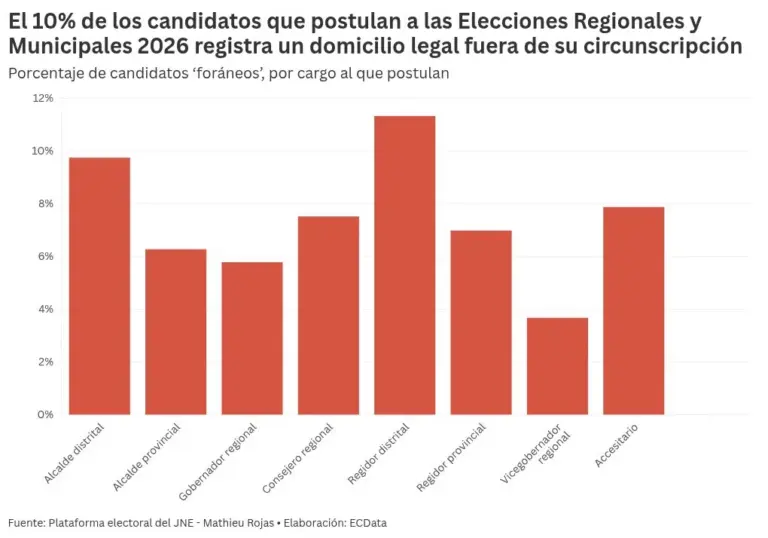
A striking case is that of candidates for provincial mayoralties. Of the 107 ‘foreign’ candidates, 85 have a legal address not only outside the province they are running for, but also outside the region.
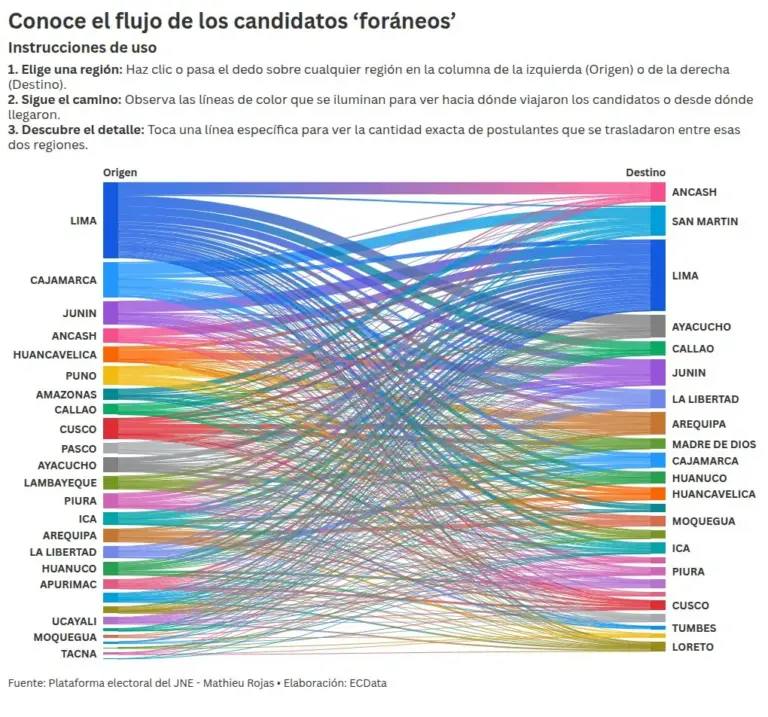
At the departmental level, the regions with the most ‘foreign’ candidates are Lima (1,995), Junín (749 cases), La Libertad (670), Arequipa (661), and Ayacucho (610).
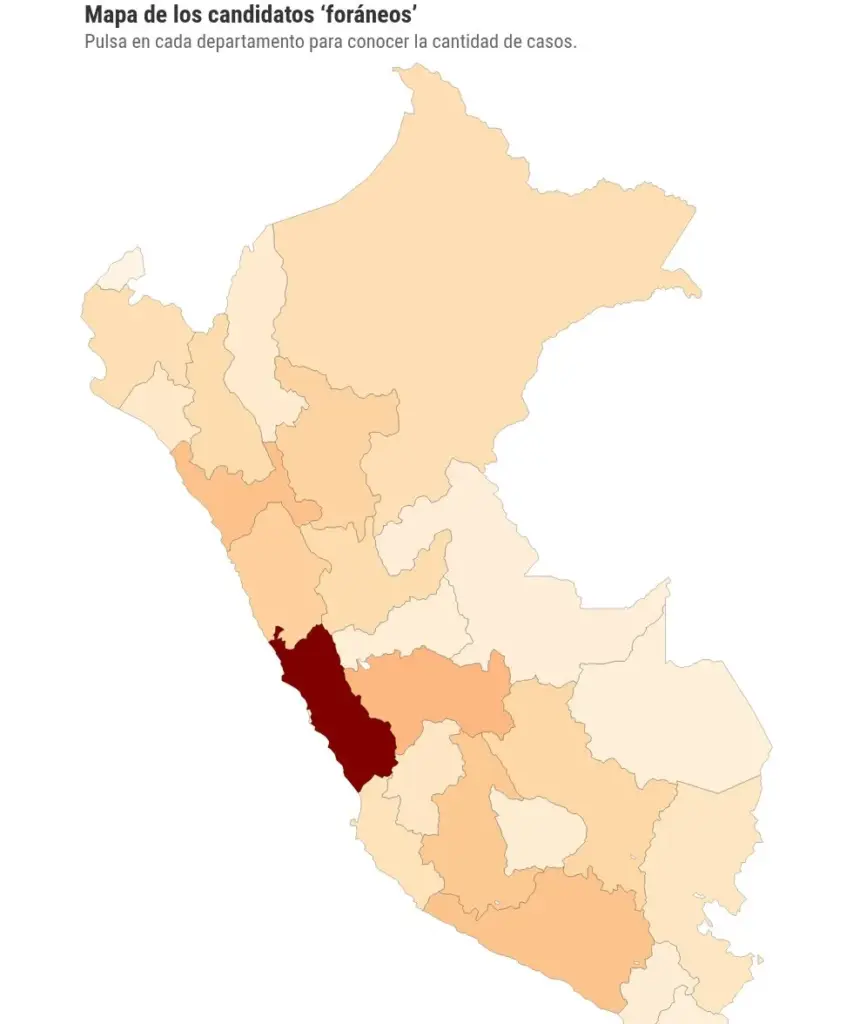
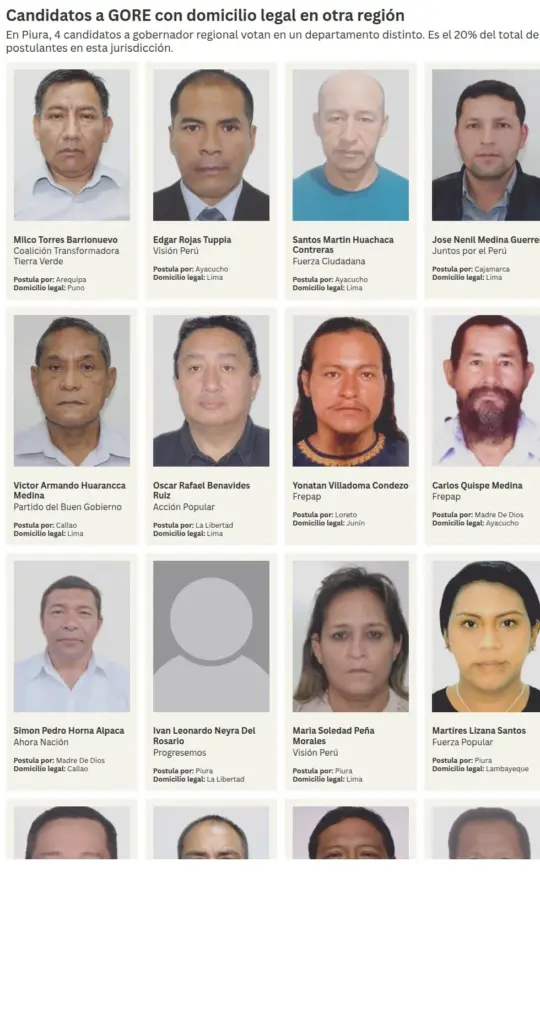
In Piura, four of the twenty candidates for the Regional Government (GORE) vote in a department different from the one they intend to govern. This figure represents one fifth (20%) of the total aspirants for the Piura regional seat.
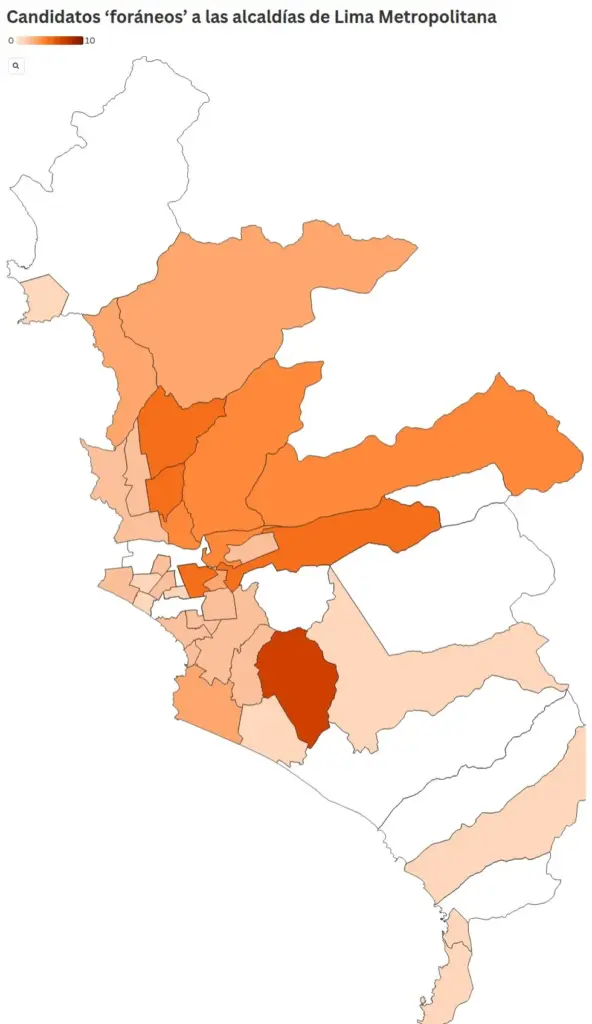
In Metropolitan Lima, foreign aspirants are more concentrated in peripheral areas. Villa María del Triunfo, Ate, Comas, and Independencia lead the ranking of candidates with a legal address outside the jurisdiction.
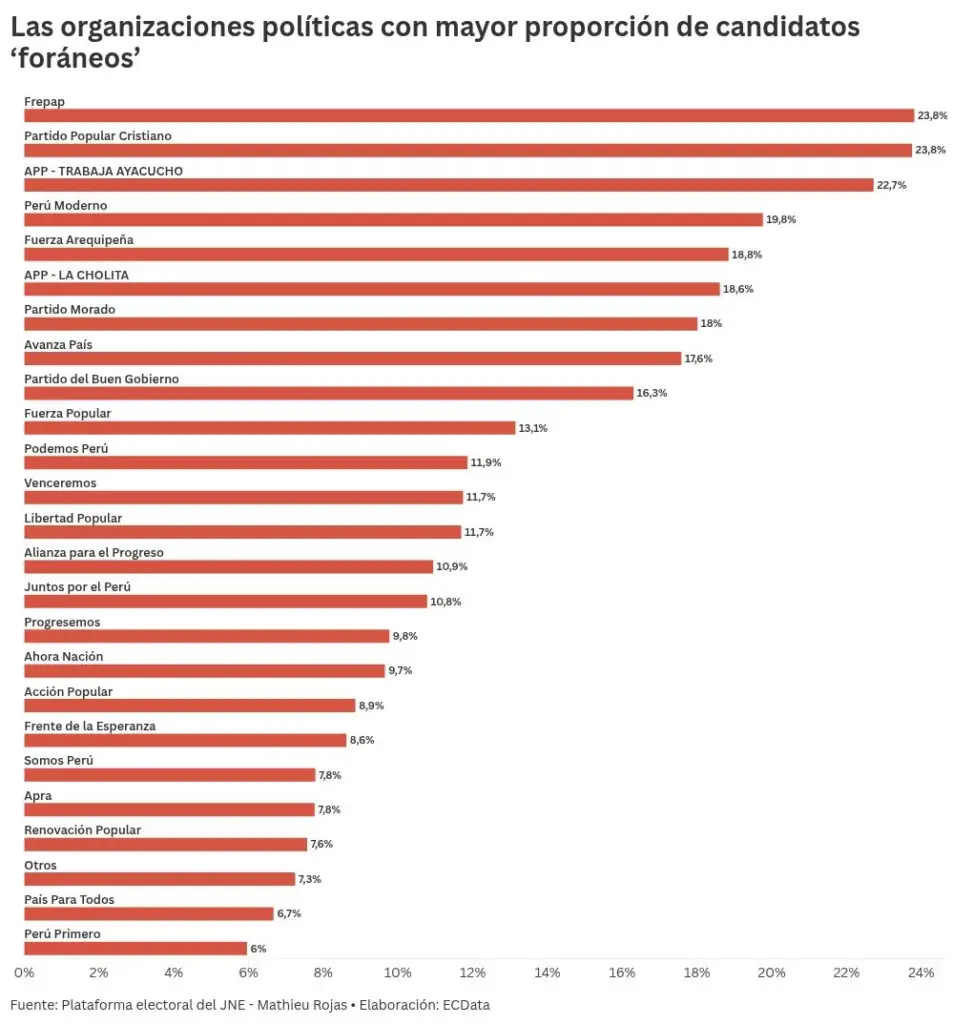
On the other hand, the political organizations with the highest proportion of candidates with a legal address in another jurisdiction are the Popular Agricultural Front of Peru (Frepap) and the Christian People’s Party (PPC). In both cases, about a quarter of the candidates are, legally, foreigners.
Right or exploitation?
In Peru, electoral legislation allows candidates in Regional and Municipal Elections to run in a jurisdiction different from their legal address, provided they were born or have resided in the place at least two years before the deadline to request the registration of candidacies.
Read more Liga 1 2026 Table LIVE: standings after Alianza Lima’s draw in Chongoyape
Additionally, the rule allows candidates to adopt the figure of “multiple domicile,” which enables them to compete for a position in a different jurisdiction, as long as it is proven that they live alternately or have habitual occupations in the place. This was precisely the figure used by candidate Amuruz.
“There are people who leave their hometown for studies, move to another area, but frequently go back to where they come from. However, the figure of multiple domicile also allows people who do not necessarily have it to use documents to prove it and be able to run. The figure has its pros and cons, but it has been misused, with a purpose that does not necessarily correspond to a real multiple domicile,” explains Silvia Guevara, specialist in Electoral Law.
For electoral affairs specialist and president of the Aklla Peru Institute, José Tello, the logic of multiple domicile responds to the possibility that people with roots in a locality can aspire to be authorities. He considers that the fact that candidates do not have a real domicile in the jurisdiction they run for can generate, “to some extent,” problems of representativeness, especially at the district level.
“Normally, in municipal elections, the figure of the neighbor, someone close, is sought. In most districts of the country, the mayor is the closest authority one has, the first neighbor of the community,” he points out.
For these elections, one in ten candidates for local mayor in Peru has a legal address outside the district in which they run.