







The exchange of fire occurs after a week of new hostilities and after a period of one month of relative calm between both countries.
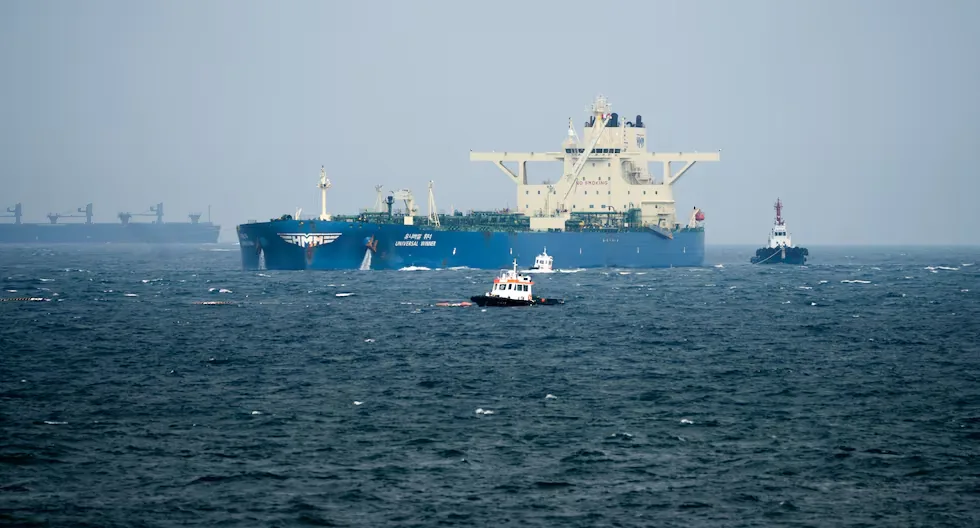
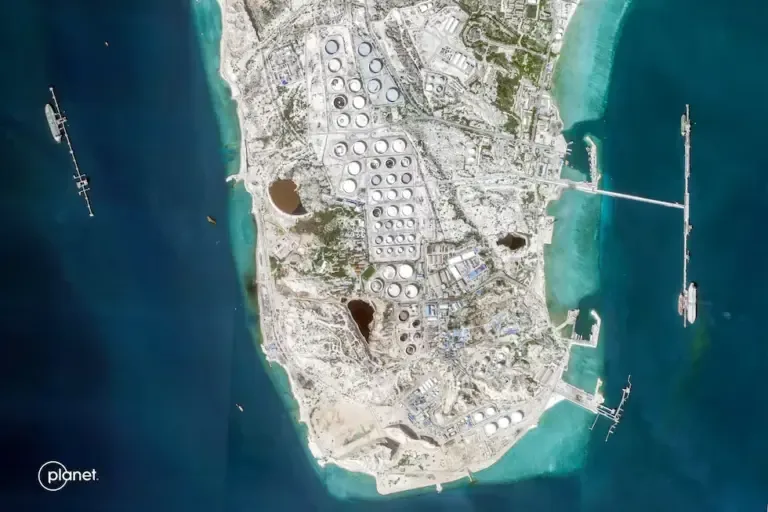
The U.S. response introduced a new element in the confrontation: the direct strike against vessels linked to Iran’s oil trade, including one attacked off the strategic Kharg Island, the main crude oil export terminal of the Islamic Republic.
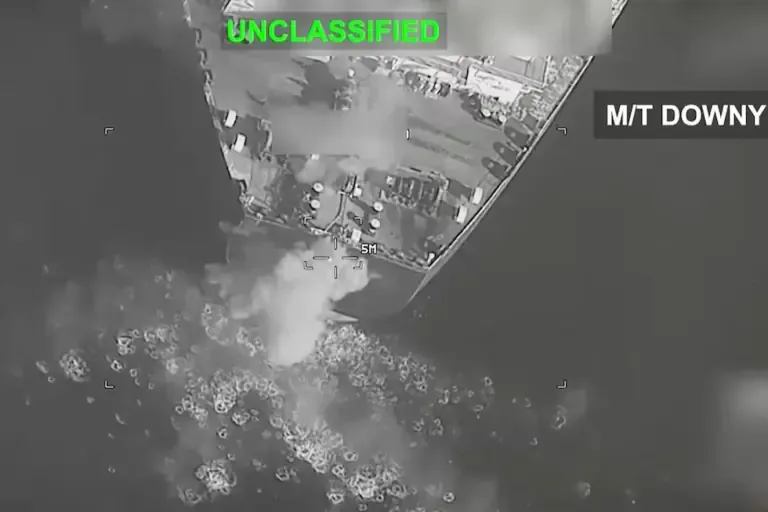
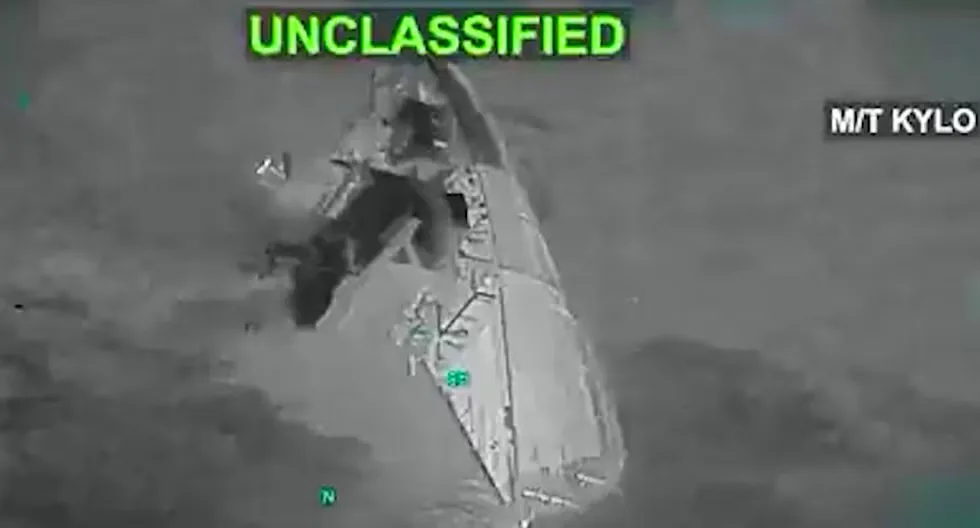
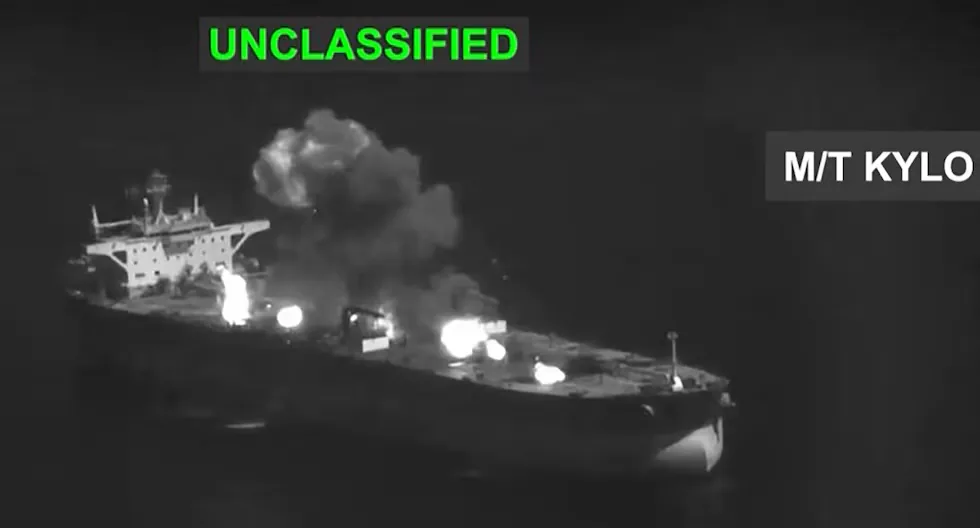
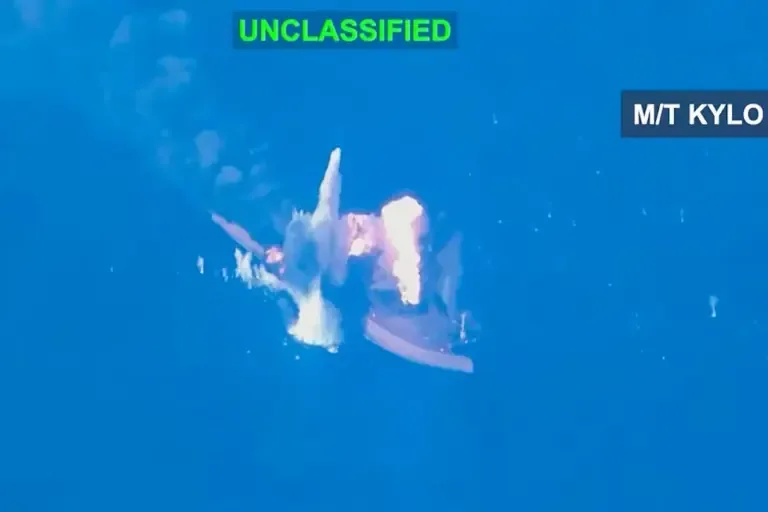
The U.S. attacks “permanently disabled” the vessels M/T Downy and M/T Stark 1, said Centcom in a statement. They also “completely destroyed” the M/T Kylo in the Gulf of Oman after the crew was warned to abandon the ship.
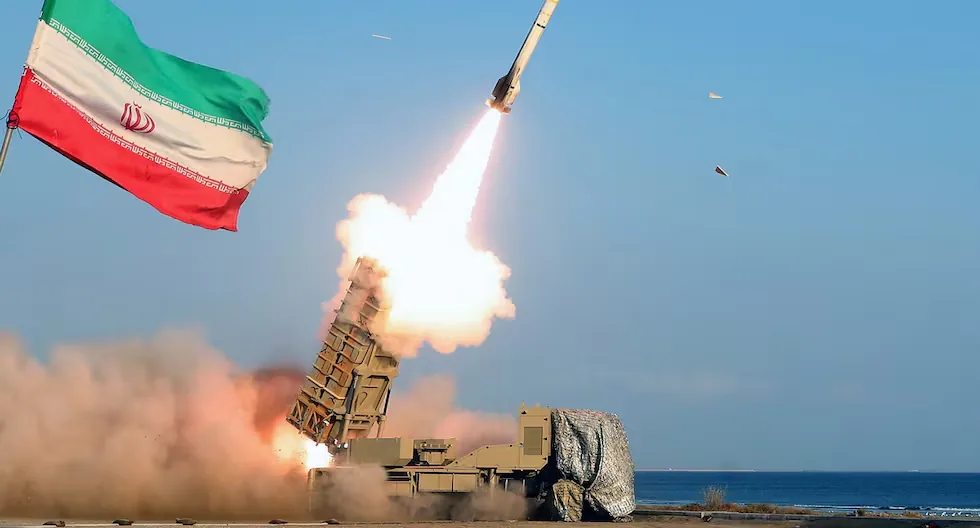
Centcom stated it retaliated after a U.S. aircraft carrier and a guided missile destroyer evaded missiles fired by Iran.
On Sunday, the Iranian Revolutionary Guard said it attacked a U.S. naval drone when it tried to enter “protected” waters of the Strait of Hormuz.
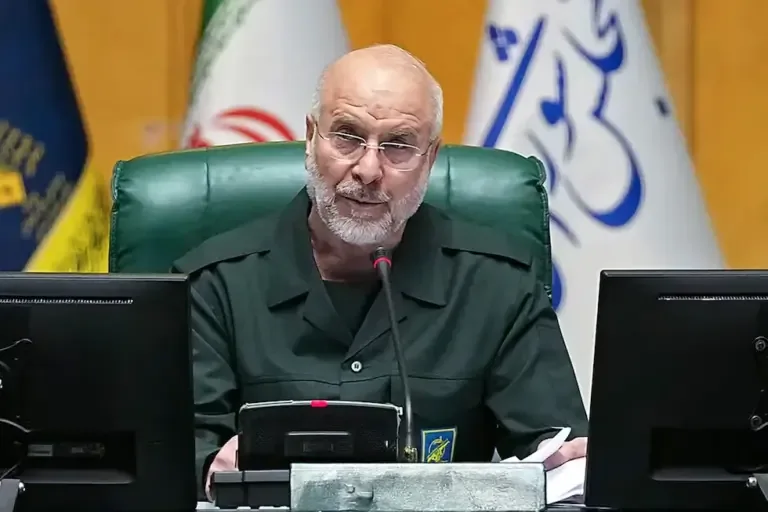
Meanwhile, the Speaker of the Iranian Parliament and the country’s chief peace negotiator, Mohamad Baqer Qalibaf, warned the U.S. on Sunday that Tehran will respond “faster, stronger, and more painfully” to future attacks against the Islamic Republic.
“The Americans surely have understood that the era of ‘proportional responses’ has come to an end and that our attacks in recent operations against the aggressor bases have only been a beginning, and if they have not understood it so far, they should understand it before it is too late, that the rules of the game have changed”, said Qalibaf in a speech broadcast by Iranian state television IRIB.
Iran blocked the Strait of Hormuz after the war began on February 28, and has made it its main pressure measure in the conflict, as it managed to paralyze almost all oil exports. Additionally, it demands that ships wishing to cross obtain its permission.
In response, the United States has established a blockade on Iranian ports and vessels and, in recent weeks, has managed to restore part of the maritime traffic through Hormuz via a route near Oman.
Meanwhile, the ceasefire agreed between the United States and Iran in June has practically collapsed. The Memorandum of Understanding (MoU) signed on June 17 established the cessation of military operations and gave a 60-day period to negotiate a definitive agreement, as well as commitments on navigation through the Strait of Hormuz, sanctions, and the Iranian nuclear program. That period expired without a final agreement.
A war that could become the new status quo
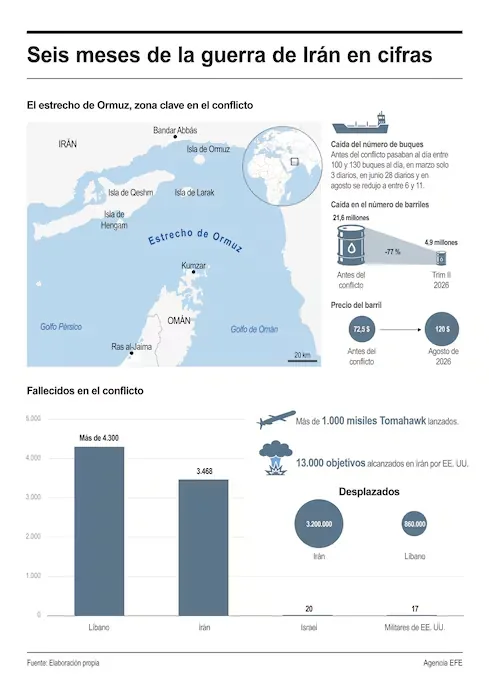
Six months after the start of the war, journalist and international analyst Carlos Novoa believes that the current dynamic between the United States and Iran can already be considered a kind of new status quo. He argues that Washington has not achieved its initial goal of decisively subduing Tehran, so the conflict has entered a phase of attacks and reprisals that could be prolonged.
“The United States seeks to attack Iran, seeks to break Iran, but does not achieve its goal”, Novoa tells El Comercio.
He considers that, due to the lack of decisive results, both governments have also ended up waging a “war of discourse”, in which each tries to demonstrate that it maintains the initiative and has not been defeated.
Novoa indicates that as long as the attacks remain within certain limits and focus on the interests of both countries, the low-intensity war could be maintained for a very prolonged period.
“This low-intensity war (…) can be maintained indefinitely”, he warns.
The problem, Novoa emphasizes, would arise if either side crosses a line that forces the other to respond with greater intensity. An intense bombing of Tehran or an expansion of the conflict to U.S.-allied countries in the Gulf could radically change the scenario.
“The risk is not only in a direct attack between Washington and Tehran, but in the conflict involving other regional actors, especially countries like Saudi Arabia, Qatar, and the United Arab Emirates, whose stance towards Iran could harden if their territories or interests are attacked,” he stresses.
The analyst argues that although both countries are suffering the consequences of the conflict, the impact is perceived differently in their respective societies.
Novoa explains that Iran has a population accustomed for years to war, economic crises, and the consequences of sanctions. While the United States may feel the impact of the conflict more immediately through rising fuel prices. He considers that this factor could gain importance in the U.S. political scenario, especially ahead of the midterm elections in November.
Why is there still no way out?
For Novoa, one of the main obstacles to ending the conflict is that neither government seems to have enough political incentives to take the first step towards a solution.
In the case of the United States, he says President Donald Trump would hardly accept an outcome that could be interpreted as a defeat.
“It suits the United States one way or another to continue, because otherwise it would have to admit it has lost, and Trump will never do that”, he states.
On the Iranian side, he observes a similar dynamic in the official discourse, characterized by threats of increasingly severe reprisals. “It is grandiloquent rhetoric that serves to attract attention at the beginning. But it is more of the same now”, he notes.
What would have to happen for negotiations to resume? Novoa states that resuming talks would require more realistic positions from Washington. He explains that the United States cannot sit down to negotiate by making demands it knows Tehran will not accept.
“The United States cannot demand from Iran things it knows Iran will not comply with, such as disarmament, demilitarization, elimination of its nuclear program, or unconditional reopening of the Strait of Hormuz,” he argues.
However, Novoa insists that for now the absence of a negotiated solution does not necessarily mean the conflict will escalate into a full-scale war.