



![Alberto Beingolea: “If they insist on not giving [the powers], they are complicating life for Peru”](https://insightermedia.com/wp-content/uploads/2026/09/bb3fa9e11304ea13fe2cd333955007bc-150x150.webp "Alberto Beingolea: “If they insist on not giving [the powers], they are complicating life for Peru”")



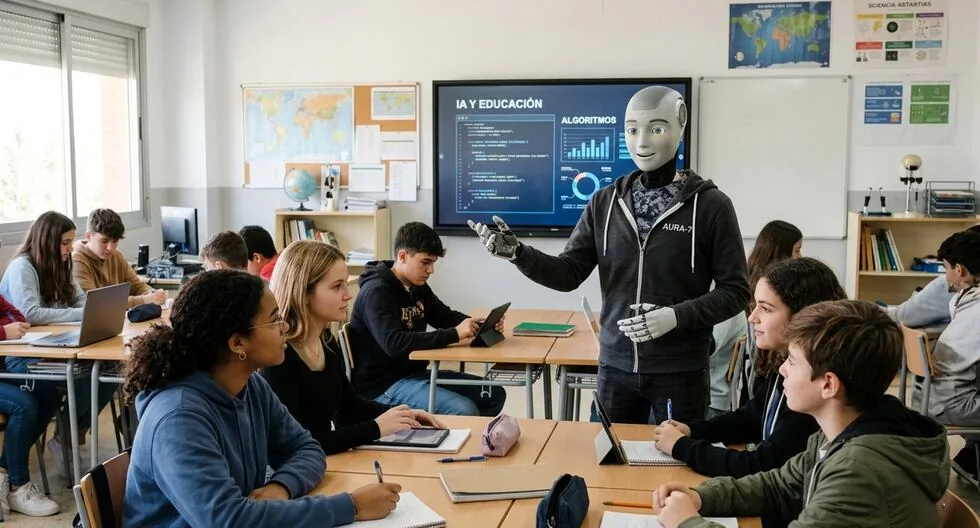
In June, the Norwegian government restricted the use of artificial intelligence (AI) in primary schools, and in August the National Autonomous University of Mexico (UNAM) faced a crisis in its admission exam after detecting anomalies in scores attributed to the use of this technology. Four years after its widespread adoption, AI continues to generate changes and controversies in our daily lives. What is the impact on education? What challenges does Peru face?
Nowadays there are more AI models. Companies like OpenAI, Anthropic, Google, Meta, DeepSeek, Alibaba, among others, are well positioned in the market and are easy to access. Additionally, there are local-use models on devices such as computers and smartphones.
SEE: Chile: the Viña del Mar Botanical Garden rises from the ashes transformed into a climate adaptation laboratory
We consulted specialists about the use of AI in education and a common point is that it should be treated as a tool, and that the main focus is learning.
“Remember that as a tool, the student has to internalize the activities and personalize them to have meaningful learning. Otherwise, the student is only using the tool to complete an academic task, neglecting their learning,” said Jhollvin Meléndez, coordinator of Continuing Education at the Autonomous University of Peru.
In conversation with El Comercio, the specialist pointed out that, broadly speaking, the impact of AI is positive, as it serves as help for teachers and students, allowing monitoring of learning and the design of activities.
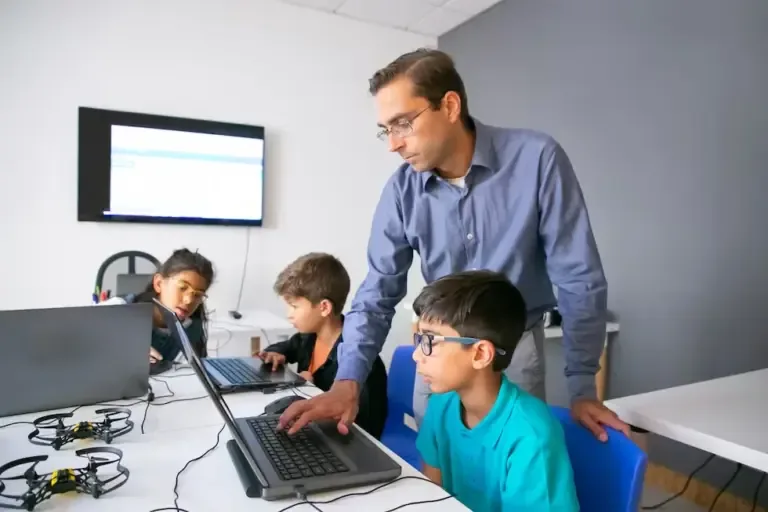
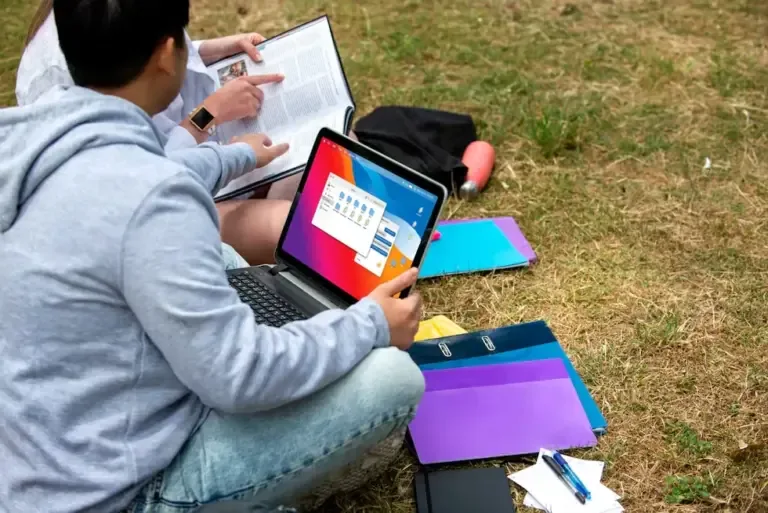
On the other hand, although in some countries access to technologies is being restricted, whether artificial intelligence (as in Norway) or social networks or phones (France, United Kingdom, Australia, etc.), for the education specialist “restrictions could occur if there is no monitoring behind the activities”.
And the key lies in the correct use of AI.
Alejandra Bacca, academic coordinator at Pearson, recalls that at first there was fear about how it would be implemented in education and how to integrate it pedagogically. And it has already been four years since the widespread adoption of AI (specifically with ChatGPT, in 2022). Many doubts arose.
SEE: Blind fortune tellers lose jobs because of AI: in South Korea they now prefer to consult chatbots
For the specialist, today the challenge is not to prohibit artificial intelligence nor to control it, “but to start using it with judgment, ethics, purpose, and above all to redesign the way we evaluate.”
In that sense, she emphasized that “it is not about using AI just for the sake of using it.”
Careers adapting to AI
So, how is AI adapting in education? In the university field, AI is being integrated into traditional careers and is also creating new specialties.
By the end of 2025, a report from The New York Times indicated that “more than 3000 students enrolled in a new artificial intelligence faculty” at the University of South Florida. The same was happening at the University of California, among others.
In our country, careers and faculties dedicated to AI are also being created.
Meléndez points out that “systems careers also use AI a lot, as it helps them develop different programs.”
Read more Rains in Lima LIVE: latest news after flooding and inundations in districts of the southern capital
Other careers that generate interest and adapt to AI are those dedicated to business knowledge, communication, marketing, education, according to a report from the Andina agency.
The case of language teaching
In the relationship between AI and education, language teaching stands out.
Meléndez comments that AI “becomes a very positive ally because it greatly develops critical thinking in the language.”
And in practice, this is reflected in the global report Assessment Evolved: Formative Assessment in a Generative AI Era, by Pearson. It states that 64% of students already use AI for academic activities and, among those who use it, 80% resort to these tools at least once a week.
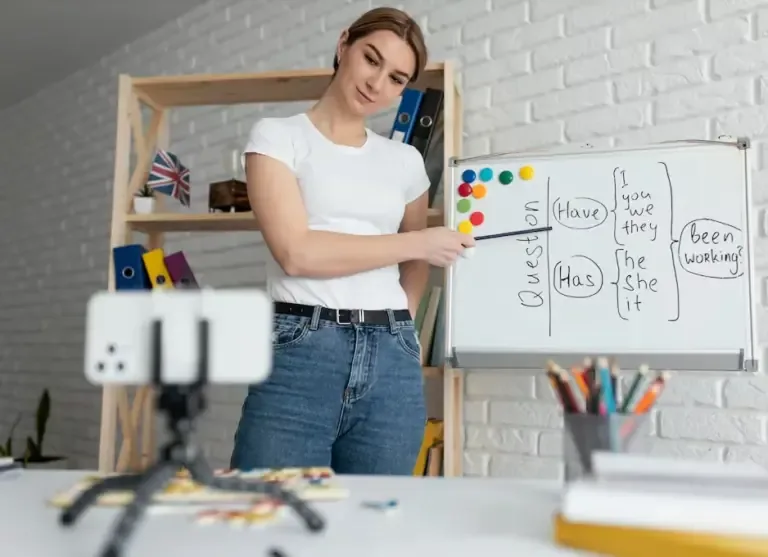
Regarding English teaching, it is indicated that it is usually used to practice writing, improve grammar, expand vocabulary, or receive immediate feedback. Alejandra Bacca suggests that the proposal is to work with learning objectives whether oral skill, written skill, listening reception, or reading.
SEE: Apple declares its iconic iPhone X obsolete: how does it affect users in Peru?
“For example, the student can use AI to correct their own work, but with an analytical approach: what did I get wrong, how should it have been done, or what are the key examples to improve. Perhaps, they can use a chatbot to work on active dialogues in different situations and be able to converse with AI,” she explained.
And one of the effects of applying AI is that teaching time can be reduced.
“Yes, we consider that yes, because we will have greater exposure and better tools. We not only consider that time can be reduced, but that the approach to the language will be much more active and more effective,” she says. And this is reflected in the time teachers spend creating practice materials. The specialist recalls that when she started teaching English, creating games “required a lot of my time, physical materials, a lot of implementation, and if I wanted to make them digital, it would require more time.” With AI, it can be much more dynamic, and in shorter times.
The challenge: the Peruvian reality
In Peru, the challenge is just beginning.
The National Artificial Intelligence Strategy (ENIA), approved by Ministerial Resolution No. 152-2026-PCM, establishes some objectives, among them the creation of talents. That is, it seeks the development of digital skills. It emphasizes that the “fundamental pillar” is human capital and, among the measures proposed are the creation of the Artificial Intelligence Program, which promotes periodic training and technical assistance.
SEE: Six out of ten people in Lima believe that not knowing how to use AI will reduce their job opportunities
But how are universities doing in this regard?
Meléndez points out that private universities are indeed prepared to work with AI, as they have all the technological equipment, “however, in some public universities we still have those deficiencies in internet connectivity.”
“I think that is a gap that still needs to be worked on a bit more,” he said.
At this point, he agrees with Alejandra Bacca.
“We must align ourselves so that in different parts of the country we have the resources to use AI: computers, good internet connection, adequate electricity. We have that battle, which is to be able to reach connectivity to all regions of Peru,” she explained, which must be accompanied by teacher training.
- Does your router need updating? These are the two ways to do it
- Not just for spies: “smart” glasses change the lives of people with visual disabilities
- 5 ways insects make decisions and solve problems (and what we can learn from them)