




![Alberto Beingolea: “If they insist on not giving [the powers], they are complicating life for Peru”](https://insightermedia.com/wp-content/uploads/2026/09/bb3fa9e11304ea13fe2cd333955007bc-150x150.webp "Alberto Beingolea: “If they insist on not giving [the powers], they are complicating life for Peru”")



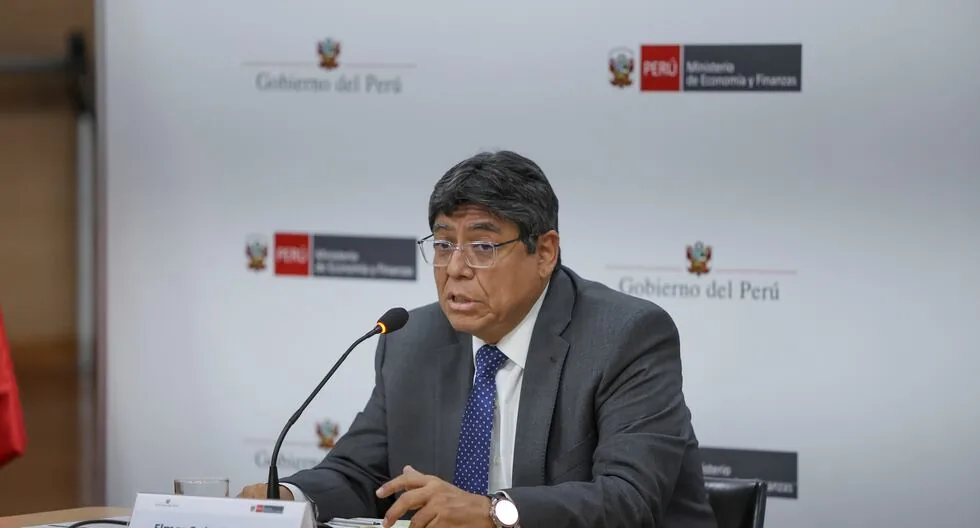
Elmer Cuba, head of the Ministry of Economy and Finance (MEF) reported that the State will assume approximately half of the increase in fuel prices for mass cargo and passenger transport, as part of the subsidy announced by the Government in response to the international rise in oil prices.
Read more Elmer Cuba, head of the MEF: “The reduction of ministries is on the agenda”
During an interview on Cuarto Poder, Cuba explained that the mechanism will amount to approximately 45% of the increase recorded in fuel prices and will be aimed at a specific segment of transporters, under formality requirements.
He added that the international rise in oil prices is linked to the military hostilities recorded since March of this year in the Strait of Hormuz.
“Yes, it has a bit of an international context. It is not because we suddenly thought of a subsidy, it is because since March of this year there have been military hostilities in the Strait of Hormuz and the price of oil has risen sharply. Crude oil has risen from 60 dollars a barrel to 100, to 120 dollars,” he said.
He indicated that the price of crude later reached 88 dollars per barrel, although it still represents an increase of approximately 40% compared to levels before the conflict.
“The price has not finally stayed at 100 dollars, it is now at 88 dollars. It is still a 40% increase before the war problem, and that has impacted inflation and costs worldwide,” he stated.
According to the minister, inflation in Peru would be at 1.5% without the impact of this external shock, while it currently reaches 4%. In this regard, the minister said that the announced subsidy will represent between 15% and 20% of the price per gallon and that, considering the recorded increase, it is approximately equivalent to 45% of that rise.
“Yes, the equivalent of the increase can be 45% of the increase, that is, almost half of the increase will be borne by the State. Half of the increase will be paid by the State,” Cuba said, although he emphasized that the measure will not be a generalized subsidy and distinguished it from the Fuel Stabilization Fund created 20 years ago.
Regarding the cost of the subsidy, he estimated that the measure will cost S/105 million soles during the initially planned three months. “For all of Peru it is 60 million soles and for Lima and Callao it is 45 million. It is 105 million soles for the three months,” he said.
The mechanism will be deactivated when the price of crude returns to the average levels recorded during the 12 months prior to the conflict.
Who will be the beneficiaries?
The head of the MEF specified that the benefit will be aimed at mass cargo and passenger transport throughout the country and that beneficiaries must be formal. “To mass cargo and passenger transport throughout the republic,” he said.
He also explained that transporters must prove their fuel consumption to access the benefit. “Every time I buy diesel, they don’t invoice me, I accumulate them and give the information to the MTC, to the ATU. The ATU verifies it and issues the check to the Banco de la Nación. And the person goes and collects that money,” he said.
On the other hand, he ruled out that taxis will be part of the beneficiaries of the mechanism. “No, only mass passenger and cargo transport.” Finally, he explained that in Lima the subsidy will have a different modality, because there is information on the routes of the units through GPS.
In Lima and Callao, payment can be made directly to the bank account registered by the formal transporter.
Read more Earthquake in Peru today, according to the IGP: epicenter, magnitude, and time of August 17