




![Alberto Beingolea: “If they insist on not giving [the powers], they are complicating life for Peru”](https://insightermedia.com/wp-content/uploads/2026/09/bb3fa9e11304ea13fe2cd333955007bc-150x150.webp "Alberto Beingolea: “If they insist on not giving [the powers], they are complicating life for Peru”")



The President of the United States, Donald Trump, surprised on Sunday by ordering a considerable reduction of the joint military exercises between the United States and South Korea, a key Washington ally in the Indo-Pacific. The U.S. president justified his decision based on the cost of the maneuvers, spoke of his good relationship with the North Korean leader Kim Jong-un, and alluded to Seoul’s refusal to join the war in Iran. The measure raises a question: is it a gesture towards Kim or a move to gain military and economic leeway?
Read more Earthquake in Peru today, according to the IGP: epicenter, magnitude, and time of August 17
The Ulchi Freedom Shield exercise, one of the main joint military maneuvers held every year, started on Monday and will end on August 27.
WATCH: A portable missile against Trump? Israel’s alert that forced a secret plane change
The maneuvers aim to strengthen the combined defense of South Korea and the United States, improve the interoperability of their forces, and enhance their response capacity against military threats in the region, especially those coming from North Korea.
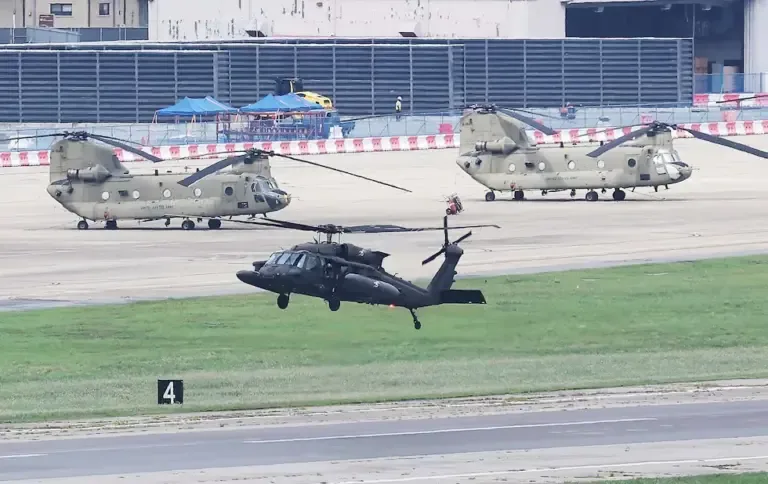
Seoul authorities reported that about 18,000 South Korean soldiers are participating in the 2026 exercise, a figure similar to last year. U.S. forces are also involved, although no total number has been released.
This year’s exercise will include training to counter drones, conduct GPS disruptions, and cyberattacks, Reuters reported last week.
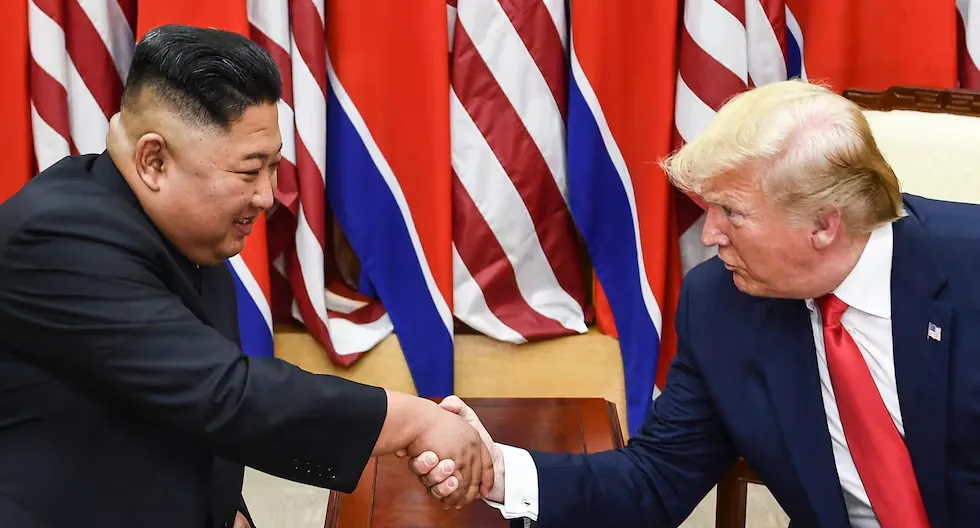
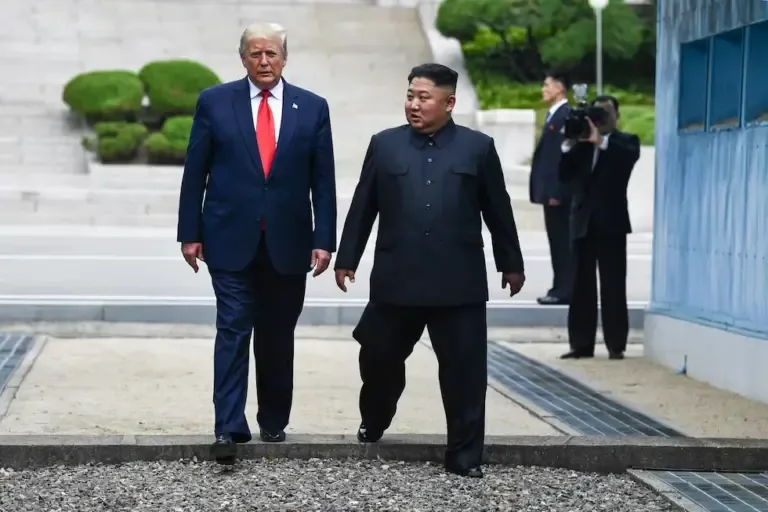
The order from Trump published on Truth Social was accompanied by a photo of him next to Kim Jong-un at their 2019 meeting.
“Based on my very good relationship with Kim Jong-un, of North Korea, I am not happy that the United States has, for a long time, agreed to participate in Joint Military Exercises with South Korea”, wrote Trump.
“These exercises are not only costly, with much of those costs paid by the United States of America (as always!), but they send a totally inappropriate and hostile signal to a country that, while Donald J. Trump has been president, has not been threatening and has been respectful,” he continued.
He then directly attacked Seoul. “Recently I asked the President of South Korea if they would like to join us in the denuclearization of the Islamic Republic of Iran, and they said: ‘No, thank you!’,” Trump stated in his post.
According to AFP, the South Korean presidential office said in a statement that it hopes Trump’s good relationship with Kim will allow dialogue with North Korea to resume.
Seoul did not respond to the American’s criticism of South Korean President Lee Jae-myung for not joining the offensive against Iran.
A report from the Government Accountability Office (GAO) estimated that the United States spent about US$13.4 billion between 2016 and 2019 to maintain its forces in South Korea, an average of approximately US$3.35 billion per year.
Trump’s double game
Carlos Aquino, director of the Asian Studies Center at the National University of San Marcos, puts forward two hypotheses that would explain Trump’s decision, and neither involves his good relationship with Kim. The first relates to the military needs of the United States in the face of the war with Iran. The second concerns the economic agreements he seeks from his allies in that region of Asia.
Aquino argues that Washington faces a complicated scenario in the war and that, given the possibility of new military action against Iran, “Trump would need to have more troops and military resources available”.
He interprets that the reduction of exercises with South Korea would allow Trump to free up some of the U.S. assets deployed on the peninsula.
The analyst recalls that the United States has already moved military assets from the region such as an aircraft carrier that was in Japan, an amphibious ship, and a missile defense system.
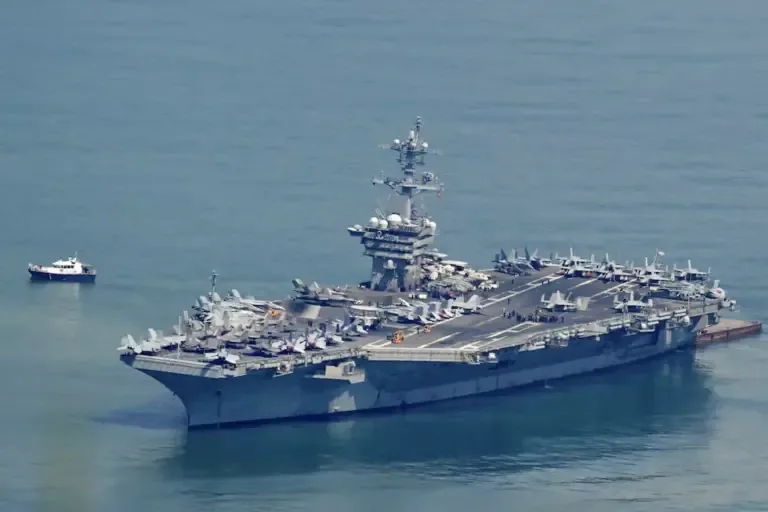
Indeed, the USS George Washington aircraft carrier, based in Japan, is being moved from the Pacific to the Middle East, where it is expected to replace the USS Abraham Lincoln.
Aquino argues that Trump’s reference to his “very good relationship” with Kim would serve to justify that the United States does not need to maintain so many military resources in South Korea.
The analyst also indicates that the United States is maintaining trade negotiations with South Korea and Japan in which, besides seeking advantages, it is pressuring both countries to make large investments on U.S. soil.
According to Aquino, Washington would be seeking Japanese investments of about US$500 billion and South Korean investments of US$350 billion. However, the negotiations, especially with Seoul, are progressing slowly.
In this context, Aquino’s hypothesis holds that Trump’s decision could be a pressure card within the economic negotiations.
The analyst links this situation to the recent departure of South Korea’s Minister of Commerce, which occurred on August 15, and notes speculation about whether his dismissal could be related to the slow pace of negotiations with Washington.
Aquino says he recently attended an event in Singapore on Asia-Latin America relations where, in his conversations and meetings, he perceived concern about Trump’s approach to his Asian allies. He explains that in some sectors of Asia there is a perception that Washington is using different pressure tools simultaneously, from trade negotiations and the threat of higher tariffs to U.S. military commitment.
Is Trump seeking to resume dialogue with Kim?
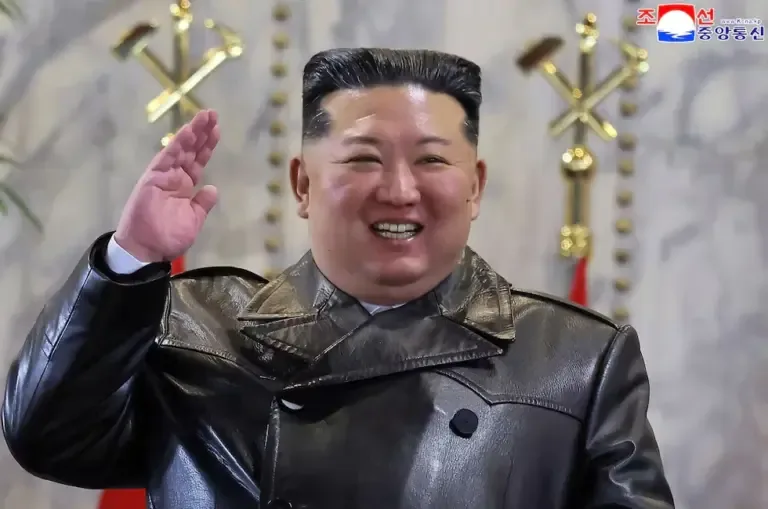
The analyst does not believe that Trump’s decision should be interpreted as a strategy to create conditions for new negotiations with North Korea. He emphasizes that Kim shows no signs of wanting to reduce his nuclear arsenal.
“On the contrary, Kim has reaffirmed that North Korea is already a nuclear state. I think Pyongyang will continue developing its military capabilities, including nuclear weapons, missiles, and submarines,” he estimates.
“The reasonable thing would rather be for the United States to increase its military presence in South Korea to protect its allies, including Japan. But it is doing the opposite”, he adds.
What will South Korea do?
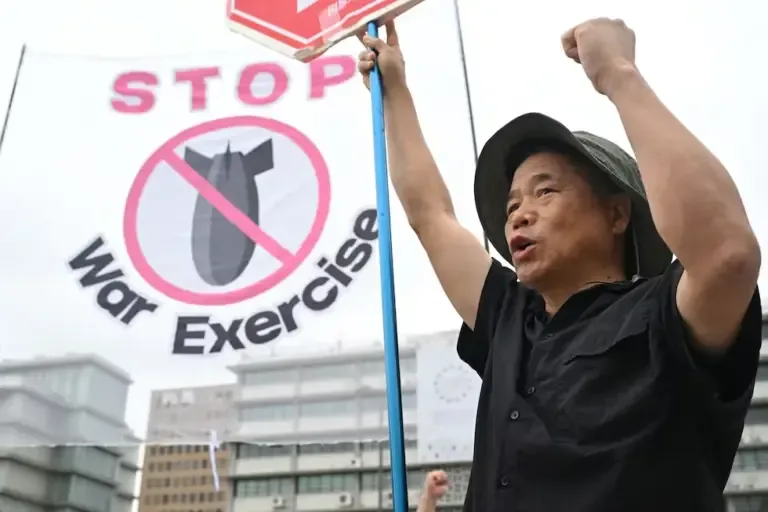
For Aquino, South Korea and Japan could begin to debate how to strengthen their own defense capacity amid the perception that Washington is reducing its military commitment.
Additionally, the analyst warns that in both countries there are already sectors that have even raised the possibility of discussing their own nuclear capability.
“For example, during a tour of Europe, Japan’s Defense Minister, Shinjiro Koizumi, said it would be necessary to open the nuclear debate in his country; the same was said a few months ago in South Korea,” he recalls.
He also estimates that Trump’s decision could translate into greater military spending by Washington’s Asian allies and a deterioration of trust in the U.S. commitment.
How will China react?
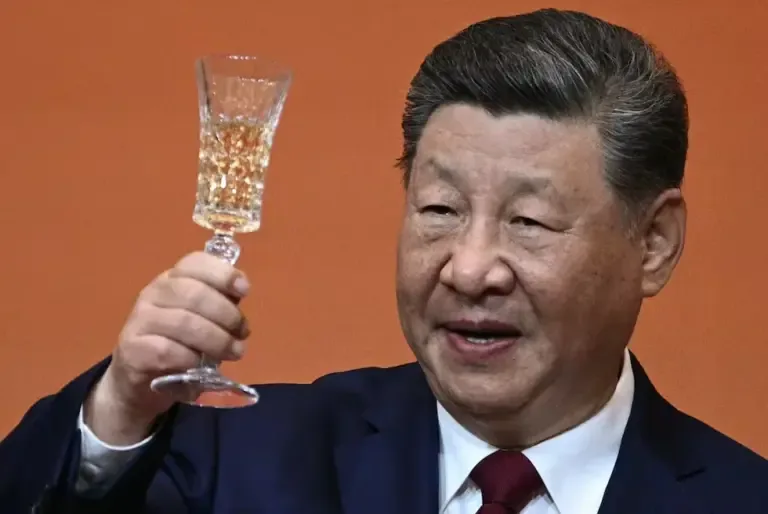
Aquino considers that China would be one of the main political beneficiaries of Trump’s decision. Beijing could use it to strengthen its argument that the United States is not a reliable ally and try to convince countries like South Korea, Japan, and the Philippines to resolve their differences directly with the Asian giant.
According to the analyst, China could take advantage of the moment to increase its diplomatic pressure in the region, although that does not necessarily mean it will take military action. In particular, Aquino separates this scenario from the Taiwan issue, which, he explains, maintains its own dynamics independently of Trump’s decision on South Korea.
Read more Education in the Age of AI: Challenges in Peru and How Language Learning is Changing