




![Alberto Beingolea: “If they insist on not giving [the powers], they are complicating life for Peru”](https://insightermedia.com/wp-content/uploads/2026/09/bb3fa9e11304ea13fe2cd333955007bc-150x150.webp "Alberto Beingolea: “If they insist on not giving [the powers], they are complicating life for Peru”")




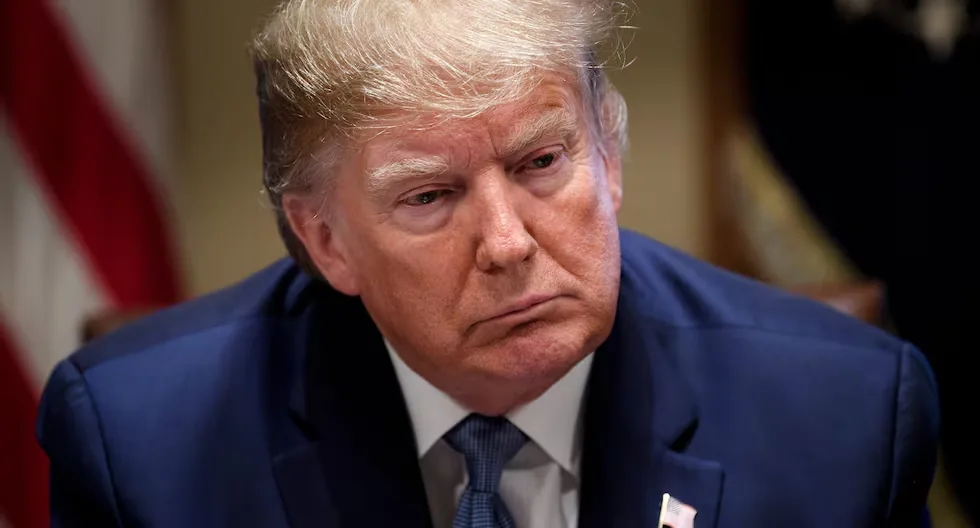
The new subscription service is called Truth API, it was presented on August 1 and is already in effect.
Read more Alex Valera renewed with Universitario: details of the new contract of the cream top scorer
The launch of Truth API comes at a particularly delicate moment for TMTG. The company founded by Trump in 2021 has just reported losses of US$238.1 million in the second quarter of 2026, compared to 20 million dollars in the same period last year.
How does Truth API work and who is it aimed at?

Trump uses Truth Social to announce key decisions about tariffs, wars, international negotiations, and other relevant US policies that can cause movements in the stock markets.
For a payment of $100,000 per month, Truth API offers faster access to those posts.
The service is aimed at Wall Street firms, including high-frequency trading firms, investment funds, and other financial companies that use automated systems to quickly react to information that can move markets.
But how fast will the access be? TMTG claimed that Truth API will deliver posts to paying customers milliseconds before the general public.
That small difference can have significant economic value. In automated trading, receiving information even a few milliseconds earlier allows systems to react automatically before other traders, an advantage that can translate into profits.
Although the subscription costs $100,000 per month, The Wall Street Journal reported that there is a fee of US$60,000 per month for multi-year contracts.
Trump Media reported that more than 10 financial firms have already subscribed to Truth API, mainly high-frequency investment funds.
According to Fortune, the company’s plan is to expand Truth API to sell data to large Artificial Intelligence model developers and international news agencies.
The lawsuit
On August 12, the media outlet The Intercept and the NGO Freedom of the Press Foundation sued Trump in a federal court in New York to prevent him from making money through Truth API.
The AP agency reported that the lawsuit argues that Trump’s deal to publish first on his own company’s site about key political decisions violates the Constitution, and that official announcements should be available to everyone at the same time.
“That a president sells priority access to news he himself generates for the benefit of a private company he controls is so blatantly corrupt and unconstitutional that it would have been hard to even imagine it just a few years ago,” said Seth Stern, director of activism at the Freedom of the Press Foundation.
In addition to invoking the First Amendment of the Constitution, which protects freedom of the press, the lawsuit also refers to the Fifth Amendment, “which prohibits the government from imposing extortionate or unreasonable conditions on the availability of government benefits.”
Trump Media responded that selling fast access to operators is common in their industry, and that the plaintiffs are only trying to silence the president.
“President Trump’s information is disseminated through countless platforms and media, many of which offer subscription APIs”, the company said in a statement using the acronym of the fast access service. “Now, left-wing activists are trying to manipulate justice to censor him again and harm our shareholders,” it added.
Trump commercializes access to power and insider information
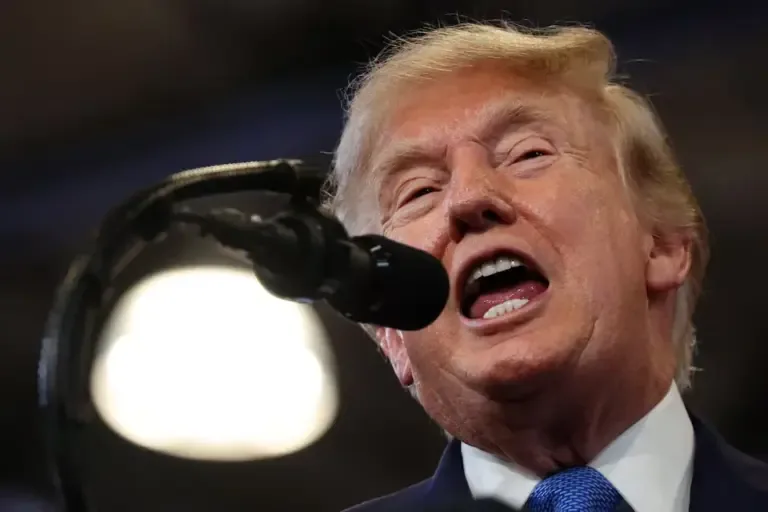
Francesco Tucci, director of the Communication and Journalism program at the Peruvian University of Applied Sciences (UPC), considers that Truth API represents a significant change because it turns Trump’s ability to issue messages with economic impact into an asset that can be sold to investors. He adds that the initiative blurs the line between political communication and the market’s reaction to announcements from a president.
The problem, Tucci explains to El Comercio, is that the service is mainly aimed at investors and allows them to gain an early advantage over the rest of the market.
Read more Minister Elmer Cuba announces that the State will assume almost half of the fuel price increase
He considers it especially worrying that privileged access to information published on a private social network but coming from a presidential figure could become normalized.
Tucci indicates that this situation helps explain the lawsuit filed against the initiative, as he recognizes that it could involve constitutional principles related to equal access to presidential information.
“It is not just a technological innovation, it is a commercialization of access to privileged information, access to power,” he states. This could have negative effects on transparency, informational fairness, and trust in institutions, he argues.
Tucci warns that even if the service ends up being considered legal, the reputational cost for the Presidency could be high, because it would feed the perception that public power is being used to favor private interests.
“It could grow the narrative of the capture of the State by private interests,” he says. He adds that if the initiative were to consolidate, it could set a precedent on how far private interests can go in using information linked to public power.
“Trump still thinks like a businessman”

Regarding Trump’s motivations, Tucci considers that “he continues to use a business mindset despite being president.”
From that perspective, Trump would have identified in his presidential communications a new business opportunity for a company facing financial difficulties. “Above all, he thinks like a businessman and has seen that there is a business from which he can profit, gain,” Tucci says.
However, he warns that this logic conflicts with the nature of the office Trump holds. “He is the head of state, he should not think like that because the dynamics are different,” he notes.
For Tucci, the State cannot be managed under the same criteria as a company, because there are fundamental differences between business logic and public function.
He considers that the initiative again brings to the table the problem of conflict of interest between the Presidency and Trump’s businesses. He recalls that investigations by US media have pointed out that companies linked to the president benefited financially during his first term and considers that a similar situation could happen now.
He warns that the problem also affects the US system of checks and balances, which is not working from the point of view of eliminating the conflict of interest.
Trump and his earnings in his second term
Trump’s second term, which began in January 2025, has coincided with a strong expansion of his businesses linked to cryptocurrencies.
His mandatory financial disclosure filed this year shows that in 2025 he earned more than US$1.4 billion in income from his cryptocurrency ventures, mainly through World Liberty Financial and the business associated with the meme coin $TRUMP. Today digital assets are one of the main sources of income for his business empire.
World Liberty Financial, controlled by Trump and his children, generated almost US$800 million for his companies through the sale of tokens and stakes in the business. Additionally, the company has received significant foreign investments.
In 2025, an entity linked to the United Arab Emirates government used the stablecoin USD1 cryptocurrency from World Liberty Financial to facilitate a US$2 billion investment in Binance.
According to his financial disclosure, Trump earned about US$635 million in royalties related to $TRUMP, launched a few days before assuming his second term.
The financial disclosure shows that Trump also earned hundreds of millions of dollars from his real estate properties and golf clubs, in addition to income from products of his brand, such as watches, Bibles, and other items.
Read more Elmer Cuba, head of the MEF: “The reduction of ministries is on the agenda”