




![Alberto Beingolea: “If they insist on not giving [the powers], they are complicating life for Peru”](https://insightermedia.com/wp-content/uploads/2026/09/bb3fa9e11304ea13fe2cd333955007bc-150x150.webp "Alberto Beingolea: “If they insist on not giving [the powers], they are complicating life for Peru”")



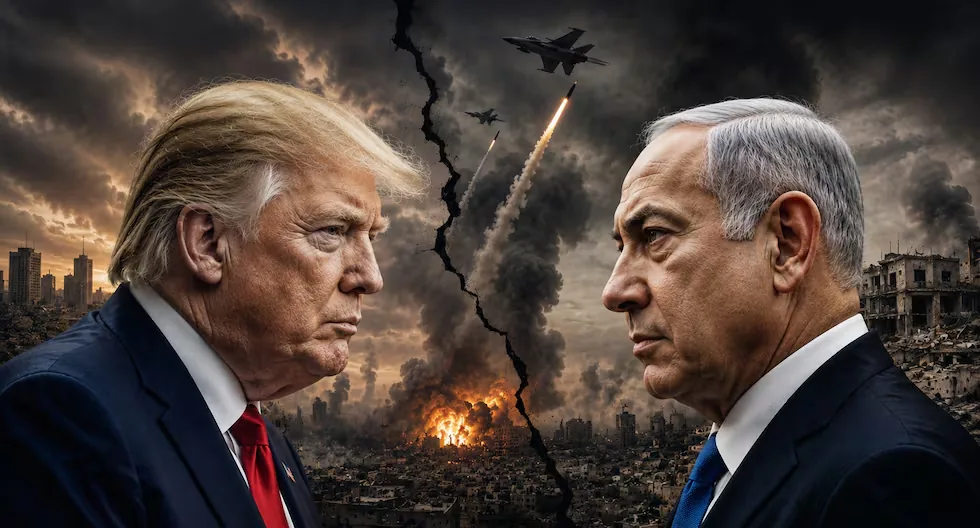
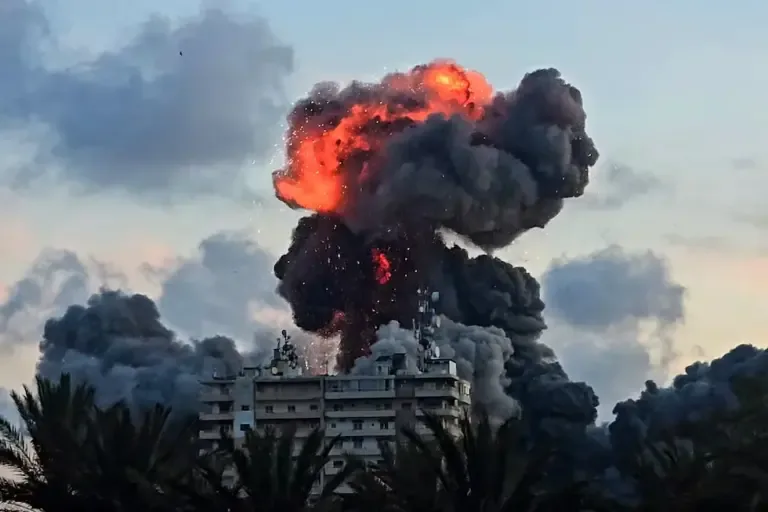
Donald Trump and Benjamin Netanyahu are seen as two of the most aligned leaders on the international stage. However, a tense phone call reported by Axios on Monday, in which the U.S. president allegedly launched harsh reproaches at his Israeli ally over the attacks in Lebanon, suggests that this relationship is going through a delicate moment. More than a specific disagreement over a military operation, the episode exposes increasingly visible differences on how to end the war in Iran, contain Hezbollah, and prevent the Middle East from sliding into a new regional conflict.
Read more Panama National Lottery Wednesday, June 3: where to watch the live broadcast of the draw
According to the Axios report, the call was one of the tensest since Trump’s return to the White House. U.S. sources told the outlet that the conversation was filled with insults and reproaches due to Israel’s military escalation in Lebanon.
WATCH: De la Espriella shakes Colombia: how he won the first round and what Cepeda needs to come back
According to Axios, Trump even told Netanyahu: “You’re fucking crazy” (“You’re fucking crazy”) and accused him of acting disproportionately in Lebanon. Furthermore, he reproached him that his actions were harming Washington’s diplomatic efforts and increasing Israel’s international isolation.
Other versions derived from the same report indicate that Trump also expressed frustration because “everyone hates Israel for this,” referring to the Israeli attacks and the deterioration of the country’s international image.
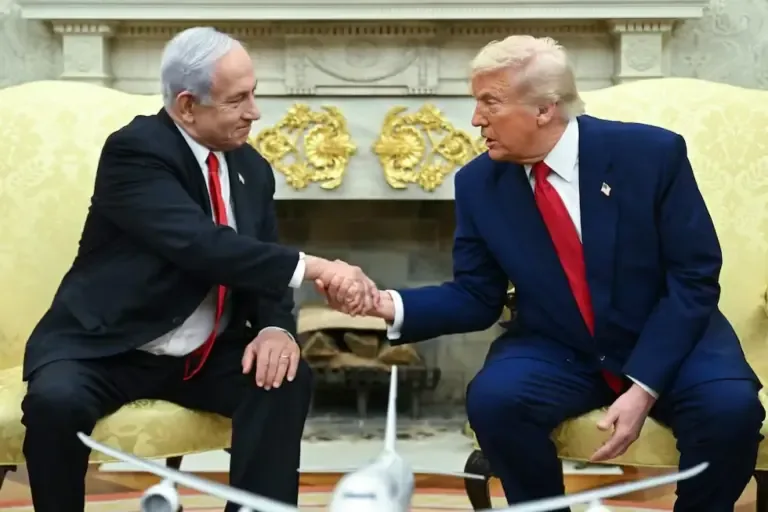
Trump’s anger is related to Israel’s threat to expand its operations against Hezbollah and even attack targets in Beirut. Because of this, Iran announced on Monday that it was halting negotiations with the United States.
For Trump, the priority is to keep talks with Iran alive and avoid a new regional escalation. U.S. officials cited by Axios stated that the president considered Netanyahu was acting excessively and putting at risk a negotiation that Washington considers strategic.
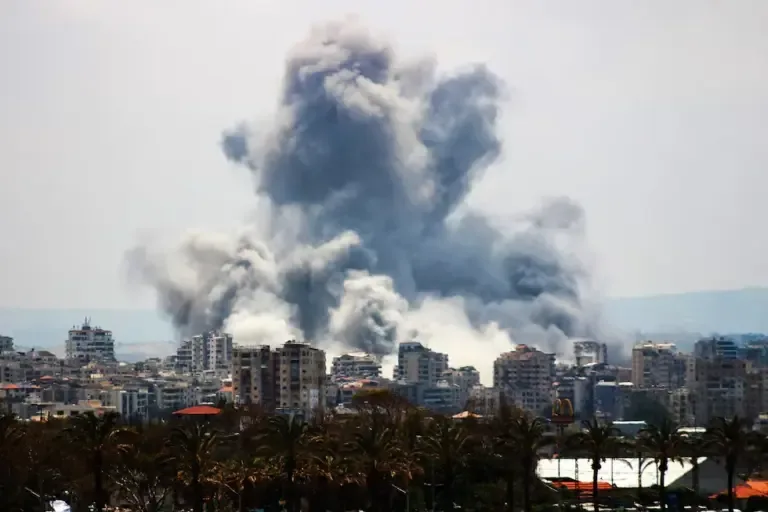
Axios reported that, after the conversation, Israel abandoned a plan to bomb Hezbollah targets in Beirut.
Subsequently, Netanyahu issued a statement saying he had explained to Trump that Israel would attack Beirut if Hezbollah continued its attacks, although he reiterated that Israeli operations in southern Lebanon would continue.
In summary, Axios sources described the conversation as one of the worst between the two leaders since January 2025, when Trump assumed power for the second time.
A passing crisis or a deep rift?
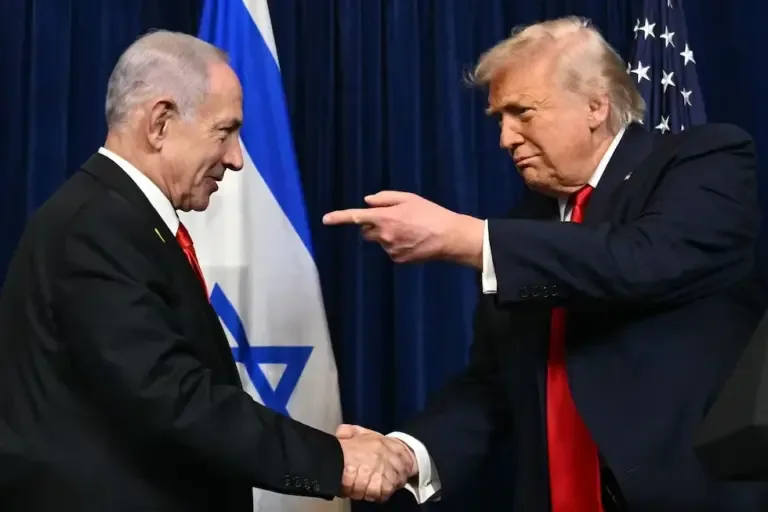
Despite the harshness of the conversation reported by Axios, international analyst Carlos Novoa believes that the differences between Trump and Netanyahu will hardly lead to a rupture between the United States and Israel.
“We are talking about a discussion between allies. It is not a negotiation between two parties with antagonistic positions, but a discussion between allies over certain positions,” he explained.
In Novoa’s view, the strategic alliance between the United States and Israel has survived much deeper disagreements in the past. Therefore, he considers it unlikely that the current tension will significantly alter U.S. support for Israel.
“I don’t think there is a risk that relations between Israel and the White House will break down. That has not happened even in moments of deep disagreements. The United States, despite the differences it may have with the Israeli government in power, will never stop supporting Israel,” he said.
“There will be no pro-Iran stance from the United States nor a policy that really harms Israel. There will always be some room to reach agreements,” he emphasized.
For his part, international analyst Francesco Tucci, professor of Political Science and International Relations at UPC, agrees that the tense conversation does not constitute a rupture between the two leaders, but it does confirm something that had been observed for months: the interests of the United States and Israel do not fully coincide regarding the future of the crisis in the Middle East.
“The American agenda and the Israeli agenda do not coincide 100%. Now that difference is much more evident,” he said.
According to Tucci, the Israeli attacks in Lebanon have complicated the diplomatic efforts promoted by the United States to reach a broader agreement with Iran, one of the main priorities of the Trump administration.
Novoa also maintains that the origin of the frictions lies in the different strategic priorities of both governments regarding the regional conflict.
He indicates that while Trump seeks to reduce the pressure derived from the war with Iran and avoid an escalation that compromises his diplomatic objectives, Netanyahu maintains a vision focused on Israeli security and the need to contain Tehran’s allies in the region.
“Trump is under pressure to get out of this conflict he has gotten into. He needs to shake off this war, while for Israel maintaining control and the capacity to act in southern Lebanon is a strategic issue directly linked to its security,” Novoa said.
The analyst adds that the Israeli government views any negotiation between Washington and Tehran with suspicion, especially if it involves concessions by the United States.
“Israel also does not want the United States to have any level of concessions with Iran. A possible agreement or ceasefire would necessarily imply some kind of concession, and that will hardly please the Israeli government,” Novoa said.
According to Tucci, the problem lies in that part of the negotiations promoted by Washington contemplates reducing the confrontation between Israel and Hezbollah, a point that clashes with the Israeli government’s military strategy.
“Part of the draft of a ceasefire and possibly a final agreement foresees that Israel will not attack Lebanon or Hezbollah. That is a key part of the negotiation with Iran,” he explained.
For Tucci, Israeli operations show that Netanyahu continues prioritizing his own strategic objectives, even when these generate tensions with his main ally.
“Israel follows its own agenda, even clashing with the American agenda. Now we have much clearer proof that both agendas are divergent,” he said.
Netanyahu and his history of confrontation with Washington
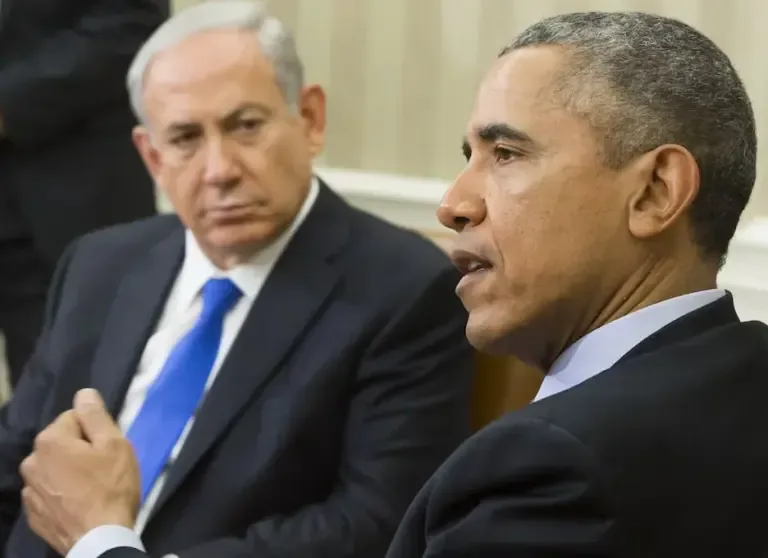
Novoa recalls that this is the first time Netanyahu has come into conflict with a U.S. president. In fact, he considers that the tensest episodes occurred during Barack Obama’s administration.
“Netanyahu has had differences with U.S. presidents several times. The most concrete case was during Barack Obama’s government, when many of the measures adopted by the White House generated rejection in the Israeli government,” he said.
According to Novoa, during that period Netanyahu even turned to the support of Republican political sectors to counter the position of the Democratic administration.
“Netanyahu came to rely on Republicans and political actors within the United States, even bypassing Obama at times,” Novoa recalls.
Far from being surprised by the differences, Tucci considers that this type of episode is part of a historical pattern in Israeli foreign policy.
“Netanyahu follows his agenda without considering that of his ally. But that doesn’t surprise me, because Israel has always acted that way,” he said.
Tucci recalls that even in moments of close bilateral cooperation, Israel has made unilateral decisions that have generated frictions with the United States.
Therefore, he considers it logical that Trump decided to intervene directly to try to contain a situation that threatens his diplomatic objectives.
For Novoa, even if tensions deepen, there are structural factors that would prevent a serious deterioration of the bilateral relationship.
He also highlights the influence that pro-Israel pressure groups maintain within the United States, such as the AIPAC lobby and pro-Israel evangelical sectors that are part of Trump’s political base.
“In the event that Trump took any measure perceived as anti-Israel, Netanyahu has important influence groups within the United States to which he could turn. Those ties remain very strong,” Novoa said.
Will Netanyahu have to give in?

Despite Israeli resistance, Tucci believes that the political and strategic weight of the United States will end up conditioning Netanyahu’s decisions.
According to his analysis, Israel can continue carrying out unilateral actions, but it would be very difficult for it to sustain a long-term strategy without Washington’s backing.
“Israel can act on its own, but it is not convenient at this moment,” he said.
Therefore, he believes that U.S. pressure could force the Israeli government to accept an agreement that does not fully satisfy its objectives.
“It is very likely that Netanyahu will have to accept, under U.S. pressure, a partial victory. He will not be able to get everything he wants,” he said.
From his perspective, the call reported by Axios does not represent a rupture between Trump and Netanyahu, but the clearest evidence so far of a strategic divergence that had been developing for some time and has become impossible to hide as negotiations on Iran and the future of the war in the Middle East advance.