




![Alberto Beingolea: “If they insist on not giving [the powers], they are complicating life for Peru”](https://insightermedia.com/wp-content/uploads/2026/09/bb3fa9e11304ea13fe2cd333955007bc-150x150.webp "Alberto Beingolea: “If they insist on not giving [the powers], they are complicating life for Peru”")



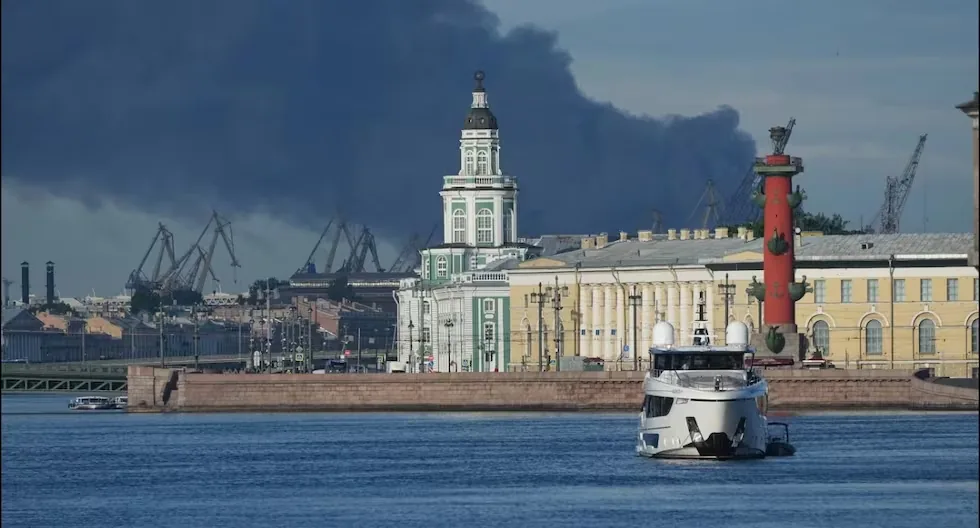
St. Petersburg, Russia’s second most important city, home to the strategic Baltic Fleet and one of the country’s best-protected territories, became on Wednesday the scene of one of the most audacious Ukrainian attacks since the start of the war in February 2022. The striking Ukrainian offensive coincided with the inauguration of the main economic forum promoted by President Vladimir Putin in that city, known as the “Russian Davos”. How did Ukraine manage to reach targets in a city considered key to the Kremlin’s security and prestige?
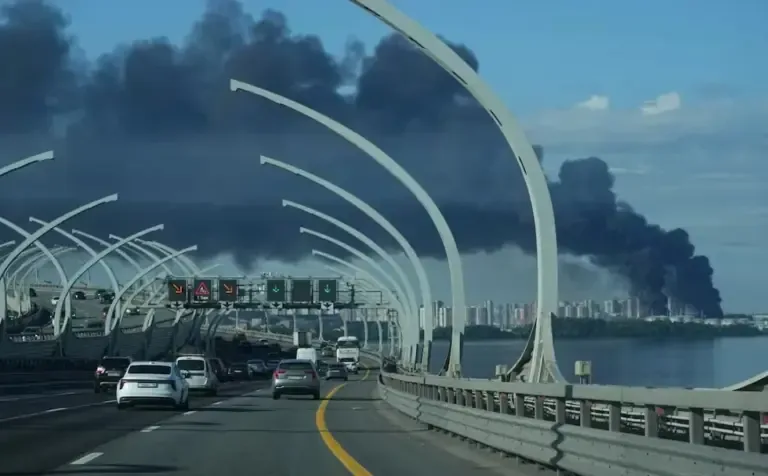
The operation was carried out with long-range drones, which struck naval and energy facilities located more than 1,000 kilometers from the Ukrainian border. Videos circulated on social media show the moment several devices crash into their targets, causing huge fireballs followed by dense columns of smoke rising over the city.
The attacks against St. Petersburg occurred a day after the massive Russian shelling of Ukraine, in which 23 civilians were killed and another 151 people were injured.
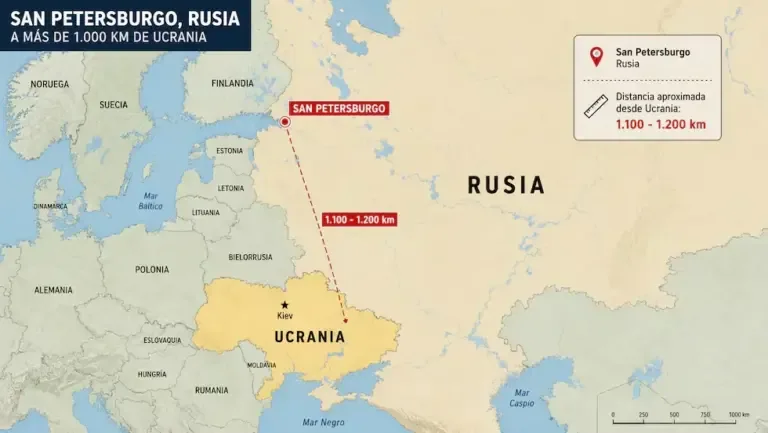
According to the Institute for the Study of War (ISW), Ukrainian forces attacked the Kronstadt naval base, where the Russian corvette Boiky of the Baltic Fleet was located, as well as the St. Petersburg Oil Terminal, one of the largest oil transfer complexes in the Baltic Sea.
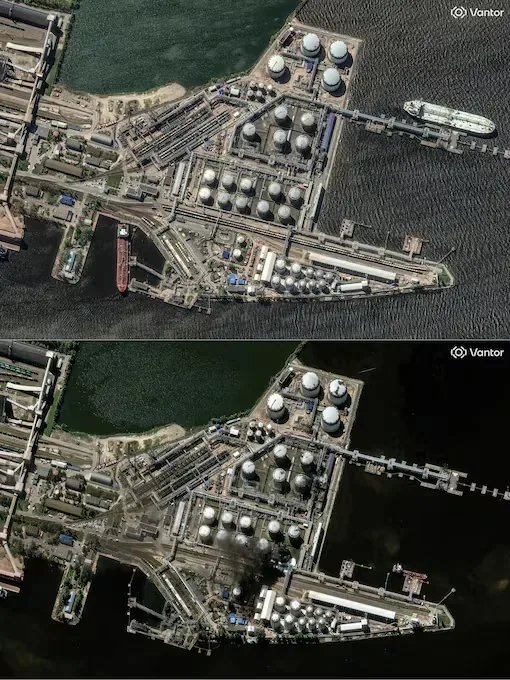
The ISW noted that the attacks caused fires and hit infrastructure considered strategic for Russia. It also cited Ukrainian commanders who stated that this was the twentieth attack against oil facilities in the St. Petersburg region since May.
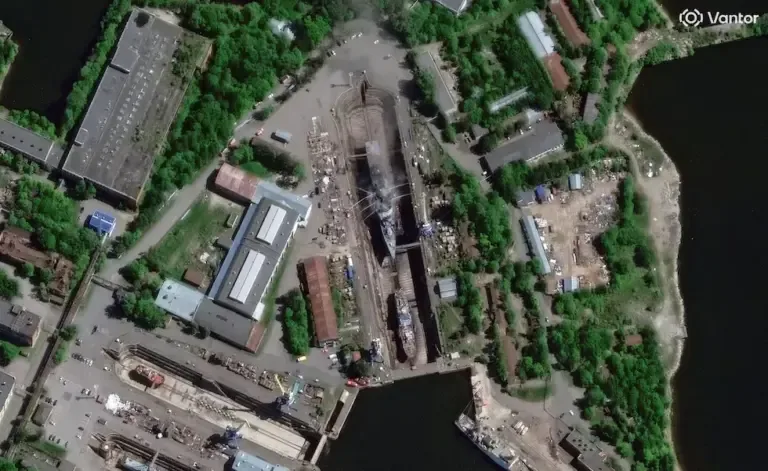
For the American analysis center, the operation reflects Ukraine’s growing capacity to strike targets located more than 1,000 kilometers from its borders and is part of a sustained campaign against the Russian energy industry, which has disproportionately affected Moscow’s refining capacity and oil exports.
The institute also emphasized the symbolic importance of the chosen moment. Historically, the Kremlin has used the St. Petersburg International Economic Forum (SPIEF) to project an image of stability, economic strength, and international power.
By attacking St. Petersburg on the first day of the forum, Ukraine not only sought to cause material damage but also to undermine that narrative and demonstrate that the war can reach even one of Russia’s most protected and emblematic cities, the ISW noted.
Putin is scheduled to participate in the St. Petersburg forum on Friday.
Aleksandr Beglov, governor of St. Petersburg, said in a statement that the attacks hit three infrastructures in the city, caused damage, and injured several people. Nearly 60 drones were shot down in the region.
As a result of the attacks, St. Petersburg’s main airport, Pulkovo, suspended its operations for almost five hours.
Ukrainian President Volodymyr Zelensky confirmed the attacks and posted a video showing oil tanks hit by drones and black smoke rising from an oil terminal located on the seashore.
Our long-range sanctions carried out by the warriors of the Security Service of Ukraine, the Unmanned Systems Forces, the Special Operations Forces, the Defense Intelligence of Ukraine, and the State Border Guard Service of Ukraine have yielded good results. Important facilities… pic.twitter.com/esxYMexU8d
— Volodymyr Zelenskyy / Володимир Зеленський (@ZelenskyyUa) June 3, 2026
🇺🇦🇷🇺 | GUERRA UCRANIA-RUSIA: El momento en que un dron ucraniano impactó una terminal petrolera en San Petersburgo, Rusia. pic.twitter.com/Qawc6R1DEG
— Alerta News 24 (@AlertaNews24) June 4, 2026
Long-range attacks like the one that hit St. Petersburg aim to reduce Russia’s oil production, a key source for financing the war, and disrupt arms production.
Zelensky has said that these long-range drone attacks have cost Russia about $7 billion. However, the New York Times noted that these losses have been offset by rising oil prices due to the war in Iran.
On Wednesday, Russia’s Finance Ministry said the government had received $9.2 billion in oil and gas export revenues in May, which is $2.3 billion above what it expected before the war in Iran. It has projected to receive another $3 billion in additional oil and gas revenues in June.
A military strike with political and psychological objectives
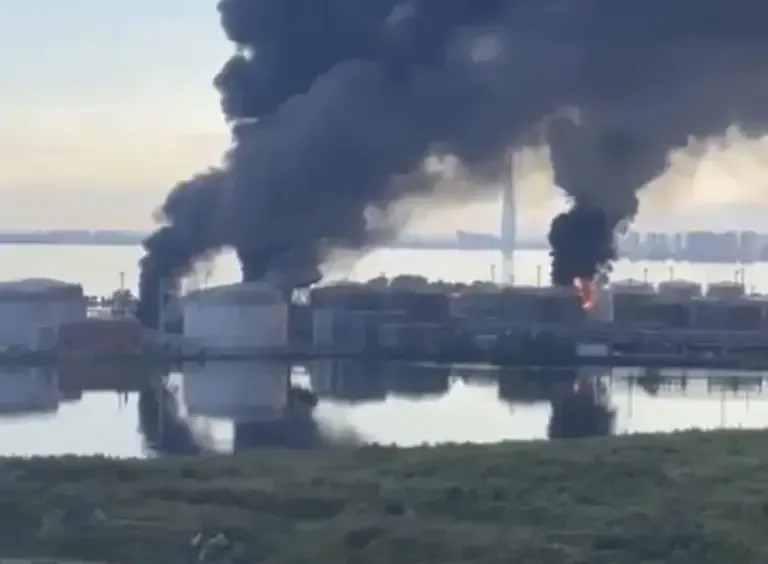
For defense and intelligence expert Andrés Gómez de la Torre, the Ukrainian attack transcends the strictly military plane. In his opinion, the operation combined strategic objectives with a clear propagandistic and psychological intention, by simultaneously striking energy infrastructure, naval facilities, and centers linked to arms production.
According to the specialist, the campaign reflects the evolution of Ukrainian strategy, which is no longer limited to attacking targets close to the front line, but seeks to project power more than 1,000 kilometers away within Russian territory. “Ukraine’s strategic vision is to combine long-range with a media objective,” he noted.
Gómez de la Torre believes that the timing of the attack was as important as the targets hit.
“The St. Petersburg International Economic Forum is a kind of equivalent to the Davos Forum, but in a Russian version,” he stated.
The analyst recalled that Putin traditionally uses this event to project an image of economic stability, attract investments, and reinforce the narrative of a multipolar world promoted by Moscow. Although Western sanctions have reduced European and American presence, this year delegations from countries such as China and Saudi Arabia, as well as American representatives, are participating, he noted.
“The attack sought to tarnish the image of normality and control that the Kremlin tries to convey during the forum,” said Gómez de la Torre.
The message of the explosions over St. Petersburg
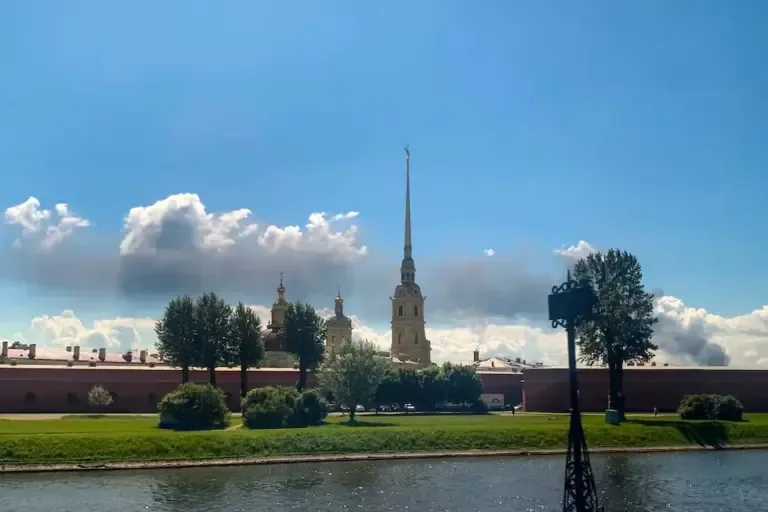
For Gómez de la Torre, one of the most relevant effects of the operation was the psychological impact generated by the images of the attacks and the disruptions caused in the daily life of the city.
The expert highlighted that the temporary closure of airspace, flight delays, preventive interruptions of Internet and mobile telephony, as well as security measures deployed in the Leningrad region, contributed to amplifying the impact of the offensive.
“The most striking aspect from a psychosocial point of view is that famous black cloud that could be seen from many kilometers on the horizon of St. Petersburg,” he stated.
In his opinion, the images of the explosions and smoke columns are part of the message that Kyiv seeks to send to both the Russian population and the international community.
“What Ukraine is trying to show are the vulnerabilities of Russian air defenses,” he noted.
Although he acknowledged that Russian anti-aircraft systems maintain a high capacity for intercepting and neutralizing drones, Gómez de la Torre considered that Ukraine is deepening a strategy aimed at attacking targets with high symbolic and media value within Russian territory.
He also maintained that this trend is favored by NATO’s increasingly explicit support for long-range attacks against Russian military targets.
“Ukraine seeks targets that are profitable in terms of propaganda, psychology, and public opinion,” he insisted.
The importance of the “Russian Davos”
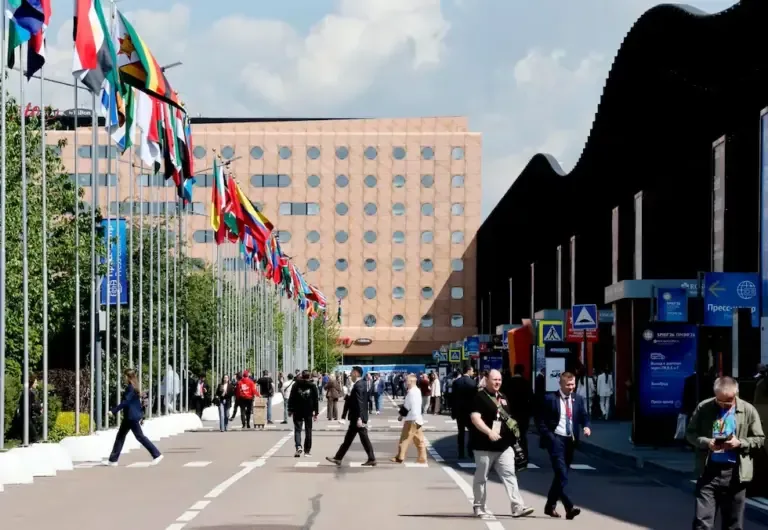
Before the invasion of Ukraine in February 2022, the St. Petersburg International Economic Forum was considered Russia’s main economic showcase to the world and was compared to the Davos Forum, held annually in Switzerland, for its ability to bring together heads of state, business leaders, investors, and executives from the largest Western companies.
The event served to announce multi-billion dollar deals, attract foreign investment, and showcase Russia as an economy integrated into global markets. Its most successful editions saw the participation of representatives from American and European companies, as well as leaders from major economic powers.
The war profoundly transformed the forum’s profile. Western sanctions and the departure of numerous multinationals reduced the presence of business leaders from Europe and the United States, while Russia strengthened its ties with countries in Asia, the Middle East, Africa, and Latin America. Even so, the SPIEF remains one of the most important events on the Russian political calendar and a key platform for Vladimir Putin.
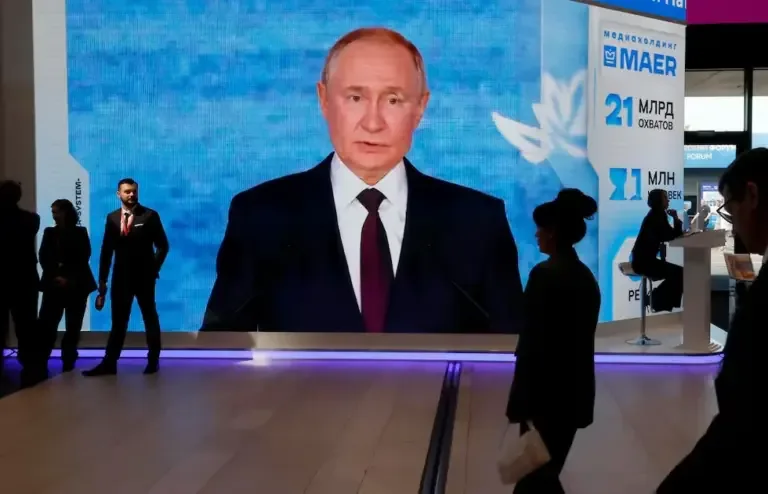
Through the forum, the Kremlin seeks to project an image of economic stability, security, resilience against sanctions, and the ability to attract partners and investments despite the isolation imposed by the West. Therefore, any attack coinciding with its celebration also has a symbolic dimension: it questions the narrative of normality and strength that Moscow tries to exhibit to the international community.