




![Alberto Beingolea: “If they insist on not giving [the powers], they are complicating life for Peru”](https://insightermedia.com/wp-content/uploads/2026/09/bb3fa9e11304ea13fe2cd333955007bc-150x150.webp "Alberto Beingolea: “If they insist on not giving [the powers], they are complicating life for Peru”")



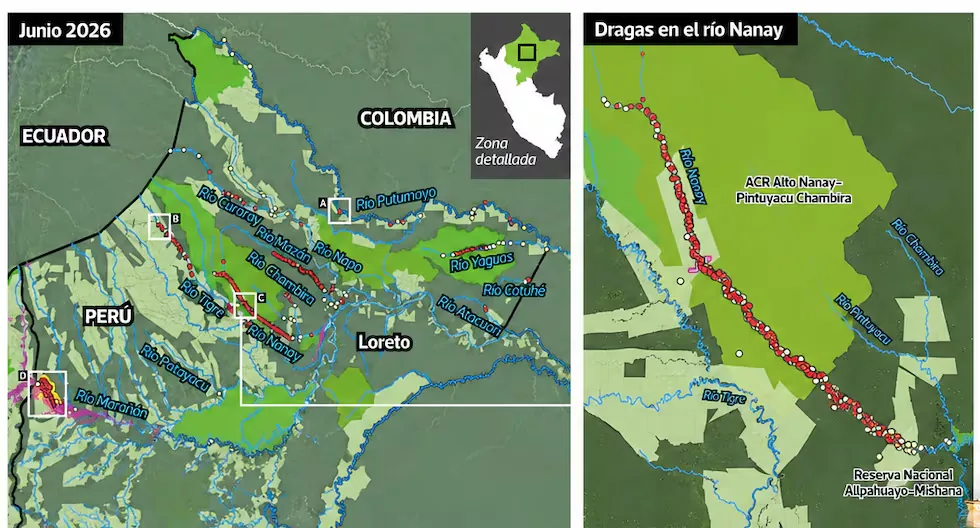
The Nanay, which is the main source of drinking water for Iquitos, has the highest number of historical records of mining dredges along its 315 kilometers of length. Between 2021 and 2026, a total of 1,076 dredges have been recorded in its various sectors.
Read more Channels to watch Barcelona vs Basel: preseason friendly match times
But only in the last 12 months, ACCA images – accessed by El Comercio’s Investigation Unit – show that, in the Nanay, 421 new dredges were recorded, several of them operating in new sectors not previously registered.
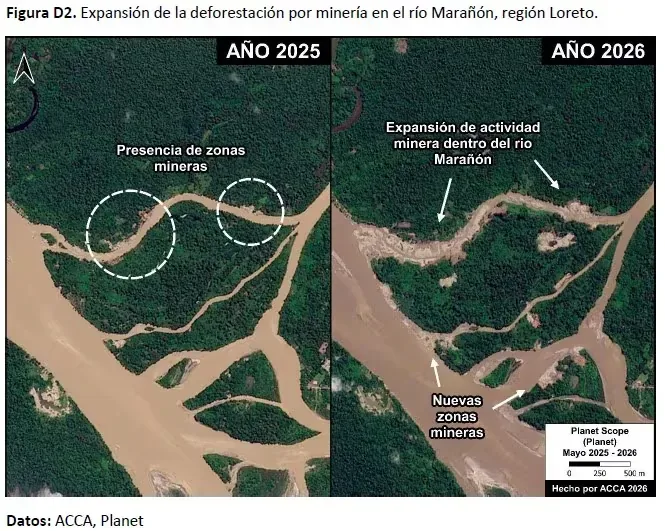
In the Marañón River, which in its final stretch joins the Ucayali River near Nauta to give birth to the Amazon, a total of 187 dredges have been observed between 2022 and 2025. In 2025 alone, 108 new dredges were recorded in various sectors of this river.
In various areas of the Tigre River, another important Amazonian tributary nearly 600 kilometers long that originates on the border between Ecuador and Peru, a total of 73 illegal rafts are recorded, making it the third river in this region with the highest number. This river is used by illegal miners to transport supplies such as fuel and equipment, as well as to evade controls by the Police and the National Service of Protected Natural Areas (Sernanp) installed on the banks of the Nanay.
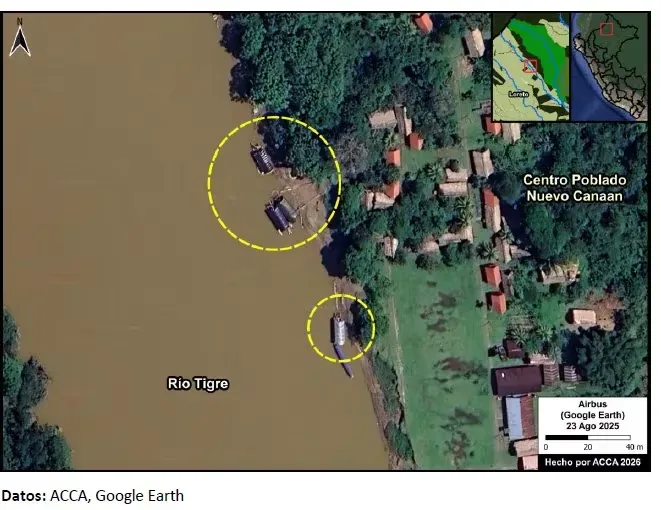
Another problem is that the operations of the Specialized Environmental Prosecutor’s Office (FEMA), together with the Navy and the Police, are limited by the support of part of the population. “We are seeing that certain communities oppose the interdiction work of the authorities. We have seen aggressive behavior, mainly from the communities of Ungurahual, Puca Urco, and Alvarenga,” says Bratzon Saboya, specialized prosecutor of Maynas who actively participates in the identification and destruction of the dredges.
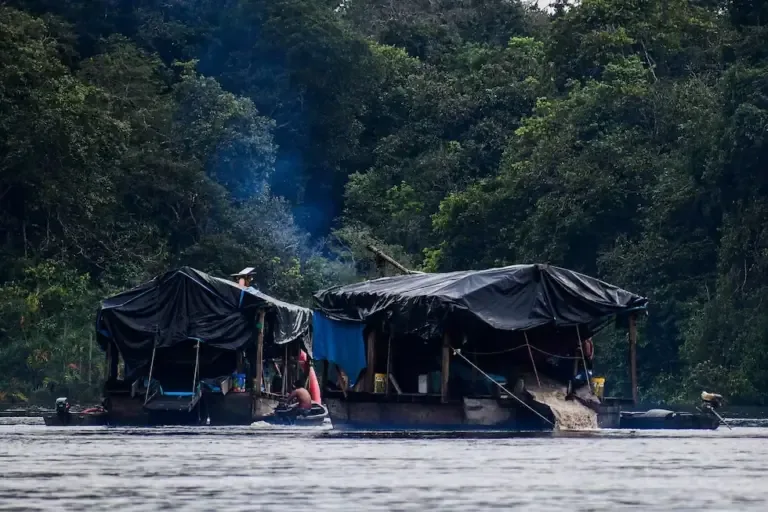
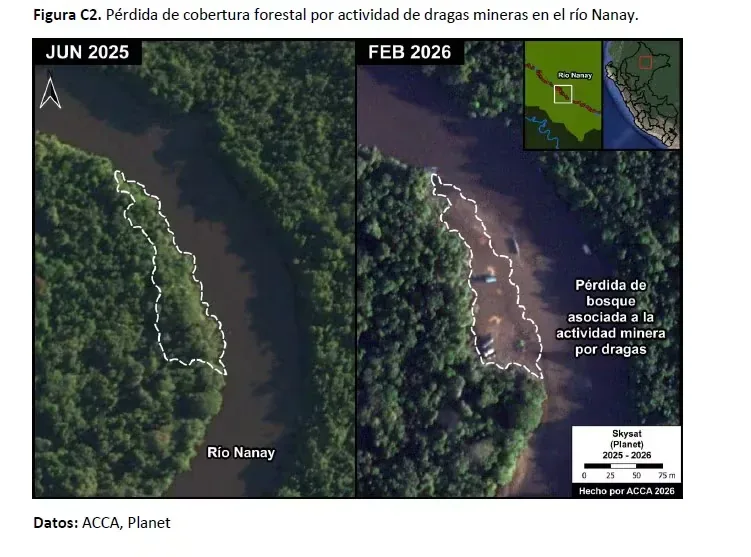
“In these areas, which are very difficult to access due to logistical reasons, the greatest amount of alluvial mining extraction activities take place. What worries us is that forested areas are already being destroyed. They not only extract (gold) from the riverbed but also destroy the forests,” warns the prosecutor.
—Unstoppable deforestation—
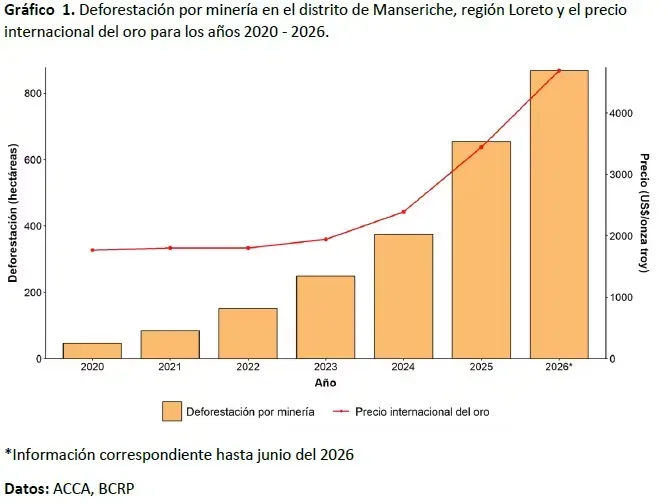
The severe deforestation near the riparian areas where illegal miners operate with their dredges is also recorded in satellite images. The impact is visible in palm swamps, low hill forests, and floodable alluvial forests. In the Marañón River, Manseriche district, Datem del Marañón province, annual deforestation has steadily increased between 2020 and 2024, coinciding with the stable trend of the international gold price.
From 2025 onwards, the significant increase in forest loss also coincided with the rise in the gold price. The ACCA report indicates that, up to June 2026, 868 hectares of forest have been deforested in Manseriche without being reversed. Only 493 hectares of forests were lost in the last 12 months; that is, 41 hectares per month. A destroyed forest area of 41 hectares represents just over half of the La Punta district (Callao), and is equivalent to six Campo de Marte parks in Jesús María (Lima).
Mining specialist Iván Arenas believes that the increase in dredges in Loreto – and in other mining areas – will worsen in the coming months if concrete actions are not taken to prevent it. “First, there is a growing demand for gold and that will not decrease. Second, because formalization (Reinfo) is a failed process and everything indicates that it will continue to be in effect,” he explains.
“Third, because regional governments, instead of being institutions that monitor, supervise, and regulate formalization through processing plants, have done absolutely nothing; and fourth, corruption,” he adds.
Arenas points out that there is a proven corruption network in Madre de Dios with the capture of former prosecutors and military personnel. According to the expert, this is an additional reason to think that the situation will not improve in the short term. “Everything that happens in the Nanay, we have been warning about for some time, and that is basically corruption,” he points out.

—Reinfo key —
In addition to the increase in illegal mining and its impact on several rivers in Loreto, there is also an increase in concession requests in areas where illegal mining operates. In the Manseriche district, affected by illegal mining, 109 new concessions were registered during 2025.
By June 2026, there are 241 mining concessions located in the Manseriche district, according to the registry of the Geological, Mining and Metallurgical Institute (Ingemmet). Of that total, 122 concessions have permission to explore and extract minerals underground, and another 115 concessions are in the process of being approved. Only four cases have expired validity.
Another relevant fact is that only three of nine registrations in the Comprehensive Mining Formalization Registry (Reinfo) for the Manseriche district are associated with concessions. The remaining six present a mining right not existing in Ingemmet.
Iván Arenas maintains that authorities must determine which areas should not be allowed for mining concessions in regions like Loreto. “First, it must be known who has Reinfo and who does not, who is operating in mining concessions that are not theirs. Then, regional governments must determine which areas are not allowed for concession and communicate it to the Ministry of Energy and Mines, to Ingemmet,” said the expert.
US$4,413
is the price of one ounce (28.4 grams) of gold in the world market. The formal price in the legal market in Peru is approximately S/ 450.
S/250
can cost one gram of gold in the Nanay River. Operators of an illegal dredge in that river could extract up to 140 grams per week.
THE FACT
The 704 new dredges in 13 rivers of Loreto represent 46% of all those registered in the last 9 years.
Between 2020-2026, 29 of these rustic rafts are operating in the Putumayo, on the border with Colombia.
Between 2017 and 2026, 1,518 mining dredges were identified in 13 rivers of the Loreto region; 46% correspond to the years 2025-2026. The case of the Nanay River is the most worrying: it accumulates 1,076 records since 2021, 70% of the total. Furthermore, illegal mining activity is advancing into forest areas, where loss of forest cover on its banks is already observed.
The Loreto region ranks last in the Regional Competitiveness Index (3.9), records the highest percentage of multidimensional poverty (62.3%), and contributes just over 1% to the national Gross Domestic Product (GDP). Illegal mining is not only an environmental problem but also one of development and governance.
The central problem is not the lack of laws, but enforcing them in a vast territory with limited state presence, little coordination, and criminal organizations capable of permanently reconstituting themselves. Destroying dredges is not enough. Peru needs to anticipate: financial and criminal intelligence management, institutional coordination, satellite and community surveillance, protection for whistleblowers, and active cooperation with neighboring countries facing the same problem.

Investigation Unit