




![Alberto Beingolea: “If they insist on not giving [the powers], they are complicating life for Peru”](https://insightermedia.com/wp-content/uploads/2026/09/bb3fa9e11304ea13fe2cd333955007bc-150x150.webp "Alberto Beingolea: “If they insist on not giving [the powers], they are complicating life for Peru”")



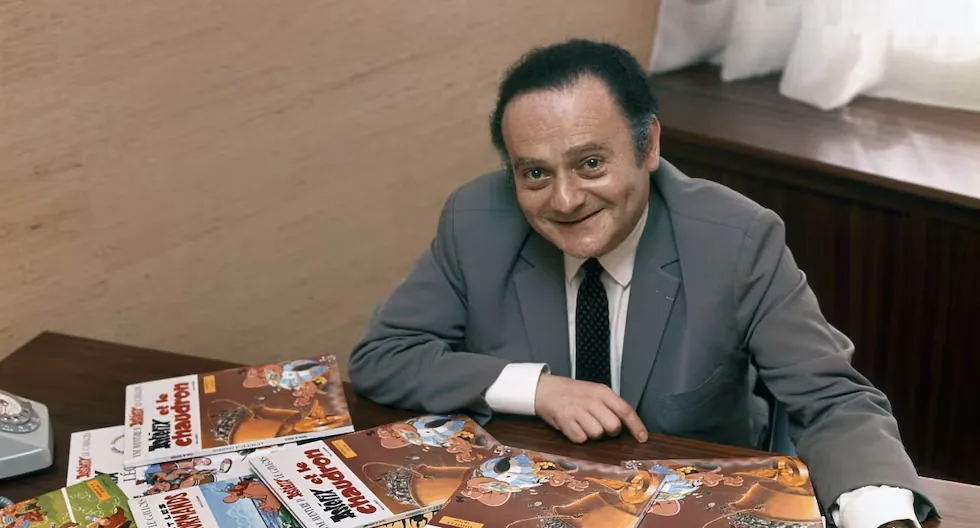
We are in the year 50 BC. All of Gaul is occupied by the Romans. All? No! After more than six decades following the adventures of Asterix, we know that there are always indomitable people, both in comics and in life. René Goscinny and Albert Uderzo were, without a doubt, two of them.
Read more The death toll from ferry sinking in Zimbabwe reaches 72
LOOK: Federico Kauffmann Doig: “I am interested in knowing how the Peruvian civilization was formed”
The story of this creative duo began with the founding of the magazine “Pilote” at the end of 1959. The vision of its founder, René Goscinny, was clear: to mix adventure with intelligent and satirical humor. For this, he joined forces with the illustrator Albert Uderzo, who was already distinguished for his work in newspapers such as France Dimanche and France Soir, as well as in the magazine “Tintin.”
Their first attempts were parodies set in prehistory, the results of which did not fully convince them. They discarded the idea and soon turned to the times of the ancient Celtic peoples. The public’s response was so overwhelming that, in 1961, the first book was published: “Asterix the Gaul.” Since then, the series’ success grew rapidly, allowing readers worldwide to feel welcomed inside that indomitable village surrounded by Roman legionaries.
The magic potion
Why did Caesar’s army never manage to defeat the Gauls? Everyone knows: the village guarded the secret of the druids, the magic potion prepared by Panoramix to grant superhuman strength. This is the soul of the stories of Asterix and Obelix, a dynamic that Goscinny enhanced with his brilliant scripts and that Uderzo visually deployed with an elastic and unmistakable stroke. From this series, the pair signed 24 masterful albums. The last of them was Asterix and the Belgians, in which Goscinny worked on much of the text before his tragic and premature death in November 1977 at age 51, due to a myocardial infarction (ironically, while undergoing a routine medical check-up at his cardiologist’s office). As readers, we continue to enjoy like children the quality of his language: the expressions, the cinematic shots, the kinetic lines, and the onomatopoeias. We can analyze his contributions and the French school in which he was trained, but there is something that escapes words: the indescribable charm of the confluence between both geniuses.
According to the newspaper “Le Monde,” Asterix in Lusitania – the 41st album of the series – managed to sell 1.65 million copies in its first two months after its release on October 23 last year. It was the best launch of the saga in two decades, the work of scriptwriter Fabcaro and illustrator Didier Conrad, published by Éditions Albert René (Hachette group). This adventure takes the Gallic hero to ancient Portugal to help the Lusitanians fighting against the Romans. While waiting for the next album in spring 2027, the big screen will receive at the end of the year the French animated film “Asterix: The Kingdom of Nubia,” directed by Alexandre Heboyan.
Read more Bettine Solf releases «Groundhog Day», her new album recorded between Peru and England
It is clear that the central concept of Asterix’s adventures is resistance. Something that the post-war generation of French people knows well, as the memory of the Nazi occupier was still fresh. Time has passed, but the druidic magic of those scripts continues to teach us history and, above all, to identify with those minorities who resist the powerful. By Tutatis!
Screenwriter and editor, Goscinny is one of the most globally successful French authors, with more than 500 million books sold.
Other notable works of his include the series “Lucky Luke,” “Little Nicholas,” and “The Great Vizier Iznogud.”
Read more Kábala: follow the results of the pozo buenazo on Saturday, August 15
- Federico Kauffmann Doig: “I am interested in knowing how the Peruvian civilization was formed”
- Commonplaces, by Alonso Cueto
- Ideas to rebuild the Ministry of Culture: “A ministry should not be a spoils of war between political parties”
- Uruguayan writer Fernanda Trías: “You always have to remain an amateur writer”
- Alejandra Costamagna: “Writing like cats is very suggestive”