




![Alberto Beingolea: “If they insist on not giving [the powers], they are complicating life for Peru”](https://insightermedia.com/wp-content/uploads/2026/09/bb3fa9e11304ea13fe2cd333955007bc-150x150.webp "Alberto Beingolea: “If they insist on not giving [the powers], they are complicating life for Peru”")



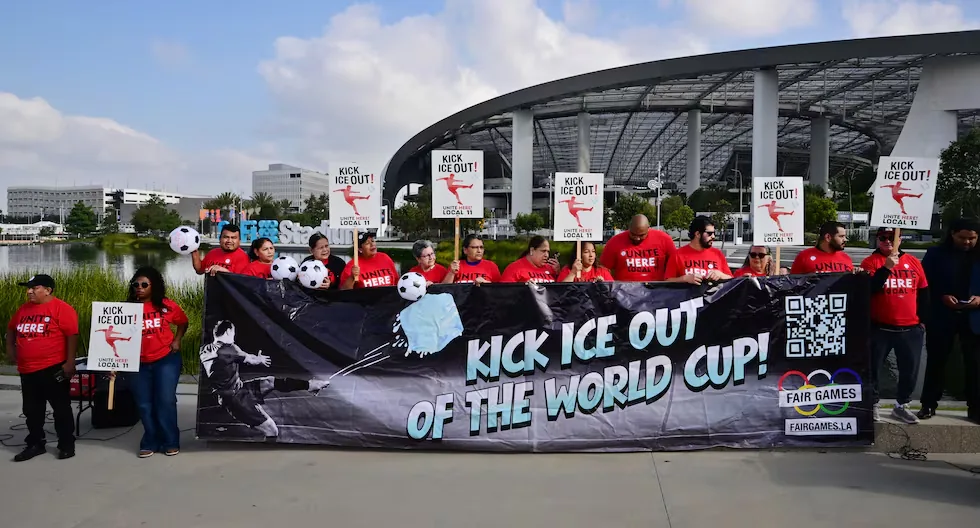
In Los Angeles, hospitality workers at SoFi Stadium, where the U.S. national team will debut, threatened to strike during the World Cup. They are not only demanding better working conditions from FIFA leaders but also that they commit to keeping ICE away from the matches and the city. Concern is also felt in the other host cities of the tournament in that country: New York / New Jersey, Dallas, Miami, Atlanta, San Francisco, Seattle, Houston, Philadelphia, Kansas City, and Boston.
Read more Circo Beat: the best of the weekend in events
Trump has turned ICE into the most powerful and feared federal agency of his administration. Its officers have prerogatives to act with impunity in order to pursue undocumented immigrants. The fear and rejection of ICE – which is part of the Department of Homeland Security (DHS) – peaked at the beginning of the year after the death of two U.S. citizens, who lost their lives in Minneapolis for protesting immigration raids.
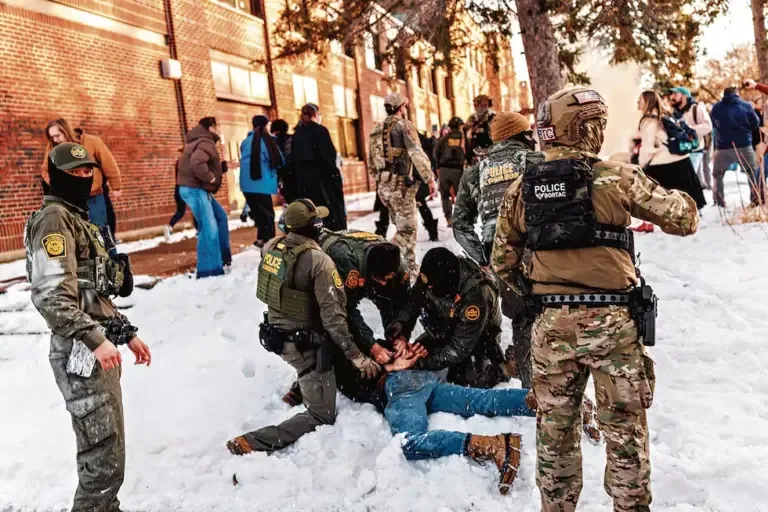
In February, acting ICE director Todd Lyons told the House of Representatives that the agency would be “a fundamental part of the overall security apparatus for the World Cup.” This, coupled with the government’s increased raids against undocumented immigrants, has fueled questions about the possibility of ICE intensifying operations to control foreigners and even conducting immigration arrests around sports venues.
Authorities have indicated that ICE will focus on combating crimes such as human trafficking or the trafficking of counterfeit goods. But that has not been enough to calm tempers. The United States will host 78 of the 104 World Cup matches.
- 167,000 people were arrested by ICE between January 2025 and March 2026 in the 11 World Cup host cities.
“Not only is there fear, but also, DHS authorities have hinted at the possibility of operations outside the stadiums, although they later tried to deny it. There is no way to think they can act differently, when the measures they have put forward to curb immigration will have an inevitable impact on a large part of the U.S. soccer fanbase,” political scientist María Puerta Riera, professor of American Government at Valencia College (Orlando), tells El Comercio.
State of unease
The concern is especially felt among the Hispanic community, which represents 20% of the U.S. population and has a strong presence in cities like Miami, Los Angeles, Dallas, and New York, all World Cup host cities.
Puerta believes that immigration operations will fundamentally affect Hispanics and other communities with a soccer tradition. “That is why immigration authorities have warned about the activities they will carry out during the matches, especially when teams from communities with high irregular migration in the country play,” she points out.
The rejection of ICE‘s presence at the World Cup is latent among Americans themselves. According to a poll by “The Washington Post” and the University of Maryland, 65% of respondents do not want ICE agents in stadiums during tournament matches.
Eduardo Gamarra, a professor at Florida International University, asserts that “nobody wants ICE at an event like the World Cup.” “It is one of the most unpopular agencies in the United States, not only as an institution but also in terms of its actions. Its agents have been present near some stadiums and have received strong rejection,” he tells this newspaper.
He adds that the Department of Homeland Security’s strategy has been to sign agreements with local police so that their officers act as immigration agents, so it will not necessarily be ICE that poses the biggest problem for undocumented immigrants.
Read more Keiko Fujimori vs. Roberto Sánchez: a runoff between the least voted candidates in history
“In cities where these agreements have been signed, if ICE is not present, a local police officer is more concerning, as they can arrest someone and then hand the person over to ICE. To this must be added that the United States has a very important need to recover its international image – it has bombed 11 countries since Trump came to power – so I don’t think ICE will play a very important role. The problem will lie in the links between local police and ICE,” he considers.
The uncertainty also extends to foreign tourists. More than 120 civil rights organizations in the United States published a “travel warning” aimed at fans, players, and journalists, alerting them to the “risk of suffering serious human rights violations.”
Another point that strains the atmosphere is the government’s decision to expand the list of countries whose citizens have restrictions on entering the United States. The list includes Haiti, Ivory Coast, Senegal, and Iran, nations qualified for the World Cup.
The tense context already forced the delegations of Iran and Senegal to move their operations center from the U.S. to Mexico. Like them, thousands of fans will also have to take additional precautions to enjoy the World Cup.
A U.S. federal judge blocked a series of restrictions imposed by the Trump administration on legal immigration after last year’s shooting of National Guard members by an Afghan immigrant.
In a ruling heavily criticized by the government, Judge John McConnell Jr. stated that the policy “threw the lives of countless immigrants living in the U.S. into an indeterminate legal limbo” and that the restrictions imposed on nationals of 39 countries are illegal.
The policies prohibited immigrants from 39 countries in Africa, Asia, Latin America, and the Middle East from receiving decisions on, for example, asylum applications, work permits, and green cards and citizenship.
The ruling will affect pending cases involving people from the nations subject to the travel ban. Trump’s mass deportation program has been frustrated or slowed by several court decisions.
Immigration operations in Minneapolis (Minnesota) caused chaos and protests at the beginning of the year.
Read more Earthquake in Mexico today, Friday, June 5: recent earthquakes reported by the SSN
- Israeli attacks impact near Beirut, leaving six dead in southern Lebanon
- Trump confirms using foul language with Netanyahu: “I was a little upset about his constant fight with Lebanon”
- The ‘mega-hearings’ on immigration: Trump’s new strategy to accelerate deportations that raises alarm