








The AfD obtained 43.8% of the votes and defeated the conservatives of the Christian Democratic Union (CDU), the party of Chancellor Friedrich Merz, which in Saxony-Anhalt only achieved 17.2% of the votes.
Read more The Kabbalah of Thursday, September 10: how to play, what time, and results
The far right was thus only three seats short of an absolute majority to form a government in Saxony-Anhalt, so from Monday it began to probe other parties to achieve that goal.
Who is the leader of AfD?
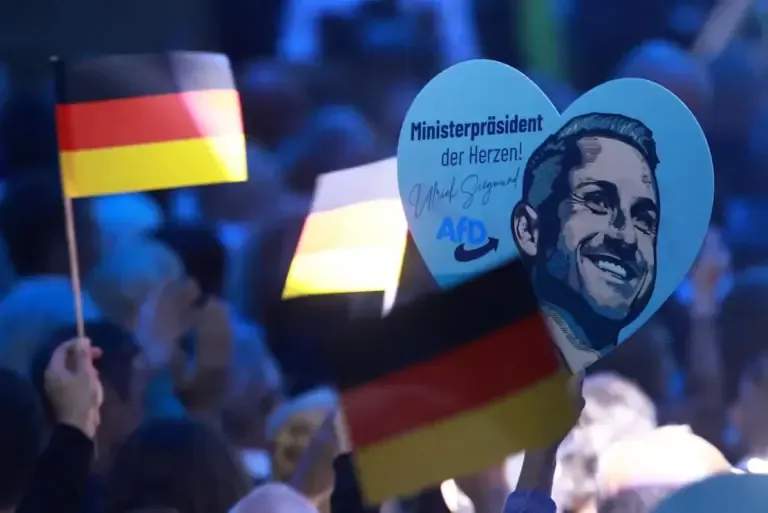
The Alternative for Germany was founded on February 6, 2013, in Oberursel, in the state of Hesse. The party initially emerged amid the euro crisis as a critical force against financial bailout policies and greater European integration.
Bernd Lucke, an economist and university professor, was one of the founders of the AfD and its first major leader.
Currently, the AfD does not have a single leader, but a dual leadership, where Alice Weidel and Tino Chrupalla are the two federal co-chairs of the party.
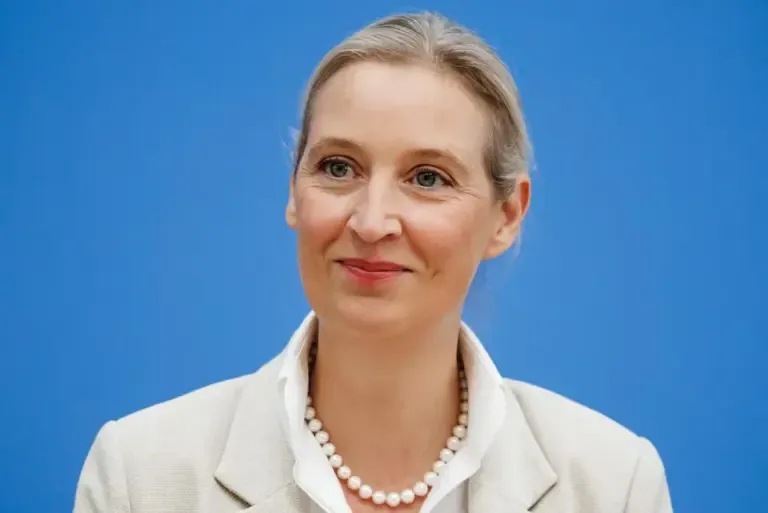
But Weidel is the most visible figure of the party at the national level. Additionally, in the 2025 federal elections, she was a candidate for chancellorship.
In those elections, under Weidel’s leadership, the AfD achieved a historic leap by obtaining 20.8% of the votes and becoming the second-largest force in the Bundestag. It practically doubled its vote share compared to 2021, when it had obtained 10.4%.
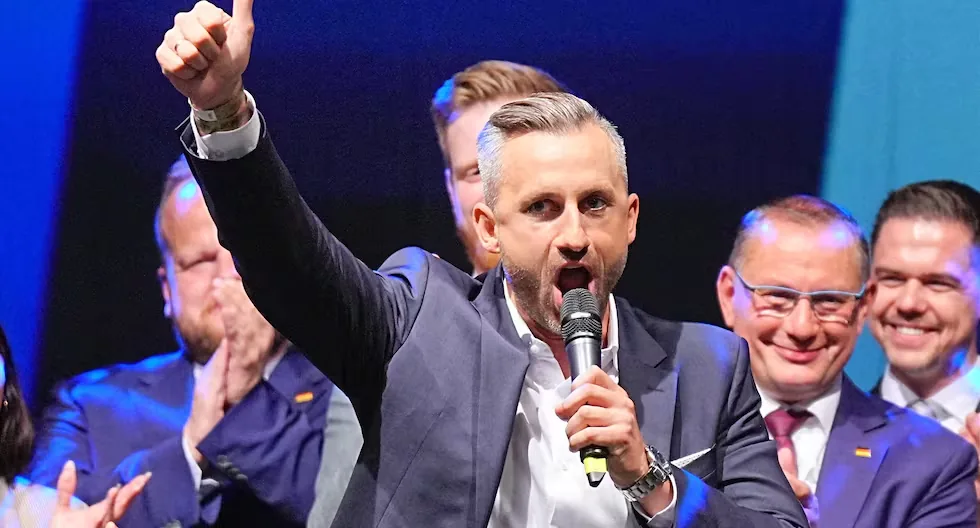
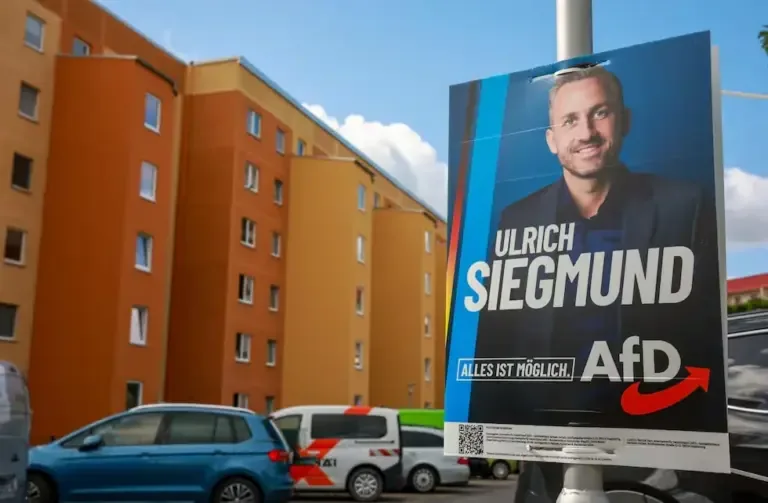
But in Sunday’s elections in Saxony-Anhalt, the main protagonist was its charismatic regional leader Ulrich Siegmund, 35 years old.
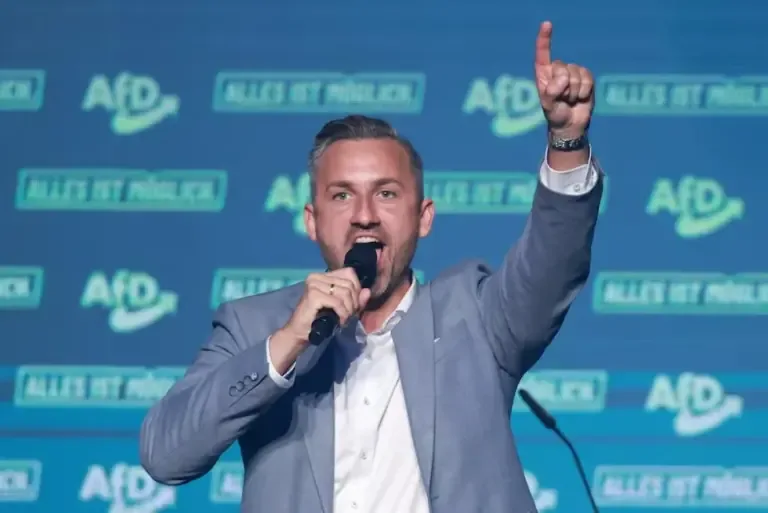
Born in Havelberg, Saxony-Anhalt, Siegmund studied economic psychology and business administration and worked in sales before dedicating himself to politics. He has been a regional deputy since 2016 and currently leads the AfD in his region.
His political career began within the CDU, but he ended up joining the AfD in 2014, before obtaining a seat in the regional parliament. During the COVID-19 pandemic, he gained notoriety for his criticisms of health restrictions and later built a strong social media presence.
His style is one of the keys to his success: he projects a young, approachable, and less confrontational image than other AfD leaders, while defending very tough positions against immigration and proposing profound changes in regional policies.
What does the AfD propose?

The AfD centers its proposals on a combination of German nationalism, strong immigration restrictions, Euroscepticism, opposition to much of climate policy, tax reduction, and a conservative turn on social issues.
On the issue of immigration, it proposes drastically reducing it and tightening asylum application conditions. It also aims to strengthen border controls, accelerate deportations of foreigners without the right to stay in Germany, limit social benefits for certain immigrants, and favor selective immigration based on labor market needs.
Regarding the European Union, it proposes returning powers from Brussels to national states, rejects further political integration of the EU, opposes an EU turned into a federal state, seeks to reduce financial transfers between countries, and even suggests the possibility of a deep reform of the EU that could lead to a new European organization.
The AfD rejects much of Germany’s climate policy. It proposes recovering and expanding the use of coal, maintaining or recovering nuclear energy, increasing gas exploitation, eliminating or reducing restrictions on combustion engines, and opposes measures such as the progressive ban on gasoline and diesel vehicles.
In economics, the AfD presents itself as a defender of private enterprise and the social market economy. It seeks to reduce taxes, cut bureaucracy, ease the tax burden on companies and workers, encourage investment, protect German industry, and reduce certain environmental and labor regulations it considers excessive.
It defends a traditional conception of the family and proposes greater economic incentives for having children, tax benefits for families, strengthening the role of parents in education, opposes certain equality policies and quotas, and rejects what it calls “gender ideology.”
The AfD proposes a toughening of security policy, with harsher penalties for repeat offenders, greater police presence, deportation of foreigners convicted of certain crimes, increased emphasis on border control, and strengthening of the state and authority.
Regarding foreign policy, its discourse mainly revolves around the war in Ukraine and rejects Berlin’s military support to that country. It also demands lifting economic sanctions imposed on Russia because it considers they harm Germany’s economy.
The AfD advocates a foreign policy more oriented to German national interests.
Why did the AfD grow?
For Francesco Tucci, director of the Communication and Journalism program at the Peruvian University of Applied Sciences (UPC), the result in Saxony-Anhalt should be read with caution, because it does not necessarily mean that almost half of the voters in this state ideologically identify with the radical right.
“It is probably more of a protest vote. They wanted to punish the traditional parties,” explains Tucci. He argues that besides the rejection of traditional parties, another key is the perception that the political elites in Berlin are increasingly distant from citizens’ concerns, especially in the industrial and peripheral areas of the eastern part of the country.
Tucci adds that the fall of the CDU is particularly significant because it reveals that part of the conservative electorate is shifting its support to a much more radical option.
The international analyst states that the division between east and west remains a fundamental factor to understand the phenomenon. “Three decades after reunification, economic inequalities, social differences, and lower trust in institutions persist among sectors of the population of the former East Germany. There is a sense of second-class citizenship, they feel discriminated against. And AfD was able to capitalize on this gap,” he says.
This discontent combines with other issues that the AfD has managed to place at the center of political debate. Among them are immigration, security, and the defense of national identity, Tucci emphasizes. Thus, he argues, the party has managed to present itself to part of the electorate as an alternative to what it considers a political front that is too liberal and cosmopolitan.
“The protest vote has turned into a vote of support for this party. This means that the AfD would be building its own stable and growing electoral base”, he states. But he stresses that the result in Saxony-Anhalt cannot be directly transferred to the whole of Germany, although it does show a trend that traditional parties cannot ignore.
International analyst Enrique Banús agrees that behind the AfD’s result there is a vote of discontent with traditional politics, but also the party’s ability to attract new voters.
“People who had not voted in previous elections went to the polls this time to mostly support the AfD, and there was a collapse of the CDU,” Banús indicates.
He considers that behind this behavior there is growing disenchantment with the German government’s politics, added to the accumulated discontent over years in the former East Germany. Although he acknowledges that the economic conditions in the east remain less favorable than in the west, he argues that a perception of grievance and abandonment has settled in, which the AfD has been able to exploit.
Banús highlights the communicative ability of Ulrich Siegmund. He describes him as a “skilled” politician and “good communicator,” but also labels him populist and demagogic. This combination allowed the party to capitalize on discontent and achieve an electoral result he calls “spectacular.”
Can AfD win a national election?
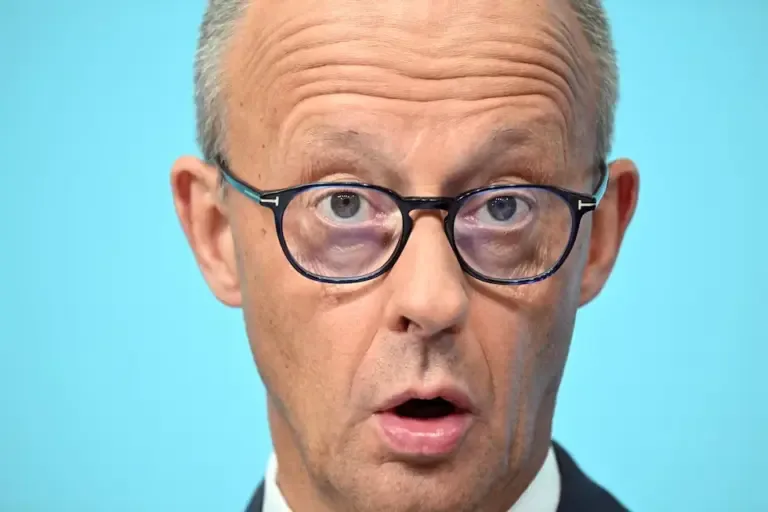
Tucci indicates that it will largely depend on the parties to prevent the AfD’s advance from translating into a national trend.
“We will see how they react. They need to analyze why part of their electorate, especially the conservative one, is migrating towards the AfD and respond to the concerns driving that shift”, he specifies.
He warns that if traditional parties do not self-criticize and do not modify their proposals to respond to citizens’ concerns, they could end up facilitating the growth of the far right.
Tucci emphasizes that the AfD’s path to power still faces a significant obstacle: the so-called cordon sanitaire or Brandmauer, by which the main German parties maintain their refusal to form alliances with the far-right party. The result in Saxony-Anhalt puts this mechanism under pressure again, especially because the AfD came close to achieving a sufficient majority to govern alone.
For now, Tucci considers it premature to say that the AfD is close to governing Germany at the federal level. But he believes its growth should not be underestimated.
For his part, Banús is very cautious about the possibility that the AfD could come to govern Germany at the federal level. “That is impossible to predict,” he says, and considers that currently the party is still far from reaching that goal.
Before making national projections, Banús suggests observing what happens in Saxony-Anhalt: if the AfD manages to form a government, with whom it would have to make agreements, and, above all, how its management would be.
“That step could even become a decisive test for the party. If it comes to regional power, it will no longer be evaluated only by its proposals and will have to demonstrate its ability to govern. It would no longer be just saying: these have ideas, but do they have a government and what are they doing?”, he points out.
Read more Earthquake in Chile today, Wednesday, September 9: epicenter of the latest tremor according to CSN