




![Alberto Beingolea: “If they insist on not giving [the powers], they are complicating life for Peru”](https://insightermedia.com/wp-content/uploads/2026/09/bb3fa9e11304ea13fe2cd333955007bc-150x150.webp "Alberto Beingolea: “If they insist on not giving [the powers], they are complicating life for Peru”")



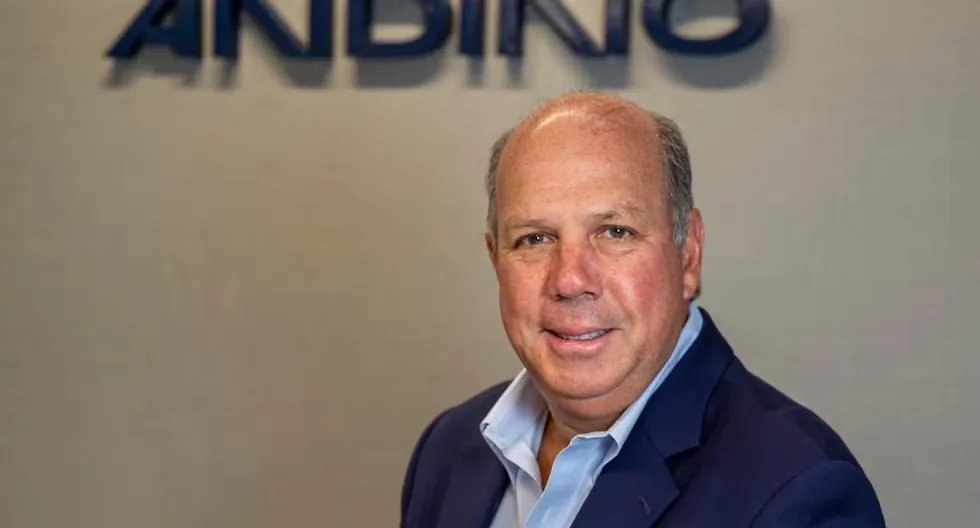
This year they signed an addendum with the MTC to invest in the five airports where they operate, what is the plan regarding these projects?
Read more Jhonsson Smit Cruz Arce: The most wanted, a profile by Fernando Vivas
Yes, in March the addendum was signed with the Peruvian government to start works at the five airports we operate. These are works worth about US$470 million, with Juliaca concentrating the most important part. There, the 4-kilometer-long runway has to be rebuilt, and a rain drainage system that the airport did not have must be constructed. The passenger terminal will also be intervened and expanded, and the perimeter fence will be improved to provide the airport with greater security.
In Arequipa, Tacna, and Puerto Maldonado, each of their terminals and perimeter fences will be expanded. At Ayacucho airport, the perimeter fence will be built around 2028. These works begin in the second half of the year, with an estimated start between the third and fourth quarters, between September and October.
Of the US$470 million, between US$30 million and US$40 million in works should be executed this year. Next year comes the most important part: we estimate about US$200 million and the remainder towards 2028. 2027 will be a year of much activity at the airports.
– Will the works be executed in parallel or sequentially?
Some will be executed in parallel and others sequentially. These are works that will finish in approximately two years or two and a half years, with an investment of US$470 million.
For this, we have formed within the group a company called Kubo, which will be in charge of management and supervision of the works on our side, since the State has its own supervisor. We are currently in final negotiations with the contractors who will carry out the works.

– After those two years, do you plan to continue investing, considering that the flow of tourists could increase thanks to the new Jorge Chávez airport?
The investment in Jorge Chávez is very important and will reposition Peru in the focus of airlines to be the regional hub, attracting more traffic from other countries in the region. It also creates pressure for the modernization of provincial airports, both for the northern group and for us in the south.
This first investment stage of US$470 million in our five southern airports is prior to a next stage, in which more than US$1 billion is expected to be invested in the five airports in the south. That phase will include a new complete terminal for Arequipa, to support traffic of 6 million passengers; the intervention of the Puerto Maldonado runway, which is reaching the limit of its useful life; and expansion in Ayacucho and Tacna. The more than US$1 billion is already foreseen in the addendum signed with the Government.
– Until what year is that investment of more than US$1 billion projected?
Until the end of the concession, which is in about 10 years, around 2036. We will finish this first package in the next two years and immediately start engineering for that second major development stage.
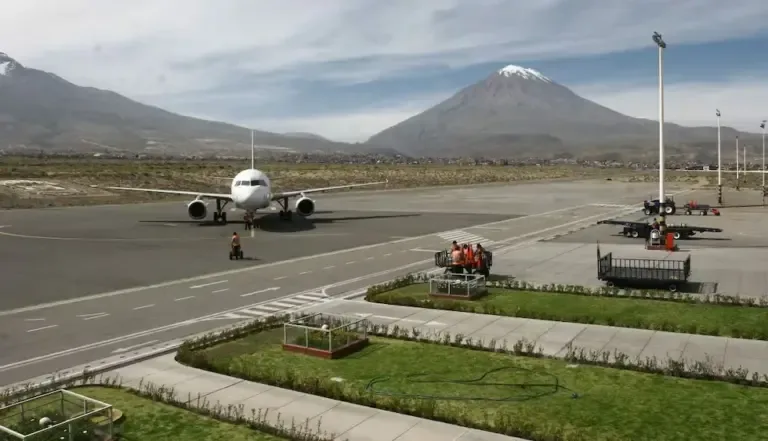
– In Peru, are you evaluating participating in the development of an FBO terminal (specialized for private, executive, and corporate aviation) at Jorge Chávez airport?
Yes, we are participating in that competitive process led by LAP. It is a very interesting bet for us and the result should be known in the next 15 days.
– This year you consolidated your alliance with the real estate operation company Mobiliare, what are the investment plans for the coming years?
In December last year, the process of selling the infrastructure company Oporsa to the Mobiliare Group began, with which we have partnered. Now the company is 50/50 and has an investment plan of over US$120 million between the rest of this year and next year.
Oporsa will invest in two very important logistics warehouses, one of 100,000 m² for one client and another of 70,000 m² for another client. With these investments, in the next two years it will complete almost 600,000 m² of available space.
Additionally, a current client has asked us to expand their container yards by almost 100,000 m², which represents an additional investment of US$30 million. In total, I estimate that in the next two years we will be investing close to US$150 million in Oporsa, together with Mobiliare.
– You had an initiative to develop a logistics hub in Callao, will you carry it out through Oporsa?
No, it is a plan for another of our companies: Terrano, which is Lima Hub and is 100% ours. In this last one, we are also analyzing investments, but we do not yet have a determined figure.
– When will the Lima Hub project in Callao be completed?
I would say that by December of this year we should have the investments committed with the clients, but for now we are in preliminary talks with several of them for Lima Hub. That is why I cannot yet define the investment amounts. These investments should be between US$50 million and US$70 million in Terrano, but the final agreements with clients remain to be defined.
In the case of Oporsa, the investments are much more advanced. The contracts for the 100,000 m² and 70,000 m² warehouses are in the engineering phase and we already have delivery dates for the warehouses. The Oporsa process is much more mature, while Terrano’s is ‘a bit greener’.
– So, if we consider an investment horizon until 2028, what will be the total investments across the entire business?
If you add everything up, the figure is around US$600 million between the airports and what Oporsa will invest jointly, in addition to other investments.
Read more Mininter confirms arrest in Bolivia of ‘Jhon Pulpo’, identified as leader of ‘Los Pulpos’
– Focusing on the business globally, this year you recorded an increase in sales but also a reduction in EBITDA, what factors influenced this?
At the close of June 2026, Andino invoiced US$80 million, compared to US$72.3 million in June last year, representing an 11% growth in sales. This increase is mainly due to the performance of the airport logistics company SAASA and, to a lesser extent, the financial solutions company Andino Capital and the real estate companies.
However, the company’s EBITDA fell from US$10.4 million (recorded in June last year) to US$8.5 million in this first half. This US$1.9 million reduction is explained by three temporary investment factors: Cosmos reduced its EBITDA by US$1.1 million due to expenses inherent to the consolidation process of its merger, which will allow it to grow from the second half and in 2027. In Spain, we finished the Madrid warehouse of SAASA Global and recorded a negative impact of US$1 million in pre-operating expenses while incorporating new clients. And AAP (Andean Airports) recorded a negative impact of US$600,000 due to investment in the creation of Kubo and hiring staff to start physical works. On the other hand, SAASA Peru improved its EBITDA by US$1.2 million.
That sum gives you the difference that causes the EBITDA reduction in the first half, but this is investment that will bear fruit towards the second half of 2027. As they say, “you have to step back to jump.”
– Do these figures correspond to the consolidated group business or only Peru?
This is overall, because the consolidated figures include SAASA Global, which is the company in Spain.
– And what is the projection with Cosmos?
Cosmos, dedicated to comprehensive logistics – sea and land – from its merger with Infinia, consolidates as a maritime-port operator. This means we are integrating shipping line services with services to importers and exporters to offer better service to clients and shipping lines.
For this, Cosmos is expanding the areas it uses in Oporsa by 30,000 m² starting January 1 next year, with the expectation of expanding up to an additional 60,000 m² in container yards and warehouses to do logistics on our Ventanilla land.
Cosmos will grow in services for empty container deposits, both for dry and refrigerated cargo, and has acquired trucks — will buy more next year — to provide logistics services to any of the ports, towards Callao, Chancay, and Paita. Being a nationwide company, it has no geographical limitations.
– What is the growth projection for the end of this year compared to 2025?
The second half will be better than the first because the investments are already made and the projects will start generating income and higher sales. Personally, I estimate that we will close the year better than the first half, both in sales and EBITDA, which will recover.

– Regarding expansion plans, does the group plan to enter other markets?
Yes, in Mexico, we will open a new logistics station on October 15. In March we opened in Monterrey, since before we only operated in Mexico City, and before the end of the year we will open in Tijuana. That is already confirmed.
We are also evaluating entering Argentina, motivated by the opening of its airport services market. And in Spain, we are deepening our operations. We took a second concession and in September we will start building a new second-line warehouse at Barajas airport. We are also participating in the bidding for the port of Barcelona, whose result will be known at the end of September, and evaluating other maritime logistics bids in that country.
– Regarding the capital market, what reorganization plans do you have?
Currently, we have two listed companies. The first is Andino Investment Holding (AIH), listed on the Lima Stock Exchange (BVL) since 2012. The second is Andino Inversiones Global (AIG), a company established in Spain to function as the new holding of the group, currently trading on BME Growth, the growth market in Madrid.
What was approved by the shareholders’ meeting is to list the Spanish company AIG on the Lima Stock Exchange. Once listed, AIH shareholders will be offered a ‘swap’ or share exchange to unify the holding under a single share listed on both exchanges, Madrid and Lima.
This will offer two key advantages: greater liquidity, by trading simultaneously on a large and developed exchange like Madrid and on the Lima Stock Exchange; it will also allow Peruvian investors to benefit from the tax advantages offered by buying and selling shares on the Lima market.
– So, will the next step be to delist AIH?
So far, that is what the meeting approved. Whether AIH is delisted or not is something that the AIH General Shareholders’ Meeting must agree on. At the appropriate time, it will be seen if it is convenient to remain listed or not.
The main goal is to integrate the Spanish capital market with the Peruvian one to have an expanded capital market so that later, if more convenient, shares can be issued on the Spanish or Lima exchange, or debt can be taken where it is more convenient.
– When do you expect to complete AIG’s entry into the Lima Stock Exchange?
It should be completed before the end of the year. We are currently preparing the ‘filing’ submission to the Superintendence of the Securities Market (SMV) for technical review.
- Does AI adjust to ‘telcos’ worldwide? Claro Peru CEO explains how prices rise amid demand for chips used in their services
- Peru, epicenter of hotel investment? The Ritz-Carlton, Moxy, Pullman and hotel brands that will invest US$495 million until 2028
- Niubiz plans to connect banks and fintechs with BCR’s TAPP platform: “We see the opportunity to be a technology provider”
- Yape’s plans for people and businesses: “Loans are an important growth focus for us”